 Bellingham
 Living on Lake Whatcom: What Sudden Valley's Climate Does to a House Exterior
Sudden Valley sits along Lake Whatcom, one of the more heavily wooded and water-adjacent communities in Whatcom County. That setting is a big part of why people love living there, and it's also exactly why homes here take a different kind of beating than a house out in the open on a windy hillside. Between the lake's humidity, the tree canopy that shades entire walls for most of the day, and a wet season that stretches from fall through spring, exterior materials at Sudden Valley are under near-constant moisture load. Add the moss and algae that thrive in shaded, damp conditions across the Pacific Northwest, and you've got a climate that rewards the right materials and punishes the wrong ones.
We work throughout Bellingham and greater Whatcom County, and Sudden Valley is one of the areas where we see the clearest gap between exteriors that were built for this climate and exteriors that weren't. This page walks through what that gap looks like and how we approach siding, roofing, windows, and decks for homes in this part of the county.
Why Shade and Moisture Are the Real Enemy Here
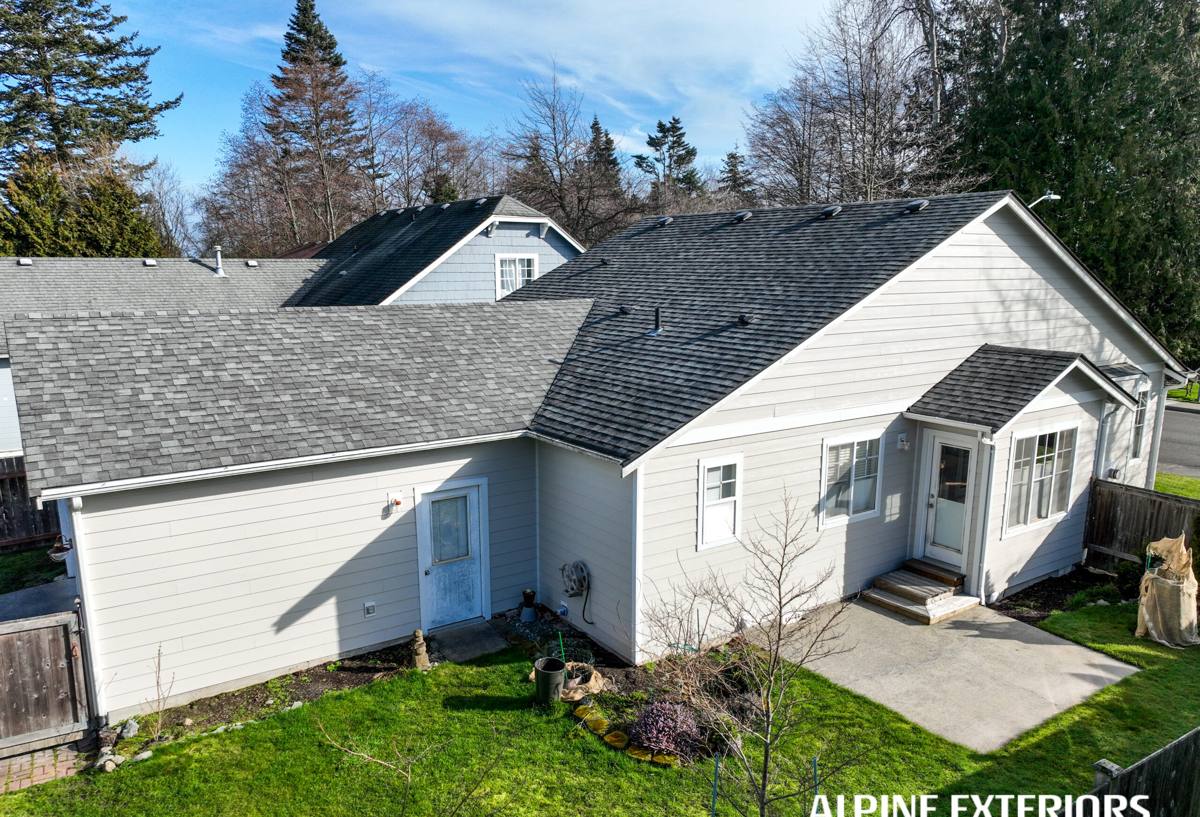
Two conditions define exterior wear at Sudden Valley more than anything else: shade and standing moisture. A lot of homes here are tucked under fir, cedar, and mixed second-growth canopy, which means north- and east-facing walls can stay damp for days after a storm passes, especially in the shoulder seasons. That combination of shade and slow-drying moisture is the exact recipe for moss, algae, and mildew growth on siding, trim, and roofing.
It's also a recipe for moisture problems underneath the surface if a siding or roofing system isn't built to handle repeated wetting and drying cycles. Wood-based products and some engineered wood products are more vulnerable to swelling, delamination, and rot when they don't get consistent sun exposure to dry out between rain events. That's not a knock on any one product line so much as a basic fact of building science: materials that depend on sun and airflow to shed moisture struggle on shaded, tree-covered lots near a lake.
What This Means Practically
- Shaded walls and north-facing elevations need materials rated for sustained moisture exposure, not just occasional rain.
- Moss and algae growth is largely a maintenance issue on the right materials, and a structural risk on the wrong ones.
- Overhangs, flashing, and drainage details matter more here than on a sunnier, more exposed lot — poor detailing gets punished faster.
- Homes closer to the lake itself may see slightly higher ambient humidity than homes farther up the hillside, which extends drying time even more.
Siding: Why We Only Install James Hardie Here
We install James Hardie fiber cement siding exclusively — we don't offer vinyl, LP SmartSide, Cemplank, Allura, primed spruce, or cedar. That's a deliberate standard, not a lack of options, and it matters most in exactly the kind of climate Sudden Valley has.
Fiber cement is dimensionally stable and doesn't absorb and release moisture the way wood-based siding does, which means it holds up better through the repeated wet-dry cycles that shaded, wooded lots produce all winter and spring. Hardie's ColorPlus factory-applied finish is baked on under controlled conditions, so it resists the fading, peeling, and moisture-driven paint failure that field-applied finishes are more prone to in a damp climate. And Hardie's HZ5 product line is specifically engineered for the moisture and freeze-thaw conditions of the Pacific Northwest, which is the region it was designed to perform in.
None of that means other products are without merit. Vinyl is inexpensive and low-maintenance in a general sense. LP SmartSide and engineered wood have real strengths in the right application. Cedar has a look people genuinely love. But in a climate like Sudden Valley's — heavy shade, lake moisture, a long moss season — the maintenance burden and moisture vulnerability of those alternatives is a real cost that shows up over years, not months. We'd rather put a product on your home that we're confident will still look and perform well a decade from now than sell you something that looks fine on install day.
What Correct Installation Looks Like
Product choice is half the equation. The other half is installation, and it matters even more on shaded lots where mistakes don't get a chance to dry out quickly. Proper Hardie installation on a home like this means correct fastening patterns, factory-specified clearances from grade and roofing, properly lapped and sealed joints, and rainscreen or drainage-plane detailing where the wall assembly calls for it. A sloppy install on a great product will still fail early in a wet, shaded environment — the install quality is not optional here.
Roofing Considerations for Wooded, Shaded Lots
Roofs at Sudden Valley deal with the same moss and moisture pressure as siding, plus the added issue of debris. Overhanging tree canopy means more needles, leaves, and organic debris collecting in valleys and gutters, which holds moisture against roofing material and accelerates moss growth if it isn't cleared regularly. Shaded roof planes — particularly north-facing slopes — often stay damp longer after a storm than a roof out in open sun, which is part of why moss tends to show up first on those sections.
We look at ventilation, flashing, and gutter and downspout capacity as part of any roofing conversation here, not just the shingle or panel itself. A roof that can't shed water and debris efficiently will develop moss and moisture problems no matter how good the roofing material is.
Windows: Condensation and Wet-Climate Performance
Window performance in a lake-adjacent, shaded setting is as much about moisture management as it is about energy efficiency. Homes near Lake Whatcom can see more interior condensation on older or poorly sealed windows during cold, damp stretches, especially in rooms that don't get much natural light or airflow. Over time, that condensation can contribute to sill and frame damage, especially around older wood-framed windows.
When we replace windows in this area, proper flashing and sealing against the wall assembly is just as important as the glass package itself — a window that leaks at the frame will undo the benefit of good glass fast in a climate this wet.
Decks: Built for Lake Living
Sudden Valley's lake setting means decks tend to get heavy seasonal use — and heavy exposure to the same shade and moisture that affects the rest of the exterior. Composite decking generally handles moisture, staining, and mold resistance better than wood in shaded, damp conditions, with far less annual maintenance. Where wood decking is preferred for its look, it needs a realistic maintenance plan (sealing, cleaning, moisture checks) to hold up under this kind of exposure, particularly on decks that sit under tree cover for much of the day.
Substructure moisture protection matters just as much as the decking surface — joist tape, proper flashing at ledger boards, and adequate airflow underneath all help decks in shaded settings last as long as they should.
Comparing Exterior Material Behavior in Shaded, Wet Conditions
| Factor | Fiber Cement (Hardie) | Wood-Based / Engineered Wood | Vinyl |
|---|---|---|---|
| Moisture absorption | Very low | Higher — more vulnerable to swelling/rot in shade | Low, but seams and gaps can trap moisture behind panels |
| Moss/algae resistance | Good with factory finish; cleans well | Moderate; growth can accelerate deterioration | Moss grows on surface but doesn't structurally damage the panel |
| Finish durability in shade | Factory-baked ColorPlus finish holds up well | Field-applied finishes more prone to early wear | Color can fade unevenly; finish isn't repairable, only replaceable |
| Fire resistance | Non-combustible | Combustible | Can soften/deform under heat |
| Typical lifespan in this climate | Long, with proper install and basic maintenance | Shorter if shade/moisture exposure is high | Long, but appearance and rigidity degrade over time |
This isn't a claim that any of these products fail outright — it's a picture of how each one is expected to behave under sustained shade and moisture, which is the exact condition a lot of Sudden Valley homes sit in. It's why fiber cement is the product we've standardized on for this region.
What a Local Crew Brings to a Sudden Valley Job
Working in Sudden Valley has its own logistics compared to a job in flatter, more open parts of Bellingham. Lots here can be steep and heavily treed, driveways and access roads are sometimes tighter, and staging materials and equipment takes more planning than on a typical in-town lot. A crew that's worked the area before knows what to expect and plans for it, instead of running into surprises on install day.
There's also a practical side to knowing the microclimate. A crew that understands how much longer a shaded wall in Sudden Valley takes to dry out compared to an open lot near downtown Bellingham will sequence work differently, pay closer attention to weather windows, and flag drainage or ventilation issues that a crew unfamiliar with the area might miss entirely.
A Quick Self-Check for Sudden Valley Homeowners
- Visible moss or dark streaking on siding, trim, or roofing, especially on shaded or north-facing sections
- Gutters or roof valleys that collect needles and debris faster than they can be cleared
- Paint or finish that's peeling, bubbling, or chalking unevenly across the exterior
- Soft spots, staining, or a spongy feel on any wood siding, trim, or deck boards
- Condensation buildup on interior window glass or sills during cold, damp stretches
- Deck boards that stay damp long after the rest of the yard has dried
None of these are emergencies by themselves, but they're worth a look before they turn into bigger repairs. Moisture problems in a shaded, wet climate tend to compound quietly over a season or two rather than show up all at once.
How We Approach a Sudden Valley Estimate
When we walk a property in Sudden Valley, we're looking specifically at sun exposure by elevation, tree cover and drainage patterns, existing moisture or moss damage, and how the current siding, roofing, windows, or decking have actually held up under this particular climate — not a generic checklist. That's the only way to give an honest recommendation instead of a one-size-fits-all pitch.
If you're dealing with moss, moisture damage, an aging exterior, or you're just planning ahead for a home in this part of Whatcom County, we're happy to come take a look. The estimate is free, there's no pressure, and you'll get a straight answer about what your home actually needs — not what's easiest to sell.