 Bellingham
 A Fair Question: Isn't Fiber Cement Just Fiber Cement?
We get asked this a lot, usually by a homeowner who's collected two or three bids and noticed that both quotes say "fiber cement siding" but the prices are noticeably different. It's a fair question. Allura and James Hardie are both cement-based composite siding, both non-combustible, both a world away from vinyl or raw wood in terms of durability. On paper, they can look like interchangeable commodities.
They aren't, and the differences matter more here than they would in a drier, calmer climate. Bellingham sits on Puget Sound, which means salt-laden air off the water, long stretches of driving rain, and a moss season that can run most of the year on north- and west-facing walls. Whatcom County siding takes a beating that inland siding never sees. That's the lens we use when we decide what goes on a house, and it's why we standardized on one fiber cement product instead of carrying two or three.
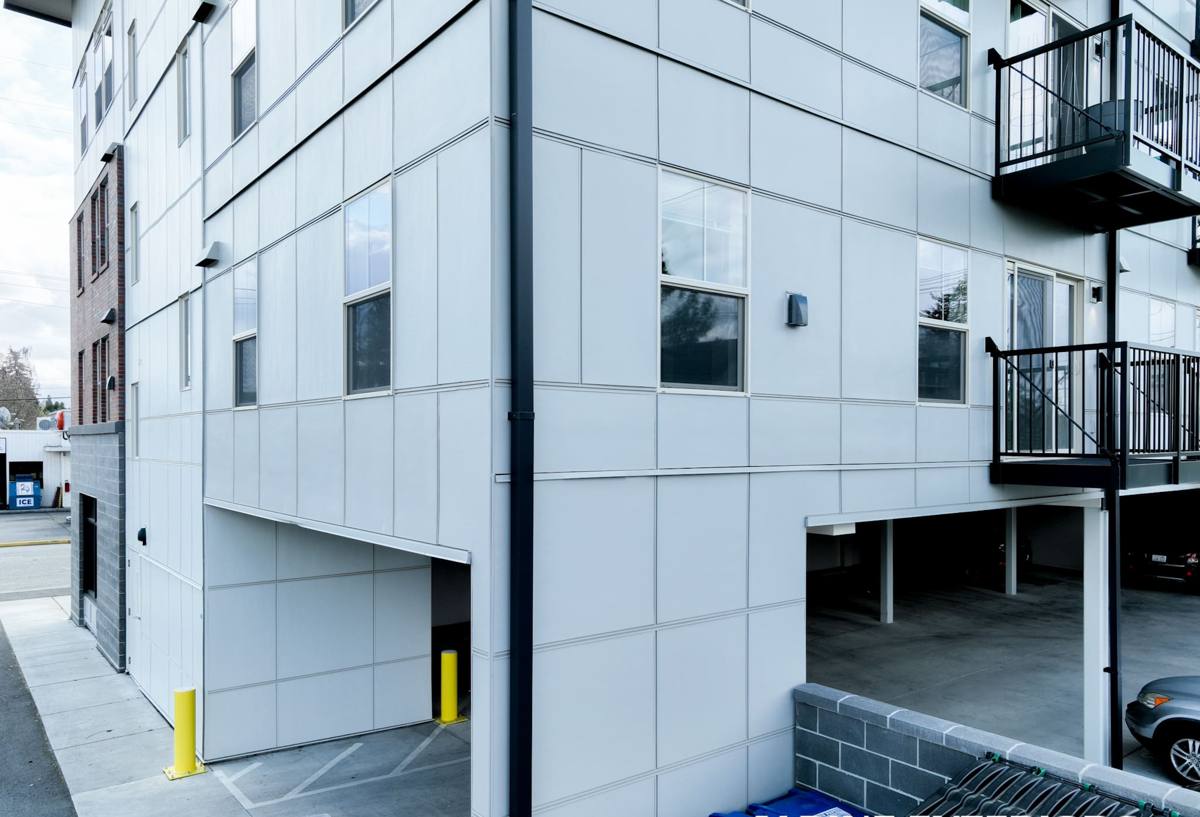
What Allura Gets Right
We want to be upfront about this before we get into the trade-offs: Allura is a legitimate fiber cement product, not a knockoff. It's manufactured from the same basic recipe as every other fiber cement siding on the market — Portland cement, cellulose fiber, sand, and water, cured under pressure. That composition is genuinely good news for any coastal homeowner. It doesn't rot, it doesn't feed insects, and it holds up to fire exposure far better than wood or vinyl.
Allura has also built a real presence in the market as a lower-cost fiber cement alternative, and for some regions and some budgets, that's a reasonable option. We're not telling homeowners the product is junk. We're telling them why, as a company that installs siding for a living in a marine climate, we chose to build our entire business around a different manufacturer's system instead of stocking both.
Where the Similarities End
The gap between fiber cement brands doesn't usually show up in year one. It shows up in year eight or year fifteen, in the specific ways a product handles the cumulative effect of wind-driven rain, freeze-thaw cycling on the wet coast, and UV exposure on painted or pre-finished faces. That's where our experience — and our comfort level — sits with one system, not two.
Factory Finish and Long-Term Color Retention
This is the single biggest reason we standardized on Hardie. James Hardie's ColorPlus finish is a baked-on, multi-coat factory finish applied and cured under controlled conditions before the boards ever leave the plant. That process produces a more consistent, more UV-stable bond between the finish and the substrate than a field-applied or lighter factory coating can match.
Allura offers factory-primed and pre-finished options as well, but the finish systems and warranty backing behind them are structured differently. In a climate like ours, where siding faces near-constant moisture cycling and salt air off the Sound, finish adhesion is what determines whether a house looks good at year three or starts showing chalking, fading, and touch-up patches. We'd rather not gamble a client's curb appeal on a finish system we haven't built years of direct field experience with.
Cut Edges and Field Painting
Every fiber cement job involves field cuts — around windows, corners, and trim — and every cut edge is a spot where the factory finish is interrupted and the raw substrate is exposed. How well a manufacturer's touch-up and sealing products bond to that cut edge matters more in a wet climate than a dry one. We know Hardie's edge-sealing and touch-up system because we use it on every job. Switching between manufacturers means switching best practices, and that's exactly the kind of inconsistency that leads to callbacks down the road.
Climate-Engineered Product Lines
One thing that genuinely sets Hardie apart is that its fiber cement formulations are engineered by climate zone — a different mix and moisture-resistance profile for the humid Southeast than for the arid Southwest, for example, with a version built specifically for regions like ours that see heavy, sustained moisture exposure. That's not a marketing footnote; it changes how the board itself is formulated to manage water at the surface and at the core.
Allura's product line doesn't offer that same degree of regional engineering. For a house in a mild, dry climate, that difference may never matter. For a Whatcom County home dealing with driving rain off the Sound and months of damp, mossy shade on the north wall, we'd rather install a product that was formulated with exactly that exposure in mind.
Warranty Structure
Warranty length isn't the only thing worth comparing — the transfer terms, labor coverage, and finish-specific coverage matter just as much, especially if a home is likely to change hands during the siding's service life.
| Factor | James Hardie (what we install) | Typical Allura Coverage |
|---|---|---|
| Substrate warranty | Long-term, non-prorated coverage on the board itself | Long-term coverage, prorated terms vary by product line |
| Factory finish warranty | Separate, extended ColorPlus finish coverage | Finish coverage tied to specific pre-finished product lines |
| Transferability | Transferable to a new owner within a defined window | Transferability varies by product and is worth confirming in writing |
| Installer-backed labor coverage | Available through certified installer programs | Varies by installer and region |
We'd encourage any homeowner comparing bids to actually pull the current warranty documents for whatever product a contractor is proposing, rather than relying on a sales sheet summary. Terms get updated, and "lifetime warranty" on a spec sheet can mean very different things once you read the fine print on proration and labor coverage.
Installer Network and Product Availability
Hardie's certified installer program means there's a large, established network of contractors trained specifically on its install specs, and Hardie backs that with technical support, inspection resources, and a wide regional supply chain for matching trim, soffit, and accessory pieces years after the original install. If a board gets damaged in a storm five years from now, matching color and profile is straightforward.
Allura is carried by fewer regional distributors in the Pacific Northwest, which can mean longer lead times for exact color and profile matches on repairs or additions down the line. That's a practical, not a performance, concern — but it's a real one for a homeowner who wants to add a garage or repair a section after a windstorm five or ten years out.
Why We Standardized on One Product
Running one fiber cement system instead of two or three isn't about brand loyalty. It's about depth. Every crew member on our team knows Hardie's fastening schedule, clearances, flashing details, and finish touch-up process cold, because it's the only system we install. That consistency is what keeps a Bellingham install watertight through its first driving-rain winter and still looking sharp a decade later, once the moss and mildew that thrive in our shade and moisture have had years to work on it.
If we installed Allura on some jobs and Hardie on others, we'd be splitting that expertise, and the homeowner is the one who'd absorb the risk of a crew being less sharp on install details for whichever product they got. We'd rather be excellent at one system than average at two.
What to Check Before You Sign a Siding Contract
Whatever brand you're considering, these are the questions worth asking before work starts:
- Ask to see the actual warranty document, not just a summary — check proration, transferability, and whether labor is covered separately from materials.
- Confirm whether the contractor is a certified installer for the specific product, and ask how many jobs they've completed with it in the last year.
- Ask how cut edges and fastener heads are sealed and touched up — this is where moisture problems start in our climate.
- Check what trim, soffit, and accessory matching looks like for future repairs or additions.
- Get the manufacturer's climate zone rating or regional recommendation for the specific product line being proposed.
- Ask what happens to color matching if a panel needs replacing five or ten years from now.
The Bottom Line for Whatcom County Homeowners
Allura is a real fiber cement product, and in a different climate, with a different installer, it might be a perfectly reasonable choice. In Bellingham, where salt air, driving rain, and a stubborn moss season all work against a home's exterior year-round, we've made the call to build our entire installation practice around James Hardie's climate-engineered lines, factory finish, and warranty structure. It's a narrower product lineup, but it means every job we do, we do with full depth of knowledge behind it.
If you're weighing siding options for a home in Bellingham or elsewhere in Whatcom County, we're happy to walk through what we install and why, with no pressure either way. Reach out for a free estimate and we'll take a look at your home's specific exposure and give you a straight answer.