 Bellingham
 Exterior Work in Barkley: What the Climate Actually Does to a House
Barkley sits in one of Bellingham's more established mixed-use pockets — a blend of newer single-family homes, townhomes, condos, and commercial buildings built up over the past couple of decades. Because a lot of the housing stock here is relatively young compared to older Bellingham neighborhoods, homeowners are often surprised when siding, trim, or roofing starts showing problems well before they expected it. The culprit usually isn't bad luck. It's Whatcom County's climate doing exactly what it does year after year: driving rain off the Salish Sea, a marine air layer that carries salt even a few miles inland, and a stretch of gray, damp months long enough to grow moss on almost anything that holds moisture.
None of that is unique to Barkley, but it's worth saying plainly because it changes how a house should be built and maintained here versus, say, a home in Spokane or Boise. Exterior materials that perform fine in a dry climate can fail early in ours — not dramatically, but steadily, through swelling, delamination, hidden rot, and finish breakdown that homeowners often don't notice until a contractor points it out during an inspection.
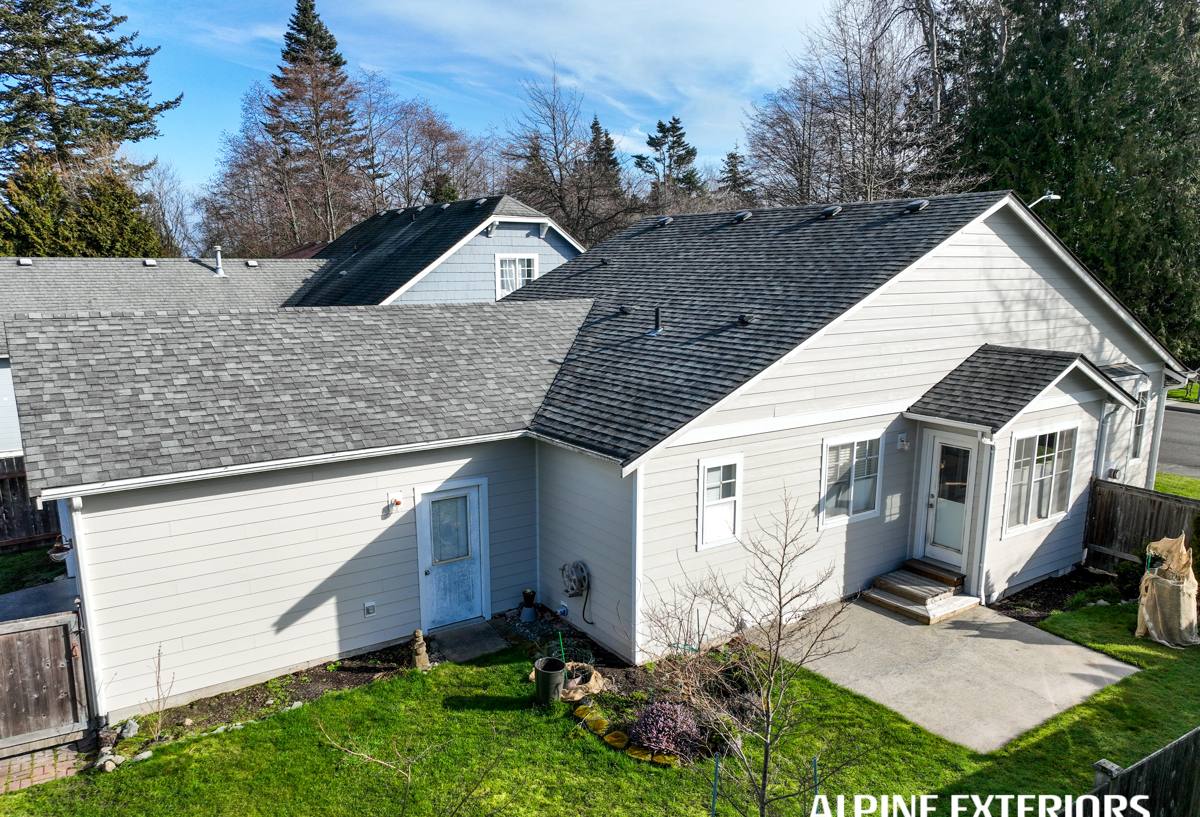
The Three Things Bellingham Weather Does to Your Siding
Driving Rain
Whatcom County doesn't just get a lot of rain — it gets a lot of wind-driven rain, which behaves differently than a straight vertical downpour. Wind-driven rain gets pushed sideways and upward into laps, seams, butt joints, and anywhere flashing or caulking is even slightly off. Over years, that's how water finds its way behind siding that looks fine from the curb.
Moss and Shade Season
Bellingham's tree canopy and long overcast stretches mean a lot of exterior walls — especially north-facing ones — stay damp for days at a time. Moss and algae aren't just cosmetic. They hold moisture against the surface of the siding, which accelerates whatever degradation process is already underway underneath.
Salt Air
Because Barkley isn't far from Bellingham Bay, homes here get some exposure to salt-laden marine air, particularly during storms out of the west and southwest. Salt air is corrosive to fasteners, flashing, and certain paint systems, and it accelerates the breakdown of finishes that aren't engineered to handle it.
Put those three together and you get a climate that's genuinely tougher on a home's exterior than most people realize until they've owned a house here through a few winters.
Why We Install Only James Hardie Fiber Cement
We made a deliberate decision to install James Hardie fiber cement siding exclusively — not vinyl, not LP SmartSide, not primed wood, not other fiber cement brands. That's not a marketing position; it's a standard we hold because of what we've seen happen to other materials in this specific climate.
Fiber cement is non-combustible, which matters increasingly in the Pacific Northwest as wildfire risk becomes part of the conversation even west of the Cascades. It doesn't swell, delaminate, or provide the same food source for moss and mildew that engineered wood products can when moisture gets past the finish. James Hardie's HZ5 product line is specifically engineered for wetter, harsher climates like ours, and their ColorPlus factory finish is baked on under controlled conditions rather than field-applied — which means better adhesion and more consistent long-term color performance than site-painted siding, especially in a climate that gives paint very little time to dry between rain events.
James Hardie also backs its siding with a strong, transferable limited warranty, which matters to homeowners in Barkley who may sell within a decade or two — a well-documented warranty transfer is a real selling point in this market.
We're upfront that Hardie isn't the cheapest option on paper. It's a heavier, denser material that requires correct fastening, clearances, and joint treatment to perform the way it's designed to. That installation sensitivity is exactly why we standardized on one product and one system, rather than spreading our crews thin across multiple materials with different rules.
How We Approach a Siding Project in Barkley
Inspection Before Anything Else
Every project starts with pulling back enough of the existing siding and trim to see what's actually happening underneath — house wrap condition, sheathing, flashing at windows and rooflines, and any signs of past moisture intrusion. In a climate like ours, what's underneath the siding often tells us more than what's on the surface.
Weather-Resistive Barrier and Flashing
This is the layer that does the real work of keeping wind-driven rain out, and it's also the layer that gets rushed or skipped on lower-quality jobs. We treat window and door flashing, kick-out flashing at rooflines, and butt-joint sealing as non-negotiable steps, not add-ons.
Installation to James Hardie Spec
James Hardie publishes specific installation requirements — fastener type and spacing, clearance from grade and roofing, gaps at joints — and those specs exist because deviations from them are exactly what cause premature failures in wet climates. We install to spec, every time, because that's what keeps the manufacturer's warranty intact and the siding performing for decades.
A Full Exterior Envelope, Not Just Siding
Siding doesn't work in isolation. Roofing, windows, siding, and decks all interact at the same vulnerable points — rooflines, window openings, deck ledger boards — and in a climate this wet, those transitions are where problems actually start. That's why we handle roofing, windows, siding, and decks as one connected scope rather than farming pieces out to separate trades who don't coordinate with each other.
- Roofing: proper roof-to-wall flashing prevents water from being driven behind new siding at the exact point homeowners least expect it.
- Windows: new siding is a natural time to address old, leaky, or poorly flashed window installations before they're sealed back up behind fresh material.
- Decks: ledger board attachment and flashing where a deck meets the house is one of the most common hidden rot locations in this region.
Homeowners in Barkley planning a larger exterior update often get more value — and fewer future headaches — by coordinating these projects together rather than tackling them one at a time over several years.
What Drives Siding Cost in Barkley
Every home is different, but a few factors consistently move the price of a siding project up or down. We walk through all of these during a free estimate, but it helps to know them going in.
| Factor | Why It Matters |
|---|---|
| Extent of existing damage | Hidden rot or moisture damage found during tear-off adds repair scope beyond the original estimate |
| Home size and complexity | Multiple stories, dormers, and cut-up wall lines take more labor per square foot than simple rectangular walls |
| Siding profile and accessories | Lap width, trim style, and Hardie panel vs. lap siding all affect material and labor cost |
| Access and site conditions | Slopes, landscaping, and tight lot lines common in some Barkley developments can add setup time |
| Scope beyond siding | Bundling roofing, window, or deck work into one project changes both cost and timeline |
Why a Local Crew Matters More Than It Sounds
A lot of exterior work in Whatcom County gets done by crews traveling up from other regions, and it shows in small but consequential ways — unfamiliarity with local permitting through the City of Bellingham, no real feel for how a particular neighborhood's microclimate behaves, and no accountability once the truck leaves town. A crew that works in Bellingham year-round knows which walls in Barkley tend to stay damp longest, how the wind typically drives rain during winter storms, and what inspectors here actually look for.
That local knowledge doesn't show up as a line item on an estimate, but it shows up ten years later in whether the siding is still performing the way it should.
Signs Your Current Siding May Be Struggling
- Soft or spongy spots when you press on the siding, especially near the bottom edge
- Persistent moss or dark streaking that comes back shortly after cleaning
- Paint that's bubbling, peeling, or failing faster than it used to
- Visible gaps, warping, or separation at seams and corners
- Musty smell or discoloration on interior walls that back up to exterior siding
- Siding that's original to a home built more than 20-25 years ago
Any one of these on its own isn't necessarily an emergency, but they're worth having a professional look at before the next wet season adds to the problem.
Get a Free, No-Pressure Estimate
If you're weighing a siding project for your Barkley home — or want a second opinion on what's happening with your current exterior — we're happy to take a look and walk you through what we find, no obligation attached. Use the form below to get started.