 Bellingham
 Siding in Cordata: What Whatcom County Weather Does to a House
Cordata sits on the north end of Bellingham, close enough to the water and to the open farmland north toward the Canadian border that homes here get a particular mix of exposures: salt-laden air moving in off Bellingham Bay and the Strait, long stretches of driving rain through fall and winter, and the kind of persistent shade and dampness that keeps moss and algae established on north- and east-facing walls for most of the year. None of that is unusual for Whatcom County. But it adds up differently depending on how a house is oriented, how old the siding is, and what it's made of.
We've worked on enough homes in this neighborhood and the surrounding areas to know the failure patterns aren't random. They cluster in predictable spots: lower courses near grade where splashback and irrigation keep material wet longer than it should be, corners and trim intersections where caulking is the only thing holding a seam together, and shaded elevations where moss gets a foothold and holds moisture against the wall long after the rain stops. A siding system that handles this climate well has to deal with all three, not just shed water on a sunny day.
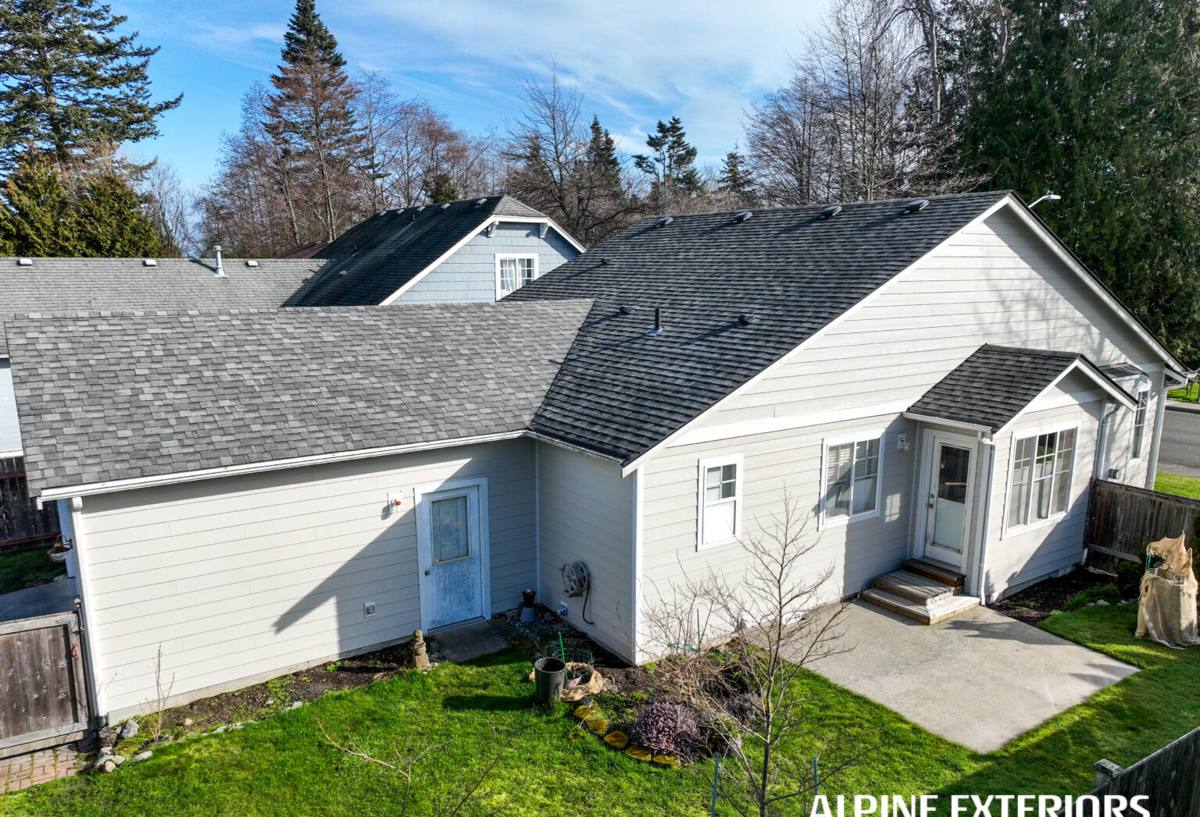
Why Cordata's Microclimate Matters for Siding Choice
Salt air and coastal proximity
Bellingham's Cordata neighborhood isn't waterfront, but it's close enough to the bay that airborne salt still reaches exterior surfaces, especially during winter storms with onshore wind. Salt exposure accelerates corrosion on fasteners and metal trim, and it degrades some paint and coating systems faster than manufacturers' inland test data would suggest. Over years, this shows up as fastener staining, premature caulk failure, and coatings that chalk or fade ahead of schedule.
Driving rain
Storms here often come with real wind behind them, which pushes rain sideways into wall assemblies rather than letting it run straight down. That matters more than most homeowners realize — it means water testing a siding product's face isn't enough; the laps, seams, and butt joints all take on water pressure they wouldn't see in a calmer climate. Products and installation details that are marginal in dry, still conditions get exposed here.
Moss and algae season
Whatcom County's moss season effectively runs most of the year on shaded walls. Moss holds moisture against the substrate, and on materials that aren't dimensionally stable or that absorb water at a cut edge, that sustained dampness is where rot and swelling start. Regular cleaning helps, but the underlying material still needs to tolerate being damp for long stretches without degrading.
What We Actually Install: James Hardie Fiber Cement
We install James Hardie fiber cement siding exclusively. We don't install vinyl, LP SmartSide, Cemplank, Allura, or primed wood products like spruce or cedar lap. That's a deliberate standard, not a sales pitch, and it's worth explaining plainly rather than just asserting it.
Why fiber cement, and why Hardie specifically
- Non-combustible core. Fiber cement doesn't feed a fire the way wood-based products can, which matters for insurance conversations and for wildfire-adjacent risk in drier summer months.
- Dimensional stability in wet climates. Fiber cement doesn't swell, cup, or delaminate the way engineered wood products can when they take on repeated moisture — a real consideration given how long walls here stay damp under moss and shade.
- Factory-applied ColorPlus finish. The color and top coat are baked on under controlled conditions, which holds up better against UV and salt exposure than field-applied paint, and it comes with its own finish warranty separate from the substrate warranty.
- HZ5 climate engineering. Hardie makes region-specific formulations, and the HZ5 line is built for wetter, colder climates like ours rather than being a one-size-fits-all product.
- Warranty structure. Hardie's product warranty is long-dated and transferable to a subsequent owner, which matters if the house sells before the siding's functional life is up.
None of this means other products are junk. LP SmartSide, vinyl, and cedar all have legitimate uses and loyal installers. But we've made a professional call that in this specific climate — salt air, sideways rain, year-round dampness — fiber cement's moisture behavior and factory finish give homeowners the best odds of not dealing with siding problems again in ten years.
Comparing Common Siding Materials for This Climate
| Material | Moisture tolerance here | Finish durability | Typical maintenance |
|---|---|---|---|
| James Hardie fiber cement | High — doesn't swell or rot from sustained dampness | Factory ColorPlus finish, long UV/fade resistance | Periodic wash, caulk checks at joints |
| Vinyl | Sheds water but can warp with heat/cold cycling; seams can let moisture behind panels | Color molded in, but fades and becomes brittle over time | Low, but cracks and impact damage aren't repairable in place |
| LP SmartSide (engineered wood) | Treated to resist moisture, but wood-based core is still vulnerable at cut edges and long-term saturation | Factory primed or finished, needs field caulking at joints | Edge sealing, regular inspection for swelling |
| Cedar / primed spruce | Natural wood; absorbs moisture and needs consistent upkeep to avoid rot, especially in shade | Field-applied stain or paint, shorter recoat cycle | Repainting/staining every few years, moss and mildew treatment |
How We Approach a Cordata Siding Project
Inspection and moisture check
Before we talk about product, we look at what's actually happening on the house — where moisture is getting in now, whether there's rot in the sheathing or framing behind the existing siding, and how the house is oriented relative to prevailing wind and rain. A lot of siding failure in this area traces back to a detail problem (flashing, kickout, caulk joint) rather than the siding material itself, and that needs to be fixed regardless of what goes back on.
Product selection within the Hardie lineup
Hardie makes several product lines — lap siding, shingle-style panels, board and batten, and trim — in a range of factory colors. We help homeowners pick a look that fits the house and the neighborhood's general character without overselling any particular style as the "right" one; that's a homeowner preference call, not a technical one.
Installation to manufacturer spec
Fiber cement's real-world performance depends heavily on correct installation — proper clearance from grade and other surfaces, correct fastener pattern, and properly flashed and caulked joints. A lot of the fiber cement problems homeowners hear about elsewhere trace back to installation shortcuts, not the material. We install to Hardie's published specifications, which is also what keeps the manufacturer's warranty intact.
Beyond Siding: Roofing, Windows, and Decks
Siding rarely fails in isolation. A roof that's shedding water onto a wall, windows with failed flashing, or a deck ledger board holding moisture against the house all interact with siding performance. We handle roofing, windows, and decks alongside siding for exactly that reason — it's easier to get the whole exterior envelope right when one crew is looking at how the pieces fit together, rather than treating each as a separate, disconnected project.
For a Cordata home specifically, that often means checking how roof overhangs and gutter performance affect wall exposure, and whether window flashing details are contributing to the wet spots we see at trim and corners.
What This Costs and What Drives the Number
We don't publish fixed prices because house size, existing wall condition, trim complexity, and product line selection all move the number significantly. In general terms, fiber cement siding costs more upfront than vinyl and is comparable to or somewhat more than engineered wood siding, largely because of material cost and the labor involved in correct installation. The trade-off homeowners are making is upfront cost against a longer functional life and less recurring maintenance.
Factors that affect your estimate
- Square footage and number of stories
- Amount of trim, corner boards, and architectural detail
- Condition of the sheathing and framing underneath the current siding
- Whether existing siding needs to be removed and disposed of versus built over (we generally don't recommend building over failing siding)
- Product line and color selection within the Hardie lineup
- Access — how easy or difficult the site is to work around, including decks, landscaping, and fencing
A Practical Checklist for Homeowners Evaluating Siding
- Walk the house and note which walls stay shaded and damp longest — that's where problems usually start first
- Check caulk joints at corners, trim, and around windows for cracking or gaps
- Look for soft spots, swelling, or discoloration near the bottom courses of siding
- Ask any contractor for their manufacturer certification and whether they install to published specifications
- Get clarity on what's covered by the manufacturer's warranty versus the installer's workmanship warranty
- Ask how the estimate breaks down — material, labor, disposal, and any sheathing repair
Why a Local Crew Matters
A contractor working across Whatcom County day in and day out sees how houses in this specific climate actually age — which elevations fail first, how moss behaves on different orientations, and where the driving rain finds weaknesses that a drier-climate installer might not anticipate. That's not something a general contractor from outside the region necessarily has a feel for, and it affects real decisions on a project: where to add extra flashing attention, which details to double-check, and how to set homeowner expectations about maintenance timing.
If you're weighing a siding project on a Cordata home, we're glad to walk the property with you, look at what your current siding and trim are telling you, and put together a straightforward, no-pressure estimate — no obligation, and we'll tell you honestly what we see.