 Bellingham
 Silver Beach Homes Face a Tough Exterior Environment
Silver Beach sits close to Lake Whatcom, tucked into the tree cover and rolling terrain that define this side of Bellingham. It's a beautiful place to own a home, but that same setting — shade from mature evergreens, moisture holding near the water, and the broader marine climate that rolls in off the Salish Sea — puts real, ongoing stress on exterior building materials. Siding, trim, and roofing here don't just get rained on. They stay damp longer than they would in a drier inland town, and that changes what "durable" actually means.
We're a local Bellingham exterior contractor, and Silver Beach is part of our regular service area. We've seen what happens to homes here over ten, twenty, thirty years, and it shapes every recommendation we make — starting with the fact that we only install one type of siding.
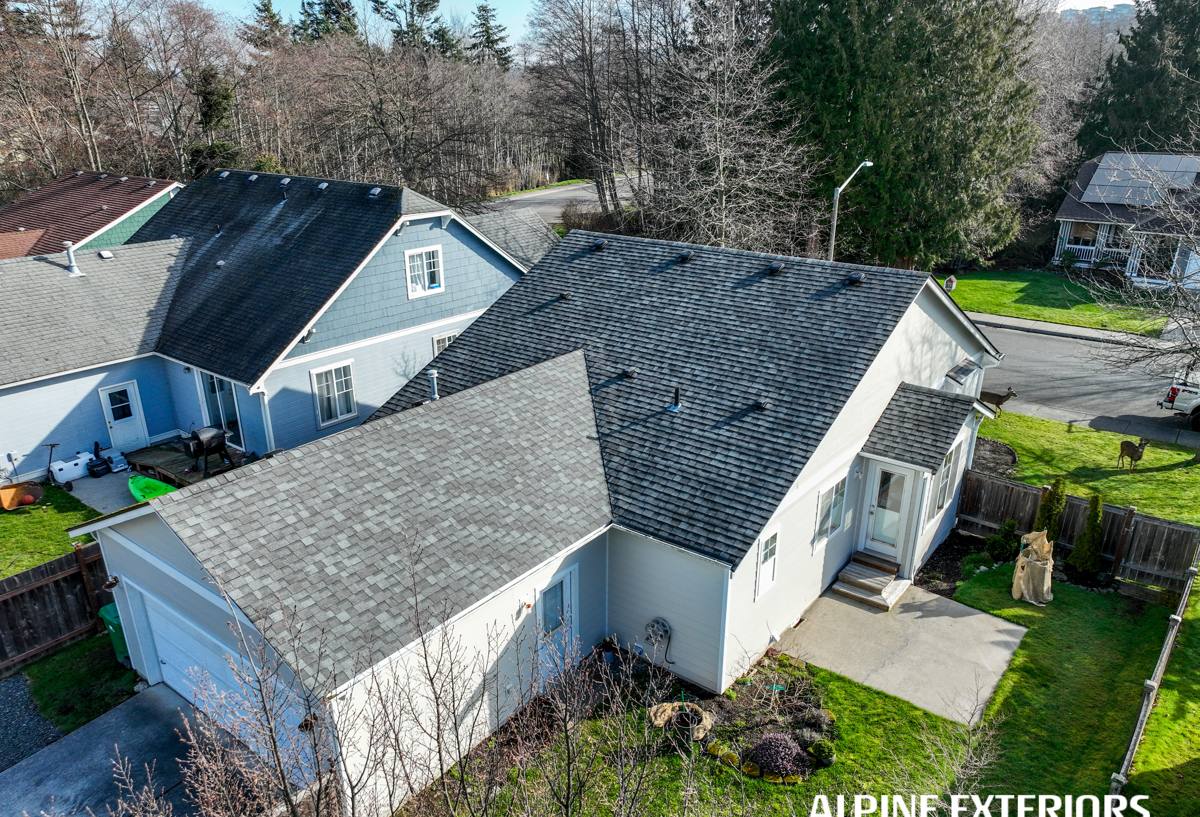
Why Whatcom County's Climate Is Hard on Siding
Rain That Doesn't Let Up
Bellingham doesn't get the heaviest rainfall in Western Washington, but it gets a lot of gray, drizzly, low-intensity rain spread across many months of the year. That kind of weather is actually harder on siding than the occasional downpour, because the wall assembly rarely gets a real chance to dry out between storms. Materials that absorb moisture, swell, or delaminate under sustained dampness are working against the climate from day one.
Salt Air and Coastal Wind
Homes throughout the Bellingham area, including neighborhoods near the water, deal with salt-laden marine air carried in off Bellingham Bay and the Sound. Salt air accelerates corrosion of fasteners and metal trim, and it works its way into any exterior material that isn't built to resist moisture intrusion. Combined with wind-driven rain, it's a steady, low-grade attack on anything nailed to the outside of a house.
A Long, Serious Moss Season
Shade, humidity, and mild temperatures are perfect conditions for moss and algae. In Silver Beach's tree-covered lots, north-facing walls and anything near the roofline can stay damp and shaded for months at a stretch. Moss doesn't just look bad — it holds moisture against the surface underneath it, which is exactly the kind of prolonged wet contact that breaks down wood-based and composite siding products over time.
Why We Install Only James Hardie Fiber Cement Siding
We made a decision a long time ago to standardize on James Hardie fiber cement siding and not offer alternatives like vinyl, LP SmartSide, cedar, or other composite panel products. That's not a marketing angle — it's because we've watched how different materials actually perform in this specific climate, and fiber cement holds up in ways the others struggle to match.
Non-Combustible Material
James Hardie siding is fiber cement, not wood or wood-based composite. It doesn't burn, which matters increasingly in Washington as wildfire risk and insurance underwriting both factor exterior materials into their assessments.
Engineered for This Region
Hardie's HZ5 product line is specifically formulated for climates like ours — colder, wetter, and more moisture-exposed than the Southern climate zones some fiber cement is built for. That matters directly in a neighborhood like Silver Beach, where shaded, damp wall sections are common.
Factory-Applied ColorPlus Finish
Rather than field-applied paint that has to fight moisture and UV from day one, Hardie's ColorPlus finish is baked on in a controlled factory environment, which gives it better adhesion and fade resistance than most site-painted siding.
A Strong, Transferable Warranty
Hardie backs its siding with a long manufacturer warranty that's transferable to a future owner — a real selling point if you ever list the home, and a sign of how confident the manufacturer is in the product's field performance.
What We Don't Install, and Why That's a Deliberate Choice
We're often asked why we don't offer vinyl or engineered wood siding as a lower-cost option. It comes down to trade-offs we're not willing to install and then have to defend later:
- Vinyl siding can warp, crack, or fade with sun and temperature swings, and it's a poor performer in wildfire-adjacent conversations since it's a plastic product.
- LP SmartSide and similar engineered wood products perform reasonably when installation and caulking are perfect and stay perfect for decades, but any breach in the water-resistant coating exposes wood-based substrate to exactly the sustained moisture our climate provides.
- Cedar and primed spruce are attractive but demand a maintenance schedule — refinishing, caulking, moisture monitoring — that most homeowners underestimate when they choose the product, and Silver Beach's shade and moisture load shorten the margin for error.
None of these are "bad" products in every setting. They're just products whose weak points line up too closely with what this climate does to a house, which is why we don't put our name behind installing them here.
How a Silver Beach Siding Project Works
On-Site Assessment
We start by walking the property and looking at what's actually happening to the existing siding — moisture staining, moss buildup patterns, soft trim, failed caulk joints — because that tells us where the house is losing the fight against the climate, not just where it looks worn.
Removal and What's Underneath
Once old siding comes off, we check the sheathing and house wrap. Water intrusion in this climate often shows up behind the siding before it's visible on the surface, and catching it during a re-side is far cheaper than discovering it later.
Installation to Manufacturer Spec
Fiber cement siding performs the way it's rated to perform only when it's installed correctly — proper fastener spacing, correct clearances at grade and roofline, and flashing detail that actually manages water rather than trapping it. This is where a lot of siding failures actually originate, regardless of material.
Site Cleanup
We haul debris and leave the property clean. It's a basic expectation, but it's part of how we operate on every job.
Beyond Siding: The Full Exterior Envelope
Siding doesn't work in isolation. Roofing, windows, and decks all interact with the same water and moisture issues Silver Beach homes deal with, which is why we handle all four rather than treating siding as a standalone product.
Roofing
A roof in poor condition sends water down behind siding and trim regardless of how good the siding itself is. We look at roof condition as part of any siding conversation.
Windows
Window flashing and siding termination points are one of the most common failure points on older homes. Replacing windows and siding together lets us tie those details in correctly the first time.
Decks
Decks near shaded, moist lots — common in Silver Beach — face the same moss and moisture pressure as siding. We build and repair decks with that same climate reality in mind.
What Drives Siding Cost in Silver Beach
| Factor | Why It Matters |
|---|---|
| Home size and stories | More surface area and taller walls increase material and labor, and multi-story homes require more scaffolding and access work. |
| Existing siding removal | Tear-off of old material, disposal, and any sheathing repair found underneath adds time and cost. |
| Trim and architectural detail | Homes with more corners, dormers, and trim detail take longer to fit and finish correctly. |
| HZ5 vs. standard Hardie panel | Climate-engineered HZ5 product is the right call for shaded, damp lots typical of this area, and it's priced accordingly. |
| Access and site conditions | Sloped lots, mature trees, and limited driveway access — common near the lake — can affect equipment staging and labor time. |
Why a Local Crew Matters Here
Anyone can quote a siding job off a set of measurements. What's harder to get right without local experience is knowing which walls in a Silver Beach home need extra flashing attention, which orientations grow moss fastest, and how the tree canopy and lake proximity change a house's actual moisture exposure compared to a similar home a few miles away in a more open part of Bellingham. We work across Whatcom County, and that repeated, local exposure to how this specific climate treats different homes is what informs the decisions we make on your project — not a generic install checklist.
Simple Maintenance Checklist for Silver Beach Homeowners
- Rinse siding and trim of moss and algae buildup at least once a year, more often on shaded, north-facing walls.
- Keep gutters clear so overflow doesn't run down siding and hold moisture against it.
- Trim back tree branches and shrubs that keep siding shaded and damp longer than necessary.
- Inspect caulk joints around windows, doors, and trim annually and touch up before winter.
- Walk the exterior after major storms to catch loose trim, damaged flashing, or impact spots early.
If you're planning a siding project in Silver Beach or anywhere else in the Bellingham area, we're happy to take a look at your home and walk you through what we're seeing and what it would take to do it right. There's no pressure and no obligation — just fill out the form below and we'll set up a time to come take a look.