 Bellingham
 Exterior Work Built for Birch Bay's Coastline
Birch Bay sits right where Whatcom County meets the Salish Sea, and that location shapes everything about how a home's exterior ages there. Homes here take on a combination that most inland Bellingham neighborhoods don't deal with nearly as much: salt-laden air blowing off the water, driving rain that comes in sideways during winter storms, and a moss and algae season that can run nine or ten months out of the year in shaded, north-facing spots. We've worked on homes throughout this stretch of coastline, and the wear patterns are consistent enough that we can usually tell how a house has been treated just by looking at the south and west walls versus the north side.
This page covers what we see most often in Birch Bay, how our siding, roofing, window, and deck work addresses those conditions, and why we've built our business around a single fiber cement siding system rather than trying to be everything to everyone.
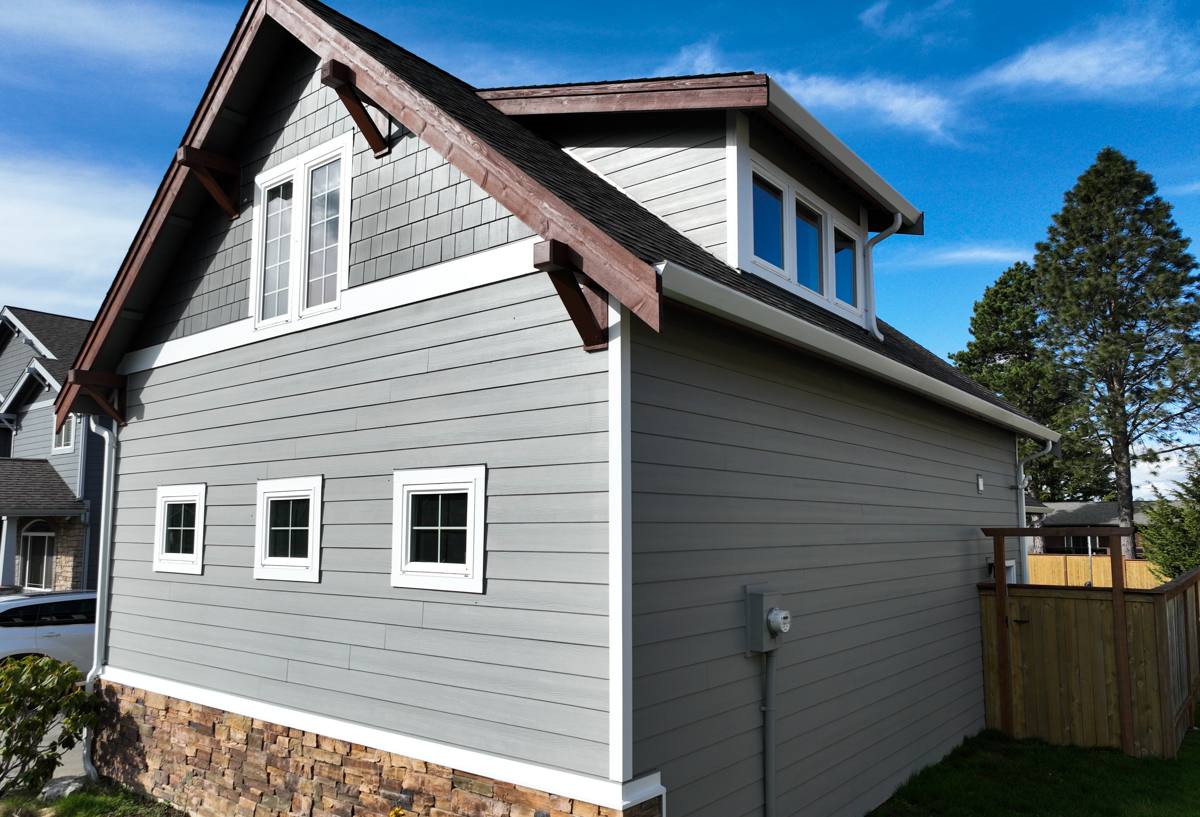
What Salt Air and Coastal Moisture Do to a House
Salt Air and Metal Fasteners
Salt air accelerates corrosion on anything metal — nail heads, flashing, hinges, gutter fasteners. On siding specifically, this shows up as rust streaking below fastener points, especially on older installations that used standard galvanized nails instead of corrosion-resistant fasteners. It's a slow problem, which is exactly why it gets ignored until the streaking is visible and the fastener underneath has already lost some of its holding strength.
Driving Rain and Wind-Driven Moisture
Birch Bay's exposure to the water means wind-driven rain isn't rare here — it's a regular winter occurrence. Rain that comes in at an angle finds its way into gaps, laps, and seams that would stay dry on a more sheltered inland lot. That makes water-resistive barrier detailing, proper flashing at windows and doors, and correctly lapped siding courses more important here than almost anywhere else in the county.
The Long Moss Season
Between the marine humidity and the tree cover common on Birch Bay lots, moss and algae growth on siding, roofing, and decking is a near-constant battle. It's not just cosmetic — sustained moss growth holds moisture against a surface, and materials that aren't dimensionally stable or moisture-tolerant can suffer for it over years of exposure.
Why We Only Install James Hardie Fiber Cement Siding
We get asked fairly often why we don't offer vinyl, LP SmartSide, or other fiber cement brands like Cemplank or Allura. The honest answer is that after years of installation and repair work across Whatcom County, including plenty of coastal properties like the ones in Birch Bay, we standardized on one product system because it holds up best to the specific conditions this area throws at a house.
Why Not Vinyl
Vinyl siding is affordable and low-maintenance in mild climates, and we won't pretend otherwise. But it's a thin plastic product that expands and contracts significantly with temperature swings, and in high-wind coastal exposure it's more prone to cracking, warping, or blowing off in a bad storm than fiber cement. It also can't be painted a dark color without risking heat warping, which limits design options for homeowners who want a specific look.
Why Not LP SmartSide
LP SmartSide is an engineered wood product — strand board with a resin coating. It performs well when the finish stays intact, but any breach in that coating, whether from impact damage, a poor cut edge, or a fastener hole that wasn't sealed, opens the door to moisture intrusion and swelling. In an area with as much sustained dampness as Birch Bay, that's a real maintenance liability over the life of the siding.
Why Not Other Fiber Cement Brands
Cemplank and Allura are legitimate fiber cement products, and the category as a whole is sound. Our decision to install James Hardie specifically comes down to their ColorPlus factory finish process, their HZ5 product engineering for wet climates, and the depth of their installer network and warranty backing in this region. When something goes wrong on a coastal job, we want a manufacturer with a track record of standing behind it here in the Pacific Northwest, not just on paper.
James Hardie for Coastal Conditions
James Hardie's HZ5 product line is engineered specifically for climates with sustained moisture exposure, which describes Birch Bay well. Fiber cement is non-combustible, doesn't swell or rot from moisture the way wood-based products can, and holds paint and factory finish far more consistently over time. The ColorPlus finish is baked on at the factory under controlled conditions, which gives it better fade and chip resistance than field-applied paint — a real advantage on a coastal home where UV and salt exposure both work against a finish.
It's also simply a heavier, more rigid material than vinyl or engineered wood siding, which matters when wind-driven rain is pushing against a wall for hours during a winter storm.
Comparing Siding Options for Birch Bay's Coastal Exposure
| Material | Moisture Behavior | Wind/Storm Resistance | Maintenance |
|---|---|---|---|
| James Hardie Fiber Cement | Does not swell or rot; engineered for wet climates | Rigid, heavy, holds up well to wind-driven rain | Low; factory finish lasts years |
| Vinyl | Doesn't absorb water but seams can leak | Prone to cracking or blow-off in high wind | Low but color-limited, can't be painted dark |
| LP SmartSide | Vulnerable if coating is breached | Decent when intact | Requires prompt repair of any damage |
| Cedar / Primed Wood | Absorbs moisture, prone to rot without upkeep | Moderate | High; regular refinishing needed |
Roofing, Windows, and Decks for the Same Conditions
Roofing
A roof takes the brunt of Birch Bay's weather before anything else does. Moss growth on roofing shortens shingle life if it's left unaddressed, and driving rain exposes any weak flashing detail around valleys, chimneys, and roof-to-wall transitions. We install and repair roofing with an eye toward the same moisture-management principles we apply to siding — proper underlayment, correct flashing, and ventilation that keeps moisture from building up in the attic.
Windows
Window flashing and sealant integration matter more in a wind-driven rain environment than almost anywhere else. A window that's slightly under-flashed might go years without an obvious leak in a sheltered inland location, but on an exposed Birch Bay lot facing the water, that same gap can let water in during the first serious winter storm. When we replace windows, we integrate the flashing with the surrounding siding's water-resistive barrier so the whole wall assembly works together.
Decks
Decks in this area deal with the same moss and moisture pressure as siding and roofing, plus direct weathering from sun and rain on horizontal surfaces. Material choice, proper drainage away from ledger boards, and fastener selection all affect how long a deck holds up before boards start cupping or fasteners start staining.
What a Local Crew Means for Birch Bay Homeowners
Working across Whatcom County gives us a practical sense of which details matter where. A crew that mostly works inland jobs might not think twice about standard fastener specs or flashing details that are perfectly adequate in a sheltered location but undersized for a home a few hundred yards from the water. We adjust for that exposure as a matter of course, not as an upsell.
Being local also means we're not disappearing after the install. If a coastal storm causes an issue, or a warranty question comes up years down the road, we're still in the area and still reachable.
Signs Your Birch Bay Home's Exterior Needs Attention
- Persistent moss or algae streaking on north-facing or shaded siding and roofing
- Rust staining below nail heads or fasteners on existing siding
- Soft or swollen spots on wood-based siding, trim, or fascia
- Paint that's chalking, peeling, or fading unevenly across different wall exposures
- Visible gaps or separation at siding seams, window trim, or door casings
- Water staining on interior walls near windows or exterior corners after a storm
- Deck boards that are cupping, graying unevenly, or showing soft spots near ledger connections
Cost Factors for Coastal Exterior Projects
What Typically Affects Pricing
| Factor | Why It Matters |
|---|---|
| Home size and wall complexity | More corners, dormers, and trim details mean more labor and material |
| Existing exterior condition | Rot or water damage found during tear-off adds repair scope |
| Access and site conditions | Waterfront or hillside lots can affect staging and equipment access |
| Product selection | Hardie panel, lap, and shingle profiles vary in material cost |
| Scope combined | Bundling siding with roofing, windows, or a deck can reduce overall mobilization costs |
We won't quote a number on a page like this — every home is different, and the only honest way to price a job is to look at it in person. What we can say is that upfront cost is only part of the equation; a properly installed, climate-appropriate exterior costs less over a 20- to 30-year span than repeated repairs or an early replacement.
Our Process for a Birch Bay Project
- Free on-site assessment of your home's exterior, including existing siding, roofing, windows, and deck condition
- Honest evaluation of what needs replacement now versus what can wait
- Detailed proposal covering materials, scope, and timeline
- Installation following manufacturer specifications, with attention to flashing and moisture management appropriate for a coastal lot
- Final walkthrough so you understand what was done and how to maintain it
If you're noticing moss buildup, staining, or wear on your Birch Bay home's siding, roofing, windows, or deck, we're happy to take a look and give you a straightforward assessment. Reach out for a free, no-pressure estimate using the form below.