 Bellingham
 Exterior Work Built for York's Climate
York is one of Bellingham's older, established neighborhoods, and that means a lot of the homes here were built decades before anyone thought seriously about how Pacific Northwest weather actually attacks a house over time. Whatcom County sits close enough to the water that salt-laden air reaches inland further than most homeowners realize, and combined with our long stretch of driving rain and a moss season that can run from early fall through late spring, exterior surfaces here take a beating that drier climates simply don't produce. If you own a home in York, your siding, roof, windows, and decking are working harder than the same materials would in most of the country.
We're a local crew that works this specific climate every day, not a regional outfit that treats Bellingham like any other stop on a route. That matters more than most homeowners expect, because the right exterior approach here isn't the same as what works in Spokane or Seattle's drier rain shadow. It's a wetter, mossier, saltier environment, and the materials and installation details have to account for that.
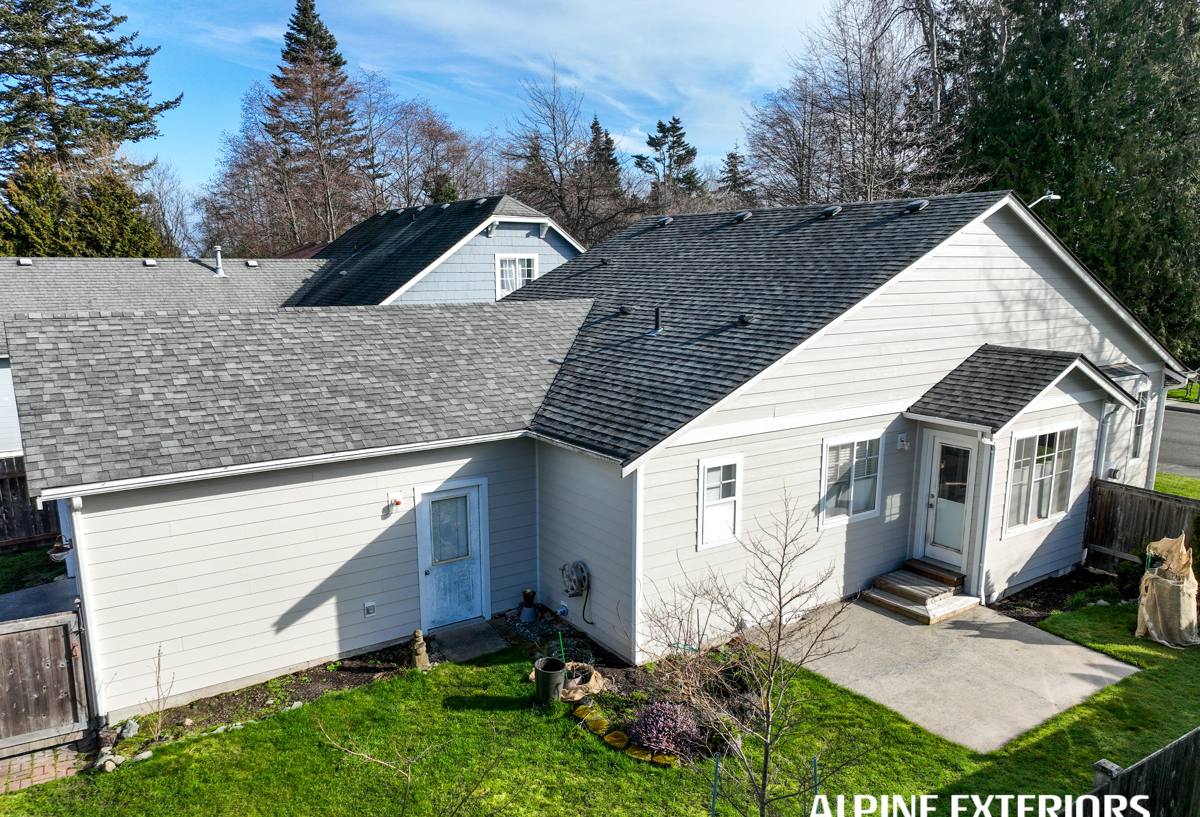
What York Homes Face Year-Round
Salt Air and Moisture
Proximity to Bellingham Bay means airborne salt works its way into paint films, caulk joints, and any exposed fastener over years of exposure. On older siding, this shows up as chalking paint, rust bleed at nail heads, and caulk that dries out and cracks faster than it would further inland. It's a slow process, but it's constant, and it's one of the reasons factory-applied finishes matter so much here — a finish baked on in a controlled environment holds up to salt exposure far better than field-applied paint that's fighting moisture during application.
Driving Rain
Whatcom County doesn't just get a lot of rain — a good share of it comes in sideways, driven by wind off the water. That kind of wind-driven rain finds every gap in flashing, every under-caulked joint, and every place where siding wasn't lapped correctly. Water intrusion behind siding is one of the most expensive problems a home can develop, because by the time you see a stain or soft spot on the inside, the sheathing and framing behind it may already be compromised.
Moss and Organic Growth
Our extended damp season is ideal for moss, algae, and lichen, and roofs and north-facing siding in shaded yards are especially vulnerable. Beyond the cosmetic issue, moss holds moisture against a surface long after the rain stops, which accelerates rot in wood-based products and can work into shingle roofing over time. Homes in tree-shaded parts of York tend to see this more than homes in open, sunnier lots.
Siding: Why We Only Install James Hardie
We install James Hardie fiber cement siding exclusively. We don't install vinyl, LP SmartSide, Cemplank, Allura, or primed wood products like spruce or cedar, and that's a deliberate professional standard, not a sales preference. Each of those alternatives has real strengths, but each also carries trade-offs that show up over a 15-30 year ownership window in a climate like ours.
Where Alternatives Fall Short Here
- Vinyl siding: Inexpensive and low-maintenance in mild climates, but it expands and contracts significantly with temperature swings, can become brittle in cold snaps, and doesn't offer the impact resistance or fire resistance of fiber cement.
- LP SmartSide (engineered wood): A wood-strand product with a resin binder. It performs well when detailing is perfect, but any breach in the factory coating — a scratch, an unsealed cut edge — opens a path for moisture to reach the wood core, which is a real concern in a climate this wet.
- Cemplank and Allura: Both are legitimate fiber cement competitors to Hardie. Our reasons for standardizing on Hardie come down to the depth of their climate-specific product engineering, the consistency of their ColorPlus finish process, and the strength of their transferable warranty — not a claim that competing fiber cement is defective.
- Primed spruce or cedar: Beautiful, traditional, and genuinely appealing to a lot of homeowners. But raw wood siding demands a repainting and caulking cycle every few years to stay ahead of moisture, and in a damp county like ours that maintenance window shrinks. It's a real, ongoing cost that a lot of buyers underestimate at the time of installation.
What James Hardie Gets Right for Whatcom County
James Hardie fiber cement is non-combustible, dimensionally stable across our wet winters and dry summers, and available in HZ5 formulations engineered specifically for climates with prolonged moisture exposure. The ColorPlus factory finish is baked on under controlled conditions and backed by its own finish warranty, which matters directly for salt-air fading and chalking. It won't rot, and it holds paint and color far longer than wood siding does under the same rain exposure. It's not the cheapest option on the market, but for a house that has to survive Bellingham winters for decades, it's the material we're willing to put our name behind.
Siding Installation Comparison
| Factor | James Hardie Fiber Cement | Vinyl | Primed Wood |
|---|---|---|---|
| Moisture resistance | Engineered for wet climates (HZ5) | Good, but seams can allow water behind panels | Vulnerable if finish is breached |
| Maintenance cycle | Repaint/recaulk every 10-15+ years | Minimal, but cracks age poorly | Repaint every 3-7 years |
| Fire resistance | Non-combustible | Combustible | Combustible |
| Salt air performance | Strong with factory finish | Moderate, can become brittle | Weak without frequent upkeep |
| Typical lifespan | 30-50 years installed to spec | 20-30 years | 15-25 years with maintenance |
Roofing for a Wet, Mossy Climate
Your roof takes the brunt of both the rain and the moss problem before either one reaches your siding. In York's mix of mature, tree-lined lots and more open streets, roof exposure varies a lot house to house, and moss growth in particular tracks closely with how much shade a roof gets. We look at ventilation, flashing details around penetrations and valleys, and underlayment quality as much as the shingle or roofing material itself, because most roof failures in this region start at a flashing or ventilation problem, not a failure of the roofing material.
Common Roof Issues We See in Established Neighborhoods
- Moss buildup at north-facing slopes and valleys holding moisture against shingles
- Undersized or blocked attic ventilation contributing to premature shingle wear from the inside out
- Flashing around chimneys, skylights, and dormers that has degraded or was never properly integrated
- Granule loss on older asphalt shingles from decades of wind-driven rain exposure
Windows: Sealing Out Wind-Driven Rain
Older single-pane or early dual-pane windows common in established Bellingham neighborhoods often struggle with exactly the kind of wind-driven rain York sees regularly. Failed seals show up as fogging between panes, drafts, and sometimes visible water staining on interior sills. When we replace windows, proper flashing integration with the surrounding siding is just as important as the window unit itself — a top-tier window installed with poor flashing will leak just as badly as a cheap one.
Decks: Standing Up to Year-Round Moisture
A deck in this climate spends most of the year wet, shaded, or both, and that combination is hard on both wood and the fasteners holding it together. We look closely at ledger board attachment and flashing where a deck meets the house, since that's the single most common point of hidden rot on older decks. Proper spacing between boards, correct fastener selection for coastal moisture exposure, and adequate airflow underneath the structure all matter more here than in a drier region.
Our Process for York Homeowners
- On-site assessment — we walk the exterior, checking siding, trim, flashing, roof condition, and any visible moisture signs specific to the home's exposure and shading.
- Honest scope and options — we explain what needs attention now versus what can be monitored, and why we recommend the materials we do.
- Detailed estimate — a clear, itemized proposal with no vague allowances.
- Installation to manufacturer spec — proper flashing, fastening, and clearances, not shortcuts that show up as callbacks in five years.
- Final walkthrough — we review the finished work with you before calling the job done.
A Practical Checklist for York Homeowners
- Check north-facing roof slopes and siding for moss buildup at least once a year
- Look for chalking, fading, or peeling paint on siding, especially near ground level and roof lines
- Inspect caulk joints around windows and trim for cracking or gaps
- Watch for soft spots or discoloration on interior walls near exterior corners after heavy storms
- Have deck ledger boards and fasteners checked periodically for hidden rot
- Clear gutters and downspouts before the fall rains start in earnest
Why a Local Crew Matters
A contractor who works Whatcom County year-round knows which details actually matter here — the flashing practices that hold up against driving rain, which slopes and shade patterns in this area breed the worst moss problems, and how salt air changes the maintenance math on different siding products. That's knowledge you build by working the same climate over and over, not by reading a spec sheet. When we're on a York property, we're applying what we've learned from every other house in this county with the same weather working against it.
If your siding, roof, windows, or deck are showing their age, or you just want a straight answer about what your home actually needs, we're happy to take a look. Reach out for a free, no-pressure estimate — there's a form right below this page.