 Bellingham
 Exterior Work in Sunnyland: What the Climate Actually Does to a Home
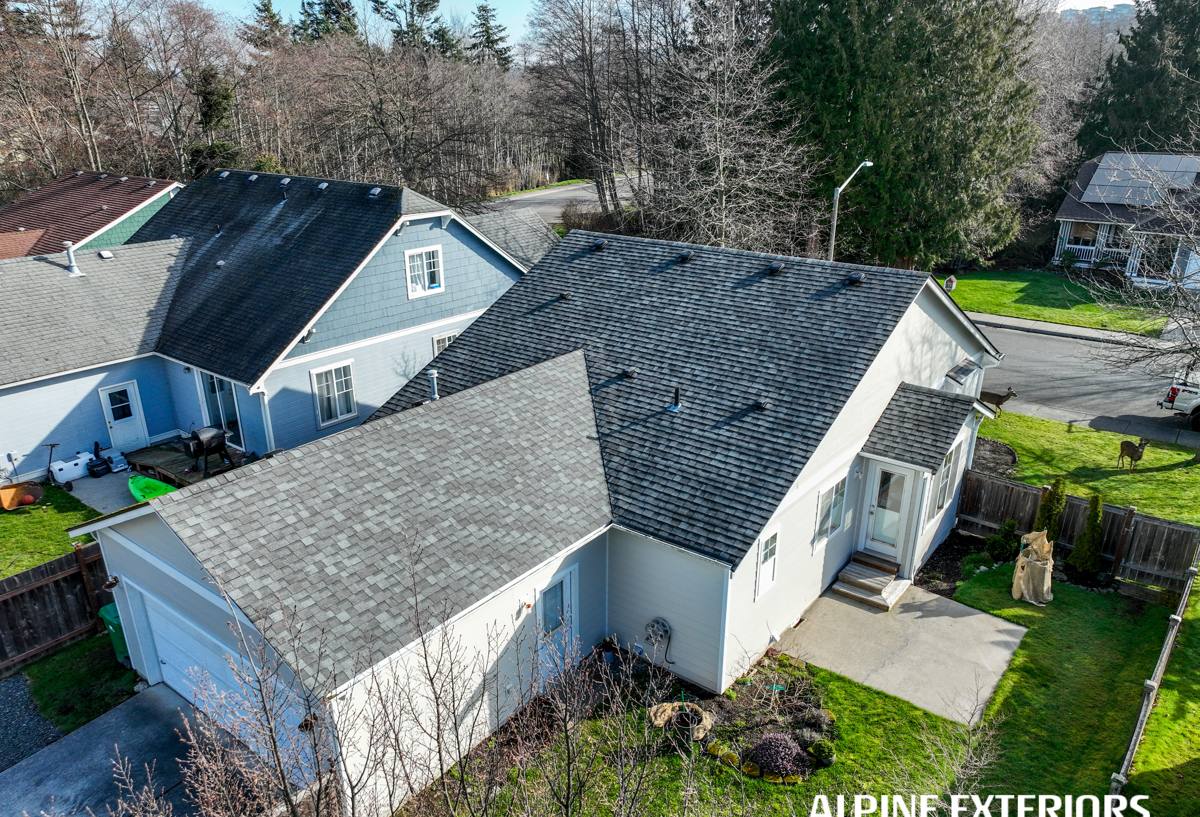
Sunnyland is one of Bellingham's established neighborhoods, with a mix of older homes and newer infill sitting under a lot of mature tree cover not far from Bellingham Bay. That combination — shade, moisture, and proximity to salt air — is exactly the environment that wears down a house's exterior faster than homeowners expect. It's not dramatic damage in most cases. It's slow: a little more moss every winter, paint that needs touching up sooner than it should, trim that starts to soften at the corners.
We work on homes throughout Bellingham and Whatcom County, and the exterior problems we see in Sunnyland follow a consistent pattern tied to three things — salt air drifting in off the bay, driving rain that comes in sideways during winter storms, and a moss season that, realistically, runs most of the year in the shadier lots. None of that is unique to this one neighborhood, but it's real, and it's worth understanding before you plan any siding, roofing, window, or deck project here.
Salt Air: The Slow Corrosion Problem
Bellingham Bay isn't far from Sunnyland, and salt-laden air travels further inland than most people assume, especially on windy days. Salt air accelerates corrosion on anything metal — fasteners, flashing, gutter hardware, hinges — and it also degrades certain paint films and coatings faster than a dry inland climate would. Over years, that shows up as rust streaking below nail heads, chalky or fading paint on the sun-and-wind-exposed sides of a house, and corroded flashing at roof valleys and window heads.
This is one of the reasons material choice matters more here than in a lot of other parts of the country. Fasteners, flashing, and trim details that would be fine in a dry climate can fail early near the coast if they're not rated for it.
Driving Rain and Wind-Driven Moisture
Whatcom County gets a lot of rain, but the issue isn't just volume — it's the wind-driven rain that comes in at an angle during winter storms and works its way behind poorly lapped siding, under loose trim, and into any gap in the building envelope. Homes in Sunnyland with mature landscaping get some wind protection, but that same landscaping also holds moisture against the house longer after a storm passes, which cuts both ways.
Wind-driven rain is a water-management problem, not just a water-resistance problem. It matters how siding is lapped, how flashing is integrated at windows and doors, and how water is directed away from the wall assembly — not just what material is on the surface.
Moss Season: Longer Than People Think
In the shadier, tree-covered parts of Bellingham, moss and algae growth isn't seasonal in the way people assume — it's a near-constant condition on north-facing walls, roof slopes, and anywhere sunlight and airflow are limited. Moss holds moisture against a surface, and sustained moisture against wood, primed trim, or degraded coatings is what leads to soft spots, paint failure, and eventually rot.
This is a maintenance issue as much as a material issue. Even the best siding product will grow moss if a roofline shades it and nobody ever cleans it off. But some materials tolerate that sustained moisture far better than others, which is a big part of why we're selective about what we install.
Siding Services for Sunnyland Homes
We install James Hardie fiber cement siding exclusively — it's the only siding product we put on homes, and we're upfront about why. Hardie's fiber cement is non-combustible, it's engineered specifically for wet climates like ours (Hardie has a product line built for the Pacific Northwest), and it holds paint and factory-applied ColorPlus finishes far longer than wood or wood-composite alternatives in a moss-prone, salt-air environment. It doesn't rot, it doesn't feed insects, and it stands up to sustained dampness in a way that matters a great deal on a shaded Sunnyland lot.
We don't install vinyl, LP SmartSide, primed wood, or other fiber cement brands. That's a deliberate standard, not a marketing line — we've made the call that Hardie's combination of durability, factory finish, and warranty backing is what we're willing to put our name behind in this climate. If you want the full explanation of why we passed on those other products, we've written about it in detail elsewhere on our site.
What a Siding Job Involves
- Removing existing siding and inspecting the sheathing and framing underneath for hidden moisture damage
- Repairing or replacing any rotted sheathing, framing, or trim before new siding goes on
- Installing a weather-resistive barrier and correctly lapped, integrated flashing at every window, door, and roofline intersection
- Installing Hardie panel, lap, or shingle siding per manufacturer spec, including proper fastener type and spacing for our climate
- Sealing and finishing trim, corners, and penetrations so water has a clear path away from the wall
Roofing: The First Line of Defense
Roofing and siding work together — a roof that's shedding moss, holding moisture, or leaking at a valley will eventually damage the siding and trim below it, no matter how good that siding is. In Sunnyland's shadier lots, we pay particular attention to moss growth on north-facing roof slopes, valley flashing condition, and gutter capacity, since undersized or clogged gutters during a heavy winter storm push water back under the roof edge and into the fascia.
If you're planning a siding project, it's worth having your roof looked at at the same time. Doing both together avoids the situation where new siding gets water-damaged a few years later by a roof problem that was already there.
Windows: Where Leaks Actually Start
A large share of the moisture problems we find during siding tear-off trace back to window flashing, not the siding itself — old aluminum or first-generation vinyl windows with degraded seals, or windows that were never properly flashed and integrated with the weather barrier when the house was built. In a climate with this much wind-driven rain, window integration is not a detail to skip.
When we replace windows as part of a larger exterior project, we treat the flashing and integration with the siding as seriously as the window unit itself. A great window installed with poor flashing will leak; a modest window installed correctly usually won't.
Decks: Built for Sustained Dampness
Decks in a neighborhood like Sunnyland deal with the same moss and moisture exposure as the walls and roof, plus direct foot traffic and standing water on horizontal surfaces. Ledger board attachment and flashing where a deck meets the house is one of the most common failure points we see — it's a spot where water gets trapped against the framing if it isn't detailed correctly, and it's invisible until there's a real problem.
We build and repair decks with drainage, ledger flashing, and material selection all treated as climate decisions, not afterthoughts.
Cost Factors on a Sunnyland Exterior Project
Every home is different, and we don't quote sight-unseen — but these are the factors that most affect cost on the kind of exterior projects we do in this neighborhood:
| Factor | Why It Matters Here |
|---|---|
| Hidden moisture damage under old siding | Shaded, moss-prone lots often have more sheathing/framing repair than a dry-climate home of the same age |
| Home size and wall complexity | More corners, dormers, and roof intersections mean more flashing detail work |
| Siding profile chosen | Hardie lap, shingle, and panel styles differ in material and labor cost |
| Roof and window condition | Addressing these alongside siding avoids re-opening a finished wall later |
| Access and site conditions | Mature trees and tight lots common in older Bellingham neighborhoods can affect staging and disposal |
Signs Your Sunnyland Home Needs Attention
- Moss or algae streaking on north-facing or shaded siding and roof sections
- Paint that's peeling, bubbling, or chalking faster than it did a few years ago
- Soft or spongy spots when you press on trim, corner boards, or lower siding courses
- Rust staining below nail heads or at metal flashing joints
- Water stains on interior ceilings or walls near windows, rooflines, or where a deck meets the house
- Gutters that overflow or stay clogged with debris through the wet months
Why a Local Crew Matters
Whatcom County's exterior problems aren't generic — they're shaped by this specific combination of coastal salt air, heavy wind-driven rain, and long stretches of shade and moisture that a lot of national or out-of-area crews simply haven't dealt with as often. A crew that works Bellingham neighborhoods regularly knows what to check for on a Sunnyland tear-off before the siding even comes off, and knows which flashing and fastener details actually hold up here versus what looks fine on paper in a drier climate.
We're not a national franchise passing through — we live and work in this county, and we stand behind what we install with a warranty that means something because we'll still be here.
If you're seeing moss buildup, paint failure, or you're just planning ahead for your home's exterior, we're happy to take a look and give you a straight, no-pressure estimate. There's a form below — reach out and we'll get you scheduled.