 Bellingham
 Fiber Cement Siding for Sunnyland Homes
Sunnyland is one of Bellingham's older, established residential neighborhoods, and that means a lot of homes here are carrying siding that was never built for a fourth decade of Pacific Northwest weather. Between the moisture coming off Bellingham Bay, the shade thrown by mature trees on many Sunnyland lots, and the sheer number of wet months Whatcom County gets every year, siding takes a beating here that it wouldn't in a drier climate. We install fiber cement siding for homeowners throughout Sunnyland, and this page covers what that job actually involves, why we only use one manufacturer's product to do it, and what to expect if you're getting ready to replace what's on your house now.
This isn't a general overview of fiber cement siding. It's specific to what we see on Sunnyland homes and what correct installation looks like in this particular corner of Bellingham.
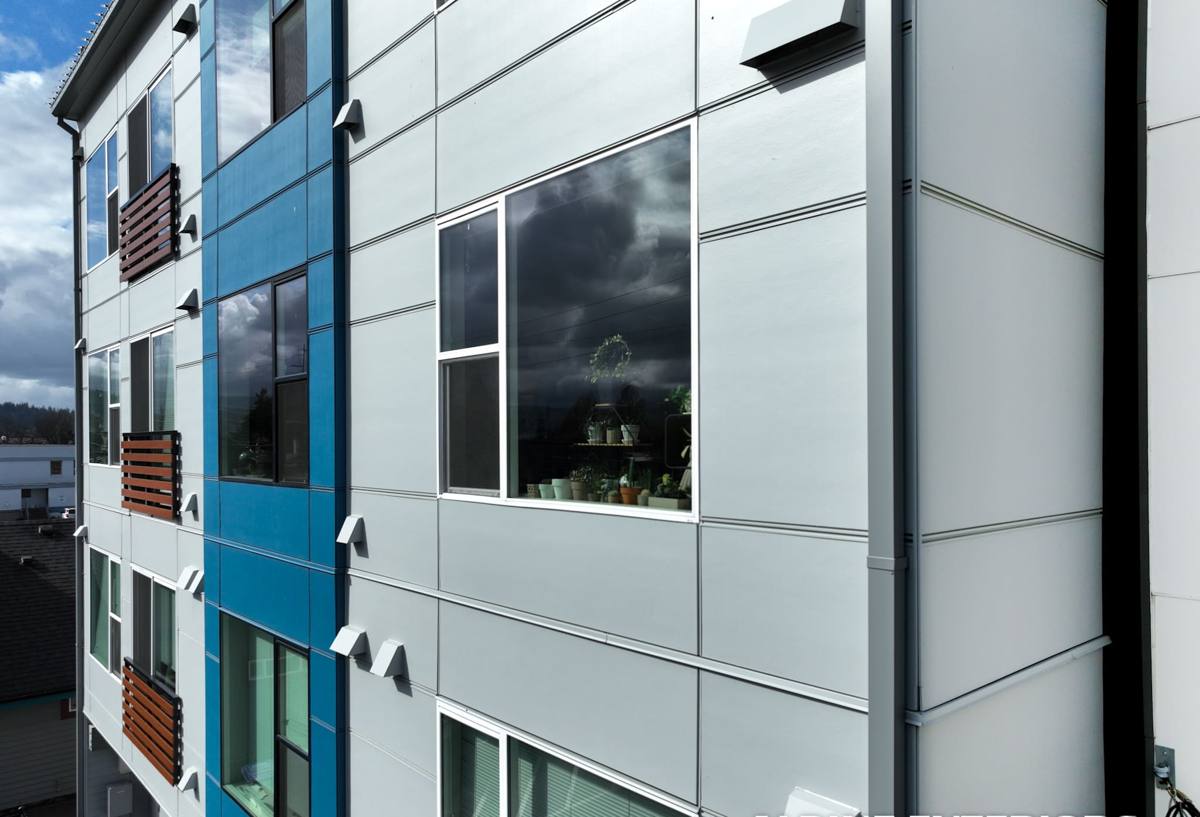
What Salt Air, Driving Rain, and Moss Do to Siding
Three things define the climate load on a Sunnyland home's exterior, and they compound each other.
Salt Air Off the Bay
Bellingham sits directly on salt water, and airborne salt travels further inland than most people expect, especially on windy days. Salt accelerates corrosion on fasteners, trim, and any metal flashing components, and it degrades cheap paint and coatings faster than plain rain does. Siding materials and finishes that aren't rated for coastal exposure tend to chalk, fade, or fail at the fastener points years ahead of schedule.
Driving Rain
Whatcom County doesn't just get a lot of rain — it gets wind-driven rain that hits siding at an angle instead of running straight down. That matters because it pushes water into laps, seams, butt joints, and anywhere flashing or caulking is even slightly off. A siding system with generous rain-screen behavior and a manufacturer-specified installation method holds up to this. A system installed loosely, or a material that swells and wicks moisture at the edges, doesn't.
A Long Moss Season
Many Sunnyland lots have real tree canopy, which is part of what makes the neighborhood pleasant to live in — but shade means siding stays damp longer after every rain, and damp siding is exactly what moss, algae, and mildew need to take hold. Once organic growth establishes on a wall surface, it holds even more moisture against the material underneath, which becomes a slow, self-feeding cycle on wood-based or poorly finished products.
None of these three factors is dramatic on its own. Together, over years, they're why we see so much premature siding failure on older Sunnyland homes — and why the material and installation method matter more here than in most parts of the country.
Why We Install Only James Hardie Fiber Cement
We don't install LP SmartSide, vinyl siding, Cemplank, Allura, or primed wood species like spruce or cedar. That's a deliberate standard, not an oversight, and it comes down to what actually holds up under the conditions described above.
Vinyl siding is inexpensive and low-maintenance in mild climates, but it expands and contracts significantly with temperature swings, and driving rain can find its way behind loose panels over time. Wood-based composite products like LP SmartSide use engineered wood strand technology that performs reasonably well when the factory coating and edge sealing stay intact, but any breach — a saw cut left unsealed, a fastener installed wrong, water intrusion at a trim joint — exposes wood fiber to a genuinely wet climate, and wood fiber that gets and stays wet doesn't recover. Primed cedar and spruce require an owner to keep up with recoating on a schedule most people don't actually maintain, and any gap in that maintenance shows up fast in a climate like this one.
James Hardie fiber cement is cement, sand, and cellulose fiber — it doesn't rot, it isn't a food source for moss or mildew the way wood is, and it's non-combustible. The ColorPlus factory finish is baked on under controlled conditions rather than field-applied, which means better adhesion and a longer service life than site-painted siding, and Hardie backs the product with a strong transferable warranty. None of this means fiber cement is magic — it still has to be installed correctly, with the right gaps, fasteners, and flashing details, or it will fail just like anything else. But the underlying material gives a Sunnyland home a real advantage against salt, rain, and moss that the alternatives don't.
What a Correct Fiber Cement Installation Involves
Fiber cement siding is only as good as the installation behind it. The material itself resists moisture and organic growth, but the assembly — house wrap, flashing, fastening, and gaps — is what actually keeps a wall dry. On a climate like Bellingham's, cutting corners here shows up within a few wet seasons, not decades.
The Water-Resistive Barrier
Every wall gets a continuous water-resistive barrier underneath the siding, lapped correctly at seams and properly integrated with window and door flashing so water that does get behind the cladding has a path down and out instead of a place to pool.
Flashing at Every Penetration
Windows, doors, hose bibs, light fixtures, and vents all need flashing detailed to shed water outward, not into the wall assembly. This is the single most common place we find failures on older homes we re-side in Sunnyland — flashing that was missing, undersized, or installed backward.
Proper Gaps and Clearances
Hardie's installation specifications call for specific gaps between siding and trim, siding and roofing, and siding and the ground or hard surfaces. Those gaps aren't cosmetic — they let the material dry out after rain instead of sitting saturated at the bottom edge, which is exactly the spot where shaded, tree-covered lots stay damp longest.
Fastening
Fasteners have to be corrosion-resistant, sized correctly, and driven to Hardie's specification — not too deep, not too shallow, in the right location on the board. Given the salt exposure this close to the bay, we don't cut corners on fastener quality.
Choosing the Right Hardie Line and Style
James Hardie makes several siding profiles and a climate-specific product line, and the right choice depends on the home's style and exposure, not just personal taste.
HardiePlank Lap Siding
The most common choice for traditional Sunnyland homes — a clean, classic horizontal look available in multiple textures and widths.
HardieShingle
A good fit for homes going for a Craftsman or cottage look, and a common match for the older housing stock found throughout this neighborhood.
HardiePanel
Vertical panel siding, often used as an accent on gables or modern-style additions.
HZ5 Climate Engineering
Hardie engineers its products for specific climate zones, and the Pacific Northwest falls into the HZ5 category — built to handle sustained moisture exposure better than a product engineered for a dry region. This is one more reason we don't substitute a cheaper, non-climate-rated product on a Whatcom County home.
Cost Factors for a Sunnyland Siding Project
Every home is different, so we don't quote firm numbers without seeing the house, but these are the factors that actually move the price on a Sunnyland fiber cement job.
| Factor | Why It Matters Here |
|---|---|
| Extent of existing damage | Older homes with wood-based siding that's been absorbing moisture for years often need sheathing repair, not just new siding, once the old material comes off. |
| Trim and detail complexity | Homes with more corners, dormers, and window trim take more flashing and cutting labor than a simple rectangular footprint. |
| Siding profile chosen | Shingle-style siding generally runs higher in labor than lap siding due to the added installation time per square foot. |
| Access and lot conditions | Mature trees and tight side-yards common in Sunnyland can affect staging, scaffolding, and cleanup time. |
| Color and finish | Factory-applied ColorPlus finishes cost more upfront than field-painted color but remove a recurring maintenance expense. |
Our Process for Sunnyland Homes
We work in this neighborhood regularly, and that familiarity actually changes how a job goes. We already know the general housing stock, the moisture patterns from tree-covered lots, and the kind of siding failures that show up on homes of a certain age around here — so the inspection isn't guesswork.
- An in-person walkaround to assess existing siding, trim, and any visible moisture or rot damage.
- A written scope covering material selection, profile, color, and any sheathing or flashing repairs needed underneath.
- Removal of old siding and inspection of the wall assembly before anything new goes up — this step catches hidden moisture damage before it gets covered over again.
- Installation of water-resistive barrier, flashing, and James Hardie fiber cement to manufacturer specification.
- A final walkthrough so you know exactly what was done and what maintenance, if any, to expect going forward.
Hiring a crew that already works in Sunnyland matters for reasons beyond convenience. A crew unfamiliar with this specific mix of salt exposure, tree shade, and driving rain is more likely to treat this as a generic siding job and miss the details — the flashing at a shaded north wall, the extra clearance needed above grade — that actually determine whether the siding lasts.
Living With Fiber Cement Siding in a Wet, Mossy Climate
Correctly installed James Hardie siding needs very little from a homeowner, but it's not zero-maintenance, and knowing what to watch for catches small issues before they become expensive ones.
- Rinse siding periodically to remove pollen, dust, and the start of algae growth, especially on shaded, north- or west-facing walls.
- Watch for moss or dark streaking at the bottom courses or anywhere tree branches overhang the roofline.
- Check caulking at trim joints and window edges every year or two — caulk is a maintenance item even on a system that doesn't rely on it structurally.
- Keep gutters clear so overflow isn't running down the wall face during heavy storms.
- Trim back vegetation that's holding shade and moisture directly against the siding.
- Repaint touch-ups only with products compatible with ColorPlus finishes, and only where the factory coating has been damaged.
If you're seeing soft spots, visible swelling, or bubbling paint on your current siding, that's usually moisture that's already gotten in — worth having looked at sooner rather than later.
Get a Free Estimate for Your Sunnyland Home
If your siding is showing its age, or you just want an honest read on whether it's holding up the way it should, we're happy to take a look. The estimate is free, there's no pressure attached to it, and you'll walk away with a clear picture of what your home actually needs — use the form below to get started.