 Bellingham
 Siding Built for What York Homes Actually Deal With
York is one of the established residential pockets close to the heart of Bellingham, and homes here carry the same exposure that shapes siding decisions across Whatcom County: salt-tinged air moving in off the water, wind-driven rain that hits walls sideways instead of falling straight down, and a moss and mildew season that barely takes a break most years. Siding here isn't just a cosmetic layer — it's the first line of defense against a climate that tests seams, fasteners, and joints on a near-constant basis.
We install James Hardie fiber cement siding exclusively, and for a neighborhood like York, that's a deliberate match rather than a default. Older housing stock, mature tree cover on some lots, and a mix of sun-exposed and shaded elevations all mean different walls on the same house can be dealing with different problems at once. Getting the material and the installation right matters more here than it does on a newer build in a drier part of the state.
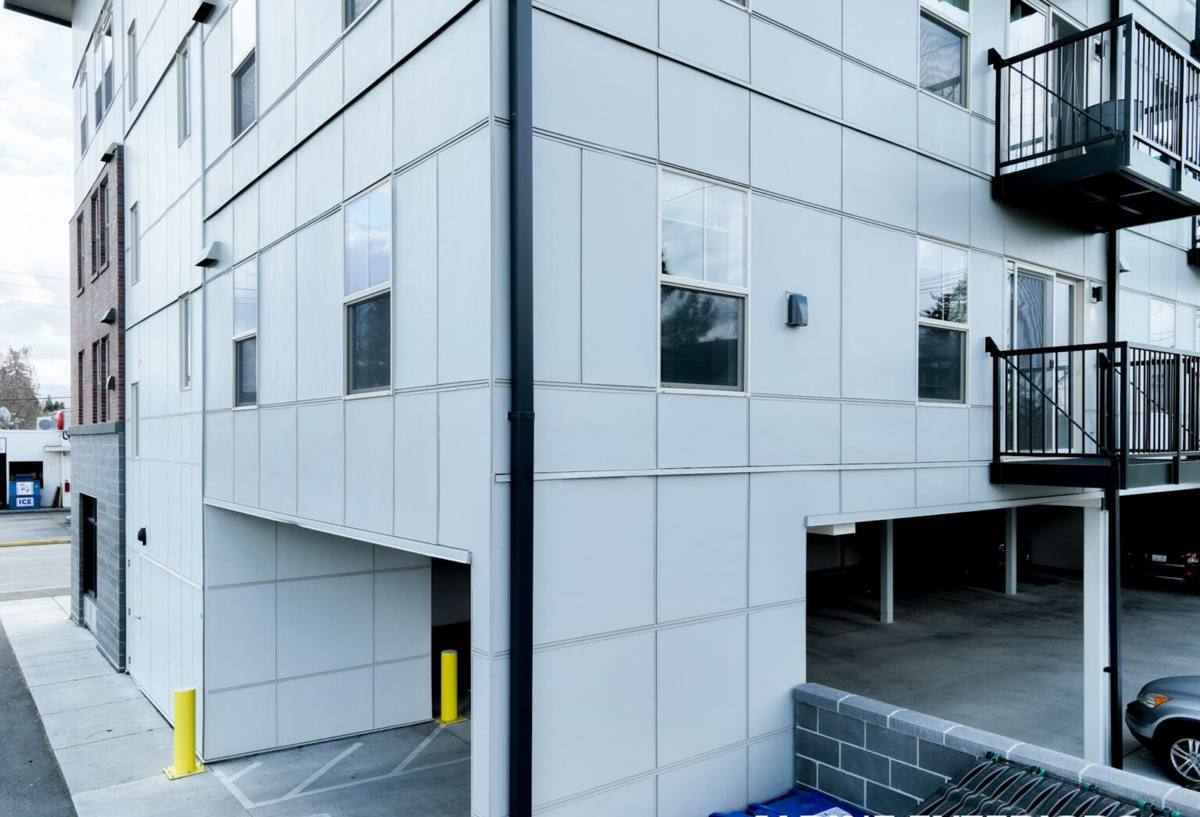
What Bellingham's Climate Does to Siding Over Time
Salt Air and Corrosion
Proximity to the water means airborne salt is a constant, low-level presence on exterior surfaces. It accelerates corrosion in fasteners, flashing, and any exposed metal trim. Once a fastener starts to corrode, it loses holding strength and can open a small gap around the point of penetration — a direct path for water to start working its way behind the siding.
Driving Rain
Rain in this part of Washington rarely falls straight down during a real storm. Wind pushes it sideways into laps, corners, and trim lines that were only designed to shed water moving downward. Walls facing the prevailing weather take the brunt of this and are usually the first to show wear — cracked caulk, staining, or early paint failure on lower-quality materials.
A Long Moss Season
Mild, damp conditions keep moss and mildew active across most of the year, especially on shaded and north-facing walls, and on any siding sitting close to mature landscaping. Organic growth isn't just a look problem — it holds moisture against the siding surface far longer than it would otherwise sit there, extending every wet cycle the material has to survive.
Why We Only Install James Hardie in This Neighborhood
James Hardie fiber cement is made from cement, sand, and cellulose fiber rather than a wood or wood-composite core. That composition makes it dimensionally stable — it doesn't swell, cup, or delaminate the way wood-based products can after repeated wet-dry cycling, and it's non-combustible, which matters to a lot of homeowners regardless of climate. The ColorPlus factory-applied finish is baked on under controlled conditions rather than field-painted, which gives it more consistent coverage and better resistance to fading and chipping than a site-applied coat.
We don't install LP SmartSide, vinyl, Cemplank, Allura, primed spruce, or cedar. Each of those products has real strengths, and we're not going to pretend otherwise — but in a marine climate that pushes moisture at walls from every direction, we'd rather stand behind one system we know performs and that we can install to a consistent standard, than juggle several products with different moisture tolerances, expansion behavior, and warranty terms. That standardization is also what lets our crews get faster and more consistent at the details that actually determine how long an installation lasts.
James Hardie Product Lines for This Climate
| Product | Best Use | Why It Fits York |
|---|---|---|
| HardiePlank lap siding (HZ10) | Most common wall application | Engineered for wetter, colder climate zones; handles the moisture cycling typical here |
| HardiePanel vertical siding | Accent walls, gables, modern facades | Clean lines with fewer horizontal laps for water to work into |
| HardieTrim boards | Corners, window and door trim, fascia | Dimensionally stable trim that won't rot or separate from the wall like wood trim can |
| HardieShingle siding | Accent gables, craftsman-style detailing | Matches older Bellingham architectural styles without the maintenance of real cedar shingle |
What a Correct Installation Actually Involves
The material is only half of what determines how a siding job performs over the next 20-plus years. Installation detailing is the other half, and it's largely invisible once the job is finished — which is exactly why it's worth understanding before you hire.
- A continuous, properly lapped water-resistive barrier behind the siding, with no gaps or reversed laps
- Flashing at every window, door, and wall penetration, sequenced correctly with the house wrap so water is directed out and down
- Correct fastener type, spacing, and embedment depth for the specific Hardie product being installed
- Properly sealed and factory- or field-primed cut edges, per Hardie's installation requirements
- A drainage gap or rainscreen detail in applications where incidental moisture needs somewhere to go rather than sitting against the sheathing
- Correct clearance between the bottom of the siding and grade, decks, patios, or roof lines where water tends to collect
Skipping any one of these doesn't usually cause an immediate problem. It shows up two, five, or ten years later as a soft spot, a stain, or a section of siding failing faster than the rest of the house — exactly the kind of slow, hidden failure this climate is good at finding.
Our Process on a York Job
1. Walk-Through and Assessment
We start by walking the exterior with you, looking at current siding condition, sun and shade exposure on each elevation, drainage around the foundation, and any trouble spots — trim, corners, or areas near grade that tend to hold moisture. On an older York home, this also means checking what's actually behind the existing siding before we quote anything.
2. Written Scope and Estimate
You get a clear breakdown of what's included — material, trim, flashing details, and labor — so there's no ambiguity about what's being installed and how. This is also where we talk through ColorPlus color options and product line choices for your specific walls.
3. Tear-Off and Substrate Check
Once work starts, we remove the old siding and inspect the sheathing and water-resistive barrier underneath. Any soft or water-damaged sheathing gets addressed before new siding goes on — installing over a compromised substrate just locks a problem behind a new wall.
4. Installation to Manufacturer Spec
Flashing, house wrap, fastening, and cut-edge sealing are all done to James Hardie's published installation requirements, not a shortcut version of them. This is also what keeps the manufacturer's warranty intact if you ever need to make a claim.
5. Final Walk-Through
We walk the finished job with you, point out what was done and why, and make sure you know what routine maintenance — if any — the specific product and color require going forward.
Cost Factors Specific to a York Re-Side
| Factor | Why It Affects Cost |
|---|---|
| Current siding material | Removing wood or fiber cement generally takes more labor than removing vinyl |
| Sheathing condition | Water-damaged sheathing found during tear-off adds repair scope before new siding goes on |
| Home size and wall complexity | More corners, gables, and trim details mean more cutting, fitting, and flashing work |
| Product line and profile | HardiePanel, HardiePlank, and HardieShingle carry different material and labor costs |
| Color selection | Standard ColorPlus colors versus premium or custom options can shift material pricing |
| Access and site conditions | Mature landscaping, tight lot lines, or multi-story walls can affect staging and labor time |
Signs a York Home's Siding Needs Attention
- Persistent moss or mildew staining that returns shortly after cleaning
- Cracked, peeling, or bubbling paint, especially on wood or engineered wood siding
- Soft spots or visible warping when you press gently on a panel or board
- Gaps opening up at seams, corners, or trim joints
- Rust streaking below fasteners or metal trim
- Musty odors or soft drywall on interior walls that back onto exterior siding
Any one of these on its own isn't necessarily an emergency, but together — or left unaddressed for a season or two in this climate — they tend to compound quickly.
Why Hiring a Crew That Already Works This Area Matters
A contractor who regularly works York and the surrounding Bellingham neighborhoods already knows which elevations on a given block face the worst wind-driven rain, where moss tends to establish first, and how older homes in the area were typically built and flashed. That local pattern recognition shortens the assessment phase and helps catch problems that a crew unfamiliar with the area might miss. It also means faster response if something needs a look after the job is done — you're not waiting on a company that has to drive in from out of the county.
If your York home's siding is showing its age, or you're planning ahead for a replacement and want an honest read on what it actually needs, we're glad to take a look. Reach out below for a free, no-pressure estimate.