 Bellingham
 Window Installation Built for Blaine's Coastal Climate
Blaine sits at the northern edge of Whatcom County, right on the water and close enough to the Canadian border that the weather off the Strait feels different from what homes further inland deal with. Salt-laden air, wind-driven rain that comes in sideways, and a long gray moss season put more stress on window frames, seals, and trim than most homeowners realize until something starts to fail. A window that's rated fine for a dry inland climate can still underperform here if it isn't installed with Blaine's actual conditions in mind.
This page is about one job, done right, in one place: window installation for homes in Blaine. Not a general overview of windows everywhere — the specific problems local homes run into, what a correct installation actually requires here, and why hiring a crew that already works this stretch of coastline matters more than it might in a milder climate.
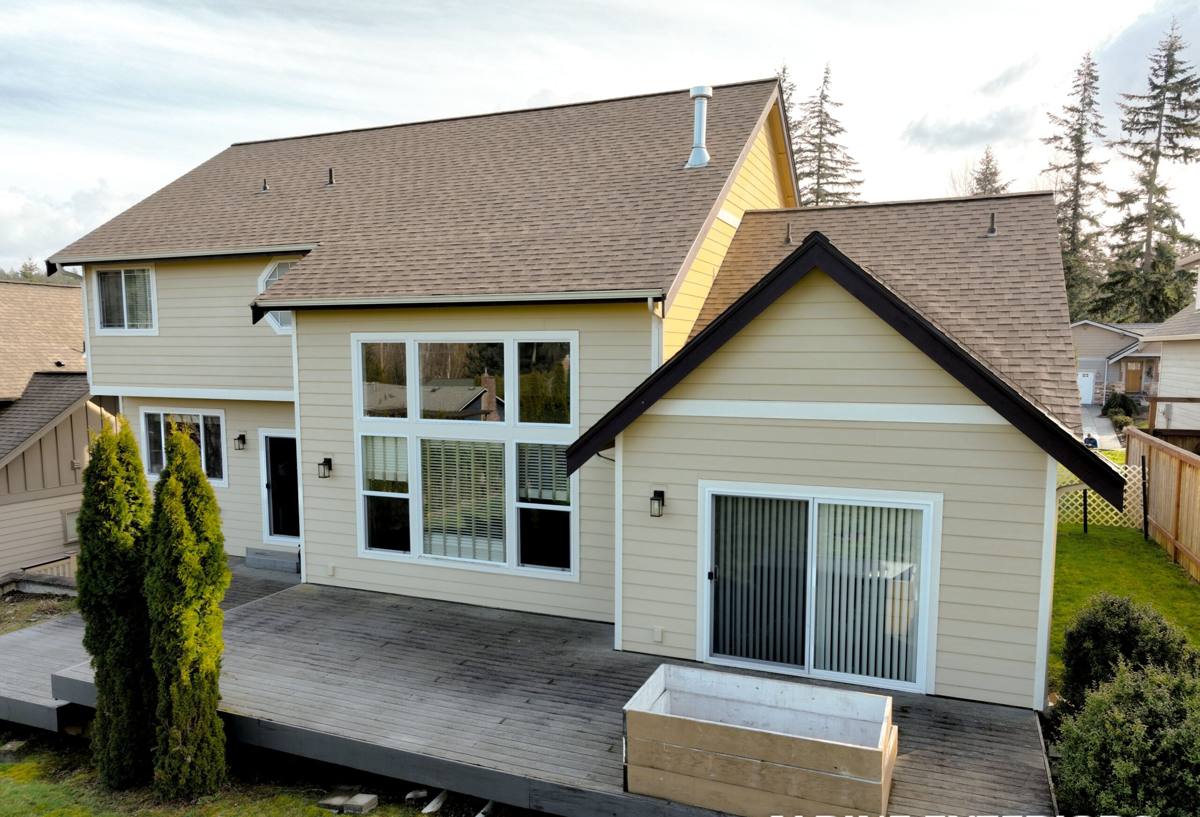
How Salt Air, Rain, and Moss Season Wear Down Windows
Salt Air and Corrosion
Homes near the water pick up airborne salt that settles on window hardware, screens, and metal components. Over years, that salt accelerates corrosion on lower-grade fasteners, hinges, and cranks, and it can dull or pit finishes on frames that weren't built to handle a marine environment. It's a slow problem, which is exactly why it gets missed — by the time hardware is visibly corroded, the window has usually been struggling for a while.
Wind-Driven Rain
Storms coming off the water don't just fall straight down — they push rain horizontally into siding and window openings under real pressure. A window that's caulked well but flashed poorly can still leak, because the water is being driven into gaps the caulk alone can't hold back. This is one of the most common causes of hidden water damage we see: not a bad window, but a window opening that wasn't built to shed water the way this climate demands.
Moss, Shade, and Trapped Moisture
Whatcom County's wet season runs long, and shaded, north-facing walls stay damp for months at a stretch. Moss and mildew take hold on sills, trim, and any spot where water sits instead of draining. Trapped moisture around a window opening doesn't just look bad — it's often the first sign that water is getting behind the trim and into framing that's much more expensive to fix than the window itself.
Signs It's Time for New Windows
Most Blaine homeowners don't replace windows on a schedule — they replace them when something starts going wrong. Here's what we'd want you to watch for:
- Visible condensation or fogging between panes (a sign the seal has failed)
- Drafts you can feel near the frame even when the window is fully closed and locked
- Wood trim or sills that feel soft, spongy, or show dark staining
- Windows that are difficult to open, close, or lock — often a sign the frame has shifted or swollen
- Paint or finish peeling and bubbling around the window opening, not just on the sash
- Rising heating bills with no other clear explanation
- Moss or persistent green growth building up on the sill or lower trim
Any one of these on its own isn't necessarily an emergency, but two or three together usually mean the window opening — not just the window — needs attention.
What Correct Window Installation Actually Involves
Removal and Opening Inspection
Pulling the old window is the easy part. The part that actually determines whether the new window lasts is what happens once the opening is exposed — checking the sheathing and framing underneath for rot, soft spots, or old water damage before anything new goes in. Installing a new window over a compromised opening just hides the problem behind fresh trim.
Flashing and Water Management
This is the step that matters most in a climate like Blaine's. Proper flashing directs any water that gets past the exterior finish back out and away from the framing, using a sequenced layering of flashing tape and water-resistive barrier so water always drains down and out, never sideways into the wall. Skipping or rushing this step is the single most common reason a "new" window still leaks a few winters later.
Insulation and Air Sealing
The gap between the window frame and the rough opening needs to be filled with the right material — not stuffed with excess fiberglass, which can actually hold moisture against the frame. Done correctly, this step cuts drafts and keeps the wall assembly dry.
Exterior Sealing and Finish Work
Caulking and trim go on last, and only after everything underneath is confirmed dry and properly layered. Caulk is a finish detail, not a substitute for proper flashing — a common shortcut that looks fine for a season or two before it doesn't.
Choosing Window Materials for a Marine Climate
Material choice matters more here than in a dry inland climate, because whatever you pick has to hold up to salt air and constant moisture exposure, not just look good on install day.
| Material | How It Handles Salt Air & Moisture | Maintenance |
|---|---|---|
| Vinyl | Won't corrode or rot; performs consistently in coastal air | Low — occasional cleaning |
| Fiberglass | Very stable in temperature swings and moisture; strong long-term option | Low |
| Wood-clad | Attractive, but exposed wood or damaged cladding is vulnerable to the wet season | Moderate to high |
| Aluminum | Durable but conducts cold and can corrode without a marine-grade finish | Moderate |
We're upfront with homeowners about trade-offs rather than pushing one product for every situation. Wood-clad windows can be the right call for a specific look, but they need a homeowner willing to keep up with maintenance in a climate that doesn't forgive neglect. Vinyl and fiberglass tend to be the lower-maintenance choice for most Blaine homes, especially anything close to the water.
Cost Factors for Window Installation in Blaine
There's no honest flat price for window installation — too much depends on the specifics of the home. What we can tell you is what actually drives the cost up or down:
| Factor | Why It Affects Cost |
|---|---|
| Full-frame vs. insert replacement | Full-frame involves more labor but is often necessary if the opening has damage |
| Number of windows | Per-window cost typically drops as the total project size grows |
| Existing water damage | Rot or soft framing found during removal adds repair time before installation |
| Window size and configuration | Large picture windows, bays, or custom shapes cost more than standard sizes |
| Material and glass package | Frame material and glass options (double vs. triple pane, coatings) shift price |
| Trim and finish work | Matching existing trim profiles or repainting adds labor beyond the window itself |
We'd rather walk your specific windows and give you real numbers than quote a price range that doesn't mean much until we've actually seen the openings.
Our Process From Estimate to Final Walkthrough
1. On-Site Assessment
We look at each window opening, not just the glass — checking framing, existing flashing, and any signs of past water intrusion before recommending anything.
2. Straightforward Estimate
You get a clear breakdown of scope, materials, and cost, including flagging any opening that looks like it may need repair work once we're inside the wall.
3. Careful Removal and Installation
Old windows come out, openings get inspected and, if needed, repaired, then new windows go in with proper flashing, insulation, and sealing — in that order, every time.
4. Final Check and Walkthrough
Before we call the job done, we test operation, check seals, and walk the exterior finish work with you so you know exactly what was done and why.
Why Hire a Crew That Already Works in Blaine
A contractor who mostly works drier, inland areas can install a window that's technically fine and still have it leak here within a few winters, simply because they're not used to building in this much sustained moisture and wind-driven rain. Crews who work Blaine regularly know to flash more conservatively, choose hardware that won't corrode in salt air, and recognize moisture damage in framing before it becomes a bigger repair. That local pattern recognition is hard to substitute for, no matter how good the product is.
Keeping New Windows Performing Through Moss Season
A correct installation is most of the battle, but a little upkeep protects that investment through Whatcom County's wet months. Keep sills and tracks clear of debris where moss and algae like to start, check that exterior caulk lines stay intact year to year, and make sure nearby gutters and downspouts are actually directing water away from window openings rather than dumping it against the wall. None of this is complicated, but it's the difference between windows that perform for decades and ones that start showing problems again in five or six years.
If you're seeing drafts, fogged glass, or moisture trouble around your windows — or you're just planning ahead for a home near the water — we're glad to come take a look. Estimates are free and there's no pressure to move forward; we'll tell you honestly what your windows actually need.