 Bellingham
 Cordata's Roofs Face a Specific Kind of Wear
North Bellingham sits close enough to the water that salt-laden air is a daily fact of life for homes in the Cordata neighborhood, and that air does more to a roof than most homeowners realize. Combined with the driving, wind-pushed rain that rolls in off Bellingham Bay and the Strait of Georgia, and the long, damp moss season that stretches from fall through spring in Whatcom County, a roof here is under near-constant low-grade stress. It's rarely one dramatic storm that takes out a Cordata roof. It's years of moisture finding small openings, moss holding water against shingles, and salt air accelerating the breakdown of metal fasteners and flashing.
That means a roof replacement in this area isn't just about swapping old shingles for new ones. It's about building an assembly that's specifically suited to sustained moisture exposure, not just occasional heavy rain. A roof designed for a drier climate, or installed by a crew unfamiliar with how Whatcom County weather behaves over a full year, tends to show problems early — usually moss regrowth, soft decking, or leaks at flashing points within the first few years.
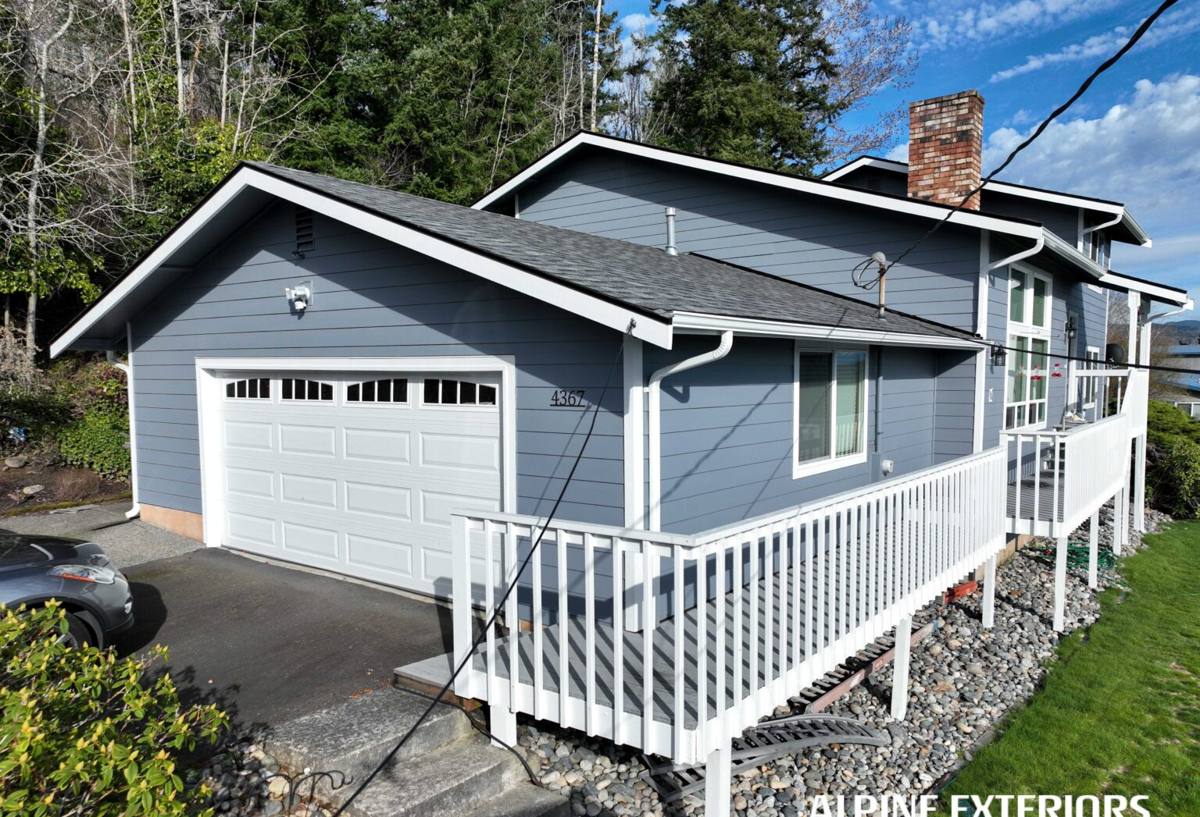
Signs Your Cordata Home Needs Replacement, Not Another Patch
Repairs make sense when a roof has isolated damage and years of usable life left. Replacement makes sense when the underlying materials are worn out everywhere, even if the visible damage looks localized. Here's how to tell the difference:
- Granule loss across most of the roof, not just one slope — a sign the asphalt itself is aging out, not just weathering unevenly.
- Moss that returns within a season or two of cleaning, even after treatment — often a sign the roof surface has degraded enough to hold moisture rather than shed it.
- Soft or spongy decking felt underfoot during an inspection, indicating water has been getting through for some time.
- Daylight or staining in the attic near valleys, chimneys, or vents, especially after a wind-driven rain event.
- Curling, cupping, or cracked shingles spread across multiple areas rather than one damaged section.
- A roof over 20-25 years old (for standard asphalt composition) that hasn't had major work — age alone becomes the deciding factor once a roof has weathered that many wet seasons.
A single repair-worthy issue doesn't mean replacement. But when several of these show up together, patching becomes a short-term fix on a roof that's already failing as a system.
What a Correct Roof Replacement Involves
A roof replacement done right is a full system rebuild, not a surface-level swap. Cutting corners on any of these steps is exactly how a new-looking roof ends up with moisture problems within a few years in a climate like this one.
Tear-Off and Deck Inspection
Old roofing material comes off completely so the decking underneath can be inspected. Any plywood or OSB that's soft, delaminated, or water-stained gets replaced before anything new goes down. Skipping this step to save time is one of the most common causes of early roof failure, because new shingles over compromised decking won't hold fasteners properly and won't stay flat.
Underlayment Built for Wet Climates
Given how much of the year Whatcom County spends under rain, the underlayment layer matters more here than in drier regions. A synthetic or self-adhered underlayment, with ice-and-water shield at eaves, valleys, and other vulnerable points, gives the roof a real second line of defense if wind-driven rain gets past the shingles.
Flashing at Every Transition
Chimneys, skylights, wall intersections, and roof valleys are where leaks actually start — not the open field of a roof. New flashing, properly lapped and sealed at every one of these points, is not optional. Reusing old flashing to save a few hours of labor is a shortcut that shows up as a leak later.
Ventilation That Matches the Roof
Balanced intake and exhaust ventilation keeps the attic space dry and temperature-stable, which slows moss growth from underneath and prevents condensation from forming on the underside of the decking. A roof replacement is the right time to correct ventilation that was never sized properly to begin with.
Choosing the Right Roofing Material for This Climate
There's no single "best" roofing material — the right choice depends on budget, roof pitch, how long you plan to stay in the home, and how much long-term maintenance you're willing to do. Here's how the common options compare for a home in this climate:
| Material | Typical Lifespan | Moss & Moisture Behavior | Maintenance |
|---|---|---|---|
| Asphalt composition shingle | 20-30 years | Prone to moss without algae-resistant granules; performs well with proper ventilation | Periodic moss treatment and gutter care |
| Architectural/laminate shingle | 25-30+ years | Better moisture shedding due to thicker profile; algae-resistant options recommended here | Low to moderate |
| Metal roofing | 40-50+ years | Sheds water and resists moss well; salt-air exposure means fastener and coating quality matter | Low, but coastal-grade fasteners recommended |
| Synthetic/composite shingle | 30-50 years | Resists moisture absorption; performance varies by manufacturer | Low to moderate |
For most Cordata homes, an architectural asphalt shingle with algae-resistant granules offers the best balance of upfront cost and moss resistance. Homeowners planning to stay long-term, or who are tired of moss maintenance altogether, often find metal roofing pays for itself in reduced upkeep, provided the fasteners and flashing are rated for coastal, salt-air conditions rather than generic hardware.
How We Handle Moss and Moisture Long-Term
Replacing a roof without addressing why the old one grew moss in the first place just resets the clock on the same problem. Moss needs shade, moisture, and organic debris to take hold — conditions that are common on north-facing slopes and under tree cover throughout Bellingham. A few things make a real difference at the replacement stage:
- Installing zinc or copper strips near the ridge on shaded slopes, which release trace metals that inhibit moss growth as rain washes over them.
- Choosing shingles with algae-resistant granules, which resist the dark streaking and biological growth common in wet, shaded climates.
- Correcting ventilation so the roof deck dries out between rain events instead of staying damp.
- Making sure gutters and downspouts are sized and pitched to move water off the roof quickly, rather than letting it pool near edges and valleys.
None of this eliminates the need for occasional moss cleaning, but it substantially reduces how often and how aggressively it's needed.
Our Roof Replacement Process, Start to Finish
- On-site inspection. We look at the roof, the attic, and the decking condition before quoting anything, so the estimate reflects what your roof actually needs.
- Written estimate. Materials, scope, and pricing are laid out clearly, with options at different price points if you want them.
- Scheduling around weather. Given how much rain this area gets, we plan tear-off and dry-in carefully so your home isn't left exposed longer than necessary.
- Tear-off and deck repair. Old material comes off, decking is inspected, and any damaged sections are replaced.
- Underlayment, flashing, and ventilation installation. This is where the roof's actual moisture resistance gets built — done correctly, it matters more than the shingle brand.
- Shingle or material installation per manufacturer specifications, which also keeps material warranties valid.
- Final walkthrough and cleanup, including a magnetic sweep for stray fasteners and a review of the finished work with you.
What Roof Replacement Costs Depend On
We won't quote a number without seeing the roof, but the main cost drivers are consistent from job to job:
| Factor | Why It Affects Cost |
|---|---|
| Roof size and number of layers to remove | More tear-off labor and disposal, especially if multiple layers exist |
| Roof pitch and accessibility | Steep or hard-to-access roofs require more safety equipment and time |
| Decking condition | Rot or soft spots found during tear-off require replacement before new roofing goes down |
| Material choice | Asphalt, architectural shingle, metal, and composite options carry different material and labor costs |
| Number of penetrations | Chimneys, skylights, and vents each require additional flashing work |
| Ventilation upgrades | Correcting inadequate intake or exhaust adds labor but reduces long-term moisture issues |
A Checklist for Hiring a Roofing Crew in Cordata
Roof replacement is a big investment, and the roofing trade unfortunately attracts its share of underqualified or transient contractors, especially after storm season. Before hiring anyone, confirm the following:
- Current Washington state contractor license and liability insurance, verifiable on request.
- A written estimate that itemizes materials, labor, and disposal — not just a lump-sum number.
- A clear explanation of what happens if decking damage is found once tear-off begins.
- Manufacturer certification if you're choosing a material with a manufacturer-backed warranty, since improper installation can void it.
- A physical local presence, not just a phone number tied to a storm-chasing crew passing through Whatcom County.
- References or examples of completed work in the Bellingham area, so you can gauge familiarity with local conditions.
Why Local Experience in Cordata Matters
A roof replacement is only as good as the crew's understanding of how it needs to perform, not just how it needs to look on installation day. Crews that work regularly in and around Bellingham know which slopes in a given neighborhood tend to hold moss, how much wind-driven rain a roof needs to shed during a typical winter storm, and which flashing details actually hold up under sustained Whatcom County weather rather than just passing a dry-day inspection. That kind of familiarity comes from doing the work here repeatedly, not from a general knowledge of roofing.
It also matters for accountability. A crew based in this area is still around next year and the year after if something needs a look, which is worth more than a marginally lower bid from a contractor with no ongoing presence in the community.
If your roof in Cordata is showing its age, or you just want a straight answer on whether it needs repair or full replacement, we're happy to take a look. Reach out using the form below for a free, no-pressure estimate.