 Bellingham
 Bellingham's Marine Climate Puts Real Demands on Silver Beach Siding
Silver Beach sits inside one of the wettest, dampest stretches of Whatcom County, and the exterior of a home here works harder than siding built for a drier climate ever has to. Salt air off the water, driving rain that comes in sideways during winter storms, and a moss season that can stretch across most of the year all chip away at whatever material is on the wall. Siding that looks fine in a catalog photo can fail quietly here for years before a homeowner ever sees the damage, because the failure usually starts behind the surface, not on it.
That's the backdrop for every siding decision we make on a Silver Beach home. It's not about picking a product that looks good on day one. It's about picking a product and an installation method that can stand up to this specific climate for decades, and installing it the way the manufacturer actually engineered it to be installed.
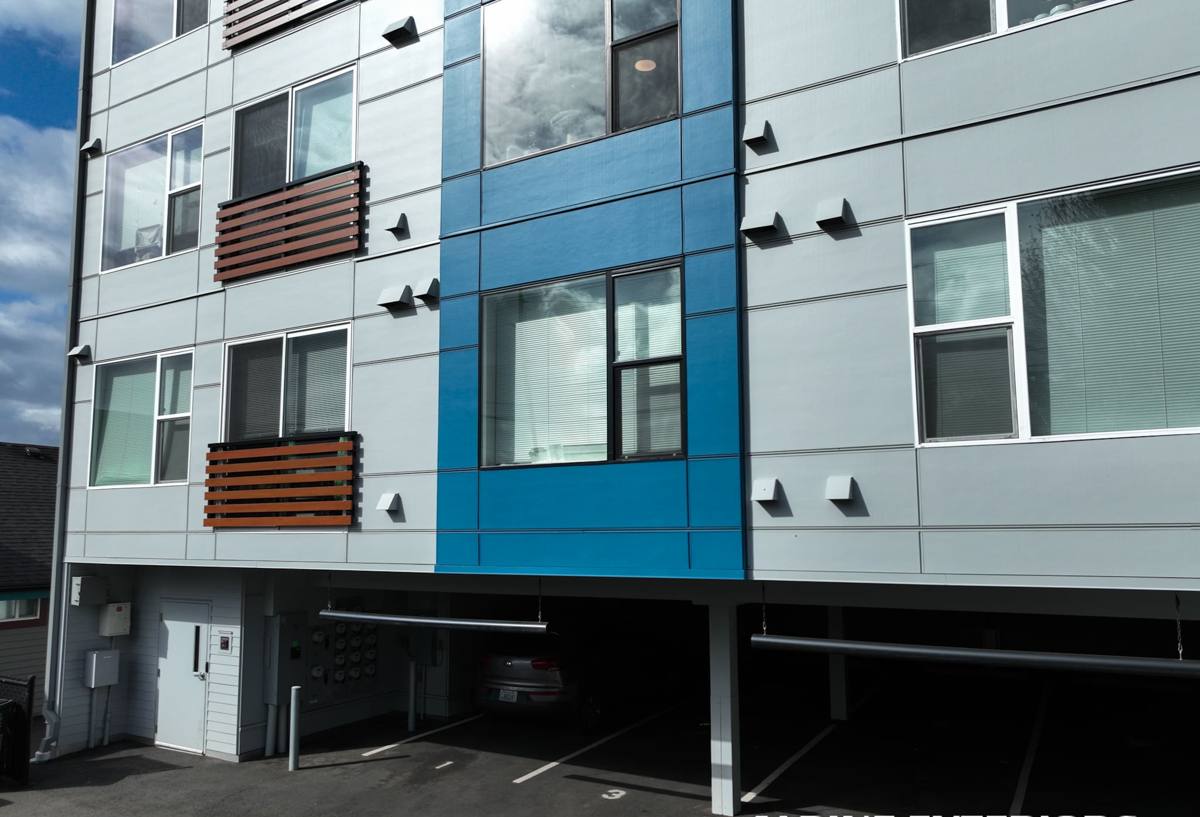
What Salt Air, Rain, and Moss Actually Do to a Siding System
Wind-Driven Rain and Wall Assemblies
Bellingham's weather doesn't just rain straight down. Wind off the water pushes moisture sideways into wall assemblies, which means siding here needs real water-shedding detail — proper laps, correct flashing, and a drainage plane behind the cladding — or water finds its way behind the panels no matter how good the material is. A siding product can be excellent and still fail if it's installed as though it were going on a house in a dry inland climate.
Moss, Algae, and Organic Growth
Shade, humidity, and mild temperatures are exactly what moss and algae need to take hold, and Silver Beach has all three for most of the year. On porous or wood-based siding, organic growth doesn't just sit on the surface — it holds moisture against the material and accelerates rot from the outside in. On the wrong finish, it also just looks bad faster, showing dark streaking and green staining within a few seasons.
Freeze-Thaw and Temperature Swings
Whatcom County doesn't get brutal cold, but it does get repeated cycles of damp cold followed by mild spells, and that freeze-thaw pattern is hard on any siding material that absorbs water. Moisture that gets into a seam, a fastener hole, or an unprotected cut edge expands and contracts with the temperature swings, and over years that's how small gaps become real problems.
Why We Standardized on James Hardie Fiber Cement
We install James Hardie fiber cement siding exclusively. We don't install LP SmartSide, vinyl, Cemplank, Allura, primed spruce, or cedar, and that's a deliberate professional standard, not a sales pitch. Each of those products has real strengths, but each also carries a trade-off that we've decided isn't worth putting on a home in this climate.
Fiber cement is made from cement, sand, and cellulose fibers, which makes it non-combustible and dimensionally stable in a way wood-based and vinyl products can't match. It doesn't swell, rot, or feed organic growth the way wood-based siding can when moisture gets in. Hardie's ColorPlus factory-applied finish is baked on under controlled conditions rather than painted on-site, which gives it better adhesion and UV resistance than field-applied paint — meaning fewer repaint cycles over the life of the siding. And Hardie engineers specific product lines, HardieZone HZ5 and HZ10, for different climate conditions across the country, which matters directly here since the Pacific Northwest's wet, moderate climate calls for different engineering than a hot, dry region does.
None of that makes fiber cement maintenance-free, and we won't tell a homeowner it is. It still needs correct installation, periodic cleaning, and attention to caulking over time. But it gives a Silver Beach home a siding system engineered for exactly the conditions it will face, backed by a manufacturer warranty that holds up if the product itself fails.
What a Correct Installation Involves in Silver Beach
Water Management Comes Before the Siding
The siding panel is the last thing water should ever touch. Correct installation starts with a weather-resistant barrier and properly integrated flashing at every window, door, and penetration, so that any water that does get past the cladding has somewhere to drain instead of sitting against the sheathing. On a home exposed to wind-driven rain off the water, this step matters more than the color or profile of the siding itself.
Gaps, Fastening, and Manufacturer Spec
James Hardie publishes specific clearance, gap, and fastening requirements — clearances from grade, roof lines, and decks; gaps at butt joints; fastener placement and depth. Skipping these details is the single most common way a fiber cement job fails early, and it's invisible to a homeowner until years later when trim starts showing water damage. We install to those specifications every time, not as an upsell but as the baseline for the warranty to mean anything.
Caulk, Paint Touch-Up, and Trim Details
Cut edges, joints, and fastener heads need to be sealed and touched up correctly at the time of installation. In a climate with this much sustained moisture exposure, a skipped caulk line or an unsealed cut edge is where water finds its way in first, long before the field of the siding shows any wear.
Choosing the Right Hardie Product and Color for This Neighborhood
Most homes in this area fall under Hardie's HZ5 zone engineering, built for climates with real moisture exposure rather than extreme heat. Within that, homeowners still have real choices: lap siding in different reveals, panel systems, and shingle-style profiles, each suited to different home styles. Color matters here too, and not just for curb appeal — darker, more saturated ColorPlus finishes tend to show algae and moss staining less readily than flat, light finishes in a shaded, damp lot, which is worth factoring in for homes with heavy tree cover or a north-facing wall that stays damp longer through the day.
How Fiber Cement Compares to Other Siding in a Wet, Mossy Climate
| Material | Moisture & Moss Behavior | Maintenance Burden | Why It's on or off Our Truck |
|---|---|---|---|
| James Hardie Fiber Cement | Doesn't swell or feed rot; factory finish resists staining | Low — periodic cleaning, occasional caulk check | What we install, engineered for this climate zone |
| Engineered Wood (LP SmartSide) | Treated to resist moisture, but wood-based core is still vulnerable if the seal is compromised | Moderate — edge sealing and touch-up are critical over time | We don't install it; long-term moisture sensitivity is a real trade-off in this climate |
| Vinyl Siding | Doesn't rot, but can warp, fade, and trap moisture behind panels if not detailed correctly | Low upfront, but limited repair options once faded or cracked | We don't install it; appearance and repairability don't hold up over a long ownership window |
| Cedar / Primed Wood | Natural material, but highly susceptible to moss, rot, and moisture absorption without constant upkeep | High — regular refinishing and inspection required | We don't install it; the maintenance demand in this climate is significant |
Our Process for Silver Beach Homeowners
- Site walk and moisture assessment. We look at the existing siding, trim, and sheathing for signs of hidden water damage before quoting anything, since that changes the scope of the job.
- Product and color selection. We walk through Hardie's lines and ColorPlus options against your home's exposure — sun, shade, wind direction — so the choice fits the specific lot, not just the style.
- Tear-off and prep. Old siding comes off, the sheathing is inspected and repaired where needed, and the weather-resistant barrier and flashing are installed correctly before a single piece of new siding goes up.
- Installation to manufacturer spec. Gaps, fastening, and clearances follow James Hardie's published requirements, not shortcuts, so the warranty stays intact and the wall assembly actually sheds water the way it's designed to.
- Final walkthrough. We go over the finished work with you, including basic care guidance for a home in this climate, before calling the job done.
Keeping Moss and Moisture From Winning: A Homeowner's Checklist
- Rinse siding gently once or twice a year to keep moss and algae from establishing, especially on shaded or north-facing walls
- Keep gutters clear so overflow isn't running down the siding face during heavy rain events
- Trim back tree branches and shrubs that keep siding shaded and damp longer than the rest of the house
- Check caulk lines at trim, windows, and joints every couple of years and touch up before gaps open up
- Look for dark streaking or soft spots near the bottom courses, a common early sign of moisture getting trapped at grade
- Avoid pressure washing directly into seams or under panels, which can force water past the drainage plane
Why a Crew That Already Works This Neighborhood Matters
Siding installation isn't identical from lot to lot, and a crew that already works in and around Silver Beach has seen how tree cover, wind exposure, and sun patterns vary block to block in a way that affects real decisions — which walls need extra attention to moss resistance, where wind-driven rain hits hardest, how a particular lot's drainage behaves in a heavy winter storm. That's knowledge that comes from doing the work here repeatedly, not from a general contractor passing through the area once.
It also matters for the parts of the job that happen after installation. A local crew is reachable for warranty questions, follow-up caulk touch-ups, or a second opinion years down the road — not a phone number that stops answering once the invoice is paid. For a siding system meant to last decades in a demanding coastal climate, that ongoing accountability is as much a part of the value as the installation itself.
If you're weighing siding options for a home in Silver Beach, we're happy to take a look and walk you through what we're seeing — no pressure, no obligation. Request a free estimate using the form below and we'll schedule a time to assess your home's specific exposure and talk through what correct fiber cement installation would look like for your property.