 Bellingham
 Fairhaven's Climate Is Hard on a Roof — Here's Why
Fairhaven sits close to Bellingham Bay, which means homes here deal with a combination of weather that inland parts of Whatcom County don't see as much of: salt-laden air off the water, wind-driven rain that gets pushed sideways into fascia and flashing, and a long, damp moss season that can run most of the year. Any one of these on its own is manageable. Together, they wear down roofing materials faster than a spec sheet usually accounts for.
Metal roofing holds up well against this combination when it's specified and installed correctly for a coastal environment. It sheds moss and standing water better than most materials, it doesn't absorb moisture the way organic shingles can, and a properly coated panel resists the slow corrosion that salt air causes. The catch is that "metal roofing" isn't one product — the fastener type, coating, and panel profile you choose matter a lot more near the water than they do a few miles inland.
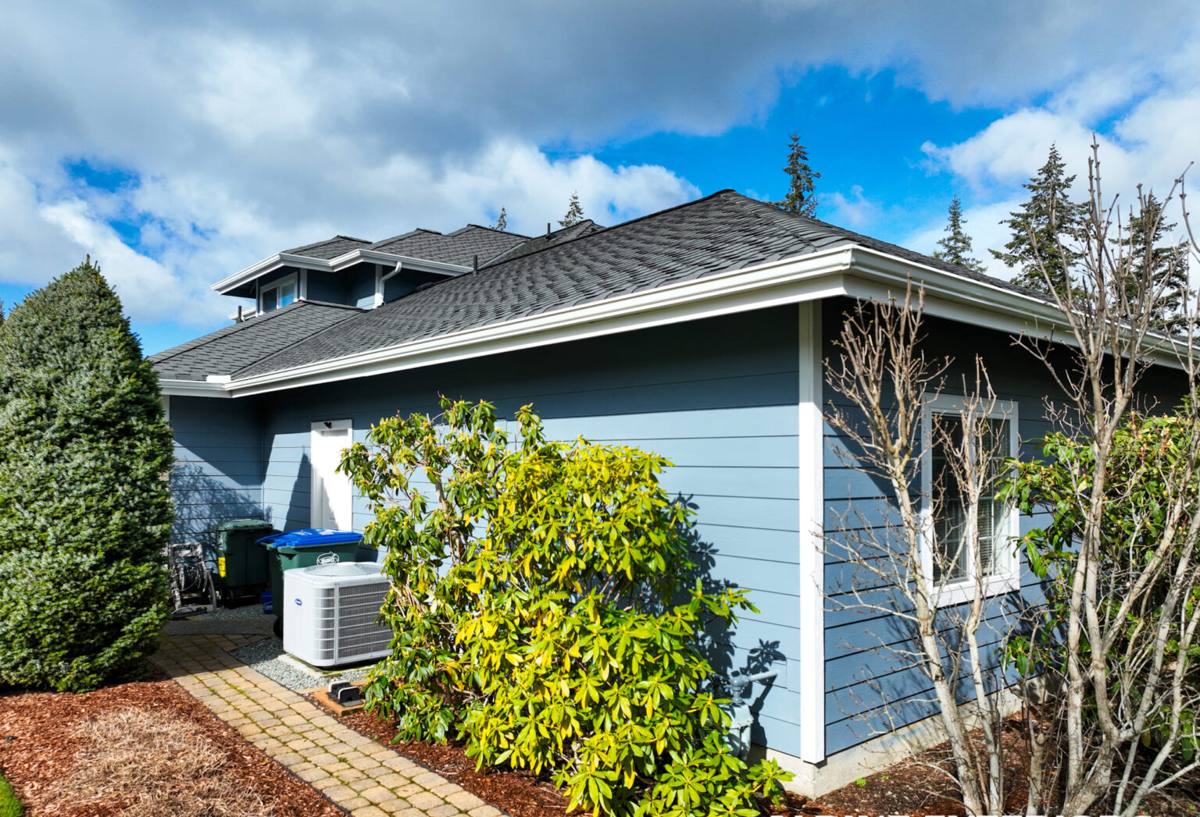
Why Metal Roofing Makes Sense for Fairhaven Homes
Fairhaven is known for its historic character — a mix of older homes and craftsman-style construction alongside newer builds near the waterfront. Metal roofing works across that range. On older homes, a well-chosen panel profile and color can complement the existing architecture rather than fight it. On newer construction, standing seam in particular gives a clean, low-maintenance roofline that holds up to the marine exposure without the upkeep a shake or comp roof would need this close to the bay.
The practical reasons metal makes sense here are straightforward:
- Steep water shed reduces the time moss spores have to take hold compared to lower-pitch or more textured roofing
- Non-organic surface doesn't feed algae and moss growth the way wood or asphalt granules can
- Correctly coated panels resist the corrosive effect of salt air far longer than untreated or mismatched metal
- Long service life reduces how often a roof near the water needs to be touched at all — every penetration and repair is a chance for a leak to start
Choosing the Right Metal Roofing System
Not every metal roof is built the same way, and the differences matter more in a coastal climate than most homeowners expect. The two most common systems we install are standing seam and exposed-fastener panel systems, with stone-coated steel as a third option for homes that want a shake or shingle look with metal's durability underneath.
| System | How It's Fastened | Best Fit |
|---|---|---|
| Standing seam | Concealed clips, no exposed screws through the panel face | Homes near the water where long-term, low-maintenance performance matters most |
| Exposed fastener panel | Screws driven through the panel face with rubber washers | Budget-conscious projects, outbuildings, or lower-exposure roof sections |
| Stone-coated steel | Interlocking panels styled to look like shake or tile | Homes wanting a traditional look with metal's durability |
Exposed-fastener systems cost less up front, but every screw is a potential leak point once the rubber washers age and shrink — and that aging happens faster under UV and salt exposure. Standing seam has no exposed fasteners in the field of the roof, which is a real advantage for a Fairhaven home where the roof takes wind-driven rain from the water side.
Panel Gauge and Coating
Thicker gauge steel or aluminum resists denting and holds its shape better over decades, which matters for wind exposure near the bay. Just as important is the coating system — a quality paint finish over galvanized or Galvalume steel, or a marine-grade finish on aluminum, is what actually stands between the metal and the salt air. We won't install bare or minimally coated panels on a home this close to the water; it's a maintenance and corrosion problem waiting to happen, not a cost savings.
What a Correct Installation Involves
A metal roof is only as good as what's underneath it and how it's flashed. On a Fairhaven project, the details we pay closest attention to are the ones that deal directly with the local climate:
- Underlayment: A self-adhered, high-temperature synthetic underlayment at eaves, valleys, and penetrations, not just felt paper, to guard against wind-driven rain that gets under the panel edges
- Fastener material: Stainless steel or coated fasteners matched to the panel metal, so two dissimilar metals aren't sitting against each other and corroding through galvanic reaction
- Flashing and valleys: Properly formed and sealed at every roof-to-wall, chimney, and valley transition — these are the spots that fail first in driving rain
- Ventilation: Balanced intake and exhaust so moisture from inside the home doesn't condense against the underside of the panels
- Edge and eave detailing: Drip edges and eave flashing sized to handle heavy, sustained rain rather than a quick summer shower
Skipping any one of these doesn't usually cause an immediate problem — it shows up two, five, or ten years later as a leak, corrosion, or a panel that's come loose in a windstorm. That's the trade-off with metal roofing: the material itself is very durable, but it has almost no tolerance for shortcuts in the installation.
Salt Air, Corrosion, and Fastener Choices
Homes near Bellingham Bay deal with a slow, steady corrosion pressure that inland Whatcom County roofs simply don't face. This isn't dramatic — it's a gradual breakdown of coatings and fasteners over years. The two things that matter most for resisting it are the coating quality on the panels themselves and making sure every fastener, flashing piece, and trim component is compatible with the panel metal.
Mixing metals without accounting for galvanic corrosion — for example, the wrong fastener against an aluminum panel, or steel trim against a different alloy — creates a reaction that eats away at the metal from the contact point outward. It's a preventable problem, but only if it's caught before installation, not after the roof starts showing rust streaks.
Moss, Algae, and Drainage in a Wet Climate
Whatcom County's moss season runs long, and Fairhaven's proximity to the water and tree cover in parts of the neighborhood keeps roofs damp for extended stretches. Metal roofing has a real advantage here because moss struggles to root on a smooth, sloped metal surface the way it does on asphalt granules or wood shakes. That said, metal isn't moss-proof in every situation — panels with a lower pitch, heavy debris buildup in valleys, or shaded north-facing sections can still develop growth over time if debris is left to sit.
Good design and correctly sized gutters, valleys, and downspouts matter as much as the panel itself. A roof that sheds water quickly and doesn't trap organic debris in corners and valleys will stay cleaner and last longer with less maintenance, which is exactly what you want on a roof that's otherwise hard to get up on safely.
Our Process for a Fairhaven Metal Roofing Project
- On-site assessment: We look at your existing roof structure, pitch, exposure to wind and water, and any problem areas — valleys, chimneys, skylights — before recommending a system.
- System and material selection: Based on that assessment, we recommend a panel profile, gauge, and coating suited to your home's exposure, not a one-size-fits-all package.
- Written estimate: A clear, itemized estimate so you know what you're paying for and why — materials, tear-off if needed, flashing detail work, and labor.
- Installation: Proper underlayment, flashing, fastening, and ventilation done to the standard the coastal climate actually requires, not the minimum code allows.
- Final walkthrough: We go over the completed roof with you, including what routine maintenance (if any) it will need going forward.
Cost Factors for Metal Roofing in Fairhaven
Metal roofing costs more up front than asphalt shingles, but the gap has narrowed over the years, and the long service life changes the math over time. Rather than quote a flat number that won't fit every home, here's what actually drives the cost on a real project:
| Factor | Why It Matters |
|---|---|
| Roof pitch and complexity | Steep, cut-up roofs with multiple valleys and dormers take more time and material than a simple gable |
| System type | Standing seam runs higher than exposed-fastener panels due to labor and concealed-clip hardware |
| Panel gauge and coating | Heavier gauge and marine-grade coatings cost more but last significantly longer near the water |
| Tear-off and decking condition | Removing old roofing and repairing any damaged sheathing adds labor before the new roof goes on |
| Access and site conditions | Steep lots, limited staging area, or difficult roof access can add time and equipment cost |
We walk through these factors with every homeowner before any work starts, so the estimate reflects your actual roof — not a generic average.
Maintenance Checklist for a Metal Roof Near the Water
One of the appeals of metal roofing is how little routine maintenance it needs compared to other materials — but "little" isn't "none," especially this close to Bellingham Bay. A few times a year, it's worth checking:
- Valleys and gutters for accumulated needles, leaves, and moss debris
- Fastener heads (on exposed-fastener systems) for rust staining or a washer that's starting to shrink or crack
- Flashing around chimneys, vents, and skylights for any sign of separation or sealant failure
- Panel surfaces near the coastline for early rust spots, especially at cut edges or fastener penetrations
- Overhanging branches that keep sections of the roof shaded and damp longer than the rest
Catching a small issue during a seasonal check is a lot cheaper than dealing with a leak that's been working its way into the decking for a year.
Why Hire a Crew That Already Works in Fairhaven
Roofing near the water isn't the same job as roofing a few miles inland, even within the same city. A crew that regularly works Fairhaven and the rest of Bellingham's waterfront-adjacent neighborhoods already knows how to detail flashing for wind-driven rain, which fastener and coating combinations actually hold up against salt air, and how to work around the older framing and rooflines common in this part of town. That's knowledge you don't get from a crew that mostly works subdivisions further from the coast — and it's the difference between a metal roof that looks right for a few years and one that performs correctly for decades.
If you're weighing metal roofing for a home in Fairhaven, we're happy to take a look and walk you through what your specific roof needs — no pressure, no generic sales pitch. Use the form below to request a free estimate.