 Bellingham
 Siding Repair for Columbia's Older Housing Stock
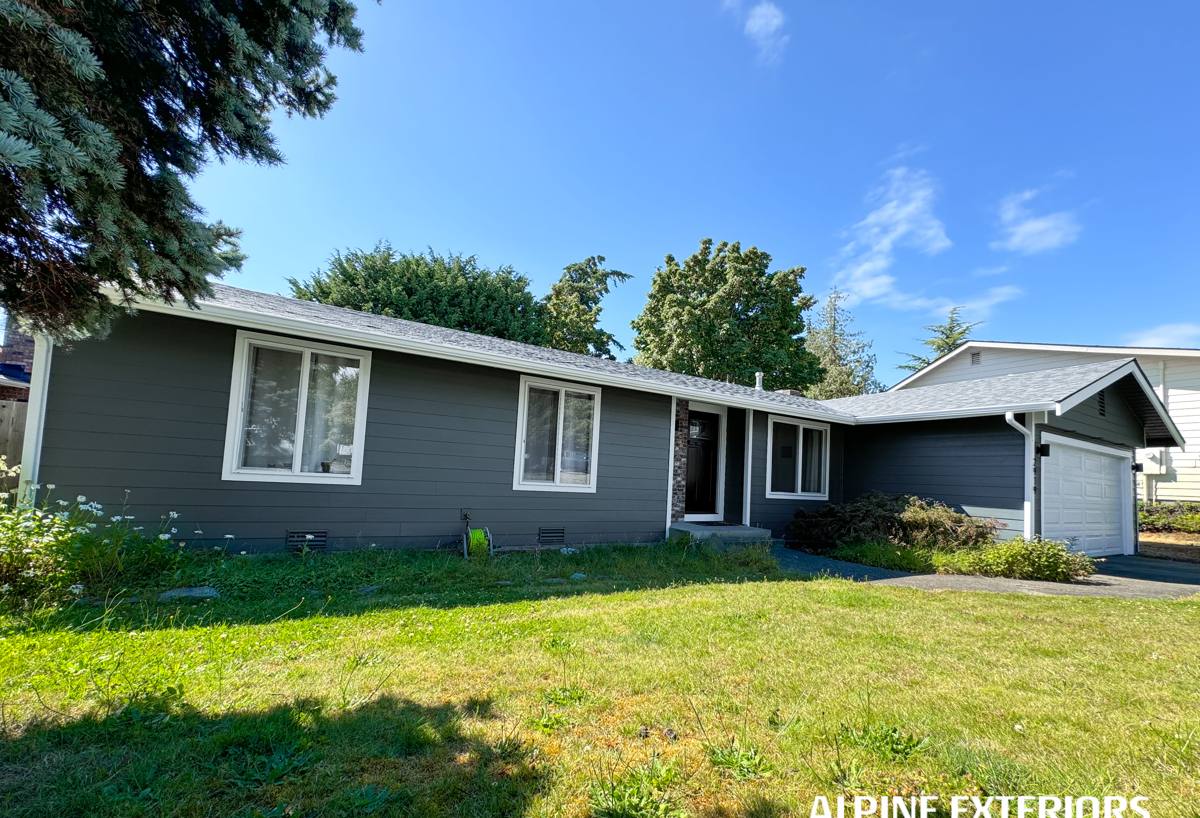
Columbia is one of Bellingham's more established neighborhoods, and that shows up in the siding calls we get from homeowners there. A lot of the homes were built or last re-sided decades ago, which means the siding has already been through hundreds of Whatcom County winters. By the time a homeowner calls us, the damage is rarely brand new — it's the slow result of years of moisture cycling, salt air drifting up from Bellingham Bay, and moss that's had a long time to work into seams and laps.
Siding repair in Columbia isn't a one-size-fits-all job. A home a few blocks from the water deals with different exposure than one tucked back under a stand of mature trees, and the right repair depends on knowing which problem you're actually looking at.
What Bellingham's Climate Does to Siding Over Time
Whatcom County's marine climate is easy on people and hard on buildings. A few specific factors show up again and again in Columbia:
Salt Air
Proximity to Bellingham Bay means airborne salt settles on exterior surfaces. On wood and wood-composite siding, that salt holds moisture against the material longer than it would otherwise sit, which accelerates rot at seams, butt joints, and anywhere paint has thinned.
Driving Rain
Bellingham doesn't just get steady rain — it gets wind-driven rain that pushes water sideways into laps, corner boards, and trim joints that were only ever designed to shed water falling straight down. Over years, that driving rain finds every small gap in caulking, flashing, or fastening.
Moss Season
Our long wet season, roughly October through April, is prime moss and algae growth conditions. Moss doesn't just look bad — it holds water against the siding surface for months at a time, and its root structure can work into hairline cracks and expand them.
Put those three together and you get a pattern we see constantly on Columbia repair calls: localized rot or delamination at the bottom courses, around window trim, and behind anything (shrubs, fences, downspouts) that keeps a section of wall damp longer than the rest of the house.
Signs a Repair Call Is Overdue
Most homeowners don't notice siding problems until they're visible from the street, but the damage usually starts from the inside of the wall assembly. Watch for:
- Soft or spongy spots when you press on siding near the ground or under windows
- Visible swelling, bubbling, or delamination on wood-based siding panels
- Persistent moss or dark streaking that comes back within weeks of cleaning
- Paint that's cracking, peeling, or failing faster than the rest of the house
- Gaps opening up at seams, corner boards, or where siding meets trim
- Interior signs — a musty smell, a damp patch on an interior wall — near an exterior wall
Any one of these can be a small, contained repair if caught early. Ignored through another wet season, most of them turn into a larger tear-out.
What a Correct Siding Repair Actually Involves
A proper repair is more than pulling off a bad board and nailing up a new one. On a Columbia home, we treat every repair as a chance to check the parts of the wall you can't see once siding is back on:
- Diagnose the actual cause — a rotted board is a symptom. We look for what let water in: failed caulking, missing flashing, grade sloped toward the house, a downspout dumping water against a wall.
- Inspect behind the damaged section — sheathing and house wrap take the brunt of long-term leaks. Repairing over rotted sheathing just hides the problem.
- Correct the water path — flashing, kick-out flashing at roof-wall intersections, and proper caulking get fixed before new siding goes up, not after.
- Match or replace — where existing siding is salvageable, we match it as closely as possible. Where a section is too far gone, we talk with the homeowner about whether a patch is realistic or whether that elevation should be replaced properly.
- Finish correctly — proper fastening, gapping, and caulking so the repair performs as well as (or better than) the surrounding siding.
Skipping the diagnosis step is the single biggest reason siding repairs fail early. A new board over an unresolved leak point just buys a year or two before the same spot fails again.
Repair vs. Replacement: How We Help You Decide
Not every problem area needs a full re-side, and not every "small" repair should be treated as small. Here's the general framework we use when walking a Columbia property:
| Situation | Usual Recommendation | Why |
|---|---|---|
| Isolated rot at one or two boards, structure sound | Targeted repair | Damage is contained and the cause can be corrected locally |
| Rot repeating across multiple elevations | Full or partial re-side | Pattern suggests a systemic moisture or original-installation issue, not a one-off |
| Existing siding is wood, LP-style composite, or old vinyl with wide moss/rot history | Discuss replacement in Hardie fiber cement | Patching a failing material only delays a full replacement |
| Cosmetic moss/algae with no soft spots | Clean and monitor, minor caulk touch-up | No structural risk yet, but worth flagging as a maintenance item |
| Damage concentrated near ground level or downspouts | Repair plus drainage/grading fix | Without fixing water source, repair fails again quickly |
We'll always tell you honestly when a repair makes sense versus when you're better off putting that money toward replacing the affected section — or the whole elevation — in a material that won't have this problem again.
Why We Repair Toward James Hardie, Not Away From It
This company installs James Hardie fiber cement siding exclusively — we don't install LP SmartSide, vinyl, Cemplank, Allura, primed spruce, or cedar. When a repair calls for replacing more than a small patch, our recommendation is Hardie, and here's the honest reasoning behind it, specific to what we see in Columbia:
- Non-combustible material — fiber cement doesn't feed a fire the way wood-based products can.
- Moisture behavior — Hardie's cement composition doesn't swell, delaminate, or rot the way wood, wood-composite, or older wood-based products do when they take on water repeatedly over a wet season.
- Climate-engineered product lines — Hardie's HZ5 formulation is built for wetter, more moisture-exposed climates like ours, which matters directly for a marine environment with driving rain and a long wet season.
- Factory finish — ColorPlus finishes are baked on at the factory and hold color and integrity longer than field-applied paint, which matters when moss and algae growth are constantly testing the finish.
- Warranty structure — a strong, transferable warranty backs the product when it's installed to spec, which matters to homeowners planning to sell.
We're not going to tell you every home in Columbia needs a full re-side — plenty of repair calls are genuinely just repairs. But when the underlying siding material is the actual problem, we'll say so plainly, and Hardie is what we put on the wall when it's time to replace rather than patch.
Why It Matters That We Already Work in Columbia
A crew that's worked Columbia's streets before isn't guessing about how this neighborhood's homes were built or how they've weathered. That familiarity shows up in a few practical ways:
- Recognizing common original siding materials and installation patterns used in homes of this era
- Knowing which elevations typically take the worst of the driving rain based on how streets and lots are oriented relative to the water and prevailing wind
- Understanding realistic timelines around Bellingham's wet season, so repair work isn't scheduled into weather that won't let materials cure or seal properly
- Being familiar with the City of Bellingham's permitting expectations for exterior work where it applies
None of that replaces a proper inspection of your specific home, but it does mean less time spent re-learning the basics and more time spent solving your actual problem.
After the Repair: Keeping Moss and Moisture From Coming Back
A good repair job also comes with a plan for what happens next. Once your siding is fixed, a little seasonal attention goes a long way:
- Rinse siding surfaces gently once or twice a year to knock back moss and algae before it takes hold
- Keep shrubs and landscaping trimmed back so air can move along the wall and siding can dry out between rains
- Check that downspouts and gutters are draining away from the foundation and walls, not dumping onto siding
- Re-caulk high-movement joints (around windows, trim) every few years rather than waiting for a visible gap
- Walk the exterior once a year, especially after a hard winter, and press-test any area that looked suspect before
Catching a small problem during that annual walk is a lot cheaper than catching it after another wet Bellingham winter has had its way with it.
If you're seeing soft spots, moss that won't quit, or siding that's just looking tired on a Columbia-area home, we're glad to come take an honest look. The estimate is free, there's no pressure to do more work than the house actually needs, and you'll get a straight answer about whether it's a repair or something bigger — just fill out the form below.