 Bellingham
 South Hill: A Neighborhood That Takes a Beating From the Weather
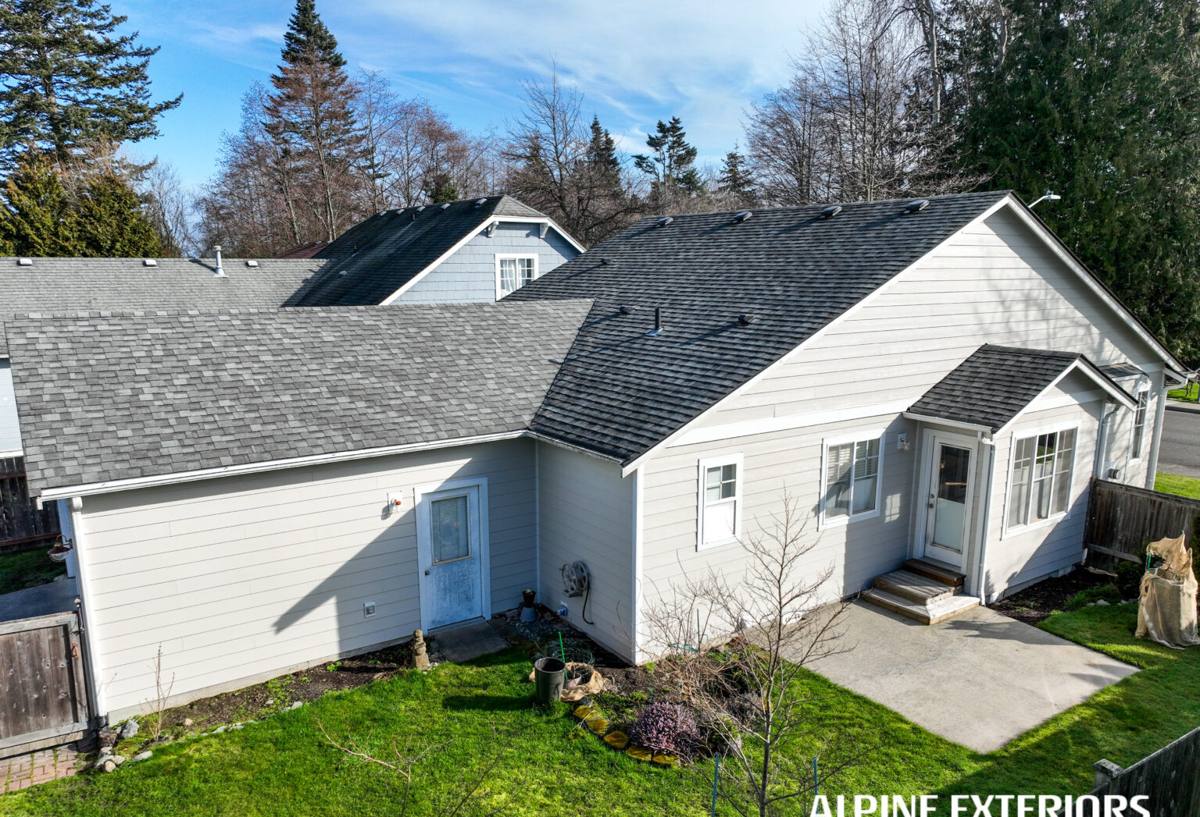
South Hill sits up in elevation relative to much of the rest of Bellingham, with a mix of older homes on wooded lots and newer construction tucked in among mature trees. That combination — height, tree cover, and proximity to Bellingham Bay — creates a specific set of exterior problems that don't show up the same way in every part of Whatcom County. Homes here catch wind-driven rain off the water, sit under heavy tree canopy that keeps siding damp longer after storms, and pick up a fine layer of salt air that slowly works on anything not built to resist it.
None of this is dramatic on its own. It's cumulative. A house that gets rained on sideways a few dozen times a winter, shaded from direct sun by big firs and maples, and lightly salted by bay air year-round is a house where the wrong siding material starts showing its weaknesses years before it should.
What South Hill's Climate Actually Does to Siding
Driving Rain and Wind Exposure
Because of South Hill's elevation and open exposure toward the water in places, wind-driven rain is a bigger factor than straight-down rainfall. That matters because most siding failures aren't caused by rain hitting a wall — they're caused by rain getting pushed into seams, laps, and fastener points that weren't designed or installed to handle horizontal water pressure. Flashing details, caulk joints, and butt-seam placement matter more here than they do on a sheltered lot.
Moss, Shade, and Slow-Drying Surfaces
Whatcom County's moss season runs long — realistically most of the year in shaded spots — and South Hill's tree cover means plenty of north-facing and understory walls that rarely see direct sun. Siding in those zones stays damp longer after every rain event. Materials that absorb moisture or swell when wet are working against a losing battle in conditions like that; materials that shed water and don't take on moisture in the first place simply hold up better, year after year.
Salt Air
Bellingham isn't a heavy marine-corrosion environment the way an oceanfront town is, but South Hill's proximity to the bay still means a low, steady exposure to salt-laden air, especially on upper stories and west- or north-facing walls. Over enough years, that exposure accelerates the breakdown of paint films, corrodes fasteners that aren't rated for it, and speeds up rot in any wood-based product that's already losing its protective coating.
Why This Pushes Us Toward One Siding Material
We install James Hardie fiber cement siding exclusively — no vinyl, no LP SmartSide, no primed wood, no other fiber cement brands. That's not a marketing position, it's a response to exactly the conditions described above. Fiber cement is non-combustible, doesn't absorb water the way wood-based products do, and doesn't warp or degrade under the kind of freeze-thaw and moisture cycling that's normal for a Whatcom County winter. Hardie's ColorPlus factory finish is baked on under controlled conditions, which holds up better against UV and salt exposure than a field-applied paint job, and it comes with a real, transferable warranty backing that performance.
We'd rather stand behind one product line we trust completely than offer a menu of options and have to explain years later why a cheaper choice didn't hold up on a South Hill lot the way it should have.
Hardie Product Lines We Use
- HardiePlank lap siding — the standard horizontal siding look, available in several textures and exposures
- HardieShingle — for homes wanting a shingle or shake appearance without the maintenance of real cedar
- HardiePanel — vertical panel siding, often used for accents, gables, or a more modern look
- HardieTrim — matching trim boards that resist the same moisture and rot issues as the field siding
How We Approach a South Hill Siding Project
Every job starts with a walk-around of the specific exposures on that property — which walls take the most wind-driven rain, where tree cover keeps things damp longest, where old caulk or flashing has already started failing. That inspection shapes the install plan more than any generic spec sheet would.
What Correct Installation Involves
Fiber cement performs the way it's rated to perform only when it's installed to Hardie's actual specifications — proper clearances, correct fastener type and spacing, house wrap and flashing detailing that accounts for wind-driven rain, and butt joints sealed or backed correctly. A lot of the siding problems we get called out to look at on older homes trace back to installation shortcuts, not the material itself. That's true of every siding brand, not just Hardie, but it's a big part of why we control installation quality closely rather than subcontracting it out to whoever's available that week.
Tear-Off and Prep
On re-siding jobs, we check the sheathing underneath once the old material is off. In a wet, tree-covered neighborhood like South Hill, it's not unusual to find some soft or water-damaged sheathing behind old siding, especially around windows, at wall penetrations, or on north-facing walls that never fully dry out between storms. We address what we find before anything new goes up — covering damage rather than sealing it in is how homeowners end up with the same problem again in five years.
Beyond Siding: The Full Exterior Envelope
We also handle roofing, windows, and decks, and on a lot of South Hill homes those systems are directly connected to siding performance. A roof with failing flashing at a wall intersection will feed water straight into the siding below it. Old windows with degraded flashing or caulk do the same thing at every opening. A deck ledger board attached without proper flashing is a classic spot for hidden rot right where the deck meets the house.
Because we work across all four trades, we can flag those connected issues during a siding estimate instead of missing them, and homeowners get one crew with one point of accountability instead of coordinating separate contractors who don't talk to each other about how the systems interact.
Why a Local Crew Matters Here
South Hill isn't uniform. A house near the top of the hill with open exposure toward the bay faces different wind and rain patterns than a house tucked into heavy tree cover a few blocks away. Lot slope, tree placement, and how a home sits relative to prevailing weather all change what actually needs attention. A crew that works across Bellingham and Whatcom County regularly sees these patterns repeat and knows what to look for before problems show up as visible damage.
Being local also means we're straightforward about permitting through the City of Bellingham where a project requires it, and we're not guessing at code requirements or weather-resistive barrier standards that are specific to this climate — we work with them on every job.
Cost Factors for a South Hill Siding Project
Every home is different, and we don't publish blanket pricing because wall complexity, current condition, and access all move the number. That said, these are the main factors that actually drive cost on a typical project:
| Factor | Why It Matters |
|---|---|
| Home size and wall complexity | More corners, gables, and dormers mean more cutting, flashing, and labor time |
| Current siding condition | Rotten sheathing or hidden water damage found during tear-off adds repair scope |
| Siding profile and texture chosen | Lap, shingle, and panel styles carry different material and install costs |
| Trim and detail work | Window and corner trim, fascia, and accent panels add finish time |
| Site access | Steep lots, tight setbacks, and mature landscaping can slow staging and scaffolding |
| Paint or color selection | Factory-finished ColorPlus versus field-painted trim affects both cost and long-term upkeep |
Maintenance: What South Hill Homeowners Should Actually Check
Fiber cement is low-maintenance compared to wood or vinyl, but "low-maintenance" doesn't mean "no maintenance," especially under heavy tree cover. A short annual check goes a long way:
- Look for moss or algae buildup on shaded, north-facing walls and rinse it off before it holds moisture against the surface long-term
- Check caulking at window and door trim for cracking or gaps, particularly on walls that take direct wind-driven rain
- Keep gutters clear — clogged gutters near tree-heavy lots are a common source of water running down and behind siding
- Trim back branches and shrubs that keep siding in constant shade or in contact with the wall
- Watch for any soft spots, staining, or paint failure near the bottom courses, deck ledgers, and roof-to-wall intersections
Get a Straight Answer for Your Home
If you're weighing a siding, roofing, window, or deck project on South Hill, we're happy to come take a look and give you a straightforward read on what your specific home actually needs — not a generic sales pitch. The estimate is free, there's no pressure, and you'll walk away with a clear picture of your options either way.