 Bellingham
 Edgemoor's Exterior Challenge
Edgemoor sits on a bluff overlooking Bellingham Bay, and that setting cuts both ways. The views are hard to beat, but the exterior of a home here works harder than one a few miles inland. Salt-laden air drifts up off the water and settles on siding, trim, and metal fasteners. Storms that roll in off the Strait of Georgia bring driving, wind-pushed rain that hits walls at an angle instead of falling straight down. And the mature tree canopy that gives the neighborhood its character also means deep shade, damp ground, and a moss season that can run most of the year in Whatcom County's marine climate.
None of that is unusual for the Pacific Northwest. But Edgemoor sees a concentrated version of it — bluffside exposure to salt and wind on one side of a property, heavy shade and slow-drying surfaces on the other. Siding, roofing, windows, and decks all have to handle both conditions on the same house, sometimes on the same wall.
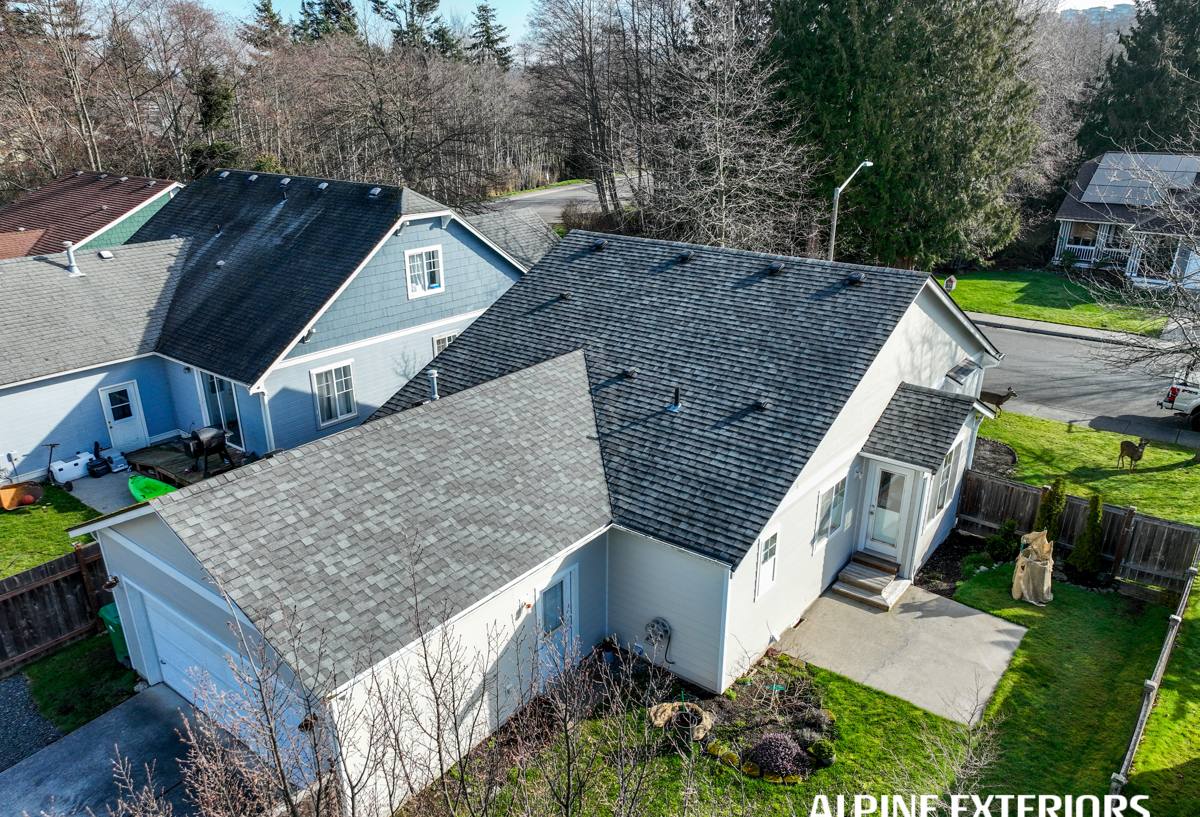
What We See on Edgemoor Homes
Working in this neighborhood, a few patterns show up again and again:
- Moss and algae staining on north-facing and shaded walls, especially under overhangs and tree cover
- Paint and finish failure from repeated wet-dry cycling, particularly on older wood or engineered wood siding
- Corrosion on fasteners and trim exposed to salt air near the water
- Soft or delaminating siding where moisture has worked into seams, butt joints, or areas without adequate flashing
- Roof moss buildup that holds moisture against shingles and shortens roof life
- Window seal failure and fogging from decades of humidity exposure
These aren't signs of a badly maintained home — they're what marine climate exposure does to exterior materials over time, especially materials that weren't built with this kind of environment in mind.
Why We Install Only James Hardie Fiber Cement
We made a decision a long time ago to install one siding system: James Hardie fiber cement. We don't offer vinyl, LP SmartSide, Cemplank, Allura, primed spruce, or cedar as alternatives, and in a neighborhood like Edgemoor, that decision matters more than it would somewhere drier and more sheltered.
Non-Combustible Material
Fiber cement is made primarily from sand, cement, and cellulose fiber. It doesn't burn, which matters for wildfire risk and for peace of mind generally — it's simply a more inert material than wood-based or vinyl siding.
Climate-Engineered for This Region
Hardie's HZ5 product line is engineered specifically for climates with freeze-thaw cycling and heavy moisture exposure — a close match for what a bluffside Bellingham property deals with. The board itself resists moisture absorption far better than wood-based composites, which reduces the swelling, cupping, and rot that show up on older siding in this area.
Factory-Applied ColorPlus Finish
Hardie's ColorPlus finish is baked on in a controlled factory environment, not brushed or sprayed on-site. It resists fading and chipping better than field-applied paint, which matters in a spot where UV, salt, and rain all attack a finish simultaneously. It also means touch-up work, when needed, uses matched factory-formulated paint rather than a guess at the original color.
A Warranty Backed by the Manufacturer
Hardie siding carries a strong, transferable limited warranty on the substrate, and ColorPlus finishes carry their own separate finish warranty. That's a meaningfully different structure than what you get with primed wood siding that depends entirely on field-applied paint maintenance to hold its warranty status.
What About Vinyl, LP SmartSide, or Cedar?
We're not going to tell you these products don't work anywhere — they do, in the right application. But we don't install them, and it's worth explaining why in plain terms rather than dodging the question.
| Material | Common trade-off in this climate | Why it factors into our decision |
|---|---|---|
| Vinyl siding | Can warp or become brittle with temperature swings; seams and panel movement can let moisture behind the cladding | We want a rigid, dimensionally stable material behind which moisture management is more predictable |
| LP SmartSide (engineered wood) | Wood-strand core is more moisture-sensitive than fiber cement; edges need consistent sealing and maintenance to prevent swelling | In a marine climate with prolonged damp seasons, that maintenance margin for error is thinner than we're comfortable installing |
| Cedar siding | Beautiful when new, but requires regular refinishing and is a natural food source for moisture, insects, and moss | Ongoing maintenance demands are high, and neglect shows up faster in shaded, damp settings like Edgemoor |
| Cemplank / Allura (other fiber cement brands) | Similar core material to Hardie, but we standardized on one manufacturer for consistent warranty terms, color-match availability, and installation specs | One system, one set of installation standards, one warranty structure to stand behind |
Every one of these products has a legitimate place in the market. Our position is narrower: for the way we build, warranty, and stand behind our work, fiber cement from a single manufacturer with a proven climate-engineered product line is what we're willing to put our name on.
Hardie Product Lines That Make Sense for Edgemoor
HardiePlank Lap Siding
The most common choice for full re-sides, available in a range of textures and exposures. Works well on both the open, salt-exposed sides of a home and the shaded, moss-prone sides, since the material itself doesn't care which direction it faces.
HardieShingle
A strong fit for homes going for a more traditional Pacific Northwest look — shingle-style siding without the maintenance burden of real wood shingles in a damp, shaded setting.
HardiePanel
Used for vertical siding applications, accent walls, and modern designs. Increasingly common on renovated and newer builds in the area.
HardieTrim
Trim boards that match the same moisture and finish performance as the field siding — important detail, since trim failure is often where water intrusion starts.
Beyond Siding: The Full Exterior Envelope
Siding doesn't work in isolation, and in a neighborhood exposed to this much wind-driven rain, the roof, windows, and any exterior decking all affect how well the walls perform.
Roofing
A roof that's holding moss, has failing flashing, or is past its service life sends water down onto siding and trim it was never meant to handle. We look at roof condition as part of any siding conversation here, because the two systems are connected.
Windows
Failed window seals and poor flashing at window openings are one of the most common sources of hidden water damage behind siding. Replacing worn-out windows at the same time as siding avoids cutting into brand-new cladding a few years later.
Decks
Bluffside and shaded decks in Edgemoor deal with the same wet-dry cycling and moss growth as siding does. We build and repair decks with drainage and material choices suited to this climate, not a generic spec.
Our Process for Edgemoor Projects
- On-site assessment of current siding, trim, roofing, and window condition — including areas hidden behind moss, shrubs, or overhangs
- Identification of moisture entry points and any rot or damage that needs addressing before new siding goes on
- Product and color selection from Hardie's ColorPlus lineup, matched to the home's setting and any HOA or neighborhood character considerations
- Installation to manufacturer spec — correct fastening, clearances, flashing, and caulking details matter more here than in a drier climate
- Final walkthrough and documentation for warranty registration
Because we're a local Whatcom County crew, we're familiar with how Edgemoor's bluff exposure and tree cover vary block to block, and we price and plan projects with that local knowledge rather than a one-size-fits-all estimate.
Living with a Marine Climate: Maintenance That Actually Helps
Even the most weather-resistant materials benefit from basic upkeep in this environment. A simple annual routine goes a long way:
- Rinse siding and trim once a year to remove salt residue and organic buildup, especially on shaded walls
- Keep gutters clear so water isn't overflowing directly onto siding below
- Trim back branches and shrubs that keep siding damp and shaded longer than necessary
- Check and clear roof moss before it spreads and holds moisture against shingles
- Inspect caulking around windows, trim, and penetrations annually and reseal as needed
- Walk the exterior after major windstorms to check for loose trim, siding, or flashing
Fiber cement siding needs far less of this than wood or engineered wood, but "less maintenance" doesn't mean "no maintenance" — and a quick annual check catches small problems before they become expensive ones.
Get a Straight Answer About Your Home
If you're noticing moss buildup, paint failure, soft spots, or just want to know how your current siding is holding up against Edgemoor's bluffside weather, we're happy to take a look. We'll give you an honest read on what's going on and what your options are — no pressure, no upsell. Reach out for a free estimate using the form below.