 Bellingham
 Decks in Edgemoor Take a Different Kind of Beating
Edgemoor sits close to Bellingham Bay, which means homes here deal with a combination most inland neighborhoods don't have to think about: salt-laden air off the water, driving rain that comes in sideways during winter storms, and heavy tree canopy that keeps decks shaded and damp for months at a time. Any one of those on its own is manageable. Together, they shorten the life of a deck faster than most homeowners expect.
Salt air accelerates corrosion on fasteners, brackets, and any exposed metal hardware. Driving rain finds its way into end grain, screw holes, and any spot where flashing was skipped or done wrong. And the long Whatcom County moss season — realistically most of the fall through spring — keeps deck surfaces wet and shaded long after a sunnier yard would have dried out, which is exactly the environment moss and algae need to take hold. A deck built without those three factors in mind will show problems years before it should.
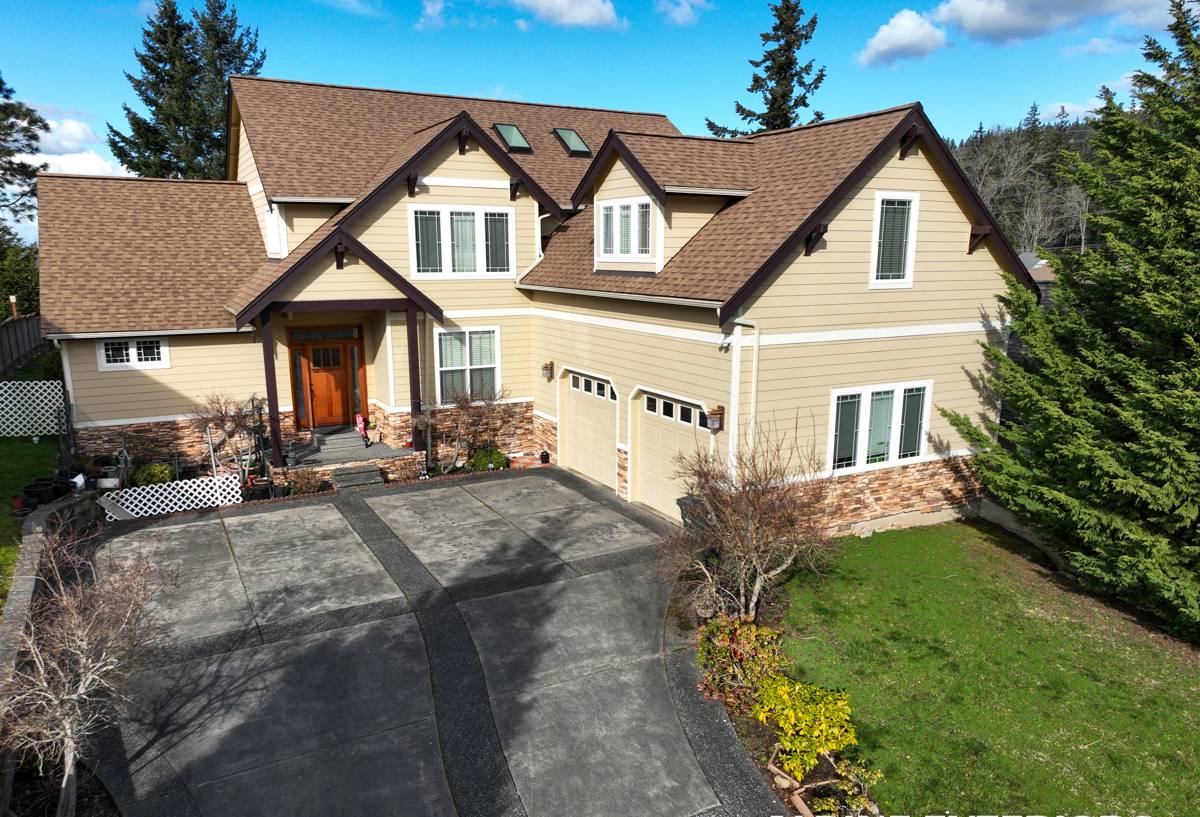
Signs an Edgemoor Deck Needs Replacement, Not Just Repair
Not every tired-looking deck needs to be torn out. But there's a real difference between cosmetic wear and structural failure, and knowing which one you're looking at matters before you spend money.
Cosmetic wear — usually repairable
- Faded or graying wood finish
- Surface moss or algae film on boards that are still solid underneath
- A handful of individual boards that are cracked or splintering
- Loose railing balusters or hardware that just needs re-tightening
Structural signs — usually a replacement
- Soft, spongy decking that flexes underfoot in multiple spots
- Rot at the ledger board — where the deck attaches to the house — which is the single most common failure point on older decks in wet climates
- Posts or footings that have shifted, settled, or show visible rot at the base
- Rust streaking or corroded fasteners throughout the structure, not just one or two spots
- A deck more than 20-25 years old that's never had the framing inspected or upgraded to current hardware standards
The honest test is the framing. If the ledger, joists, and footings are sound, a resurfacing or targeted repair can extend the deck's life for a reasonable cost. If the framing itself is compromised, replacing just the decking boards on top of failing structure is a short-term fix that doesn't address the real problem — and it's not something we'll recommend just to make a smaller job.
What a Correct Deck Replacement Actually Involves
A deck replacement done right isn't just pulling up old boards and screwing down new ones. The parts nobody sees are what determine whether the next deck lasts 10 years or 30.
Structure first
That means proper ledger board attachment with flashing that actually sheds water away from the house band board — this is the single most important detail on any deck attached to an Edgemoor home, since a poorly flashed ledger is where slow, hidden water damage to the house itself usually starts. It also means joists sized and spaced correctly for the deck's actual load, footings set below frost depth and rated for the soil conditions on the lot, and structural connectors rated for exterior, coastal-adjacent use rather than generic hardware store brackets.
Then the surface
Decking material, fastening method, and drainage all get decided based on how much shade and moisture exposure the specific spot gets — a deck under mature fir or cedar cover needs different spacing and material choices than one that gets full sun most of the day. Railings, stairs, and any code-required guarding get built to current safety standards, not just matched to whatever was there before.
Decking Material Options for a Shaded, Damp Lot
There's no single "best" decking material for every Edgemoor property — it depends on how much sun the deck gets, how much maintenance you want to do, and your budget. Here's how the common options actually perform in this kind of climate.
| Material | Behavior in Salt Air & Rain | Moss/Algae Resistance | Maintenance |
|---|---|---|---|
| Pressure-treated wood | Prone to warping and checking if not sealed regularly | Low — needs regular cleaning | Annual cleaning and re-sealing |
| Cedar | Naturally moisture- and insect-resistant, but still needs finish upkeep | Moderate — better than treated pine but still needs cleaning in shade | Periodic cleaning and re-oiling |
| Composite (uncapped) | Resists rot but can absorb moisture at cut edges over time | Moderate to good depending on brand | Occasional washing, no sealing |
| Capped composite / PVC | Best resistance to moisture absorption and salt exposure | Good — smoother, less porous surface | Occasional washing, no sealing |
Wood costs less up front and has a warmer, natural look that fits a lot of Edgemoor's older, established homes. Composite and capped-composite products cost more initially but hold up better on shaded, north-facing, or bay-adjacent decks that rarely get enough sun to dry out between rains — which describes a good portion of the lots in this neighborhood. We'll walk through the honest trade-offs for your specific lot rather than pushing one product across the board.
Our Deck Replacement Process
- On-site assessment. We inspect the existing ledger, framing, footings, and any visible rot or hardware corrosion before quoting anything, so the estimate reflects what's actually there.
- Material and layout discussion. We talk through decking material, railing style, and any layout changes based on how the space is used and how much sun and rain exposure it gets.
- Permitting. We handle the permit application and inspections through the appropriate jurisdiction so you're not stuck navigating that process yourself.
- Demolition and disposal. Old decking, framing, and hardware are removed and hauled off — we don't leave debris for the homeowner to deal with.
- Structural rebuild. New footings, framing, ledger flashing, and hardware go in to current code, sized for the deck's actual use.
- Decking, railings, and finish work. Surface material and railings are installed and finished, with attention to drainage and airflow underneath to slow future moss growth.
- Final walkthrough. We go over the finished deck together before calling the job done.
Permits and Code in Bellingham and Whatcom County
Deck replacements that involve new framing, footings, or any structure attached at height typically require a building permit, whether the property falls under City of Bellingham jurisdiction or unincorporated Whatcom County. Requirements around guardrail height, stair geometry, and ledger attachment are there because they address real, common failure points — not paperwork for its own sake. A contractor who suggests skipping the permit to save time is passing the risk on to you, since unpermitted decks can complicate a future home sale or insurance claim. We pull permits as a standard part of the job.
What Affects the Cost of a Deck Replacement
| Factor | Why It Matters |
|---|---|
| Deck size and layout | More square footage and multiple levels or angles increase material and labor |
| Framing condition | Rotted joists, footings, or ledger require structural rebuild, not just resurfacing |
| Decking material | Wood, composite, and capped-composite span a wide price range |
| Height above grade | Taller decks need more substantial framing, footings, and code-required guarding |
| Access to the site | Tight side yards, slopes, or bluff-adjacent lots can add labor time |
| Railing and stair complexity | Custom railing styles or multiple stair runs add both material and labor |
Costs on a straightforward deck replacement can range from a modest, single-level rebuild to a significant investment for a large multi-level deck with premium materials. We'll give you an honest, itemized number based on your actual deck and lot — not a ballpark that changes once the crew shows up.
Keeping a New Deck in Good Shape
A properly built deck still needs some seasonal attention in this climate to get its full lifespan out of it.
- Sweep leaves and debris off the surface regularly through fall — trapped, wet organic matter is what feeds moss
- Rinse or lightly scrub the deck surface a couple of times a year to keep algae and moss from establishing
- Check that gaps between boards stay clear so water can drain rather than pool
- Inspect railings and stair connections annually for looseness or corrosion, especially on hardware closer to the water
- Re-seal wood decking on the manufacturer's recommended schedule — don't wait until it's visibly gray and dry
- Keep nearby shrubs and low branches trimmed back to let air and light reach the deck surface
Why It Matters That We Already Work in Edgemoor
A crew that's worked on decks in this neighborhood already knows which spots hold moisture longest, how much the bluff and bay-facing lots complicate footing placement, and which framing details tend to fail first on older Edgemoor homes. That's not something you get from a contractor who mostly works inland and treats every job the same regardless of exposure. It also means we're familiar with the permitting process through the correct jurisdiction for this part of Bellingham, so that step doesn't turn into a delay.
Beyond the technical side, working locally means we're accountable to the same neighborhood year after year — the work has to hold up because we're not going anywhere.
If your deck is showing its age or you're just not sure whether it needs repair or full replacement, we're glad to take a look and give you a straight answer. Reach out for a free, no-pressure estimate using the form below.