 Bellingham
 Why Sehome's Climate Is Hard on Siding
Sehome sits close enough to Bellingham Bay that salt-laden air is a daily fact of life for the siding on these homes, not an occasional nuisance. Add Whatcom County's long wet season, driving rain that comes in sideways off the water, and a neighborhood tree canopy that keeps north- and east-facing walls shaded for months at a time, and you get a set of conditions that will find every weakness in a siding system faster than a drier, sunnier climate ever would. Salt air accelerates corrosion of fasteners and metal trim. Wind-driven rain pushes moisture into laps, seams, and butt joints that a calmer climate would leave alone. And shade plus moisture is exactly what moss, algae, and mildew need to take hold and stay established for most of the year.
None of this means siding in Sehome is doomed — it means the material and the installation both have to be matched to the conditions. A siding job that would hold up fine in a dry inland town can fail here in a fraction of the time if it's the wrong product, installed the wrong way.
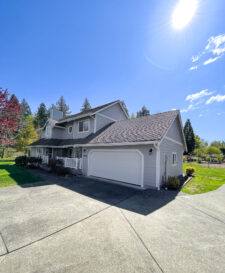
What Sehome's Housing Stock Tells Us About a Replacement Job
Sehome is one of Bellingham's older, established neighborhoods, with a mix of home vintages sitting on hillside and near-hillside lots close to Western Washington University and the wooded slopes around Sehome Hill. That mix matters when we're scoping a siding replacement:
Older siding materials still on these walls
We regularly find original wood clapboard, old T1-11 panel siding, aluminum siding from a prior remodel, or a well-worn layer of vinyl added over something else entirely. Each of these tells us something different about what's likely hiding underneath — old wood siding often means original board sheathing with no modern weather-resistive barrier; a vinyl layer over old siding often means moisture has been trapped against the wall for years without anyone knowing.
Hillside and sloped lots
Grade changes affect how rain and roof runoff move around a foundation and up a wall. Where a lot slopes toward the house, or where a neighboring structure sits close, we pay extra attention to splash-back zones and lower courses of siding, since those areas take the most sustained moisture exposure.
Mature tree cover
Shade is good for a home's energy bill and terrible for how fast siding dries out after rain. Walls under heavy tree cover need a rainscreen gap and proper flashing more than a sun-exposed wall does, because they simply don't get the drying time.
What a Correct Siding Replacement Actually Involves
Siding replacement is not just pulling off old boards and nailing up new ones. Done right, it's a full building-envelope job:
- Full tear-off and inspection — removing old siding down to the sheathing so we can actually see the condition of the wall, not guess at it.
- Sheathing repair — replacing any rotted or delaminated sheathing found underneath, which is common on walls that have been trapping moisture for years.
- New weather-resistive barrier — a correctly lapped and taped water/air barrier is the actual first line of defense, more than the siding itself.
- Rainscreen furring — a small air gap behind the siding lets walls dry to the outside instead of staying damp, which matters enormously in a shaded, wet climate like Sehome's.
- Flashing at every penetration — windows, doors, hose bibs, light fixtures, and any deck ledger or roof-to-wall transition need proper flashing, not just caulk.
- Correct fastening and clearances — manufacturer-specified nailing patterns, gaps at trim and inside corners, and ground clearance so siding doesn't sit where it wicks up moisture.
- Factory-finished siding, field-caulked and painted only where required — minimizing the amount of on-site paint that has to hold up to Bellingham's weather.
Skip any one of these steps and the new siding may look fine for a year or two before the underlying problem resurfaces — usually as bubbling paint, soft spots, or the same moss and staining the homeowner was trying to get rid of in the first place.
Why We Install Only James Hardie Fiber Cement
We standardized on James Hardie fiber cement siding and don't install vinyl, LP SmartSide, Cemplank, Allura, primed spruce, or cedar. That's a deliberate choice, not a lack of options. Each of those alternatives has real strengths, but each also has a trade-off that we don't think holds up well against a Whatcom County climate over the long haul — whether that's a wood-based product's sensitivity to sustained moisture, vinyl's tendency to warp or fade and its limited ability to shed heavy driving rain at seams, or the extra maintenance burden that comes with anything relying on field-applied paint or caulk as its main defense.
James Hardie's fiber cement is cement, sand, and cellulose fiber — it doesn't rot, it isn't a food source for insects, and it's non-combustible, which matters for wildfire-conscious insurance policies as much as it does for peace of mind. Hardie also engineers specific product lines (its HZ5 line, for the Pacific Northwest's wetter zones) for exactly the freeze-thaw and moisture cycle we get here, and its ColorPlus factory finish is baked on under controlled conditions rather than brushed on outdoors in Bellingham's damp air. Hardie backs its siding with a 30-year limited warranty, which is a meaningfully different commitment than most alternatives offer.
| Factor | James Hardie Fiber Cement | Vinyl / Wood-Based Alternatives |
|---|---|---|
| Moisture behavior | Cement-based; does not rot or swell with sustained wet exposure | Can warp, delaminate, or rot depending on material and installation quality |
| Fire resistance | Non-combustible | Combustible (vinyl melts/deforms; wood-based products burn) |
| Finish | Factory-applied ColorPlus finish, engineered for UV and moisture | Often relies on field-applied paint or a thinner factory coating |
| Maintenance | Periodic washing; repainting intervals are long | Varies — some need more frequent recaulking, repainting, or panel replacement |
| Warranty | 30-year limited warranty from the manufacturer | Varies by product, often shorter or prorated |
This isn't a knock on every homeowner who has one of these products on their house today — it's an explanation of why, when we're the ones putting siding on a wall in this climate, we've chosen to stand behind one system rather than offer several.
Our Siding Replacement Process
- Walkthrough and assessment — we look at your existing siding, note problem areas (moss, staining, soft spots, gaps), and check what's likely underneath based on the home's age and construction.
- Written estimate — scope, product line and color, and a clear breakdown of what's included, with no vague allowances.
- Tear-off and sheathing check — old siding comes off, sheathing is inspected and repaired as needed before anything new goes up.
- Weather barrier and rainscreen installation — the part of the job that does the most long-term work, done to spec every time.
- Hardie siding installation — installed to James Hardie's fastening, clearance, and flashing requirements, not shortcuts that happen to look right from the ground.
- Trim, caulking, and final walk-through — finishing details reviewed with you before we call the job done.
Moss, Shade, and Keeping New Siding Looking Good
A correctly installed Hardie system dramatically reduces moss and mildew problems compared to older materials, because the surface and finish are more resistant and the wall behind it can actually dry out. But no siding is completely maintenance-free in a shaded, damp neighborhood like Sehome. A few habits go a long way:
- Keep gutters clear so roof runoff doesn't sheet down exterior walls
- Trim back branches and shrubs that keep siding in constant shade or hold moisture against it
- Rinse siding annually, especially on north-facing and heavily shaded walls, to keep organic growth from establishing
- Check caulking at trim, windows, and penetrations every year or two and have any cracked sections redone
- Watch for staining or streaking near ground level, which often points to a splash-back or grading issue rather than a siding defect
Why Hiring a Crew That Already Works in Sehome Matters
Every neighborhood has its own quirks, and Sehome's hillside lots, mature landscaping, and mix of older and newer construction all affect how a siding job actually gets done — from where equipment and material staging can go on a tight or sloped lot, to knowing which older homes are more likely to have hidden sheathing damage before we even pull the first board. A crew that's worked other homes in the area isn't guessing at any of this, and that experience shows up in fewer surprises and fewer change orders once the tear-off starts. It also means we're familiar with Bellingham's permitting expectations for exterior work, so that part of the project doesn't become the bottleneck.
What Affects the Cost of a Sehome Siding Replacement
Every home is different, but the same handful of factors drive most of the cost variation we see on Sehome projects:
| Factor | Why It Matters |
|---|---|
| Number of existing siding layers | Homes with a vinyl or aluminum layer over original siding take longer to strip down to sheathing |
| Condition of sheathing underneath | Hidden rot or moisture damage found during tear-off adds repair scope |
| Home height and roofline complexity | Multi-story walls, dormers, and steep or hillside-adjacent access affect labor and equipment needs |
| Trim and architectural detail | Corner boards, window casings, and decorative trim all add installation time |
| Siding profile and color selection | Lap width, shingle-style panels, and custom ColorPlus colors vary in material cost |
We walk through all of these in person before giving you a number, so the estimate reflects your actual home rather than a generic square-footage guess.
If your Sehome home's siding is showing moss, staining, soft spots, or just isn't keeping up with the weather anymore, we'd be glad to take a look. Reach out for a free, no-pressure estimate using the form below — we'll walk the property, answer your questions, and give you a straight assessment of what it would take to do the job right.