 Bellingham
 Building a Deck That Actually Holds Up in Sehome
Sehome sits close in to downtown Bellingham, tucked against the wooded rise of Sehome Hill, with Bellingham Bay's salt air reaching homes throughout the neighborhood and the surrounding Whatcom County hillside. That combination — coastal humidity, tree cover, and a long stretch of wet months — is a tough environment for an outdoor structure. A deck built with generic, big-box specs might look fine the first summer and then start showing problems by year three: soft spots near the ledger board, rust bleeding from fastener heads, boards cupping, and a green film that never fully goes away no matter how often you scrub it.
We build custom decks for homes in this part of Bellingham with that climate in mind from the first conversation, not as an afterthought. That means talking through material choice, drainage, fastener grade, and structural details specific to a shaded, damp, salt-influenced lot before a single board goes down. This page covers what actually matters for a deck in Sehome — not generic deck-building advice, but the decisions that determine whether your deck is still solid and safe in ten or fifteen years.
What Sehome's Terrain and Tree Cover Mean for Your Deck
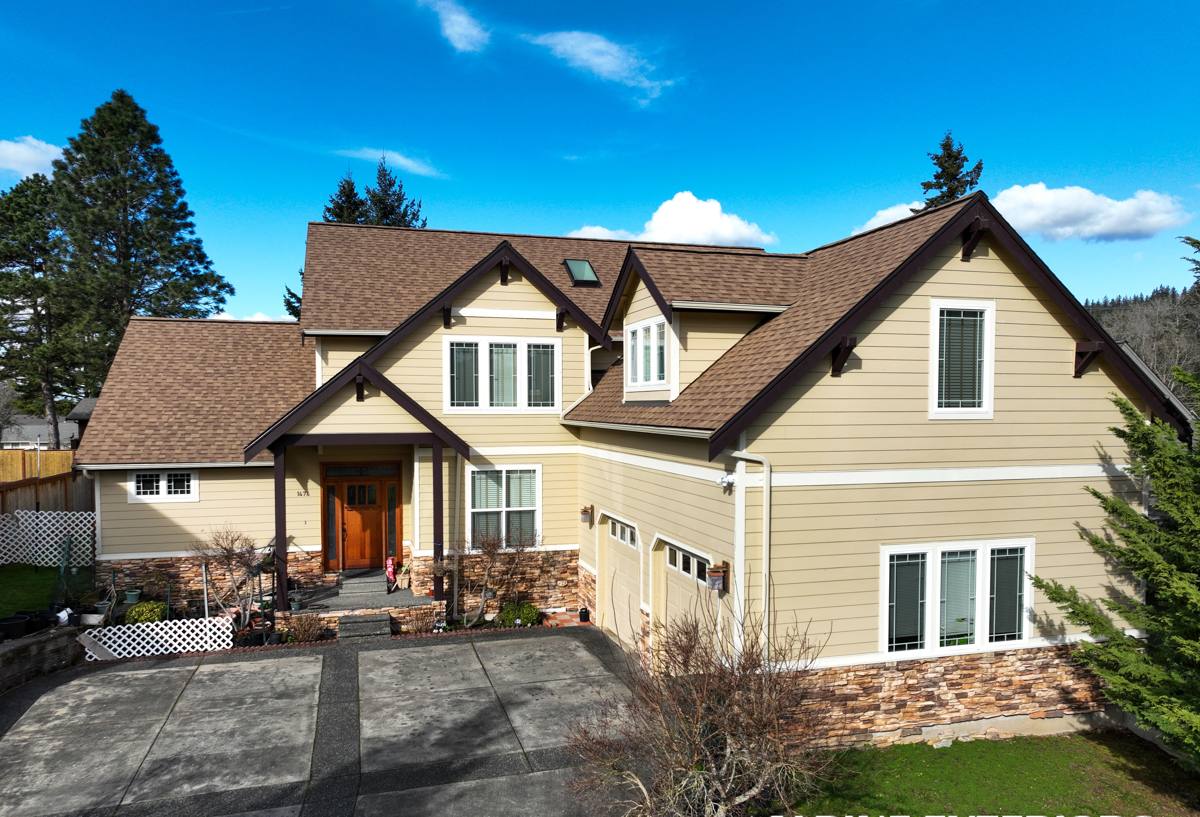
Many homes in Sehome sit on sloped or partially shaded lots near Sehome Hill's tree line. That's part of what makes the neighborhood attractive, but it creates specific conditions for an outdoor deck:
- Slower drying time. Shade from mature trees means decking surfaces and framing members stay damp longer after rain, extending the window where moss, algae, and mildew can establish themselves.
- Debris load. Needles, leaves, and seed pods collect between deck boards and in corners, holding moisture against the wood or composite surface if gaps and airflow aren't planned correctly.
- Grade and drainage. Sloped lots common in this part of Bellingham change how water sheds off a deck and away from the foundation — a flat, poorly pitched deck surface on a hillside lot is a common source of standing water and premature rot.
- Salt-influenced air. Bellingham Bay's proximity means metal hardware, brackets, and fasteners are exposed to more corrosive conditions than an equivalent deck built inland.
None of this makes a deck a bad idea in Sehome — it just means the build has to account for these conditions rather than following a one-size-fits-all approach.
Choosing the Right Decking Material for This Neighborhood
There's no single "best" decking material for every home — it depends on your budget, how much shade your lot gets, and how much upkeep you're willing to do. Here's how the common options actually compare for a shaded, damp, coastal-influenced lot like the ones typical in Sehome.
| Material | Upfront Cost | Moisture & Moss Behavior | Maintenance | Realistic Lifespan Here |
|---|---|---|---|---|
| Pressure-treated wood | Lowest | Absorbs moisture readily; needs sealing to resist moss and rot | Annual cleaning and resealing | 10–15 years with consistent upkeep |
| Cedar | Moderate | Naturally rot-resistant but still needs sealing in shaded spots | Cleaning and re-oiling every 1–2 years | 15–20 years with upkeep |
| Capped composite | Higher | Sheds water well; resists moss better than wood but still needs regular cleaning in shade | Periodic washing, no sealing/staining | 25+ years, manufacturer-warrantied |
| PVC/vinyl decking | Highest | Doesn't absorb moisture; least hospitable surface for moss growth | Occasional washing | 25–30+ years, manufacturer-warrantied |
For sunnier, more open lots in Sehome, a well-maintained cedar deck can still be a great choice and a good value. For heavily shaded lots close to the hill, we generally steer homeowners toward capped composite or PVC decking, since the maintenance burden of keeping a wood deck moss-free under consistent shade is significant. That's our professional recommendation based on how these materials behave in wet, low-light conditions — not a claim that wood decking is a bad product, just an honest trade-off worth knowing before you commit.
A Note on Cheaper Composite Products
Not all composite decking is built the same way. Older or lower-tier composite products without a full polymer cap can absorb moisture at the board's core, which leads to swelling, splintering, and mold growth over time — particularly in a climate as consistently damp as ours. We install fully capped composite or PVC products specifically because the moisture behavior is fundamentally different, and we'll walk you through the actual specs and warranty terms of any product we recommend rather than just naming a brand.
Framing and Structure: What's Underneath Matters Most
The decking surface is what you see, but the framing underneath is what determines whether the deck is safe and long-lasting. This is where a lot of corner-cutting happens on lower-bid deck jobs, and it's not visible until something fails.
- Ledger board flashing. Where a deck attaches to the house, proper flashing keeps water from tracking behind the siding and into the wall framing — a serious, expensive problem if it's done wrong, and one of the most common failure points we find on older decks.
- Joist protection. We use joist tape or an equivalent moisture barrier on top of framing lumber to keep standing water from soaking into the wood through fastener holes and cut ends, which is where rot typically starts first.
- Footings sized for the slope. On a sloped Sehome lot, footing depth and placement need to account for grade change and drainage, not just a standard flat-lot layout.
- Proper board spacing. Gapping between deck boards is set to allow airflow and drainage — too tight, and debris and moisture get trapped; too wide, and it becomes a tripping and heel-catching hazard.
A deck that looks great on the surface but skips these details is the kind that needs major structural repair well before its decking material wears out.
Railings, Fasteners, and Hardware That Won't Rust or Fail
Salt-influenced air off Bellingham Bay accelerates corrosion on standard hardware faster than most homeowners expect. We use stainless steel or coated fasteners rated for coastal exposure on structural connections — joist hangers, ledger bolts, and post bases — rather than the standard galvanized hardware that's adequate further inland but tends to streak and weaken faster here. The same goes for railing hardware, which takes constant hand contact and weather exposure at the same time.
Railing material matters too. Wood railings need the same sealing schedule as wood decking. Metal (aluminum or steel cable) railings need a finish rated for coastal humidity to avoid pitting and rust streaks. Composite and PVC railing systems require the least upkeep and pair well with a capped composite or PVC deck surface.
Dealing With Moss, Mildew, and Slip Resistance
Whatcom County's moss season effectively runs from early fall through late spring — anywhere there's shade and moisture, moss will find it. On a deck, that's both a maintenance headache and a real safety issue, since wet moss on a walking surface is slippery.
A few build-level decisions reduce how much moss becomes a problem later:
- Correct board gapping and deck pitch so water actually sheds instead of pooling.
- Decking with a textured, slip-resistant surface profile rather than a smooth-finish board in shaded areas.
- Keeping the deck surface a few inches clear of adjacent siding, plantings, and structures to allow airflow underneath and around the edges.
- Choosing a material (see the comparison table above) that doesn't give moss spores an absorbent surface to root into in the first place.
Even with the right material and build, some seasonal cleaning is normal for any deck in this climate — the goal of a correct build is reducing how much work that takes, not eliminating it entirely.
Our Process for a Sehome Deck Build
1. On-Site Assessment
We walk the property, evaluate sun and shade exposure, existing grade and drainage, and how the deck will connect to the house. This is where we identify site-specific issues — a shaded north-facing wall, a slope that affects footing depth, or an older ledger connection that needs to be redone.
2. Design and Material Selection
We go over decking material, railing style, and layout based on your budget and how the space will be used, along with the honest maintenance expectations for whatever material you choose.
3. Permitting
Deck projects above a certain size or height typically require a permit from the City of Bellingham or Whatcom County, depending on the property's location. We handle that process as part of the build rather than leaving it to the homeowner.
4. Construction
Footings, framing, flashing, decking, and railings are installed in that order, with structural connections and moisture protection treated as non-negotiable steps rather than places to save time.
5. Final Walkthrough
We go over the finished deck with you, including a maintenance rundown specific to the material installed, before considering the job complete.
What to Ask Before Hiring a Deck Contractor in Sehome
Not every contractor who builds decks has real experience with shaded, sloped, coastal-humidity lots like the ones common in this neighborhood. Before hiring, it's worth asking:
- Do you pull permits directly with the City of Bellingham or Whatcom County, or is that left to me?
- What fastener and hardware grade do you use for structural connections, and is it rated for coastal exposure?
- How do you flash and protect the ledger board where the deck meets the house?
- What's the manufacturer warranty on the decking material, and does it cover moisture-related failure?
- Can you explain why you're recommending one decking material over another for my specific lot?
A contractor who can answer these clearly and specifically — rather than with a generic sales pitch — is a good sign they build for this climate rather than around it.
Maintenance Through the Seasons
Whatever material you choose, a small amount of regular upkeep goes a long way in this climate:
- Fall: Clear leaves and needles regularly as they drop, especially between boards and in corners where they trap moisture.
- Winter: Keep an eye on moss growth in shaded spots; a stiff brush and deck-safe cleaner handle most buildup before it gets slick.
- Spring: Inspect railings, fasteners, and any wood surfaces for early signs of rust streaking or soft spots once the wettest months pass.
- Summer: This is the window for resealing or restaining wood decking and railings, and for a deeper cleaning of composite or PVC surfaces.
Why Hire a Crew That Already Works in Sehome
A deck built to a generic national spec sheet will hold up differently here than it would in a drier, sunnier climate. Choosing materials, hardware, and framing details based on Sehome's actual conditions — shade from Sehome Hill's tree cover, salt-influenced air off Bellingham Bay, sloped lots, and a long moss season — isn't an upsell, it's what determines whether the deck you pay for now is still solid in fifteen years or needs major repair in five. We build decks throughout Bellingham and Whatcom County with those local conditions as the starting point, not an afterthought added after the fact.
If you're planning a new deck or replacing an aging one in Sehome, we're happy to walk your property, talk through material options honestly, and give you a straightforward, no-pressure estimate using the form below.