 Bellingham
 Windows Built for Silver Beach's Weather, Not Just Its Openings
Silver Beach sits close enough to the water that homes here take a different kind of weathering than houses further inland in Bellingham. Wind-driven rain comes in sideways off the water for days at a stretch, salt-laden air works on metal hardware and finishes year-round, and the shaded, damp conditions that define a Whatcom County winter keep moss and algae established on anything that holds moisture. Windows are one of the first parts of a house to show the wear from that combination — swollen sashes, pitted hardware, foggy glass, and frames that have started to soften are all common calls we get from this neighborhood.
"Custom" windows aren't a luxury upgrade — they're often the only correct fix. Older Silver Beach homes frequently have rough openings that don't match anything on a big-box shelf, additions or renovations that left odd-sized gaps, or original wood windows that were built to dimensions nobody makes as a stock size anymore. Forcing a standard-size unit into a non-standard opening means shimming, gapping, and extra trim work that becomes the first place water finds its way in.
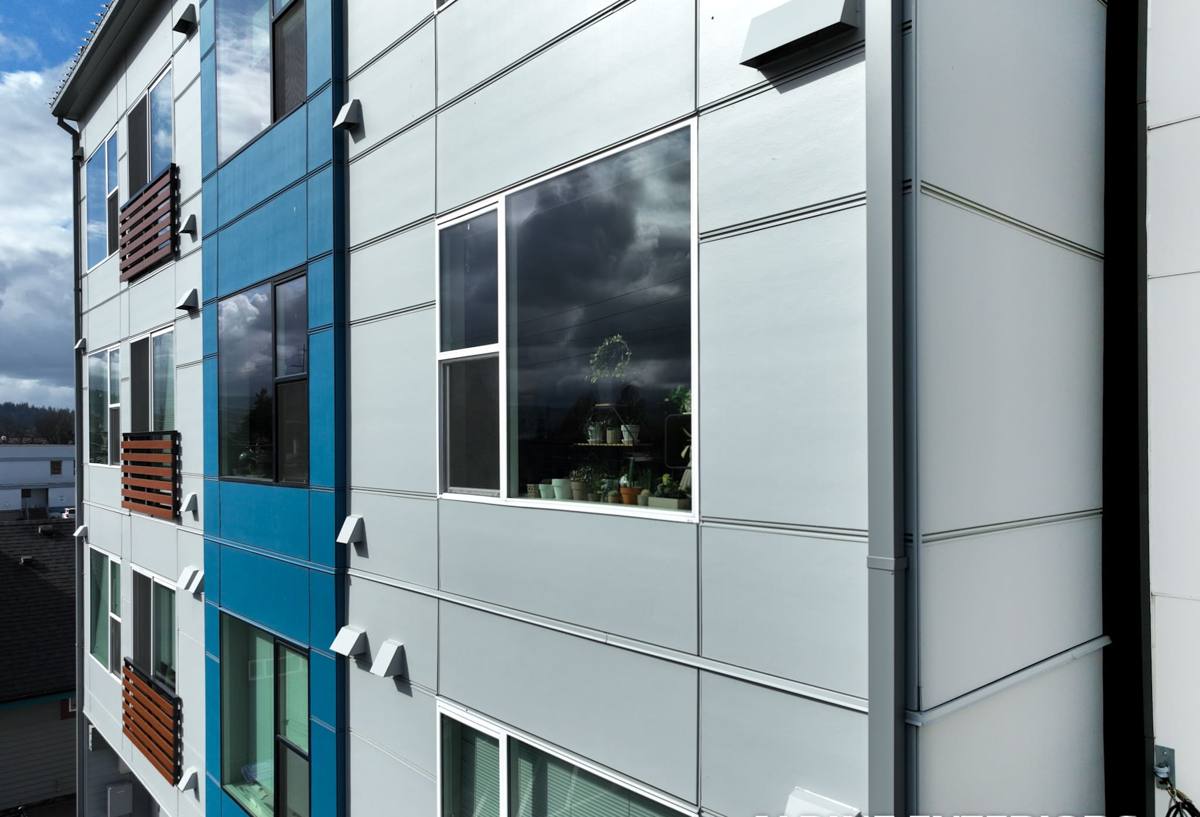
What Custom Actually Means on a Job Like This
Exact Measurements, Not Nearest Size
A custom window is built to the precise dimensions of your opening, including any out-of-square condition that's crept in over the decades. That precision matters more here than in a dry climate — a loose fit that would just be a minor draft in Arizona is a water intrusion point in a house that gets pounded by driving rain off the water several months a year.
Matching the Home, Not Just the Hole
Custom also means matching sightlines, grid patterns, and trim profiles so a replacement doesn't look like a patch job next to its neighbors. On older homes we're often replicating a look — narrow sash profiles, true divided lites, specific casing details — that stock replacement windows can't reproduce.
Built for the Specific Wall
Wall thickness, siding type, and existing flashing all change how a window needs to be installed. A custom order accounts for the exact depth and detailing of your wall assembly instead of relying on generic trim-out to make up the difference.
Signs Your Current Windows Are Already Losing the Fight
Before we talk about installation, it's worth knowing what to look for. These are the complaints we hear most from homeowners in this part of Bellingham:
- Sashes that stick, bind, or won't stay open on their own
- Visible fogging or a gray haze between panes of double-glazed glass (a failed seal)
- Soft, spongy, or discolored wood at the sill or lower corners of the frame
- A cold draft you can feel standing next to the window even when it's closed and locked
- Green or black growth building up in the frame corners or on the exterior sill
- Hardware that's stiff, corroded, or has started to pit and discolor
- Paint that's bubbling or peeling specifically around the window opening, not the wall in general
- Condensation forming on the inside of the glass most mornings in fall and winter
Any one of these on its own might not mean much. Two or three together, especially on the side of the house that takes the most weather, usually means the window assembly has been letting moisture in for a while.
Frame Material: What Actually Holds Up Here
We get asked constantly which material is "best." The honest answer is that it depends on the exposure of the specific window, the look you want, and how much upkeep you're willing to do. Here's how the common options actually perform in a salt-air, high-rainfall setting:
| Material | Moisture & Salt Air Performance | Maintenance | Best Use |
|---|---|---|---|
| Fiberglass | Excellent — won't rot, rust, or corrode; dimensionally stable in temperature swings | Low | Water-facing walls, high-exposure sides |
| Vinyl | Good — resists moisture well, but lower-end frames can warp under direct sun/heat cycling | Low | Budget-conscious full-house replacements |
| Wood (clad exterior) | Good if detailed correctly — the cladding protects the exterior face, but any breach exposes wood beneath | Moderate | Historic or period-accurate homes where appearance matters most |
| Solid wood (painted) | Fair — authentic look but most vulnerable to this climate without diligent upkeep | High | Restorations where an all-wood look is required |
| Aluminum | Fair — conducts cold and can corrode over time near salt air unless properly finished | Moderate | Modern architectural styles, limited exposure areas |
We're not going to tell you a given brand or material is "bad" — every option above has a legitimate place. Our job is to walk through where each window sits on your house, how much weather it actually takes, and steer you toward the material that won't turn into a maintenance headache in a few years.
The Installation Details That Separate a Good Job from a Problem
Flashing Comes First
Most window failures we're called out to inspect aren't a window problem at all — they're a flashing problem. Water finds the path of least resistance, and in driving rain that path is almost always a gap in the flashing above and around the opening. We integrate flashing with the existing water-resistive barrier so water sheds down and out, not behind the window into the wall cavity.
Sealing for the Exposure, Not the Manual
Manufacturer install guides are written for average conditions. A window on the weather side of a Silver Beach home facing open water gets a different sealant detail and backer rod approach than one tucked under an eave on the sheltered side of the house. We adjust for that instead of treating every opening the same.
Hardware and Fasteners That Won't Corrode
Salt-laden air is hard on standard fasteners and hinges over time. We use corrosion-resistant hardware appropriate to coastal-adjacent exposure so you're not dealing with rusted, seized, or discolored hardware a few winters in.
Insulating the Gap Correctly
A gap that's over-packed with foam can bow the frame; one that's under-insulated leaves a cold, drafty perimeter and a condensation point. Getting this right is part of what keeps a custom-fit window performing the way it's supposed to.
How the Job Actually Runs
- On-site assessment — we look at every opening being replaced, check for existing water damage or rot, and take exact measurements.
- Material and style walkthrough — we talk through frame material, glass options, and grid/trim style based on your home and budget, using the tradeoffs above rather than a sales pitch.
- Custom order — windows are built to your exact opening dimensions rather than pulled from stock sizing.
- Removal and inspection — old units come out carefully so we can check the framing and sheathing underneath for hidden moisture damage before anything new goes in.
- Flashing and install — proper flashing integration, air-sealing, and insulation, one opening at a time.
- Exterior and interior finish — trim, caulking, and paint or stain work to match the surrounding wall.
- Walkthrough — we operate every window with you before we consider the job done.
Living With Custom Windows in This Climate
Even a well-installed window needs a bit of seasonal attention here. A few habits go a long way:
- Wipe down sills and lower frame corners a couple times a year to keep moss and algae from establishing
- Check exterior caulking annually, especially after a hard winter, and touch up anywhere it's cracked or pulled away
- Keep gutters and downspouts clear so runoff isn't sheeting directly down the wall above a window
- Operate every window through its full range a few times a year so hardware doesn't seize from disuse
- Rinse salt residue off exterior frames periodically if the home faces open water directly
None of this is heavy maintenance — it's the difference between a window that looks and performs the same in year ten and one that starts showing the climate's wear after year three.
Why Local Experience in This Neighborhood Matters
Silver Beach isn't a generic Bellingham address — its exposure to wind off the water, its mix of older homes with non-standard openings, and its moss-heavy shaded lots create a specific set of problems that a crew unfamiliar with the area tends to under-detail. We've worked enough homes in this part of Whatcom County to know which walls take the worst of the weather, what kind of rot patterns to expect on original wood windows, and how to flash an opening so it holds up through another wet season rather than needing attention again in a year or two. That local pattern recognition is what keeps a window job from becoming a recurring one.
If your windows are showing any of the wear signs above, or you're planning a renovation that needs true custom sizing, we're happy to come take a look. Reach out for a free, no-pressure estimate — the form below gets you started.