 Bellingham
 Barkley's Climate Is Harder on Siding Than It Looks
Barkley sits close enough to Bellingham Bay that salt-laden air reaches the neighborhood on a regular basis, and it's tucked into the same wet, tree-shaded weather pattern that defines siding wear across Whatcom County. None of that is dramatic on any single day. It's the accumulation — years of moisture cycling in and out of seams, joints, and fastener holes — that eventually shows up as soft trim, peeling paint, or a section of siding that no longer sits flat against the wall.
Because Barkley is a mix of newer construction and homes now old enough for their original siding to be reaching the end of its service life, we see a wide range of repair situations here: everything from a single damaged panel to whole elevations that were never properly flashed to begin with. A repair that only addresses what's visible on the surface tends to fail again within a season or two. A repair that accounts for what's happening underneath the siding holds up for years.
Salt Air and Coastal Moisture
Salt air doesn't just affect fasteners and metal flashing — though it does, accelerating corrosion faster than homeowners further inland typically expect. It also keeps humidity levels elevated around the building envelope, which slows drying time after every rain event. Siding materials that absorb moisture, or paint systems that aren't built for a marine climate, break down faster here than the same products would in a drier part of the state.
Long Moss Season, Shaded Elevations
Bellingham's moss season runs long — realistically most of the year on north-facing walls, shaded side yards, and anywhere tree cover blocks direct sun. Moss and algae hold moisture against the siding surface, and on wood-based products that moisture doesn't just sit on top — it works into seams and cut edges. By the time green or black staining is visible, there's often already some degree of moisture intrusion happening beneath it.
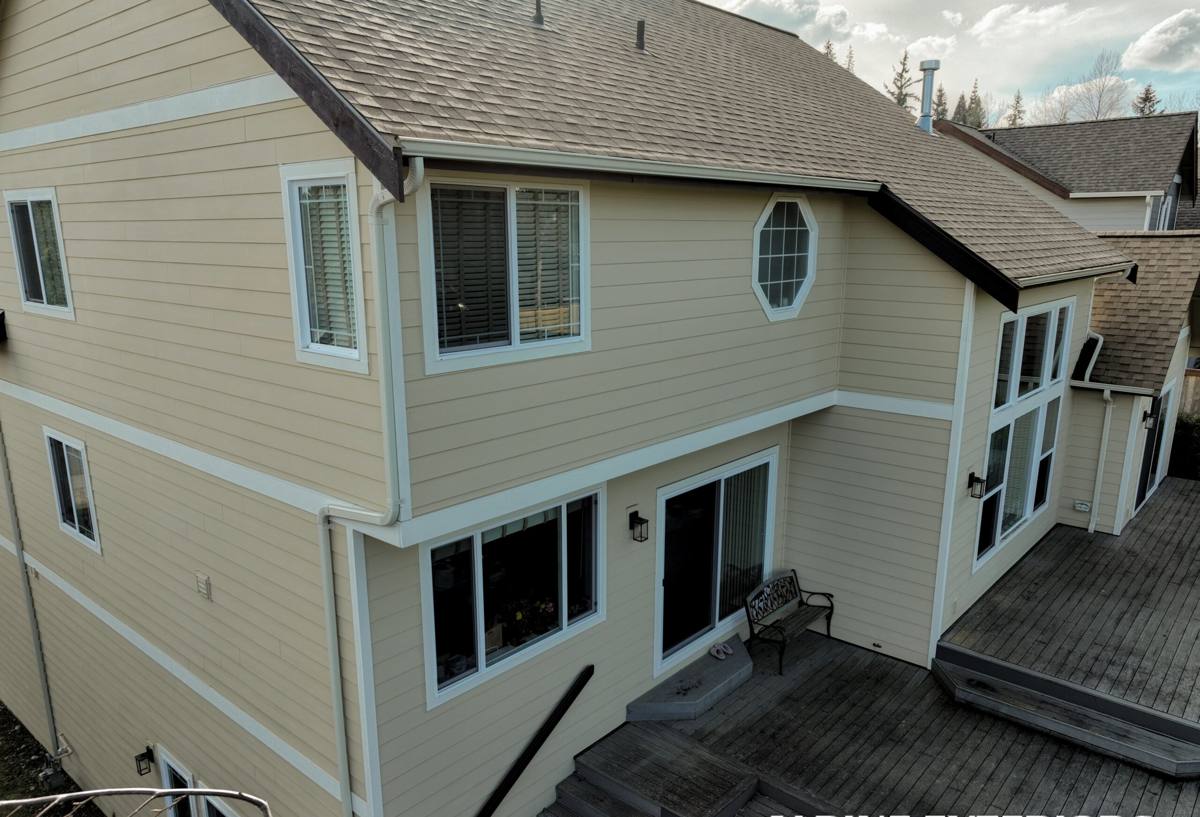
Signs a Barkley Home Needs Siding Repair
Most siding problems give some warning before they become expensive. The list below covers the signs we're asked about most often on repair calls in this neighborhood.
- Soft or spongy siding when pressed, especially near the bottom courses or below window sills
- Visible gaps, cracks, or buckled panels, particularly after a windstorm
- Paint that's peeling or bubbling in a localized area rather than across the whole house
- Dark streaking, persistent moss, or algae growth that keeps returning after cleaning
- Soft trim or fascia boards where they meet the siding
- Visible daylight or drafts felt from inside near exterior walls
- Warping or separation at seams, corners, or around window and door casings
- A musty smell in an interior room that shares a wall with the affected area
Any one of these on its own might be minor. Several appearing in the same area, or a homeowner noticing the same soft spot returning after a previous patch, usually points to a moisture source that hasn't been fully addressed.
What a Correct Siding Repair Actually Involves
A repair that's done right isn't just about matching the color and cutting a new piece to fit. It starts with figuring out why the original siding failed in that spot, because replacing the surface material without addressing the cause just resets the clock on the same problem.
Diagnosing the Cause, Not Just the Symptom
Before any siding comes off, we look at what's feeding the damage: a failed piece of flashing above a window, a gutter that's been overflowing onto a wall, caulking that's shrunk and pulled away from a joint, or a grade issue that's splashing water back up onto the lower courses. If we don't identify the source, the repair is cosmetic.
Checking What's Behind the Siding
Once the damaged section is removed, the sheathing and weather-resistive barrier underneath need to be inspected. Soft or delaminated sheathing has to be replaced, not just covered back up. This is the step that gets skipped in a rushed repair, and it's the step that determines whether the fix lasts five years or fifteen.
Rebuilding the Water Management, Not Just the Surface
Proper repair means restoring correct flashing details, lapping the weather barrier the right direction, and sealing penetrations the way they should have been sealed originally — then installing new siding that matches the existing material as closely as possible, with fastening and clearances done to manufacturer spec.
Repair or Replace? How We Help You Decide
Not every damaged section needs a full re-side, and not every homeowner who calls about a "small repair" actually has a small problem. The table below outlines the factors that push a project one way or the other.
| Factor | Leans Toward Repair | Leans Toward Replacement |
|---|---|---|
| Extent of damage | Isolated to one or two sections | Spread across multiple elevations |
| Age of existing siding | Well within expected service life | Near or past its expected lifespan |
| Sheathing condition | Dry, intact where exposed | Soft, delaminated, or repeatedly wet |
| Original installation quality | Flashing and details were done correctly elsewhere | Recurring flashing or barrier issues found |
| Material match available | Close color/profile match exists | Discontinued profile or faded, uneven color |
We'll always tell you honestly which side of this table your home falls on. A targeted repair is the right call more often than people assume — but if we open a wall and find the same moisture problem in three other spots, we'll show you what we found before recommending anything.
Why We Repair With James Hardie Fiber Cement — and Only That
When a repair calls for new siding material, we install James Hardie fiber cement — full stop. We don't install vinyl, LP SmartSide, Cemplank, Allura, primed spruce, or cedar, even for a patch repair, and that's worth explaining rather than just stating.
Each of those products has legitimate uses and reasonable arguments in its favor. But they each come with a trade-off we're not willing to build into a Bellingham home: vinyl expands and contracts more than fiber cement in temperature swings and can crack in impacts; engineered wood products are more sensitive to the sustained moisture exposure that Whatcom County's climate delivers; primed spruce and cedar require more frequent repainting and are more vulnerable to the same moss and moisture cycling that caused the original damage. In a climate with this much sustained dampness, those trade-offs show up faster than they would somewhere drier.
James Hardie fiber cement doesn't absorb moisture the way wood-based sidings do, it's non-combustible, and its ColorPlus factory finish is engineered to hold color and resist the fading and cracking that bare-painted siding is prone to in coastal air. Hardie also builds its HZ product line specifically for different climate zones — the HZ5 formulation used in our region is engineered for exactly the wet, moderate-temperature conditions Bellingham sees, rather than a one-size-fits-all product. When we patch in new Hardie material next to existing Hardie siding, or transition a full elevation, the result is a repair built on a material designed for this exact climate, backed by a strong transferable warranty when installed to spec.
Our Siding Repair Process
- Inspection and diagnosis — We assess the visible damage and look for the underlying cause: flashing, drainage, grading, or a barrier failure.
- Honest scope and estimate — You get a clear explanation of what's damaged, what's driving it, and what repair or replacement will actually involve — including if we think you don't need what you called about.
- Removal and hidden-damage check — Affected siding comes off, sheathing and the weather-resistive barrier are inspected, and any compromised material is identified before we move forward.
- Rebuild the water management details — Flashing, barrier laps, and sealant details are corrected, not just covered.
- Install and finish — New James Hardie material is fit, fastened to spec, and finished to blend with the surrounding siding as closely as the existing product and color allow.
- Final walkthrough — We review the completed work with you and explain anything worth keeping an eye on going forward.
Why a Crew That Already Works in Barkley Matters
Siding repair is site-specific work, and a crew that's already spent time on homes in this neighborhood has a real advantage over one seeing Barkley's particular mix of exposure and shade for the first time. That includes knowing which elevations in a shaded lot tend to hold moisture longest, how salt air from the bay tends to accelerate wear on south and west-facing walls, and what typical construction details look like across the different eras of homes built here.
It also matters for the practical side of the job — knowing how the City of Bellingham handles permitting for exterior repair work of different scopes, and being familiar enough with the neighborhood's housing stock to source a close material and color match without guesswork. A crew that treats every Barkley job as a one-off spends billable time relearning what a locally established crew already knows.
Protecting Your Repair Through Moss Season
A correctly executed repair can still be undone by neglect afterward, especially given how long moss season runs here. A few habits go a long way toward protecting the investment:
- Keep gutters clear so overflow doesn't run down the siding face
- Trim back vegetation and tree limbs that keep an elevation shaded and damp
- Rinse visible moss or algae buildup before it has a chance to spread
- Recaulk joints and penetrations if you notice gaps opening up over time
- Have siding checked after any major windstorm, especially around window and door trim
If you're dealing with damaged, soft, or aging siding on a Barkley home, we're happy to take a look and give you an honest read on what's going on — repair or replacement, no pressure either way. Reach out below for a free estimate.