 Bellingham
 Metal Roofing for Sunnyland Homes: Built for What This Neighborhood Actually Deals With
Sunnyland sits close enough to Bellingham Bay that salt-laden air is a fact of life, and far enough into the tree canopy that shade, damp ground, and slow-drying roof surfaces are just as much a factor. That combination — moist marine air plus heavy tree cover — is a tough environment for a roof. Homeowners here tend to ask us the same question in different words: what roofing actually holds up to this, instead of just surviving it for a decade and then falling apart? For a lot of homes in this part of Bellingham, the answer is metal.
This page isn't a general metal roofing pitch. It's specifically about what a metal roof needs to do on a Sunnyland lot, what a correct installation looks like given Whatcom County's climate, and why the crew doing the work matters as much as the material itself.
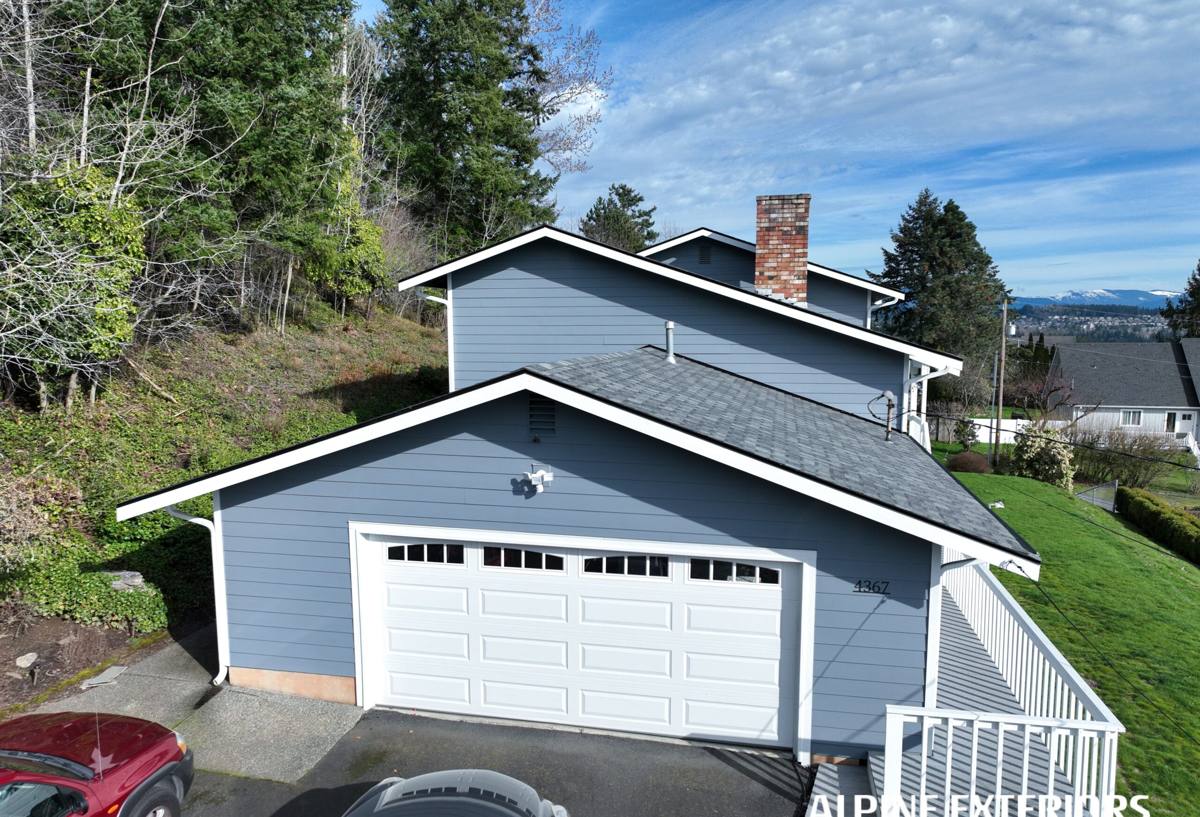
What Bellingham's Climate Does to a Roof Over Time
Three things wear on roofs in this part of Whatcom County, and Sunnyland gets all three at once:
- Salt air. Proximity to the bay means airborne salt settles on exposed metal, fasteners, and flashing. Untreated or poorly coated metal corrodes faster here than it would further inland.
- Driving rain. Storms off the water don't always fall straight down — wind-driven rain finds its way under poorly lapped flashing, weak seams, and aging underlayment.
- A long moss season. Shaded, tree-lined lots stay damp for months at a time. Moss and algae get a foothold on asphalt shingles especially, and once established, they hold moisture against the roof deck year-round.
None of these are dramatic, one-time events. They're slow, cumulative pressure — the kind that shows up as granule loss, soft spots, or a moss mat five years earlier than the manufacturer's warranty assumed. Metal roofing doesn't ignore these conditions, but it responds to them differently than shingles do, which is why it's worth a serious look for this neighborhood specifically.
Choosing the Right Metal Roofing System
"Metal roofing" isn't one product — it's a category, and the right choice depends on the home's roof pitch, budget, and how much of the lot sits under tree cover. Here's how the common options compare for a Sunnyland-style property:
| System | Moss/Debris Resistance | Relative Cost | Best Fit |
|---|---|---|---|
| Standing seam | Excellent — smooth panel, few horizontal laps for debris to catch on | $$$ | Steeper roofs, homes prioritizing longevity and clean lines |
| Exposed fastener (corrugated/ribbed) | Good, but exposed screws need periodic inspection | $$ | Simpler rooflines, garages, outbuildings, budget-conscious replacements |
| Stone-coated steel | Good — textured surface sheds water well, though texture can trap some debris | $$$ | Homeowners who want a shingle or shake profile with metal's durability |
We don't push one system on every roof. A heavily shaded, low-slope section of a Sunnyland home behaves differently than a steep, more exposed south-facing plane on the same house — sometimes the right answer is different panel types on different parts of the same roof.
Standing Seam
Concealed fasteners and raised seams mean fewer penetration points for water to work into, which matters when driving rain is part of the equation. It's our first recommendation on steeper pitches and on homes where long-term, low-maintenance performance is the priority.
Exposed Fastener Panels
A solid, more affordable option, but the exposed screws are the weak point over time — the neoprene washers under each screw head degrade eventually, especially with salt air accelerating wear on the metal around them. This system works well when it's installed correctly and inspected periodically; it's not the system to install and forget.
Stone-Coated Steel
Gives a more traditional shingle or shake appearance while keeping metal's structural durability. It's a reasonable middle ground for homeowners who want metal's lifespan without a strictly industrial look.
What a Correct Metal Roof Installation Actually Involves
The panels themselves get most of the attention, but on a damp, shaded lot like a lot of Sunnyland's, the details underneath the panels are what determine whether the roof performs for thirty-plus years or ten.
Deck Inspection and Tear-Off
We don't install new roofing over a deck we haven't inspected. Years of trapped moisture under moss-covered shingles can soften sheathing, and that has to be found and replaced before anything goes on top of it — not discovered as a leak two years later.
Underlayment and Moisture Barriers
A synthetic, high-temperature underlayment is standard under metal roofing, but in valleys, around chimneys, and at any low-slope transition, we add ice-and-water membrane regardless of the time of year — Whatcom County doesn't get much ice, but the same membrane does double duty against wind-driven rain intrusion at vulnerable points.
Flashing, Valleys, and Penetrations
Flashing is where most roof leaks actually originate, metal or otherwise. Valleys, chimney flashing, plumbing boots, and skylight curbs all need to be detailed to shed water even when wind is pushing rain sideways — a real condition here, not a theoretical one.
Fasteners and Coatings for Salt Air
Given Sunnyland's proximity to the bay, we pay close attention to fastener material and panel coating compatibility. Mixing incompatible metals (steel fasteners against aluminum panels, for example) sets up galvanic corrosion that shows up as staining and pitting well before the panel itself would otherwise fail. Matching fastener and panel metals, and using a quality factory finish, is a small decision at install time that prevents a cosmetic and structural problem a decade out.
Our Process, Start to Finish
- On-site assessment. We look at the existing roof, the deck condition, ventilation, and how much of the property sits under tree cover — that shapes both the material recommendation and the maintenance conversation.
- Straightforward estimate. Panel system, underlayment, flashing detail, and ventilation are all covered up front — no vague allowances that turn into surprise costs mid-project.
- Tear-off and deck repair. Any soft or water-damaged sheathing gets replaced before underlayment goes down.
- Underlayment and flashing installation. This is the stage that determines long-term watertightness, and it's not one we rush.
- Panel installation. Panels, seams, and trim installed to manufacturer spec, with attention to fastener and coating compatibility.
- Final walkthrough and cleanup. We check ridge and eave details, gutters, and site cleanup before calling the job done.
Moss, Debris, and Long-Term Maintenance
Metal roofing dramatically reduces moss growth compared to shingles because it doesn't hold moisture in a porous surface the way asphalt granules do. It's not moss-proof, though — organic debris can still build up in valleys and against roof-to-wall transitions on a heavily shaded lot, and that debris needs to be cleared periodically so it isn't holding water against the panel or flashing.
Signs it's worth having a roof looked at, whether it's currently metal, shingle, or something else:
- Visible moss or algae staining, especially on north-facing or shaded slopes
- Granule buildup in gutters (a shingle roof sign, and a hint that replacement timing is worth discussing)
- Rust streaking or discoloration around fasteners or flashing on an existing metal roof
- Debris accumulation in valleys that doesn't clear on its own after rain
- Any staining on interior ceilings near roof penetrations or chimneys
- Panels or shingles that look lifted or loose after a windy storm
Why Hiring a Crew That Already Works Sunnyland Matters
Roofing crews who mostly work drier, more open parts of Whatcom County don't always plan for what a shaded, salt-air-adjacent lot needs — the extra attention to fastener compatibility, the valley detailing for wind-driven rain, the awareness that a roof here dries slower than one a few miles inland. A crew that's worked this neighborhood before isn't guessing at how the local climate behaves; they've already seen how it ages roofs, and they build accordingly.
There's also a practical side: familiarity with City of Bellingham permitting and inspection expectations keeps a project moving instead of stalling on paperwork. That's not a glamorous reason to choose a contractor, but it's a real one.
What Reasonable Cost Expectations Look Like
Metal roofing costs more up front than asphalt shingles, and the systems above aren't priced the same as each other either — standing seam runs higher than exposed fastener panels, largely due to labor and material for the concealed fastener detailing. What we won't do is quote a number without seeing the roof: pitch, tear-off scope, deck condition, and access all move the price, sometimes significantly. What we can promise is a written estimate that spells out exactly what's included, so there's no ambiguity about what you're paying for.
If you're weighing metal roofing for a home in Sunnyland, we're glad to take a look and walk through what makes sense for your specific roof — no pressure, no obligation. The estimate form below is the easiest way to get started.