 Bellingham
 Storm Damage Roof Repair for Sunnyland Homes
Sunnyland sits close enough to Bellingham Bay that its roofs take a steady beating from weather most inland neighborhoods never see in the same combination. Salt-tinged air, wind-driven rain off the water, and a moss season that runs longer than most homeowners expect all work on a roof at the same time. When a windstorm or heavy rain event pushes a roof past its limit, the fix has to account for all of that, not just patch the one spot that's leaking today.
This page covers what storm damage roof repair actually looks like for homes in this part of Bellingham — what causes it, how to tell it's happened, what a correct repair involves, and why local experience with this specific neighborhood's housing stock and weather pattern matters more than it might seem.
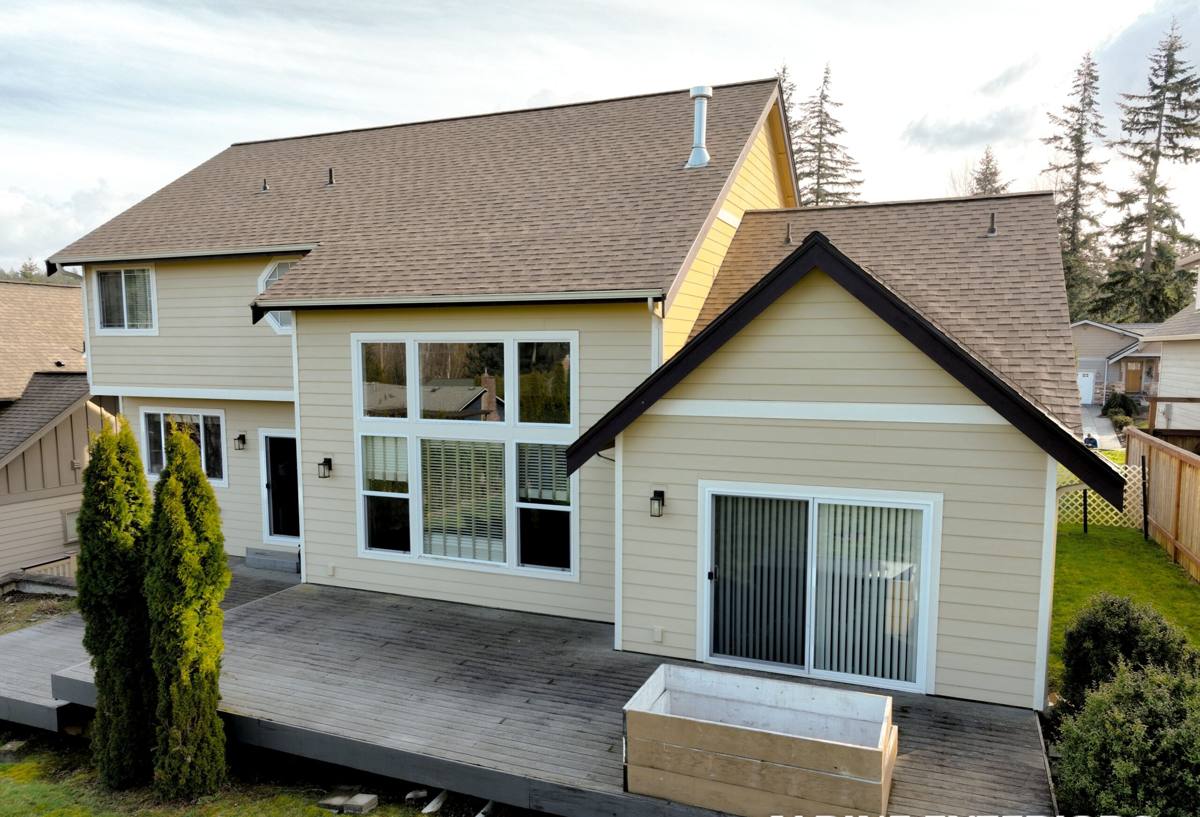
Why Whatcom County Storms Are Hard on Roofs
Bellingham and the rest of Whatcom County sit in a marine climate that swings between long stretches of drizzle and sudden, sharp storm systems moving in off the Pacific. A few things about that pattern matter specifically for roofs in Sunnyland:
Wind Direction and Exposure
Storms here often arrive with strong, gusting wind out of the south or southwest, sometimes compounded by outflow events funneling down from the Fraser Valley to the north. Roofs with any exposed ridge line, older or loose flashing, or shingles already past their prime are the first to lose material in that kind of wind. Even a moderate gust can lift a shingle edge that's been slowly failing for years without anyone noticing from the ground.
Driving Rain
Rain that comes in sideways doesn't behave like rain falling straight down. It gets pushed up under shingle tabs, around chimney and vent flashing, and into any gap that a calm-weather roof would shed water past without issue. A roof that's been "fine" for years can suddenly leak during a wind-driven storm simply because the water is attacking it from an angle the roof was never tested against.
Moss and Organic Buildup
The mild, wet stretches between storms are exactly what moss needs to take hold, and Whatcom County's tree cover means a steady supply of needles and organic debris landing on roofs year-round. Moss holds moisture against the roofing material, works its way under shingle edges, and adds weight and friction that make wind damage worse when the next storm hits. A roof with heavy moss going into a windstorm is more likely to lose shingles than a clean one.
Signs Your Sunnyland Roof Has Storm Damage
Storm damage isn't always obvious from the driveway. Some of it shows up right away; some of it shows up as a slow leak weeks later. After any significant wind or rain event, it's worth checking for the following:
- Shingles that are curled, cracked, creased, or missing entirely, especially near ridges and edges
- Granules collecting in gutters or at the base of downspouts — a sign of impact or wind abrasion
- Lifted or bent flashing around chimneys, skylights, and roof vents
- New or worsening moss growth in areas where wind may have disturbed the shingle surface
- Water stains on ceilings or in the attic that weren't there before the storm
- Debris — branches, needles, or blown material — piled against a roof plane instead of shedding off it
- Gutters pulled loose or sagging away from the fascia
Any one of these on its own might be minor. Several at once, or a leak that shows up during or right after a storm, means it's time for a real inspection rather than a wait-and-see approach.
What a Correct Storm Damage Repair Actually Involves
A rushed storm repair often just covers the visible hole and calls it done. That approach tends to fail again in the next storm, because it ignores what actually let water in. A correct repair includes:
Finding the Real Entry Point
Water travels. A stain on a ceiling can be several feet from where the water is actually getting in, especially on a roof with any pitch complexity. A proper repair traces the path back to the source — often flashing, a fastener, or a shingle edge — rather than patching wherever the stain happens to appear.
Matching Materials and Method
Replacement shingles need to match the existing roof's material, profile, and where possible, color, so the repair doesn't create a new weak point at the seam between old and new. Flashing repairs need to be integrated with the existing underlayment, not just caulked over — caulk is a short-term fix, not a repair.
Checking What's Underneath
If water has been getting in for any length of time, the decking underneath may be softened or the underlayment compromised, even if the surface shingles look mostly fine. A repair that doesn't check the substrate risks leaving hidden rot that shows up as a bigger problem later.
Addressing the Contributing Factors
If moss buildup or debris contributed to the damage, a repair that doesn't address that leaves the roof set up to fail the same way again. Clearing growth and improving drainage around the repaired area is part of doing the job right, not an upsell.
Repair vs. Replacement: How We Decide
Not every storm-damaged roof needs full replacement, and not every roof can be responsibly patched. The honest answer depends on a few factors we look at during inspection:
| Factor | Favors Repair | Favors Replacement |
|---|---|---|
| Roof age | Under roughly 12-15 years | Near or past expected lifespan |
| Extent of damage | Localized to one section or slope | Widespread across multiple roof planes |
| Underlying decking | Solid, no rot found | Soft spots or rot present |
| Shingle condition elsewhere | Rest of roof still granulated and flexible | Brittle, curling shingles across the roof |
| Prior repair history | First significant storm event | Repeated patches over several years |
We'll tell you plainly which category your roof falls into. A roof that only needs a repair doesn't need a sales pitch for a full replacement, and a roof that's genuinely failing shouldn't be patched just to delay the real conversation.
Our Process: Inspection to Cleanup
1. Inspection
We walk the roof, not just look at it from the ground, and check attic space where accessible for signs of water intrusion. Wind and hail damage can be subtle, so this step takes time.
2. Clear Explanation
Before any work starts, we explain what we found, what caused it, and what the repair involves — in plain terms, not roofing jargon.
3. Repair Work
We replace damaged material, correct flashing, and address decking issues if found, using materials matched to your existing roof wherever possible.
4. Moss and Debris Cleanup
Where growth or debris contributed to the failure, we clear it as part of the job so the repaired section isn't set up to fail again.
5. Final Check and Cleanup
We confirm the repair holds up under close inspection and leave the property clear of old material, nails, and debris.
Insurance Claims and Storm Damage
Many storm damage repairs in this area involve a homeowner's insurance claim, particularly after a named wind event or a storm significant enough to be widely reported locally. A few honest points on that process:
- Document damage with photos before any tarping or temporary repair if it's safe to do so
- Temporary protection (like tarping an exposed area) is often reasonable and expected by insurers to prevent further damage — it doesn't compromise a claim
- A written, itemized estimate helps your adjuster understand scope; we provide that as a matter of course, not a favor
- We work from what the roof actually needs, not from inflating a claim — that protects you if the claim is reviewed later
We're happy to meet an adjuster on site and walk the roof with them if that's useful to your claim.
Cost Factors for Storm Damage Roof Repair
Storm repair costs vary widely based on real conditions, so we won't quote a number without seeing the roof. What actually drives cost:
- How much of the roof is affected — a single flashing repair versus multiple shingle sections
- Roof pitch and access — steeper or harder-to-access roofs take longer and require more safety setup
- Whether decking replacement is needed underneath the damaged area
- Material match availability, particularly on older roofs with discontinued shingle lines
- Whether moss removal or gutter work is needed alongside the repair itself
We give a written estimate after inspection so you know exactly what you're paying for and why, with no vague line items.
Why a Crew That Already Works Sunnyland Matters
Roofing crews that only pass through a neighborhood after a big storm tend to move fast, quote fast, and disappear once the check clears. A crew based here and working across Bellingham and Whatcom County regularly has a different set of incentives — we're going to be in this neighborhood next month and next year, and our reputation with your neighbors depends on the work holding up.
That local presence also means faster response after a widespread storm, familiarity with the mix of housing ages and roof types common in this part of Bellingham, and a working knowledge of how local weather actually behaves through a full moss season and storm season, not just a one-time visit.
If you've had storm damage — or you're not sure whether recent wind or rain caused damage that hasn't shown itself as a leak yet — we're glad to come take a look. The estimate is free, there's no pressure to book anything on the spot, and you'll get a straight answer about what your roof actually needs. Use the form below to get started.