 Bellingham
 Why Birchwood Homes Need a Roof Built for This Specific Climate
Birchwood sits close enough to Bellingham Bay and the surrounding water that salt-laden air is a real factor in how long any roofing material lasts, not just a talking point. Add in Whatcom County's long wet season, driving rain that comes in sideways off the water during winter storms, and the deep shade thrown by mature trees common in this neighborhood, and you've got a combination that's hard on roofs. Asphalt shingles work fine in a lot of climates, but in a neighborhood like this one, metal roofing earns its keep by handling all three of those stresses at once: it sheds water fast, it doesn't absorb moisture the way organic shingle mat does, and with the right material choice, it resists the corrosion that salt air accelerates.
We're not writing this page to sell metal roofing as a miracle product. It's not the right fit for every budget or every roof shape. But for homeowners in Birchwood who are tired of moss removal, ice damming, or replacing shingles every 15-20 years, it's worth understanding what a correctly installed metal roof actually involves — and what separates a system that holds up for decades from one that causes problems in five years.
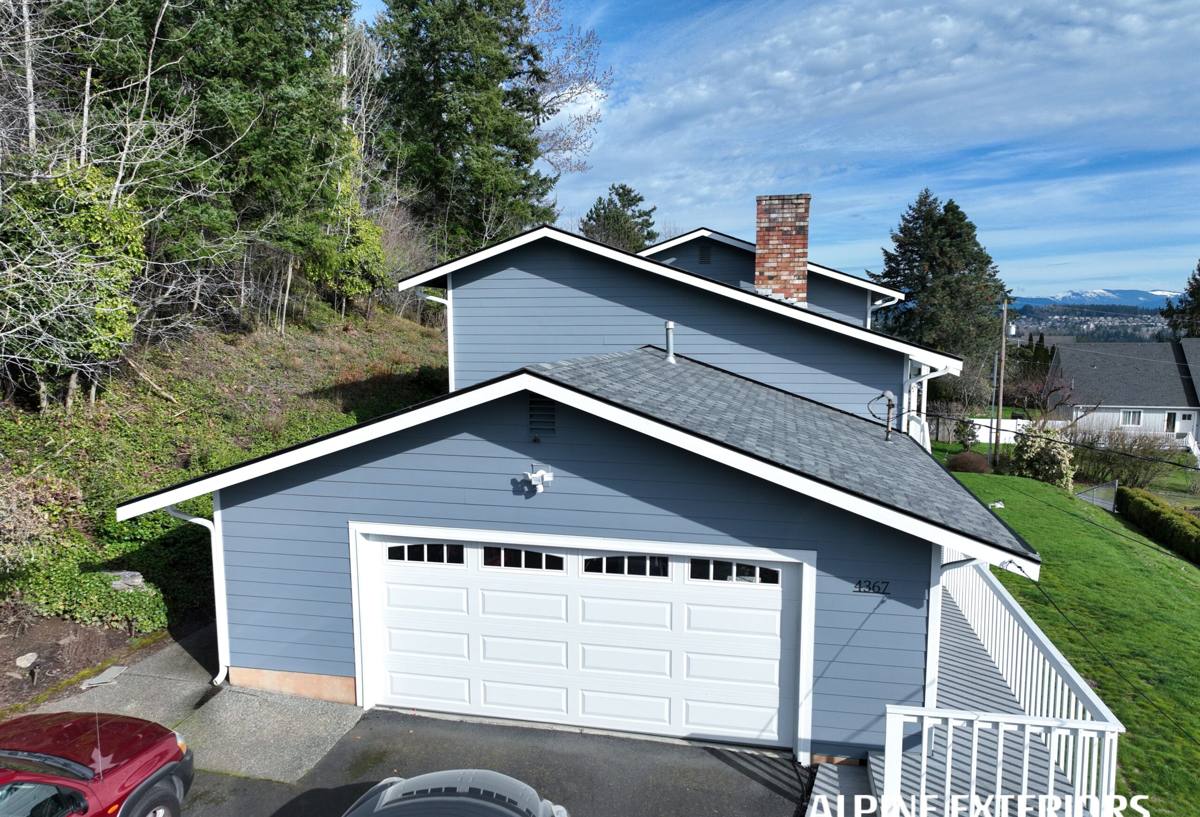
What Salt Air and Constant Moisture Do to a Roof Over Time
Salt air doesn't just affect homes right on the waterfront. Airborne salt travels inland on wind, and Birchwood gets enough of it that untreated or poorly matched metals can start showing white corrosion spots or rust streaking well before their rated lifespan is up. This is why fastener choice, panel coating, and even the metal underneath the coating all matter more here than they would in a dry inland climate.
Constant moisture brings its own set of problems separate from salt. Bellingham's rain isn't just frequent, it's often prolonged low-intensity rain that gives water time to find every weak seam, nail hole, or flashing gap. Combine that with shaded, tree-covered lots that stay damp longer after a storm, and you get ideal conditions for moss growth on any roofing material with texture or seams that trap organic debris. Moss holds moisture against the roof surface, and over years that moisture works its way into fastener penetrations and underlayment.
The Practical Result for Homeowners
Roofs in this area age faster than the same material would in a drier climate unless the installation accounts for drainage, ventilation, and corrosion resistance from day one. That's the standard we hold ourselves to on every Birchwood metal roofing job — not just meeting code, but building in the extra margin this specific climate demands.
Choosing the Right Metal Roofing System for This Area
"Metal roofing" covers a range of products, and the right choice depends on your roof's pitch, your budget, and how long you want to go before doing any maintenance. Here's how the common options compare for a coastal Whatcom County home:
| System | Best Suited For | Moisture & Salt Performance | Maintenance Needs |
|---|---|---|---|
| Standing seam steel (Galvalume or steel with PVDF coating) | Most roof pitches, especially where a clean, low-maintenance look is wanted | Strong — concealed fasteners mean fewer penetration points for water and salt to attack | Low; periodic gutter and valley clearing |
| Standing seam aluminum | Homes closest to the water or with a history of corrosion issues | Excellent — aluminum doesn't rust, only forms a stable surface oxide | Low |
| Exposed-fastener steel panels | Budget-conscious projects, outbuildings, simpler rooflines | Fair — fasteners are the weak point and need monitoring over time | Moderate; fastener washers should be checked periodically |
| Metal shingles / shakes | Homes wanting a traditional look with metal's durability | Good, depends on coating and fastener quality | Low to moderate |
For most Birchwood homes, we lean toward standing seam systems because the concealed fastener design removes the biggest long-term failure point in a wet, salty climate: exposed screws and washers that eventually loosen or corrode. Exposed-fastener panels aren't a bad product, but we're upfront that they carry a higher long-term maintenance burden here, and we'll tell you that honestly rather than push the cheaper option without context.
Steel vs. Aluminum: An Honest Trade-Off
Steel with a quality Galvalume coating and PVDF paint system performs well for the vast majority of homes in this area, and it costs less than aluminum. Aluminum costs more but makes sense for homes with direct water exposure or a documented history of corrosion problems, since it has no iron content to rust in the first place. Neither is "wrong" — it's a decision based on your specific site and budget, and we'll walk through it with you rather than default to whichever is easier to install.
What a Correct Metal Roofing Installation Actually Involves
A metal roof is only as good as the details underneath the panels. This is where a lot of corners get cut on lower-bid jobs, and it's exactly where problems show up years later in a climate like this one.
- Underlayment: A synthetic, high-temperature underlayment rated for metal roofing, with self-adhering ice-and-water barrier at eaves, valleys, and penetrations — the areas most exposed to wind-driven rain.
- Fasteners: Stainless steel or coated fasteners matched to the panel material, since mismatched metals accelerate corrosion through galvanic reaction — a real risk given the salt content in the air here.
- Ventilation: Proper intake and exhaust airflow so moisture doesn't get trapped under the deck, which matters even more under a metal roof than under shingles.
- Flashing details: Custom-formed flashing at valleys, chimneys, skylights, and wall intersections rather than generic trim pieces caulked into place.
- Fastening pattern and clip spacing: Sized for the wind exposure of the specific roof, not a one-size-fits-all spacing pulled from a manufacturer's minimum spec sheet.
- Drip edge and gutter integration: Sized and positioned so heavy rain sheds cleanly instead of overshooting gutters during the area's harder storms.
Skipping any one of these doesn't usually cause an immediate problem. It causes a problem three, five, or ten winters from now — which is exactly why we don't treat them as optional upgrades.
Moss, Algae, and Debris: Design Choices That Reduce the Battle
No roofing material is moss-proof if it sits under heavy tree cover in a wet climate, but metal roofing gives you a real advantage: its smooth, hard surface doesn't hold onto spores and organic debris the way shingle granules do, and standing seam profiles shed needles and leaves more readily than a textured surface. That said, a few installation choices make a bigger difference than the panel material alone.
Design Details That Help
Adequate roof pitch and clean valley design keep water and debris moving rather than pooling. Panel profiles with fewer horizontal ledges give moss less of a foothold to establish itself. And where a roof sits under heavy tree cover, we'll talk with you honestly about whether some canopy trimming on your end would meaningfully extend the time between cleanings — it's a cheaper fix than any roofing upgrade.
What Affects the Cost of a Metal Roofing Project Here
We're not going to quote a number that doesn't reflect your actual roof, but these are the main factors that move the price on a Birchwood metal roofing project:
| Factor | Why It Matters |
|---|---|
| Roof pitch and complexity | Steep roofs, multiple valleys, and dormers all add labor and custom flashing work |
| Panel material and finish | Aluminum and premium coatings cost more upfront but reduce long-term corrosion risk |
| Tear-off vs. install over existing roof | Removing old roofing adds cost but lets us inspect and repair the deck underneath |
| Access and site conditions | Tree cover, tight lot lines, and roof height affect staging and safety requirements |
| Ventilation and deck repairs | Any rot or inadequate ventilation found during tear-off needs to be addressed before panels go on |
Broadly, metal roofing costs more upfront than asphalt shingles, but the gap narrows when you factor in the shingle roof's shorter lifespan and the moss and ice-dam maintenance that comes with it in this climate.
Our Process, Start to Finish
1. On-Site Assessment
We walk the roof, check the deck condition where accessible, look at ventilation, and talk through how your specific site — tree cover, wind exposure, proximity to the water — should shape the material and detailing choices.
2. A Clear, Written Estimate
You get a straightforward proposal covering material, labor, and the specific underlayment, fastener, and flashing approach we're recommending for your roof, not a vague lump sum.
3. Tear-Off and Deck Inspection
When we remove the existing roofing, we inspect the deck for rot or soft spots before anything new goes down. Problems found here get flagged and priced before we proceed, not discovered as a surprise later.
4. Installation
Underlayment, ice-and-water barrier, flashing, and panels go in following the details outlined above — built for this climate, not a generic spec sheet.
5. Final Walkthrough
We go over the finished roof with you, including what maintenance to expect and what to watch for over the coming seasons.
Maintenance After Installation
One of the real advantages of metal roofing in this climate is how little ongoing maintenance it needs compared to shingles — but "little" isn't "none."
- Clear needles, leaves, and debris from valleys and gutters at least once or twice a year, more often under heavy tree cover.
- Have gutters checked for proper flow during peak rain months so water isn't backing up under the drip edge.
- Look for any lifted or loose fasteners on exposed-fastener systems every few years.
- Avoid pressure washing the surface — it can drive water into seams and strip protective coatings.
- Trim back overhanging branches that keep sections of the roof shaded and damp longer than the rest.
Why a Crew That Already Works in Birchwood Matters
Metal roofing is unforgiving of inexperienced installation — small mistakes in fastener spacing, flashing laps, or panel alignment don't announce themselves right away, but they show up as leaks or corrosion down the line. A crew that regularly works in this specific part of Bellingham already understands the wind exposure, the tree cover patterns, and the salt air conditions particular to Whatcom County's coastal neighborhoods, rather than applying a generic install approach and hoping it holds up. That familiarity shows up in the details: where we add extra ice-and-water protection, how we spec fasteners, and which panel profiles we steer clients toward for this kind of site.
It also means we're a known, findable local business if a question comes up five or ten years after installation — not a crew that worked in the area once and moved on.
If you're considering a metal roof for your Birchwood home, we're happy to take a look and give you a straightforward, no-pressure estimate — including an honest answer on whether metal is the right fit for your roof in the first place. Use the form below to get started.