 Bellingham
 Why Birch Bay Decks Wear Differently Than Decks Inland
A deck built five miles inland in Bellingham and a deck built along Birch Bay are not living the same life, even if they're built from the same materials. Birch Bay's waterfront exposure means salt-laden air moving across the deck year-round, wind-driven rain that gets pushed sideways into fascia and rim joists instead of just falling straight down, and a wet season that runs long by any standard — soaking the same shaded, low-airflow spots for months at a time. Composite decking handles this environment better than wood in most respects, but "composite" is not a single product with one set of behaviors. How it's installed matters as much as what brand is on the board.
We work on decks throughout Whatcom County, and the Birch Bay jobs get treated differently from the start — different fastener choices, different attention to substructure ventilation, different board-gap decisions — because the failure modes out here are specific to the exposure.
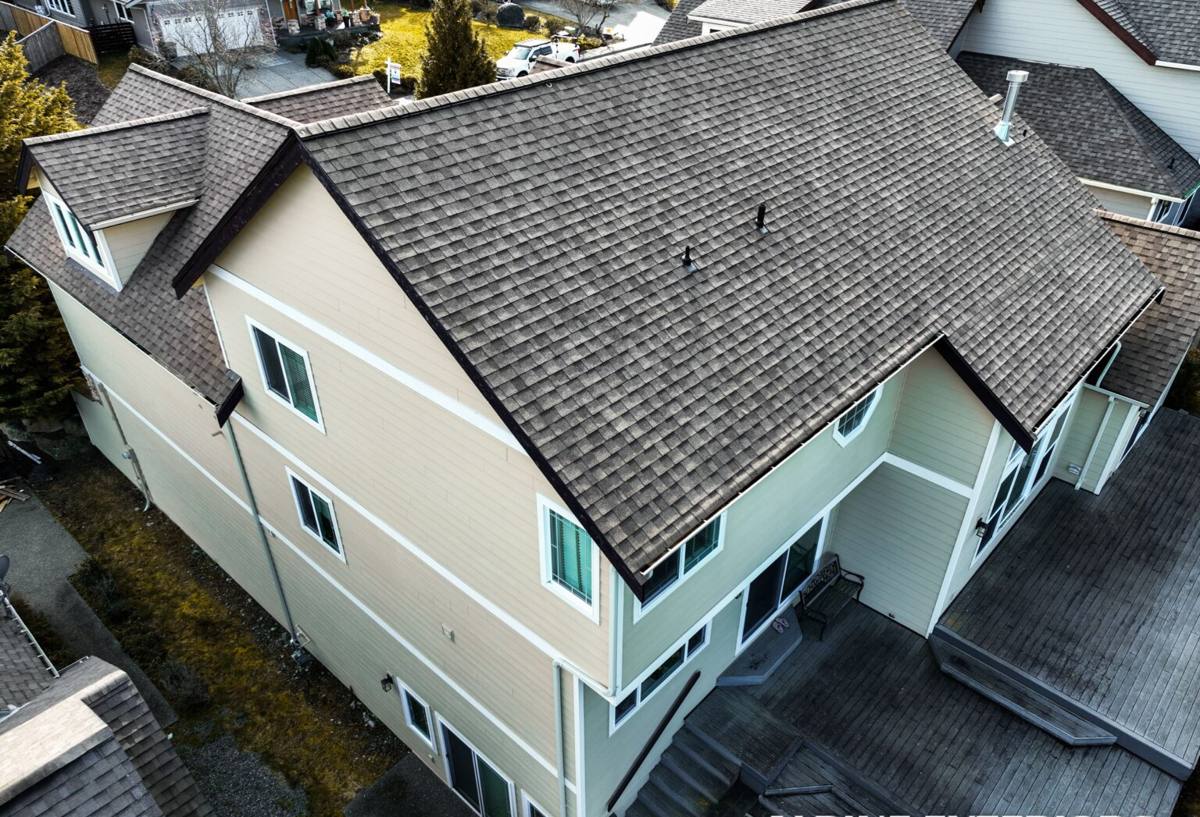
What Salt Air and Moisture Actually Do to a Deck
Metal Components Are the First to Show Wear
Composite boards themselves don't rust or rot, but every deck has metal in it — joist hangers, screws, bolts, railing hardware, flashing. In a salt air environment, standard galvanized fasteners can start showing corrosion years before they would inland. This doesn't ruin the deck overnight, but it's the kind of slow failure that goes unnoticed under the decking until a hanger lets go.
Moisture Finds the Gaps You Didn't Seal
Driving rain doesn't fall politely from above — it gets pushed under rail caps, into end-grain cuts on framing, and behind fascia boards that weren't flashed correctly. Composite decking is far more forgiving of surface moisture than wood, but the framing underneath it is usually still pressure-treated lumber, and that lumber can still take on water and start to break down if it's never allowed to dry.
Building the Substructure Correctly
Fasteners and Hardware
For Birch Bay installs, we use stainless steel or coated fasteners rated for coastal and marine-adjacent exposure rather than standard galvanized hardware. It costs more up front and it's the difference between hardware that's still sound in fifteen years and hardware that's staining and weakening in five.
Ventilation Under the Deck
A deck built low to the ground or over a partially enclosed space needs airflow underneath it. Without it, the space under the boards stays damp for weeks after a storm, which is exactly the condition that encourages rot in the framing and mold or algae growth on anything organic nearby. We build in ventilation gaps and skirting details that let air move rather than trapping moisture in a dark, still pocket.
Ledger Board Flashing
Where the deck attaches to the house, the ledger board and its flashing are one of the most common failure points on any deck, anywhere — but a leaking ledger connection in a high-moisture coastal climate causes damage faster. This connection gets proper flashing and sealing every time, not just a strip of tape and a hope.
Moss, Algae, and the Long Wet Season
Whatcom County's wet season stretches long, and Birch Bay's proximity to the water keeps humidity and surface moisture around even longer than a few miles inland. Moss and algae need three things to take hold: moisture, shade, and organic debris to feed on. A deck that sits wet and collects fir needles or leaf litter in the gaps between boards is giving moss everything it needs.
Board Spacing and Drainage
Proper gapping between boards lets water and debris pass through instead of pooling on the surface. Boards installed too tight — sometimes done to make a deck look seamless — trap moisture and organic matter right where moss wants to grow. We space boards according to manufacturer spec and account for board expansion, so the gap stays consistent through wet and dry cycles instead of closing up in winter.
Grading and Runoff Underneath
Water that drains through the deck surface has to go somewhere. If the ground or substructure underneath doesn't shed water away from the house and framing, you've just relocated the moisture problem instead of solving it. We check and correct grading under the deck as part of the build, not as an afterthought.
Realistic Maintenance
Composite decking cuts maintenance dramatically compared to wood — no staining, no sealing, no sanding — but "low maintenance" isn't "no maintenance" in this climate. An occasional rinse and sweep, especially heading into fall when needles and leaves start collecting, keeps moss from ever getting a foothold. That's a fraction of what wood decking demands, but it's not zero.
Composite vs. Wood vs. PVC for a Birch Bay Deck
| Material | Performance in Salt Air / Wet Season | Maintenance | Trade-Offs |
|---|---|---|---|
| Wood (cedar/pressure-treated) | Absorbs moisture readily; needs regular sealing to resist rot and staining near water | High — annual cleaning and refinishing | Lowest material cost, most upkeep, shortest realistic lifespan in this exposure |
| Composite | Resists moisture absorption and staining well; doesn't rot; some early-generation boards could fade or stain if not capped properly | Low — periodic rinse and sweep | Higher upfront cost, but framing underneath still needs correct ventilation and hardware |
| PVC / capped polymer | Fully resists moisture absorption; performs well in coastal exposure | Low — similar to composite | Highest material cost; can feel and flex differently underfoot than wood-grain composite |
We install composite for most Birch Bay projects because it strikes the right balance of moisture resistance, appearance, and cost for this exposure — but the honest answer depends on your budget, how close to the water your lot sits, and how the deck will be used. We'll walk through the real trade-offs on-site rather than push one product.
Our Process for a Birch Bay Composite Deck
- Site visit and assessment — we look at sun/shade exposure, wind direction relative to the water, existing drainage patterns, and the condition of any structure we're replacing.
- Substructure plan — framing layout, fastener spec, ventilation and skirting details are decided before any lumber goes down, based on that site's specific exposure.
- Framing and flashing — ledger connection, joists, and hangers go in with coastal-rated hardware and proper flashing at every point moisture could enter.
- Decking installation — boards installed to manufacturer spec for gapping and fastening, with attention to drainage flow across the whole surface.
- Rail, stair, and edge details — the places most likely to trap water or get missed on a rushed job get checked specifically.
- Final walkthrough — we go over maintenance expectations honestly, including what this specific deck's exposure means for upkeep.
Permits and Local Considerations
Deck projects near the water in Whatcom County can involve permitting and setback considerations that don't apply to an inland build, particularly depending on proximity to the shoreline and any existing structure being replaced versus a new build. We handle the permitting conversation with the relevant jurisdiction as part of the project rather than leaving it for the homeowner to sort out, and we won't guess at requirements that are specific to your parcel — that gets confirmed before work starts, not assumed.
What Affects the Cost of Your Deck
| Factor | Why It Matters |
|---|---|
| Deck size and shape | More linear footage of framing, fascia, and board cuts; complex shapes add labor |
| Height off the ground | Taller decks need more substructure, railing, and often stairs |
| Board and hardware grade | Coastal-rated fasteners and higher-tier composite or PVC boards cost more but last longer in this exposure |
| Site access and demo | Removing an old deck, tight lot access, or grading work adds time |
| Railing and stair details | Composite or metal railing systems, stair complexity, and lighting all add to scope |
We give a straightforward, written estimate after seeing the site — not a phone-quote number that changes once we're standing in your yard.
Why It Matters That We Already Work Birch Bay
A crew that mostly builds decks in dry, inland conditions and only occasionally works a waterfront lot doesn't always think to spec coastal-rated hardware, doesn't always catch a ventilation problem that would be invisible for the first year or two, and doesn't have a feel for how fast moss can take over a shaded deck near the water. We work this area regularly, so those decisions aren't guesswork — they're standard practice on every Birch Bay job we take on.
What a Correctly Built Composite Deck Should Include
- Coastal-rated stainless or coated fasteners throughout, not just at visible connections
- Proper ventilation and airflow under the deck surface
- Correctly flashed ledger board connection where the deck meets the house
- Board gapping set to manufacturer spec for drainage and expansion
- Grading underneath that directs water away from the house and framing
- A clear, honest maintenance conversation before the crew leaves — not a sales pitch about "zero maintenance"
If you're planning a new composite deck or replacing one that's struggling with moss, staining, or soft spots in Birch Bay, we're happy to take a look and give you a straightforward, no-pressure estimate. Use the form below to get started.