 Bellingham
 Roofing Happy Valley Homes for Local Conditions
Happy Valley sits close enough to the water and tree cover that its homes take a specific kind of beating: salt-laden air off Bellingham Bay, long stretches of driving rain through fall and winter, and a moss season that can run most of the year in shaded yards. A new roof installed here needs to account for all three, not just meet the minimum code requirements a roofing crew would use anywhere else in the state.
We install roofs for homes throughout this part of Whatcom County, and Happy Valley's mix of older bungalows, mid-century houses, and newer infill construction each present their own quirks — different deck conditions, different roof pitches, different amounts of tree canopy. A correct installation starts with understanding what that specific roof is up against, not just rolling out a standard package.
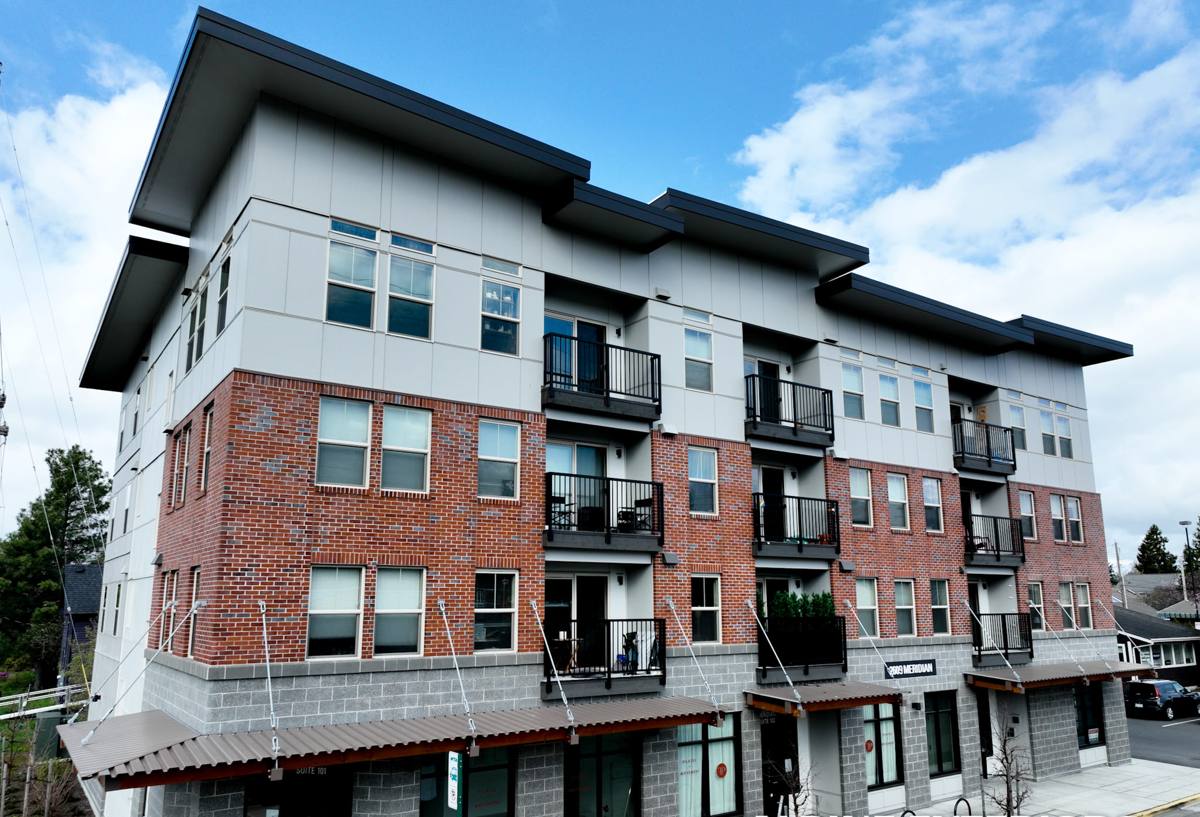
What a Correct New Roof Installation Actually Involves
"New roof" sounds simple, but the difference between a roof that lasts and one that fails early almost never shows up in the shingle color. It shows up in the layers underneath, most of which you'll never see once the job is done.
Tear-Off and Deck Inspection
We remove the old roofing down to the deck rather than layering over it. That lets us actually see the plywood or plank sheathing underneath — soft spots, rot around old vent penetrations, and water staining all get found and fixed here. Skipping this step is the single most common shortcut that leads to early failure, because a new roof over a compromised deck is only as good as the wood holding it up.
Ice and Water Barrier at Vulnerable Points
Eaves, valleys, and any low-slope transitions get a self-adhering waterproof membrane before anything else goes down. In a climate with as much sustained rain as Whatcom County sees, wind-driven water can work its way under standard felt at these spots. This barrier is cheap insurance against the leaks that show up two or three winters later.
Underlayment
We use synthetic underlayment across the full deck rather than old-style felt paper. It handles repeated wet-dry cycling better, doesn't wrinkle the way felt can under humidity, and gives the roof a second line of defense if wind ever lifts a shingle edge during a storm.
Flashing
Flashing around chimneys, skylights, sidewalls, and vent pipes is where most roof leaks actually originate — not from the field of the roof itself. We replace flashing rather than reusing old pieces, and we take extra care at any wall-to-roof transition, since those are the spots salt air and moisture attack fastest.
Ventilation
A roof that can't breathe traps moisture in the attic, which speeds up deck rot from underneath and feeds moss growth on the surface. We check intake and exhaust balance as part of every installation and correct it when the existing setup is undersized, which is common on older Happy Valley homes that were built before current ventilation standards.
Moss, Moisture, and Salt Air: The Three Things Shortening Roof Life Here
These aren't abstract concerns — they're the specific reasons roofs in this area wear out faster than the manufacturer's stated lifespan would suggest.
Moss takes hold anywhere a roof stays shaded and damp, which describes a lot of Happy Valley given the tree cover. Moss doesn't just look bad — its root structure lifts shingle edges and holds moisture directly against the roofing material, accelerating granule loss and, eventually, leaks. Zinc or copper strips at the ridge, installed during the initial roof, are a low-cost way to slow regrowth for years without ongoing chemical treatment.
Driving rain in this region doesn't just fall straight down — wind pushes it sideways and up under shingle edges and around flashing. That's why the underlayment and flashing details matter more here than they would in a drier climate; they're doing real work most winters, not sitting as backup protection.
Salt air off the bay accelerates corrosion on any exposed metal — nails, flashing, vent caps, gutter hardware. We use corrosion-resistant fasteners and flashing materials on homes in this area for that reason, since standard hardware can start rusting years ahead of schedule this close to saltwater.
Comparing Roofing Materials for Happy Valley Conditions
There's no single "best" roofing material — the right choice depends on your budget, your roof's exposure to shade and moss, and how long you plan to stay in the home. Here's how the common options actually compare for this specific climate.
| Material | Moss Resistance | Typical Lifespan Here | Rough Cost Range |
|---|---|---|---|
| Architectural asphalt shingle | Moderate (better with zinc strips) | 20-30 years | Lowest to mid |
| Standing seam metal | High — moss struggles to hold on smooth metal | 40-50+ years | Highest |
| Cedar shake | Low without regular maintenance | 20-25 years with upkeep | Mid to high |
| Synthetic composite shingle | Moderate to high | 30-40 years | Mid to high |
Architectural asphalt remains the most common choice because it balances cost and performance well when installed correctly and paired with moss-prevention details. Metal roofing costs more up front but shrugs off moss and salt air the best of any option, which makes it worth considering for homes with heavy shade or direct bay exposure. Cedar shake looks great but demands more upkeep in a moss-prone climate than most homeowners want to commit to — we'll be honest about that trade-off rather than talk you into a product that'll need constant attention.
Our Installation Process
- On-site evaluation. We walk the roof, check the attic, and look at drainage and tree coverage specific to your property before quoting anything.
- Written estimate. Materials, scope, and price laid out clearly, with options if you're deciding between shingle types or budget tiers.
- Permitting. We handle the permit process so it's not on you to navigate.
- Tear-off and deck repair. Old roofing comes off, deck gets inspected, any damaged sheathing gets replaced before we move forward.
- Waterproofing and underlayment. Ice and water membrane at vulnerable points, synthetic underlayment across the field.
- Flashing and ventilation correction. New flashing throughout, ventilation balanced if needed.
- Roofing installation. Material installed to manufacturer spec, with moss-prevention detailing where applicable.
- Final walkthrough. We go over the finished roof with you and cover care and maintenance specific to your material.
Why a Crew That Already Works Happy Valley Matters
A roofing crew that's worked this specific area knows things a crew from outside the region won't think to check — which streets sit under heavy tree canopy and need extra moss detailing, which parts of the neighborhood catch the worst of the wind off the bay, and what deck conditions tend to show up in homes of a certain age around here. That local pattern recognition shortens the guesswork and reduces the chance of missing something that only becomes obvious after a wet Whatcom County winter.
It also matters for follow-up. If a question comes up after the job — about a warranty detail, a maintenance question, or something you noticed after a storm — you're dealing with a crew that's a short drive away and familiar with your property, not a call center.
Signs Your Happy Valley Home May Need a New Roof
- Shingles curling, cracking, or losing granules faster in shaded areas
- Visible moss or algae streaking, especially on north-facing slopes
- Daylight visible through the attic roof boards
- Water stains on ceilings or upper walls after heavy rain
- Sagging areas in the roofline or soft spots underfoot in the attic
- Flashing that's rusted, lifted, or separating from chimneys and walls
- Roof is approaching or past the manufacturer's expected lifespan for its material
Any one of these on its own isn't necessarily an emergency, but a few together usually means it's worth having someone take a real look rather than waiting for a leak to force the issue.
Permits, Timeline, and What to Expect
Most residential roof replacements in this area take one to three days on site depending on roof size, pitch, and material, though weather can push that out given how much rain Whatcom County sees over a typical fall or winter. We pull permits before work starts and schedule around forecasted dry windows whenever possible, since installing over wet decking is one of the more common ways a roof job goes wrong.
You don't need to be present for the entire job, but we'll walk you through what to expect for noise, driveway access, and cleanup before we start, and again at the final walkthrough.
If your Happy Valley roof is showing its age or you're just planning ahead, we're glad to come take a look and give you a straight, no-pressure estimate — use the form below to get started.