 Bellingham
 Deck Replacement Built for Fairhaven's Waterfront Climate
Fairhaven sits right on Bellingham Bay, and that location is exactly what makes decks here wear out faster than decks a few miles inland. The salt air coming off the water, the driving rain that blows in sideways during fall and winter storms, and a moss season that can run most of the year on shaded or north-facing decks all work on wood and fasteners in ways a drier, inland yard never has to deal with. We replace decks throughout Fairhaven and the rest of Whatcom County, and we build every one of them with that specific combination of exposures in mind, not a generic spec sheet.
A deck that looks fine from a distance can still be failing underneath. Soft joists, corroded hardware, and a ledger board that's been quietly taking on water for years are common findings once we pull the old decking up, especially on older Fairhaven properties where the deck may not have been built to current code or with coastal-grade materials in the first place. Replacement done right means fixing what's actually wrong under the surface, not just installing new boards over the same problems.
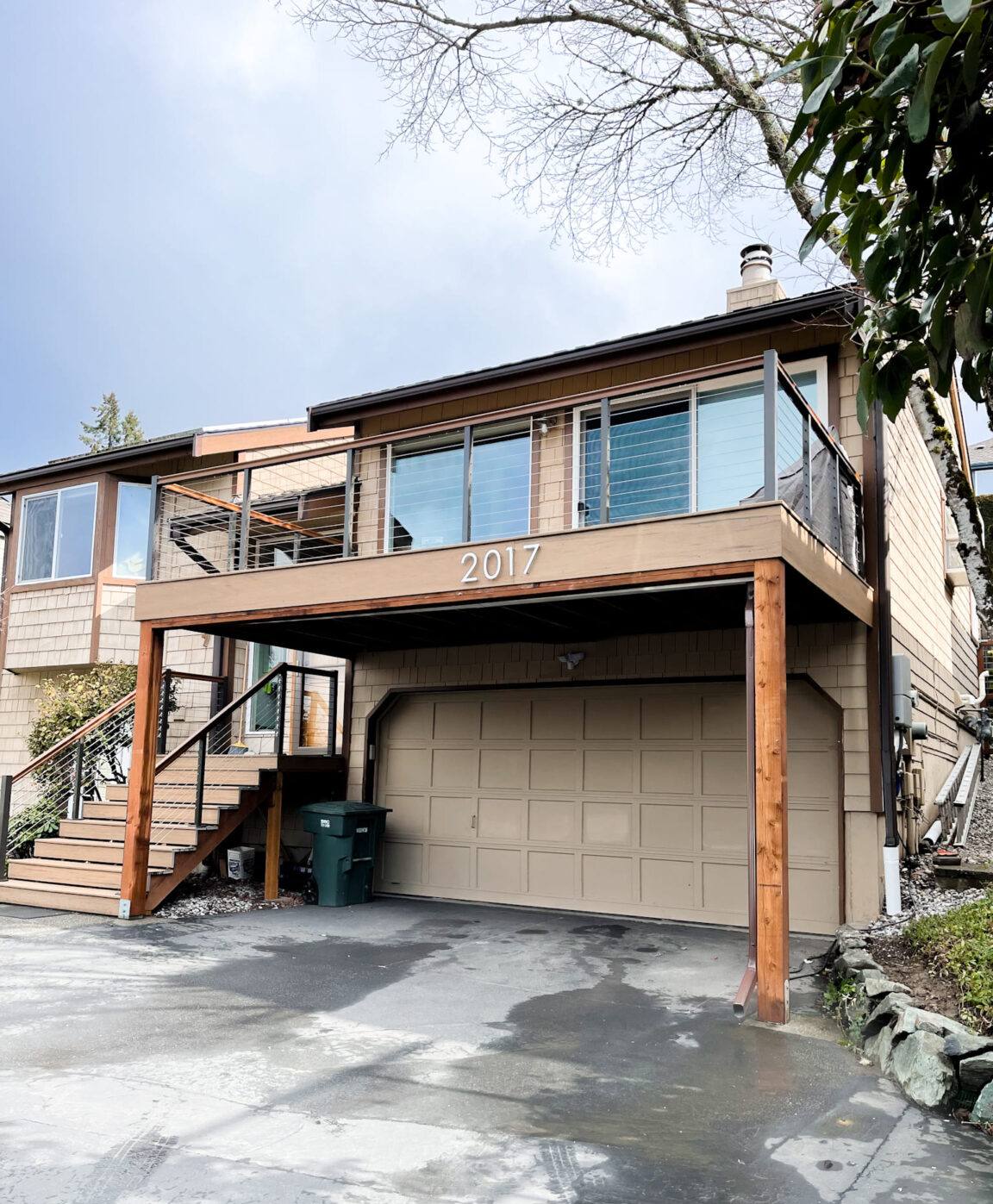
What Bellingham Bay Exposure Does to a Deck
Salt Air and Metal Fatigue
Decks close to the water take in salt-laden air on a near-daily basis, and that steady exposure accelerates corrosion in fasteners, joist hangers, and structural connectors far faster than standard hardware is rated for. A deck built with the wrong grade of hardware can look sound on the surface while the metal holding it together is quietly rusting from the inside out.
Wind-Driven Rain at Ledger and Rim Joints
Rain blowing off the bay doesn't fall straight down, it drives sideways into the house-to-deck connection, the ledger board, and any spot where the deck framing meets the building. That's the single most common place we find hidden rot on a Fairhaven deck, because a ledger without proper flashing and a water-resistant barrier behind it lets moisture track directly into the house's rim joist, not just the deck itself.
A Long Moss and Algae Season
Mild temperatures and consistent bay dampness mean moss and algae can establish on deck boards for much of the year, especially under trees or on the shaded side of a hillside lot. Beyond looking bad, a mossy deck surface is a real slip hazard, and moss that's allowed to sit against wood or composite decking holds moisture against the board longer than it would otherwise dry, which shortens the material's service life.
Hillside and Bluff Terrain
A lot of Fairhaven's housing sits on sloped or bluff-adjacent lots above the bay, which affects deck framing in practical ways: taller support posts, deeper or more numerous footings, and more attention to how the structure is braced against wind loading than you'd need on a flat inland lot.
Signs a Fairhaven Deck Needs Replacement, Not Just Repair
- Soft, spongy, or springy decking boards, especially near the ledger or in shaded areas
- Rust staining running down from fasteners, joist hangers, or post bases
- Persistent moss or algae that returns quickly after cleaning
- Visible gaps, cupping, or splitting in aging wood decking
- A ledger board that's discolored, soft, or separating slightly from the house
- Wobble or movement in railings or support posts under normal weight
- A deck older than 15 to 20 years that's never had the structure inspected below the surface
Any one of these can sometimes be addressed with a targeted repair. Several of them together, or anything involving the ledger connection or structural framing, usually means the deck has reached the point where replacement is the more honest recommendation than another round of patching.
What a Correct Deck Replacement Actually Involves
Tearing off old decking and nailing down new boards is the easy part. The work that actually determines how long a deck lasts in this climate happens underneath, before a single new board goes down.
Ledger Flashing and Water Management
The ledger board connection to the house gets proper metal flashing and a water-resistant membrane behind it, installed so water sheds away from the house rather than tracking behind the siding or into the rim joist. This is the detail most responsible for hidden rot when it's skipped or done carelessly on the original build.
Coastal-Grade Fasteners and Hardware
Given the salt air exposure this close to the bay, we use fasteners and structural hardware rated for coastal or high-corrosion environments rather than standard-grade hardware built for a drier inland climate. It costs more up front and it's the difference between hardware that lasts and hardware that fails quietly inside the structure.
Footings Sized for the Site
Footing depth and post spacing get sized to the actual lot, which on a sloped or bluff-adjacent Fairhaven property often means deeper footings and more careful post placement than a standard flat-lot deck requires. This gets engineered and permitted correctly, not eyeballed.
Proper Board Spacing and Drainage
Decking gets spaced and sloped to shed water rather than trap it, which matters even more here given how much rain the deck surface sees over a typical year. Poor drainage under and around the deck is one of the quieter causes of premature rot.
Deck Replacement Process
- On-site inspection of the existing deck, including checking the ledger, framing, and footings, not just the surface boards
- Honest assessment of repair versus full replacement, explained plainly
- Material and layout discussion based on your budget, maintenance preference, and how the deck will actually be used
- Permitting through the local jurisdiction, which is required for most deck replacement work involving structural changes
- Tear-off and disposal of the old structure
- Framing, footings, ledger flashing, and structural work built to current code
- Decking, railing, and finish work installed to spec
- Final walkthrough so you know exactly what was done and how to maintain it
Choosing a Decking Material for a Bay-Facing Lot
There's no single right answer here, material choice comes down to budget, maintenance tolerance, and how exposed the deck is to sun, rain, and salt air. We'll walk through the real trade-offs for your specific property rather than pushing one product regardless of fit.
| Material | Upfront Cost | Maintenance | How It Handles This Climate |
|---|---|---|---|
| Composite decking | Higher | Low, occasional cleaning | Resists moisture absorption and moss staining well, doesn't require sealing or staining |
| Pressure-treated wood | Lower | Higher, regular sealing needed | Affordable and structurally solid, but needs consistent maintenance to resist moisture and moss in a wet marine climate |
| Cedar | Mid to high | Higher, staining or sealing needed | Naturally attractive and rot-resistant to a point, but requires upkeep to keep performing well against sustained bay moisture |
| Hardware and fasteners | Varies | Low if coastal-grade | Coastal-rated stainless or coated hardware costs more but resists the corrosion salt air causes in standard-grade hardware |
Whatever decking material you choose, the framing, flashing, and fastener decisions underneath it matter just as much, if not more, to how the deck performs over time.
Deck Replacement Cost Factors in Fairhaven
| Factor | What It Affects | Why It Matters Here |
|---|---|---|
| Lot slope and site access | Labor time and equipment needs | Fairhaven's hillside and bluff-adjacent lots can add staging, material handling, and footing work compared to a flat lot |
| Existing structural condition | Repair costs before new decking goes on | Ledger and framing damage from years of bay-driven moisture often isn't visible until the old decking comes off |
| Decking material selection | Material cost and long-term maintenance | Composite costs more upfront but needs less upkeep against moss and moisture than untreated wood options |
| Footing and post requirements | Structural cost | Sloped lots near the bluff often need deeper or additional footings for stability |
| Permit and code requirements | Timeline and design constraints | Deck replacements involving structural changes require permitting through the local building department |
We walk every property before quoting because these factors vary house to house, especially on Fairhaven's terrain, and a real number only comes from seeing the actual site.
Why Local Deck Experience Matters in Fairhaven
A deck crew that mostly works drier, inland projects can still build a structurally sound deck, but they may not default to coastal-grade hardware, proper ledger flashing for wind-driven rain, or footing depths suited to sloped bay-adjacent lots unless they're specifically thinking about it. Working in and around Fairhaven regularly means those decisions aren't an afterthought, they're the starting point for how we spec every job in this part of Whatcom County. We also know what the local permitting process typically requires for deck work here, which keeps a project from stalling partway through.
Access matters too. Narrow streets, sloped driveways, and tight lots are common in Fairhaven, and planning for material delivery and equipment staging ahead of time keeps a replacement moving instead of losing days to logistics that should have been anticipated.
Deck Replacement Checklist for Fairhaven Homeowners
- Have the ledger board and framing inspected, not just the visible decking surface
- Ask what grade of fasteners and hardware will be used, and confirm it's rated for coastal exposure
- Confirm whether the project requires a permit before work begins
- Discuss decking material trade-offs honestly, including realistic maintenance expectations
- Ask how footings will be sized for your specific lot slope and soil conditions
- Get a clear scope in writing before any tear-off starts
If your Fairhaven deck is showing signs of wear, or you just want an honest read on whether it's due for repair or full replacement, we're glad to walk the property and give you a straight answer. Reach out for a free, no-pressure estimate using the form below.