 Bellingham
 Roofing in Puget Takes a Different Kind of Beating
If you own a home in the Puget area of Bellingham, you already know your roof works harder than a roof fifty miles inland. You're close enough to the water to catch salt-laden air, exposed enough to take driving rain off Bellingham Bay, and shaded enough by conifers in most yards to grow moss on anything that sits still for more than a season. None of that is a reason to panic about your roof. It is a reason to make sure whoever installs or repairs it actually understands what "correct" looks like out here, not just what's correct in a manufacturer's national spec sheet.
Asphalt shingles remain the most practical roofing material for the vast majority of Puget homes — they're proven, repairable, reasonably priced, and available in weights and lines that hold up well to this climate when installed right. The word "installed right" is doing a lot of work in that sentence, and that's what this page is about.
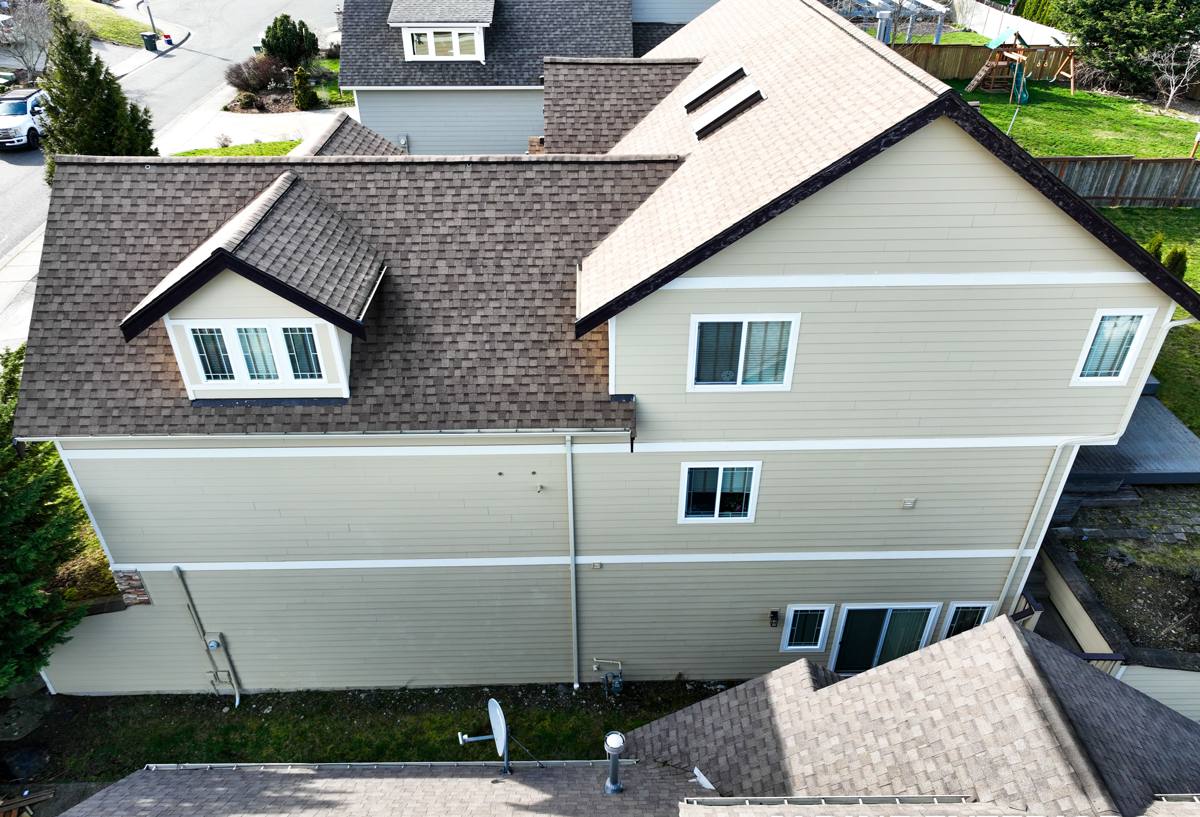
What Whatcom County Weather Actually Does to a Roof
Salt Air and Metal Fatigue
Homes closer to the water deal with airborne salt that accelerates corrosion on exposed metal — nail heads, flashing edges, vent housings, and drip edge. It's slow, but it's constant. A roof detailed with the wrong fastener or flashing material will show rust streaks and early failure at those metal points years before the shingles themselves are due for replacement.
Driving Rain, Not Just Rain
Bellingham doesn't just get rain — a lot of it comes in sideways off the bay during winter storms. Wind-driven rain finds every gap in flashing, every under-lapped shingle course, and every place where a valley or step-flashing detail was rushed. A roof that would be fine in a calmer inland town can leak here if the underlayment and flashing details aren't built for wind-driven water rather than straight-down rain.
The Long Moss Season
Between the tree cover common in Puget yards and the region's long stretch of damp, low-sun months, moss has months on end to get established on north-facing slopes and shaded valleys. Moss isn't just cosmetic — as it grows it lifts shingle edges, holds moisture against the roof deck, and shortens the life of the shingle underneath it. A roof that's never had moss addressed will age faster than one that has.
What a Correct Asphalt Shingle Job Actually Involves Here
A lot of roofing problems in this climate don't come from bad shingles — they come from a fine shingle installed with shortcuts that don't matter in dry climates but matter a great deal here. A correct job in Puget includes:
- Ice-and-water membrane or equivalent self-adhering underlayment at eaves, valleys, and around every penetration — not just the code minimum, but placed where wind-driven rain and moss-related moisture actually collect
- Corrosion-resistant flashing and fasteners suited to salt-air exposure, especially on homes within a few miles of the water
- Proper step flashing at every wall intersection, woven in course by course rather than caulked over as a shortcut
- Balanced intake and exhaust ventilation so the attic doesn't trap the moisture this climate throws at it, which left unaddressed leads to sheathing rot from the inside
- Shingle nailing in the manufacturer's high-wind pattern, since gusts off the bay are common enough that standard-pattern nailing leaves shingles vulnerable
- Valley and drip-edge detailing sized for real volume, not minimum code, since our storms move a lot of water in a short time
Skip any one of these and the roof might look fine for a year or two. The failures in this climate tend to show up in year three to seven — a leak at a valley, rot at a wall flashing, a shortened lifespan from trapped attic moisture. That delay is exactly why cutting corners is so common and so costly: nobody's around to connect the leak back to the install.
Shingle Options and How They Actually Perform Here
Not every asphalt shingle line is a good match for a wet, mossy, salt-influenced climate. Here's how the common tiers stack up for a Puget home specifically:
| Shingle Type | Typical Lifespan Here | Moss Resistance | Best Fit |
|---|---|---|---|
| Standard 3-tab | 15-20 years | Low — no built-in resistance | Budget rentals, short-hold properties |
| Architectural / laminate | 25-30 years | Moderate, better if algae-resistant granules are specified | Most owner-occupied Puget homes |
| Algae-resistant (copper/zinc granule) architectural | 25-30 years, cleaner appearance longer | High — granules actively slow moss and algae growth | Shaded lots, north-facing roof planes, homes with a moss history |
| Premium / designer laminate | 30+ years | High, with the added durability of a heavier mat | Steep-slope, high-visibility roofs, homeowners planning to stay long-term |
For most Puget homes with any tree cover, we lean toward algae-resistant architectural shingles as the practical sweet spot — the upcharge over standard architectural shingles is modest, and the payoff in reduced moss staining and slower granule loss is real over a 20-30 year roof life.
Repair, Recover, or Full Replacement — How to Tell Which You Need
Not every roof problem in Puget means a full tear-off. The honest answer depends on the age of the existing roof, how widespread the damage is, and what's happening underneath the shingles.
When Repair Makes Sense
Localized damage — a section lifted in a windstorm, a cracked pipe boot, a flashing detail that was never sealed correctly — is usually a repair, not a replacement, especially on a roof under 15 years old that's otherwise sound.
When Recover Is a Bad Idea Here
Installing new shingles directly over an old layer without a tear-off might save money upfront, but it also buries the deck and underlayment from inspection — exactly the layer where this climate's rot and moisture problems start. We don't recommend recover roofs in Puget's climate except in narrow, specific cases, because it hides the one thing you actually need visibility into.
When Full Replacement Is the Right Call
Widespread granule loss, multiple leak points, soft spots in the decking, or a roof already past 20-25 years usually means replacement is the more honest recommendation, even if a patch could technically buy another season.
Our Process for a Puget Roofing Project
- On-site inspection — we walk the roof (weather permitting) and check the attic from inside, since attic moisture and ventilation tell us as much as the shingle surface does
- Honest scope and options — repair versus replacement, shingle tier options, and a clear explanation of why, not just a quote
- Detailing plan for this climate — underlayment placement, flashing material, and ventilation adjustments specific to your roof's exposure and shade pattern
- Install with attention to the failure points that matter here — valleys, wall flashing, penetrations, and fastening pattern get the extra time, not the shortcuts
- Cleanup and final walk-through — including a look at gutters and downspouts, since a new roof shedding water into a clogged or undersized gutter system just moves the moisture problem downstream
Maintenance That Actually Extends Roof Life Here
A correctly installed roof still benefits from a bit of attention in this climate. A short, honest maintenance checklist for Puget homeowners:
- Have moss treated (not power-washed — pressure washing strips granules) on north-facing and shaded slopes every 1-2 years
- Keep gutters clear going into fall, before the heavy rain season starts, so water isn't backing up under the eaves
- Trim back overhanging branches where practical — less shade means less moss and faster drying after storms
- After any significant windstorm, a quick visual check (from the ground, with binoculars if needed) for lifted or missing shingles is worth the five minutes
- Have your roof looked at professionally every few years even with no visible problems, since flashing and valley issues often aren't visible from the ground
Why a Crew That Already Works Puget Is Worth Choosing
Roofing crews that mostly work drier, inland climates tend to install to a generic standard that's perfectly fine where they usually work and genuinely inadequate here. A crew that already works Puget and the greater Bellingham area knows which roof planes in this neighborhood tend to hold moss, which flashing details fail first under wind-driven rain off the bay, and which fastener and flashing materials are worth the modest upcharge near salt air. That's not a marketing point — it's the difference between a roof that needs attention again in year four and one that goes the full 25-30 years it's rated for.
Whatcom County's mix of coastal exposure, heavy rainfall, and a genuinely long moss season means a roof here is judged less by how it looks the day it's finished and more by how it holds up over the next decade of wet winters. That's the standard we install to.
Get a Straight Answer About Your Roof
If you're dealing with moss buildup, a leak that's been nagging you, or a roof that's simply getting old, we're happy to take a look and give you an honest read on repair versus replacement — no pressure, no inflated scope. Use the form below to request a free estimate for your Puget-area home.