 Bellingham
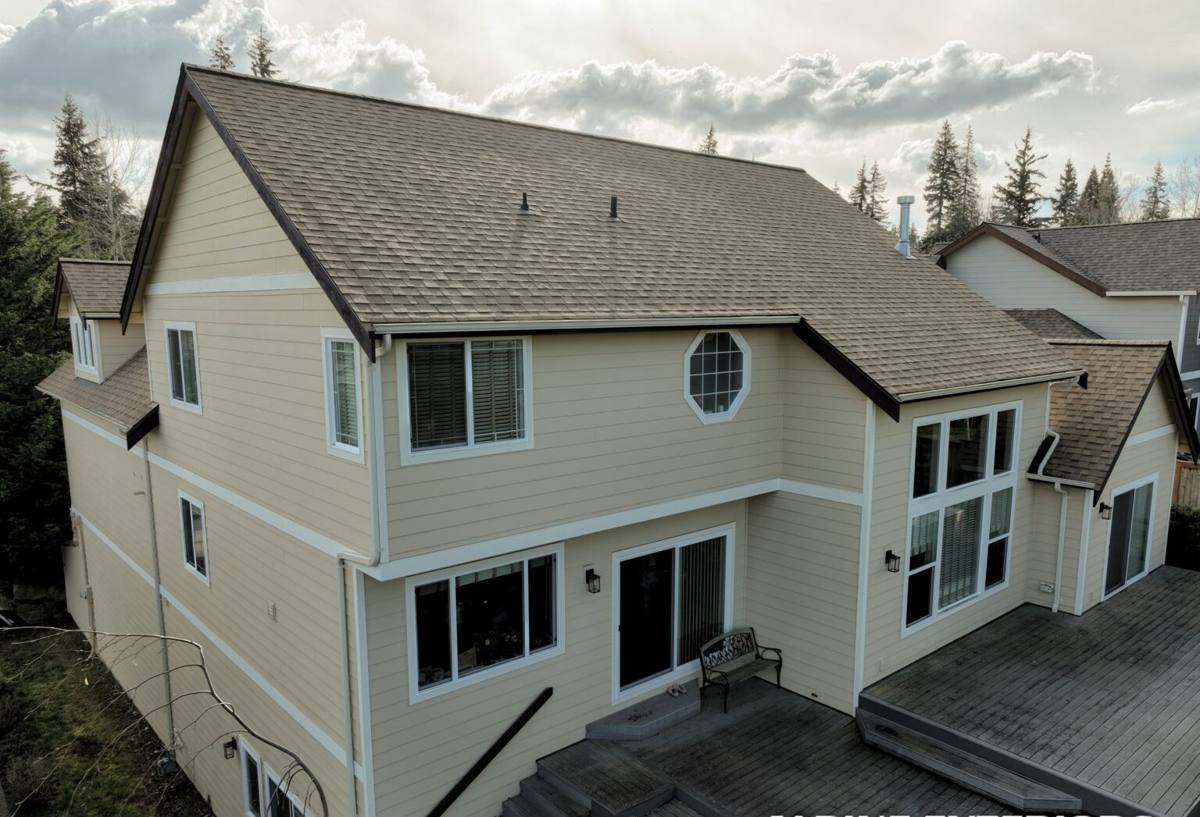
 New Roof Installation for Sunnyland Homes
Sunnyland is one of Bellingham's older, established neighborhoods, and that means a lot of its housing stock is carrying roofs that were installed decades ago under very different product standards. When a roof in this part of town reaches the end of its life, it's rarely a surprise — it's usually the result of years of moss buildup, granule loss, and slow moisture intrusion that finally catches up with the decking underneath. A new roof installation here isn't just about swapping old shingles for new ones. It's about correcting whatever let the old roof fail in the first place, so the replacement actually lasts through Bellingham's wet winters instead of repeating the same problems.
We install roofs across Whatcom County, and Sunnyland's mix of mature tree canopy, close-set lots, and homes built across several different eras means no two jobs look quite the same. Some houses need straightforward tear-offs. Others reveal rot, inadequate ventilation, or framing issues once the old roofing comes off. A crew that's done this work in the neighborhood before knows what to expect and doesn't get caught flat-footed mid-project.
Why Bellingham's Climate Is Hard on Roofs
Whatcom County sits close enough to the Salish Sea that salt-laden air is a real factor in how roofing materials age, particularly on metal flashing, fasteners, and any exposed hardware. Combine that with driving rain that comes in sideways during winter storms, and you've got a climate that punishes any roof with weak flashing details or marginal underlayment. Add in a moss season that, realistically, runs most of the year under the tree cover common in Sunnyland, and you have three separate forces working against an aging roof at once.
What This Means for Material Choice and Detailing
None of this means Bellingham homes can't have long-lasting, good-looking roofs — it means the installation details matter more here than they would in a drier, less shaded climate. Corrosion-resistant fasteners and flashing, properly lapped underlayment, and ventilation that actually moves moist air out of the attic aren't upgrades — they're the baseline for a roof that's going to sit under fir and cedar canopy for the next 25-40 years.
Moss: The Quiet Roof Killer in Sunnyland
Moss doesn't just look bad. It holds moisture against the roof surface far longer than open air would, and on shingle roofs it works its way under tabs and lifts them over time. On older roofs, thick moss mats are often hiding granule loss and soft spots that aren't visible from the ground. When we replace a roof in a moss-prone yard, we talk with homeowners about realistic maintenance expectations and, where it makes sense, install zinc or copper strips near the ridge that release trace metals with rainfall to slow future moss growth. It's not a permanent fix — nothing is in this climate — but it meaningfully extends the interval between cleanings.
- Keep overhanging branches trimmed back so roof surfaces get more light and airflow
- Have gutters cleared at least twice a year — clogged gutters back water up under the roof edge
- Avoid pressure washing shingle roofs; it strips granules and shortens their life
- Watch for dark streaking or thick moss mats and address them before they hold moisture all winter
- Get a roof looked at after any major windstorm, even if nothing looks obviously wrong
What a Correct Roof Installation Actually Involves
A quality roof replacement is built in layers, and skipping or rushing any one of them is where problems start. Here's what we consider non-negotiable on every install:
Tear-Off and Deck Inspection
We remove the old roofing down to the deck rather than laying new material over old — it's the only way to actually see the condition of the sheathing. Rot or soft spots, common after years of slow leaks, get replaced before anything new goes down. This step is where a lot of the "surprises" on older Sunnyland homes show up, and it's better to find them now than after the new roof is on.
Underlayment and Ice/Water Protection
Given how much wind-driven rain this area sees, we use synthetic underlayment across the full deck and self-adhering ice-and-water membrane at eaves, valleys, and around penetrations — the places most likely to see water pushed uphill under shingles during a storm.
Flashing
Flashing around chimneys, skylights, sidewalls, and valleys is where most roof leaks actually originate, not the field of the roof itself. We install new flashing rather than reusing old pieces, since bent or corroded flashing is one of the most common causes of the leaks that bring homeowners to us in the first place.
Ventilation
Balanced intake and exhaust ventilation keeps attic moisture from condensing on the underside of the deck — a slow, invisible process that rots sheathing from the inside out. Many older Sunnyland homes were built with minimal or blocked ventilation, so this is often one of the more valuable corrections we make during a replacement.
Comparing Roofing Options for Sunnyland Homes
Most Sunnyland homes are well suited to architectural asphalt shingles, though some owners ask about metal or cedar given the neighborhood's older character. Here's how the common options stack up for this specific climate:
| Material | Typical Lifespan Here | Moss/Moisture Behavior | Maintenance Load |
|---|---|---|---|
| Architectural asphalt shingle | 25-30 years | Moderate moss resistance; benefits from zinc strips | Low to moderate |
| Standing seam metal | 40-50+ years | Sheds water and moss debris well; minimal moisture retention | Low |
| Cedar shake | 20-30 years with upkeep | Absorbs moisture, needs active moss/moisture management | High |
| Synthetic composite shingle | 30-50 years | Low water absorption, resists moss better than wood | Low |
We don't push one product on every home. A lot of it comes down to the roof's pitch, how much shade the lot gets, the home's architectural style, and the budget the homeowner has in mind. What we will steer people away from is any installation shortcut — like skipping proper underlayment on a low-slope section — regardless of which material is chosen, because that's where premature failures come from in this climate, not the shingle brand itself.
Our Installation Process
- On-site evaluation — we walk the roof, check the attic for ventilation and moisture signs, and look at gutters and drainage patterns around the home
- Written estimate — covering material options, scope of work, and a realistic timeline
- Tear-off and deck repair — old roofing removed, deck inspected and repaired as needed
- Underlayment, flashing, and ventilation installation — the layers that actually determine how the roof performs in storms
- New roofing installed — per manufacturer specifications, since a manufacturer's warranty is only as good as the installation behind it
- Final walkthrough and cleanup — including a magnetic sweep for stray fasteners around the property
Permits, Warranties, and What to Expect
Roof replacements in Bellingham typically require a building permit, and we handle that as part of the job rather than leaving it to the homeowner. On the warranty side, most manufacturers offer stronger material warranties when the installation is done by a certified contractor — this matters more here than in drier climates, since a roof installed against spec is more likely to show its weaknesses during the first hard winter storm rather than years down the road.
What Affects Your Cost
Every roof is priced individually, but the main factors are roof size and pitch, the number of penetrations (chimneys, skylights, vents), deck condition once the old roofing is off, and material choice. Steep or cut-up roofs — common on some of Sunnyland's older homes — take longer to work safely and cost more than a simple, low-pitch roof of the same square footage.
Why Local Experience with Sunnyland Roofs Matters
A roofing crew that's worked in Sunnyland before already understands the tree cover, the drainage patterns on tighter lots, and the age range of homes in the neighborhood. That translates into fewer surprises during tear-off, a more accurate estimate up front, and a roof that's detailed for the specific way water and moss behave on this side of Bellingham. It also means we're not guessing at permit requirements or scrambling to source materials suited to a marine climate — we already know what holds up here and what doesn't.
If your roof in Sunnyland is showing its age — heavy moss, granule loss, curling shingles, or daylight in the attic — it's worth having it looked at before winter storms find the weak spots for you. We offer free, no-pressure estimates for new roof installations in Sunnyland and the surrounding Bellingham area. Fill out the form below and we'll get a time on the calendar to take a look.