 Bellingham
 Building Decks That Hold Up in Sunnyland
Sunnyland sits close enough to Bellingham Bay that salt-tinged air, prevailing wet winds, and a long stretch of grey, drippy months all factor into how a deck should be built here. A deck that would hold up fine in a dry inland climate can start showing problems within a few seasons in this neighborhood if it wasn't designed with our conditions in mind. We build and repair decks for homes throughout Sunnyland and the surrounding Bellingham area, and the details we pay attention to are almost always the details that matter most once the rain sets in for the winter.
This page covers what a deck actually needs to survive Whatcom County weather, what a properly built deck involves from the ground up, and how we approach deck projects for Sunnyland homeowners specifically.
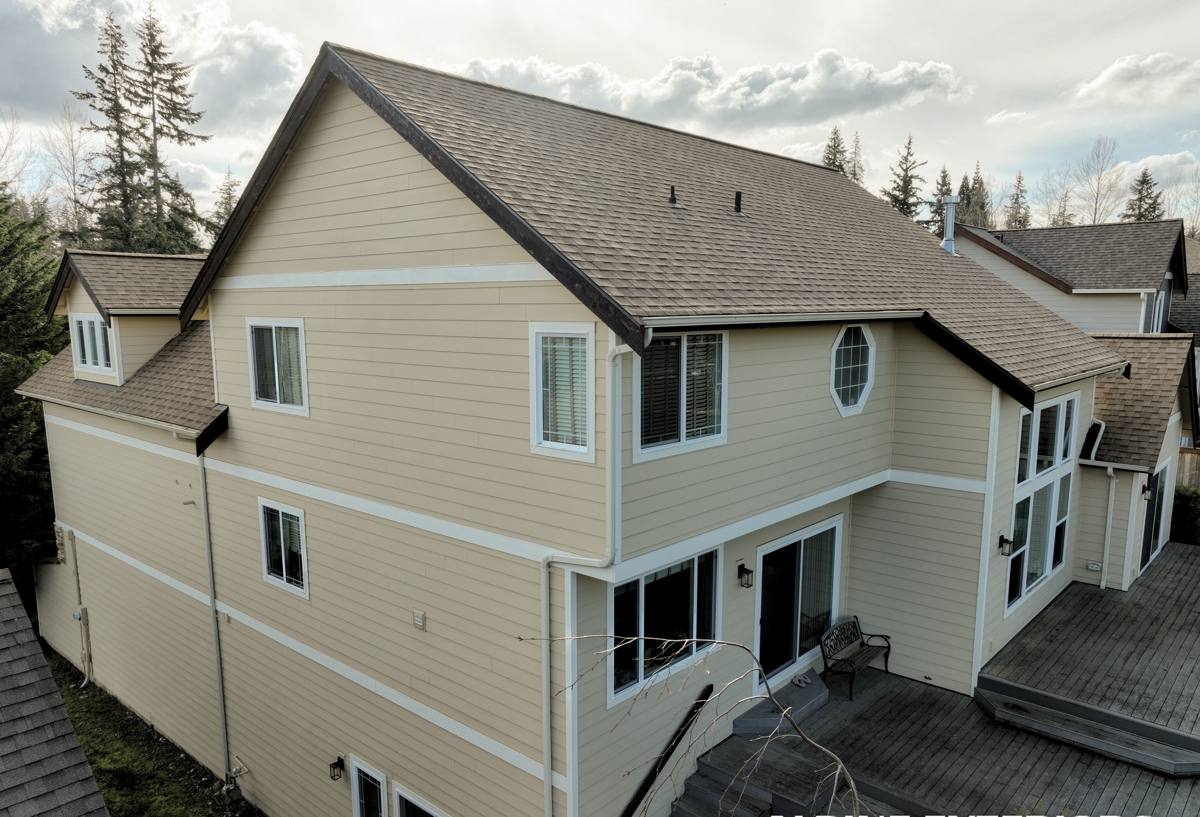
What Bellingham's Climate Does to a Deck
Three things drive almost every deck problem we get called out to fix in this area: moisture that doesn't fully dry out for months at a time, moss and algae that colonize any shaded or poorly-drained surface, and the slow corrosive effect of salt-laced air near the water. None of these are dramatic on their own, but stacked together over a Bellingham winter, they punish shortcuts.
Driving Rain and Prolonged Dampness
Whatcom County doesn't get flash floods — it gets weeks of steady, low-intensity rain. That's actually harder on a structure than a hard downpour, because wood and fasteners stay wet for extended periods instead of getting wet and drying quickly. Any spot on a deck where water can collect, wick into end grain, or sit against a ledger board or post base is a spot that will eventually rot or corrode if it isn't detailed correctly.
Moss and Algae Growth
Sunnyland's tree cover and the region's humidity mean moss and algae will find any deck surface that doesn't get much sun or airflow. Beyond looking bad, moss holds moisture against decking boards and turns a deck slick and genuinely dangerous underfoot, especially on stairs. Deck boards with poor spacing or a substructure that traps standing water accelerate this.
Salt Air and Metal Fasteners
Homes closer to the bay deal with a steady low-level exposure to salt-carrying air. Over years, this attacks the wrong grade of screws, joist hangers, and structural connectors — leading to rust streaks on the decking and, more seriously, weakened connections you can't see from the surface. This is one of the most common corners cut on budget deck builds, and it's one of the most expensive to fix later because it means tearing into the structure, not just replacing boards.
What a Correctly Built Deck Involves
A deck is a structure first and a surface second. The parts nobody sees — footings, framing, flashing, and fasteners — determine how long the parts everyone sees will actually last.
Footings and Framing
Footings need to be sized and set to local frost depth and soil conditions, not guessed at. Undersized or shallow footings are a common source of decks that develop a slight lean or bounce within a few years. Framing lumber, hardware, and spacing should be matched to the actual load the deck will carry, including furniture, hot tubs, or gatherings — not just the minimum to hold the boards up.
Ledger Board Flashing
Where a deck attaches to the house is the single most important detail on the entire project. A ledger board that isn't properly flashed and separated from the house's wall assembly will channel water directly into your home's framing and siding over time. This is invisible until it isn't, and it's the source of some of the more expensive repairs we see. Correct flashing — installed in the right order, with the right materials, sealed at the right points — isn't optional, and it isn't something to trust to guesswork.
Fasteners and Hardware
Given the salt air and near-constant moisture in this area, we use fasteners and structural connectors rated for wet, corrosive exposure — not the minimum-grade hardware that's fine in a drier climate. It costs more up front and it's the difference between hardware that's solid at year fifteen and hardware that's rusting through at year five.
Decking Material
Material choice affects how much maintenance a deck will need and how it handles moss, moisture, and UV over time.
| Material | Moisture & Moss Behavior | Maintenance | Typical Lifespan Here |
|---|---|---|---|
| Pressure-treated lumber | Resists rot when sealed; can hold surface moisture if not maintained | Needs re-staining/sealing every 1-2 years | 15-20+ years with upkeep |
| Cedar | Naturally rot-resistant, ages gracefully, but greys and can host moss if unmaintained | Periodic cleaning and sealing recommended | 15-25 years with upkeep |
| Composite decking | Doesn't rot or absorb water like wood; still needs cleaning where moss/algae can grow on the surface | Low — occasional washing, no staining | 25-30+ years, varies by product warranty |
There's no single "right" material for every home — it depends on budget, the look you want, and how much upkeep you're willing to do. We'll walk through the honest trade-offs of each option for your specific project rather than pushing whatever is easiest for us to install.
Design Choices That Matter for Sunnyland Homes
Drainage and Board Spacing
Proper gapping between deck boards lets water pass through instead of pooling, which directly reduces moss growth and slows wood degradation. This is a small detail during installation that has an outsized effect on how the deck looks and performs five winters from now.
Sun Exposure and Layout
Where possible, we factor in existing tree cover and shade patterns on the property when planning layout and railing design, since shaded, poorly-ventilated sections of a deck are where moss and slippery surfaces show up first. We can't move the sun, but thoughtful layout and railing choices can reduce how much of the deck stays perpetually damp.
Stairs and Railings
Stairs deserve extra attention in this climate — they're the part of a deck most likely to become a slip hazard once moss or algae sets in. Surface texture, spacing, and material choice on stair treads matter as much as anything else on the project.
Our Process for Sunnyland Deck Projects
- On-site assessment: We look at your lot's drainage, sun exposure, tree cover, and how the deck will attach to your home before recommending anything.
- Honest material discussion: We walk through wood versus composite options in plain terms, including what each will actually cost you in upkeep over time.
- Permitting: Most deck projects in the City of Bellingham require a permit depending on size and height — we handle that process as part of the job.
- Proper build sequence: Footings, framing, ledger flashing, and hardware get done to spec before decking ever goes down.
- Walkthrough and care guidance: Once it's built, we tell you what maintenance it actually needs for our climate — not generic advice that doesn't apply here.
Repairs vs. Replacement
Not every aging deck in Sunnyland needs to be torn out. If the footings and framing are sound and the problems are limited to surface boards, rusted hardware, or a section of rot near the ledger, targeted repair is often the right call. But if the framing has been compromised by long-term moisture intrusion — especially anything connected to a poorly flashed ledger board — patching the surface just delays a bigger problem. We'll tell you honestly which situation you're in rather than defaulting to whichever answer is more profitable for us.
Signs Your Deck Needs a Closer Look
- Soft or spongy spots underfoot, especially near the house
- Persistent moss or algae that returns quickly after cleaning
- Rust streaking around screws, brackets, or joist hangers
- Visible gaps, cracking, or staining where the deck meets the siding
- Noticeable bounce, movement, or a slight lean in the structure
- Stairs or railings that feel less solid than they used to
Why Local Experience Matters for This Job
Deck building isn't exotic work, but building one that's still solid after a decade of Whatcom County winters takes attention to details that don't matter as much in drier parts of the country. A crew that regularly works in Sunnyland and the greater Bellingham area already knows how local soil, drainage, and exposure patterns tend to behave, what inspectors here expect to see, and where decks in this specific area typically fail when they're built to a generic spec. That local pattern recognition is worth more than it sounds like — it's usually the difference between a deck that needs attention in year five and one that doesn't need much until year twenty.
Get a Straightforward Estimate
If you're planning a new deck, replacing an aging one, or just want an honest opinion on whether yours needs repair or replacement, we're happy to take a look. Reach out for a free, no-pressure estimate using the form below, and we'll walk your property with Sunnyland's specific climate and conditions in mind.