 Bellingham
 Why Birch Bay Roofs Take a Different Kind of Beating
Birch Bay sits right on the water, and that changes what a roof has to survive year after year. Homes here face wind coming straight off the Strait of Georgia, salt-laden air that speeds up corrosion on fasteners and flashing, and driving rain that gets pushed sideways under roof edges instead of just falling straight down. Add in Whatcom County's long, damp shoulder seasons and you get one of the longer moss-growing windows in Western Washington. None of this is unusual for the area, but it does mean a roof in Birch Bay ages differently than one fifteen miles inland, and storm damage here often shows up in places a generic repair crew isn't used to checking.
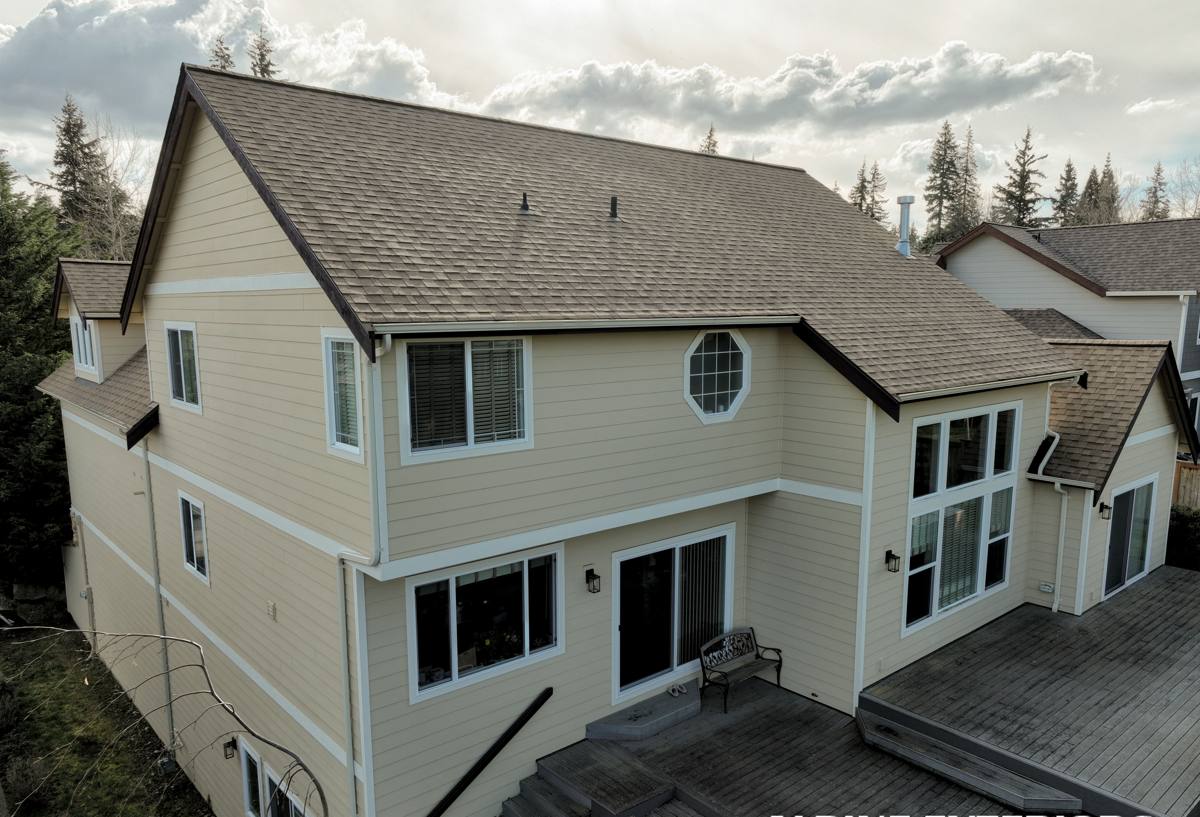
What "Storm Damage" Actually Looks Like on a Birch Bay Roof
Wind Damage
Sustained wind off open water doesn't just rattle a few shingles — it works at edges, ridges, and any spot where a shingle tab isn't fully sealed. Once wind gets a lifted corner to grab onto, it can peel back a run of shingles fast, especially on older roofs where the factory adhesive strip has already weakened from sun and salt exposure.
Wind-Driven Rain Intrusion
A lot of what we get called out for in Birch Bay isn't a dramatic hole in the roof — it's water that snuck in sideways during a storm, under a shingle tab, through a gap in flashing, or around a vent boot that's gone stiff and cracked. That kind of intrusion can sit unnoticed in an attic or wall cavity for weeks before it shows up as a stain on a ceiling.
Moss and Debris Damage
Moss doesn't cause storm damage directly, but it sets a roof up to fail during one. A moss mat holds moisture against shingles, lifts tabs slightly off the deck, and gives wind something to grab. Add wind-thrown branches or debris from a storm and a roof that was already compromised by moss can lose material a healthy roof would have shrugged off.
Signs You May Have Storm Damage
After any significant wind or rain event, it's worth a quick look — from the ground, not the roof itself. Here's what we tell Birch Bay homeowners to watch for:
- Shingles in the yard, gutters, or against fences after a windy night
- Visible gaps, curling, or missing tabs when viewed from the ground or a neighbor's upstairs window
- Granules collecting at downspout outlets — a sign of shingle surface wear or impact
- New or spreading ceiling stains, especially near exterior walls or around chimneys and skylights
- Damp, musty smell in the attic that wasn't there before
- Sagging or soft-feeling spots along the roofline
- Flashing that looks bent, lifted, or pulled away from a chimney, dormer, or sidewall
Any one of these on its own might be minor. Several at once, especially right after a storm, is worth a professional look before the next system rolls through.
What a Correct Storm Damage Repair Involves
A repair that only replaces the shingles you can see from the driveway is a repair that's likely to fail again in the next storm. A correct repair starts underneath the surface layer:
- Deck inspection — once damaged shingles are pulled, we check the plywood or OSB decking underneath for soft spots, delamination, or rot before anything new goes down
- Underlayment — damaged or saturated underlayment gets replaced, not just covered over, since it's the actual water barrier if wind ever drives rain past the shingles again
- Flashing — step flashing, counter-flashing, and vent boots in the repair area get inspected and replaced where they're bent, corroded, or no longer sealing tight, since flashing failure is behind a large share of the leaks we find
- Matching materials — we match shingle profile, color, and where possible manufacturer as closely as the existing roof allows, so the repair blends in rather than creating a visible patch
- Fastening for wind exposure — in a coastal wind zone like Birch Bay, that means correct nail placement and count, not the minimum a calmer inland site could get away with
Materials That Hold Up Better in a Coastal Wind Zone
Not every shingle or underlayment is a good match for a property this close to open water. We lean toward wind-rated shingle lines with stronger sealant-strip adhesion, since standard-grade shingles are rated for wind speeds that a Birch Bay winter storm can exceed. At valleys, eaves, and around penetrations like chimneys and skylights, we use self-adhering membrane rather than relying on felt alone, because it's the difference between a roof that sheds wind-driven rain and one that lets it wick backward under the shingle course. For flashing and fasteners, corrosion resistance matters more here than it would twenty miles inland — we favor heavier-gauge or coated metal over the thinnest option that happens to be cheapest, since replacing corroded flashing every few years costs more over time than doing it right the first time.
Our Process for Birch Bay Storm Repairs
We keep the process straightforward, because after a storm the last thing anyone wants is more uncertainty.
- Inspection. We walk the roof (weather permitting) or use ground-level and ladder inspection to identify every affected area, not just the obvious one, and check the attic side for water intrusion.
- Documentation. We photograph the damage clearly enough to support an insurance claim if you're filing one, and note the likely cause — wind, impact, or wear that a storm exposed.
- Written scope and estimate. You get a clear description of what needs repair versus what's cosmetic, with pricing broken out so you know what you're paying for.
- Repair work. Tear-off of damaged material, deck check, flashing and underlayment work, and reshingling — done in that order, not skipped for speed.
- Cleanup and walkthrough. Job site cleared of debris and old material, with a final look together so you can see what was done and ask questions.
Don't Let Damage Sit Between Storms
Whatcom County's storm season rarely delivers just one event and then goes quiet. Systems tend to stack through the fall and winter, which means a roof that took minor damage in one storm is often still exposed when the next one arrives days or weeks later. If a full repair can't happen immediately — material availability or scheduling can push a start date out — we can put temporary protection in place to keep water out in the meantime. Waiting until "the weather clears for good" before addressing visible damage is one of the more common ways a small repair turns into a bigger one, since a small gap in coverage rarely stays small once another storm finds it.
Repair or Replace? Cost Factors to Weigh
Not every storm-damaged roof needs full replacement, and not every roof is worth patching indefinitely. The honest answer usually comes down to a few factors:
| Factor | Leans Toward Repair | Leans Toward Replacement |
|---|---|---|
| Roof age | Under 10-12 years, still within expected lifespan | Nearing or past manufacturer's rated life |
| Extent of damage | Isolated to one slope or section | Spread across multiple slopes or repeat damage in the same areas |
| Deck condition | Solid decking found once opened up | Soft, rotted, or delaminated decking in multiple spots |
| Storm history | First significant damage event | Third or fourth repair after successive storms |
| Underlying material | Newer underlayment and flashing still in good shape | Original underlayment already at end of service life |
We'll always tell you honestly which category your roof falls into rather than pushing a bigger job than the situation calls for. Sometimes a well-executed repair buys a homeowner several more good years; sometimes it's just delaying an expense that's coming regardless, and we'll say so.
Working With Your Insurance Company
Most storm damage claims in Whatcom County come down to good documentation. We provide clear photos and a written description of the damage and its likely cause, which helps support a claim, but we don't inflate scope or claim damage that isn't there — that approach tends to backfire on homeowners with future claims or policy renewals. If an adjuster's assessment and our on-roof findings don't match, we're glad to walk the roof with the adjuster directly and point out what we found.
Why a Crew That Already Works Birch Bay Matters
Roofing in a coastal Whatcom County community isn't identical to roofing in downtown Bellingham or further inland toward Ferndale. Wind exposure changes block by block depending on how close a property sits to open water and which direction it faces. Salt air corrodes exposed metal faster along the immediate waterfront than it does a half-mile back. A crew that regularly works Birch Bay has a feel for which homes need extra attention to flashing and fastening, and which details tend to fail first on the area's older beach cottages versus its newer builds. That local pattern recognition is hard to replicate from a one-time visit, and it's part of why we take the time to actually inspect rather than quote from a photo.
Let's Take a Look
If a recent storm has you wondering whether your roof took damage, we're glad to come out, walk the property, and give you a straight answer — repair, monitor, or replace — with no pressure either way. Fill out the form below to request a free estimate.