 Bellingham
 Why Birch Bay's Waterfront Climate Wears Out Windows Faster
Birch Bay sits right on the water, and that location cuts both ways. The views are part of why people live there, but the same exposure that makes the bay beautiful also makes it hard on building materials — windows especially. Salt-laden air drifts off the water and settles on everything facing the shoreline, working into hardware, weep holes, and any gap in a seal. Add wind-driven rain that comes in sideways during winter storms, plus a long stretch of gray, damp months that keep moss and mildew active on north- and west-facing walls, and you've got a climate that finds every weakness in a window system within a few years, not a few decades.
This isn't unique to Birch Bay, but it's more concentrated here than it is a few miles inland in Bellingham proper. Homes closer to the water tend to show frame corrosion, seal failure, and wood rot around openings sooner than similar homes set back from the shoreline. If you own a place in Birch Bay — whether it's a full-time residence or a second home you use seasonally — your windows are working harder than the manufacturer's spec sheet probably assumes.
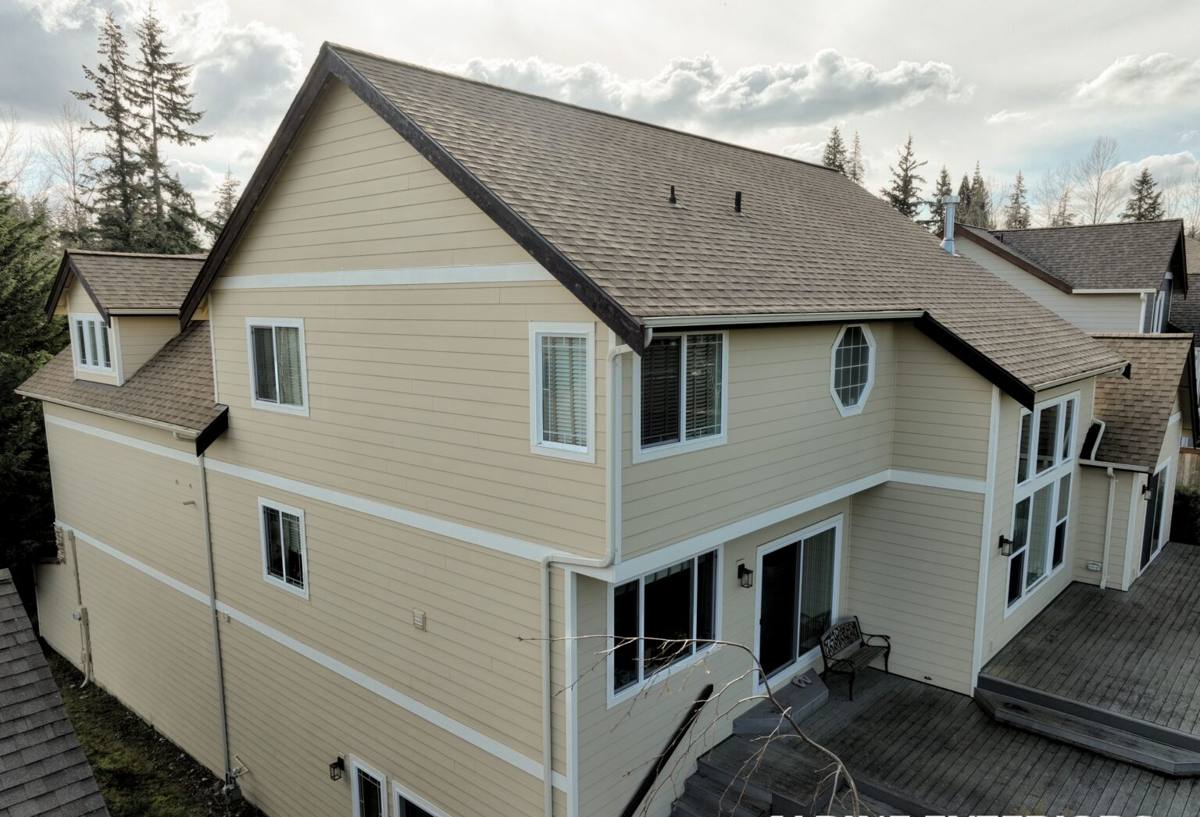
Signs Your Windows Are Losing the Battle
Most homeowners don't think about window replacement until something forces the issue — a stuck sash, a soft spot in the trim, a bill for heating a house that never quite feels warm. Here's what we look for, and what you can check yourself before calling anyone out:
- Fogging or a hazy film between panes of double-pane glass — the seal has failed and the gas fill is gone
- Frames that feel soft, spongy, or discolored when you press on them, especially at the bottom corners
- Visible pitting, chalking, or white corrosion on aluminum frames or hardware
- Windows that are difficult to open, close, or lock — frames can swell or warp from repeated moisture exposure
- Persistent moss or dark streaking on the trim or siding directly around a window opening
- Noticeable drafts near the frame even when the window is fully latched
- A cold wall or window surface in winter that doesn't match the rest of the room
One or two of these on their own might just mean a caulking touch-up. Several together, especially on the water-facing side of the house, usually means the window and its flashing have reached the end of their useful life.
Choosing a Frame Material That Can Actually Handle Salt Air
Frame material matters more in Birch Bay than it does for a comparable home a few miles inland. Some materials shrug off salt air and driving rain for decades; others need real upkeep to stay ahead of it. We walk every client through the trade-offs honestly rather than pushing whatever's easiest to install.
| Frame Material | Salt Air Durability | Maintenance | Typical Lifespan |
|---|---|---|---|
| Vinyl | Very good — won't corrode or rot | Low; occasional cleaning | 20–30 years |
| Fiberglass | Excellent — dimensionally stable, resists corrosion | Low | 30–40+ years |
| Aluminum | Fair — prone to pitting/corrosion near saltwater over time | Moderate; hardware needs periodic attention | 15–25 years near the coast |
| Wood (unclad) | Poor without diligent upkeep — absorbs moisture, prone to rot | High; regular repainting/sealing required | Highly variable |
| Wood-clad (vinyl or aluminum exterior) | Good — exterior face protected, interior keeps wood look | Low to moderate | 25–35 years |
For homes directly exposed to bay winds and spray, we generally steer clients toward vinyl or fiberglass frames rather than bare wood or standard aluminum. That's not a knock on those materials in general — they perform fine in drier, more sheltered settings. It's simply that unclad wood and bare aluminum ask for more maintenance than most owners want to keep up with here, and skipping that maintenance is exactly how rot and corrosion get a head start.
What About Vacation and Rental Properties?
A lot of Birch Bay homes are used seasonally or rented out part of the year, which changes the maintenance equation. If nobody's checking the caulk lines every spring, a low-maintenance frame material earns its keep fast. We factor that into the recommendation when a client tells us the house sits empty for stretches at a time.
What a Correct Installation Actually Involves
The window itself is only part of the system. In a climate that drives rain sideways into wall assemblies, the installation details around the window matter as much as the product you buy. A poorly installed premium window will leak; a well-installed mid-range window won't.
Full-Frame Replacement vs. Insert Replacement
There are two basic approaches. An insert (or "pocket") replacement fits a new window into the existing frame, leaving the old frame and exterior trim in place. It's faster and less invasive, and it's a reasonable option when the existing frame is still sound and dry. A full-frame replacement removes the window down to the rough opening, which lets us inspect and repair the sheathing, flashing, and framing underneath — something we recommend whenever there's any sign of past water intrusion, which is common on Birch Bay's weather-exposed elevations.
Flashing and Sealing Done Right
This is where most window failures actually start, and it's rarely the window's fault. A correct install includes a sloped sill pan so any water that gets past the glass drains back outside instead of pooling in the framing, properly lapped flashing tape that sheds water downward at every layer, and sealants rated for exterior exposure — not just standard caulk that will chalk and crack within a couple of wet seasons. On the bay-facing side of a home, we pay particular attention to head flashing and the top corners of the opening, since wind-driven rain tends to find its way in from above before it finds a way in from the sides.
Glass and Performance Choices Worth Understanding
Beyond the frame, the glass package affects comfort and condensation resistance — both relevant in a marine climate with high humidity swings. Double-pane, low-E glass with an argon fill is standard for this region and performs well against Whatcom County's damp winters. For homes with direct wind exposure off the water, we also talk through impact-rated or heavier-gauge glass options, less for storm protection than for the added stiffness against sustained wind pressure, which can flex lighter glass over time and accelerate seal fatigue.
We're honest that going beyond standard low-E, argon-filled double-pane glass is a marginal-returns decision for most Birch Bay homes — it's a legitimate upgrade for specific wind or noise concerns, not a must-have for every project.
How We Handle a Birch Bay Window Replacement Project
1. On-Site Assessment
We start by looking at the actual condition of your existing windows and the framing around them — not just measuring for new units. This is where we catch hidden rot or past water damage before it becomes a surprise mid-project.
2. Material and Product Walkthrough
We go through frame material, glass package, and full-frame vs. insert options based on what your home's exposure and budget actually call for, not a one-size-fits-all pitch.
3. Measurement and Ordering
Every opening gets measured individually — older Birch Bay homes especially can have openings that have shifted slightly out of square over the years, and we account for that rather than forcing a stock size.
4. Removal and Installation
Old units come out, the opening gets inspected and repaired as needed, and the new window goes in with sill pan flashing, properly lapped weather barrier, and coastal-grade sealant.
5. Exterior Finish and Cleanup
Trim is finished to match your home's existing exterior, and we clean up the job site each day — not just at the end of the project.
6. Final Walkthrough
We check operation, sealing, and finish with you before calling the job done, and go over basic maintenance so the windows actually reach their expected lifespan.
Why Local Experience in Birch Bay Actually Matters
A window crew that mostly works inland jobs won't necessarily think to spec a coastal-grade sealant or pay extra attention to head flashing on the water-facing wall — because most of their projects don't need it. Working regularly in Birch Bay and along the rest of the Whatcom County coastline means we're used to scheduling around wind and rain windows, know which products actually hold up under this exposure versus which ones look fine on a spec sheet, and aren't guessing at how a given frame material will age here. That familiarity shows up in fewer callbacks and windows that are still performing well a decade or two down the road.
Timing the Work Around the Season
Window replacement can happen year-round, but we plan around Whatcom County's wetter months when we can. Installing during a drier stretch reduces the window of time your home's framing is exposed while old units are out and new ones are going in. If your project has to happen during the rainy season, we sequence the work opening by opening so nothing is left exposed longer than necessary, and we don't start a removal we can't seal the same day.
If your windows are showing any of the wear signs above, or you're just planning ahead for a home that's due, we're glad to come take a look. Estimates are free, there's no pressure attached, and you'll get a straight answer about what your windows actually need — use the form below to get started.