 Bellingham
 Why Edgemoor Roofs Wear Differently
Edgemoor sits close to the water, with mature tree canopy shading much of the neighborhood year-round. That combination is beautiful to live in and hard on a roof. Salt-laden air off Bellingham Bay accelerates corrosion on exposed metal — flashing, fasteners, vent caps — faster than it would a few miles inland. Heavy tree cover keeps roof surfaces shaded and damp longer after every rain, which is exactly the condition moss and algae need to take hold. And Whatcom County's long, wet fall-through-spring stretch means a roof here spends more months of the year saturated than a roof in a drier climate ever does.
None of that means Edgemoor roofs fail faster because the neighborhood is unlucky — it means they need a replacement that's specified correctly for these exact conditions. A roof system built for a dry inland subdivision, dropped onto a shaded, waterfront-adjacent lot without adjustment, will underperform no matter how well it's installed. That's the gap we focus on closing.
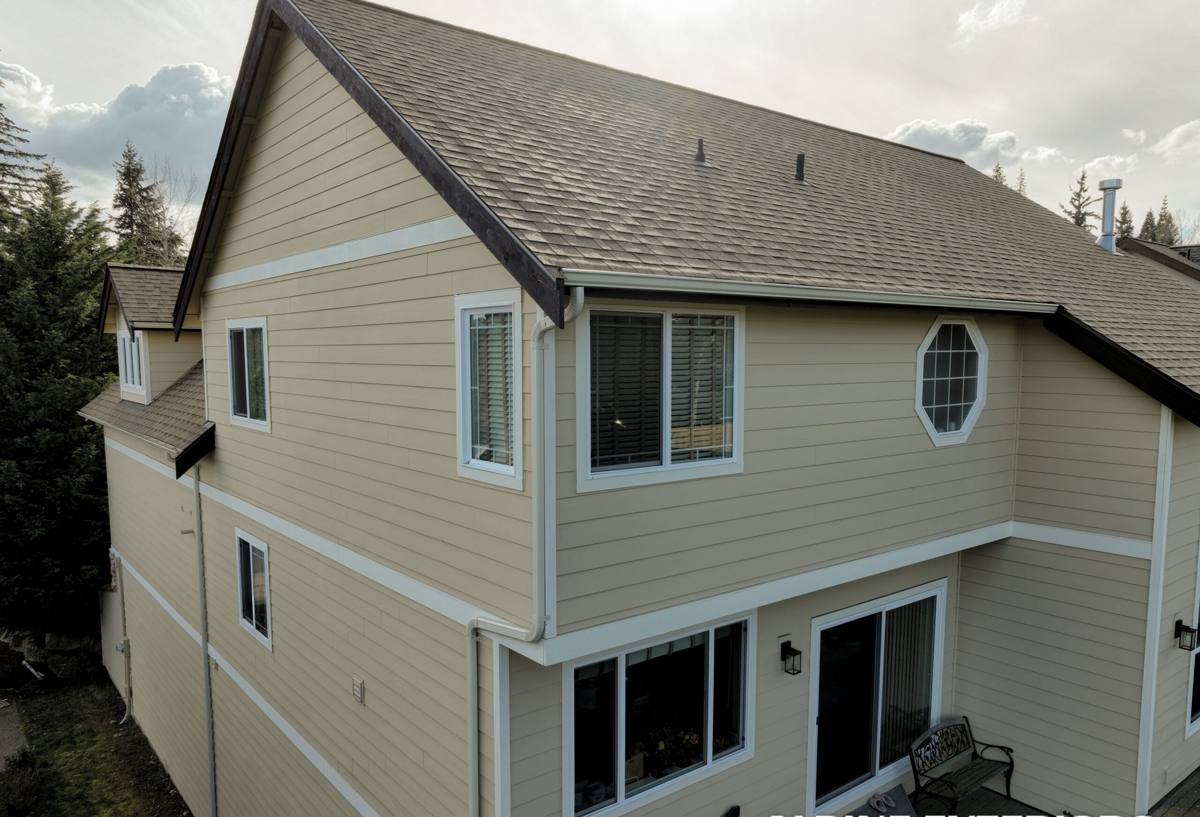
Signs a Repair Won't Cut It Anymore
Not every roof problem means full replacement, but there's a point where patching becomes more expensive than doing the job right, once you count callbacks and interior damage. Look for these before deciding which path makes sense:
- Granule loss heavy enough that you can see bare, shiny patches on shingles, or granules collecting in gutters
- Moss or algae growth that returns within a season or two of cleaning, especially on north-facing or shaded slopes
- Multiple layers of prior roofing already on the deck — a common find on older Edgemoor homes, and a limit on how many more repairs a roof can take
- Curling, cupping, or cracked shingles across more than one section of the roof, not just one isolated spot
- Soft or spongy decking felt underfoot in the attic, or daylight visible through the roof boards
- Rusted or failing flashing around chimneys, skylights, and valleys — often the actual leak source even when shingles look fine
- A roof approaching or past 20–25 years old (asphalt) with no major work done
If you're seeing two or more of these at once, that's usually the signal that you're paying for repairs on a roof that's already past the point where repair makes financial sense.
What a Correct Roof Replacement Actually Involves
A roof replacement is more than swapping old shingles for new ones. Done right, it's a full system rebuild, and skipping any layer is where most premature failures start.
Tear-Off and Deck Inspection
We remove the existing roofing down to the deck rather than layering over it. That's the only way to actually see what's underneath — soft spots, hidden rot around old flashing, or water staining that points to a leak history the homeowner never knew about. Any damaged decking gets replaced before anything new goes down; new shingles over bad decking is how a roof fails early no matter how good the shingle is.
Underlayment and Ice-and-Water Protection
Given how much driving rain this region sees, we don't treat underlayment as an afterthought. Self-adhered ice-and-water membrane goes in valleys, around penetrations, and along eaves — the spots where wind-driven rain is most likely to find a way under the shingle field.
Flashing
Because salt air accelerates corrosion on exposed metal, flashing choice and installation matter more here than in a drier inland climate. Chimneys, skylights, sidewalls, and valleys all get new flashing as part of the job — reusing old, pitted flashing is a false economy that shows up as a leak within a few years.
Ventilation
Balanced intake and exhaust ventilation keeps the attic temperature and moisture in check, which does double duty: it protects the decking from the inside and reduces the cool, damp conditions moss prefers on the outside.
Material Options for Edgemoor's Climate
There's no single "best" roofing material — the right choice depends on budget, roof pitch, tree cover, and how much long-term maintenance you want to take on. Here's how the common options stack up against Edgemoor's specific conditions:
| Material | Moss/algae resistance | Salt-air durability | Maintenance |
|---|---|---|---|
| Standard asphalt composition shingle | Moderate; better with algae-resistant (AR) granules | Good; metal components need corrosion-resistant flashing | Periodic moss removal in shaded areas |
| Algae-resistant (AR) asphalt shingle | Higher; copper-infused granules slow regrowth | Good | Lower than standard asphalt, still needs occasional attention |
| Standing-seam metal | High — smooth surface sheds moisture and resists moss anchoring | Requires marine-grade or properly coated fasteners near the water | Low; occasional fastener/seam check |
| Cedar shake | Low without diligent upkeep — organic material in a damp, shaded setting is the hardest combination | Moderate | High; regular treatment and cleaning needed to avoid rot |
| Synthetic/composite shingle | High; engineered to resist moisture absorption | Good | Low |
For heavily shaded Edgemoor lots specifically, we usually steer homeowners away from untreated cedar shake — not because it's a bad product everywhere, but because a shaded, damp roof plane is the exact environment where organic roofing struggles to stay ahead of moisture and moss. Algae-resistant asphalt, metal, and synthetic options all handle that combination with far less ongoing maintenance.
Our Roof Replacement Process
- On-site assessment. We inspect the existing roof, attic ventilation, and any trouble spots (valleys, chimneys, skylights) and take measurements.
- Written estimate. You get a clear scope and price before any work starts — no surprise add-ons buried in fine print.
- Material selection. We walk through options based on your roof's exposure, shading, and budget, not a one-size-fits-all default.
- Scheduling around weather. Given how often the forecast changes here, we build in realistic timing rather than promising a date we can't control.
- Tear-off and deck inspection. Old roofing comes off, decking is inspected and repaired as needed.
- Installation. Underlayment, ice-and-water membrane, flashing, and roofing material go in per manufacturer specification.
- Cleanup and final walkthrough. Site is cleared of debris and nails, and we walk the finished roof with you.
Cost Factors to Expect
| Factor | Why it matters |
|---|---|
| Roof size and pitch | Steeper roofs take longer and require more safety setup |
| Number of existing layers | Multiple tear-off layers add labor and disposal cost |
| Decking condition | Rotted sections found during tear-off require replacement |
| Material choice | Asphalt, metal, and synthetic options span a wide price range |
| Roof complexity | Valleys, skylights, and multiple chimneys add flashing work |
| Site access | Mature trees and tight lots common in Edgemoor can affect staging and disposal |
We don't quote flat per-square rates over the phone, because the factors above genuinely change the number. What we can promise is a written estimate with no vague allowances, so you know what you're paying for before work begins.
Ventilation and Long-Term Moisture Control
A roof replacement is a good time to fix ventilation problems that have been quietly working against the roof for years. Poor attic airflow traps moisture, which condenses on the underside of the decking and shortens its life from the inside — independent of anything happening on the shingle surface. It also keeps the roof deck warmer and damper than it should be, which is a gift to moss.
We check intake (soffit vents) and exhaust (ridge or roof vents) as part of every replacement and correct the balance where it's off. On heavily shaded Edgemoor roofs, this one step often does more to slow moss regrowth long-term than any surface treatment applied after the fact.
Why a Crew That Already Works Edgemoor Matters
Edgemoor's mix of mature landscaping, waterfront exposure, and older homes means a replacement here isn't quite the same job as a new-construction roof in a treeless subdivision. A crew that's worked the neighborhood before already knows to plan for tree-canopy access constraints, to spec flashing and fasteners that hold up to salt air, and to expect the moisture patterns that come with heavy shade. That local familiarity shows up as fewer surprises mid-job and a roof that's actually built for the conditions it'll face, not a generic install.
Whatcom County permitting and inspection requirements also apply to roof replacement work, and a contractor who pulls permits regularly in the area knows the process rather than learning it on your project.
Maintaining Your Roof After Replacement
A correctly installed roof still benefits from basic upkeep, especially given the moss pressure in a shaded, coastal-adjacent setting like Edgemoor:
- Keep gutters clear of needles and debris so water isn't backing up under the roof edge
- Have overhanging branches trimmed back where reasonable to reduce shade and debris buildup
- Schedule a soft wash or gentle moss treatment before growth gets heavy, rather than after it's established
- Have flashing and attic ventilation checked periodically, not just when a leak shows up
- Address small issues — a lifted shingle, a loose vent cap — promptly rather than waiting for the next inspection
If your Edgemoor roof is showing its age, or you just want an honest read on whether repair or replacement makes more sense for your situation, we're glad to take a look. The estimate is free, there's no pressure attached to it, and you'll get a straight answer either way — just fill out the form below to get started.