 Bellingham
 Birch Bay Decks Work Harder Than Inland Decks
A deck built a few miles inland in Whatcom County lives a different life than one built in Birch Bay. Sitting right on the Salish Sea, Birch Bay properties deal with salt-laden air, wind-driven rain coming straight off the water, and a shoulder season that stays damp and shaded long after inland yards have dried out. None of that means you can't have a great deck here — it just means the deck has to be built for these specific conditions, not for generic Pacific Northwest weather.
Salt air is the one people underestimate most. It doesn't just sit in the air near the water — it settles on metal fasteners, hinges, and structural connectors, and over years it can accelerate corrosion on hardware that would hold up fine twenty minutes inland. Combine that with near-constant winter moisture and a shaded, damp microclimate on the north or west side of many Birch Bay lots, and you get faster moss and algae growth on decking surfaces than most homeowners expect. A deck that ignores these factors will look tired years before it should.
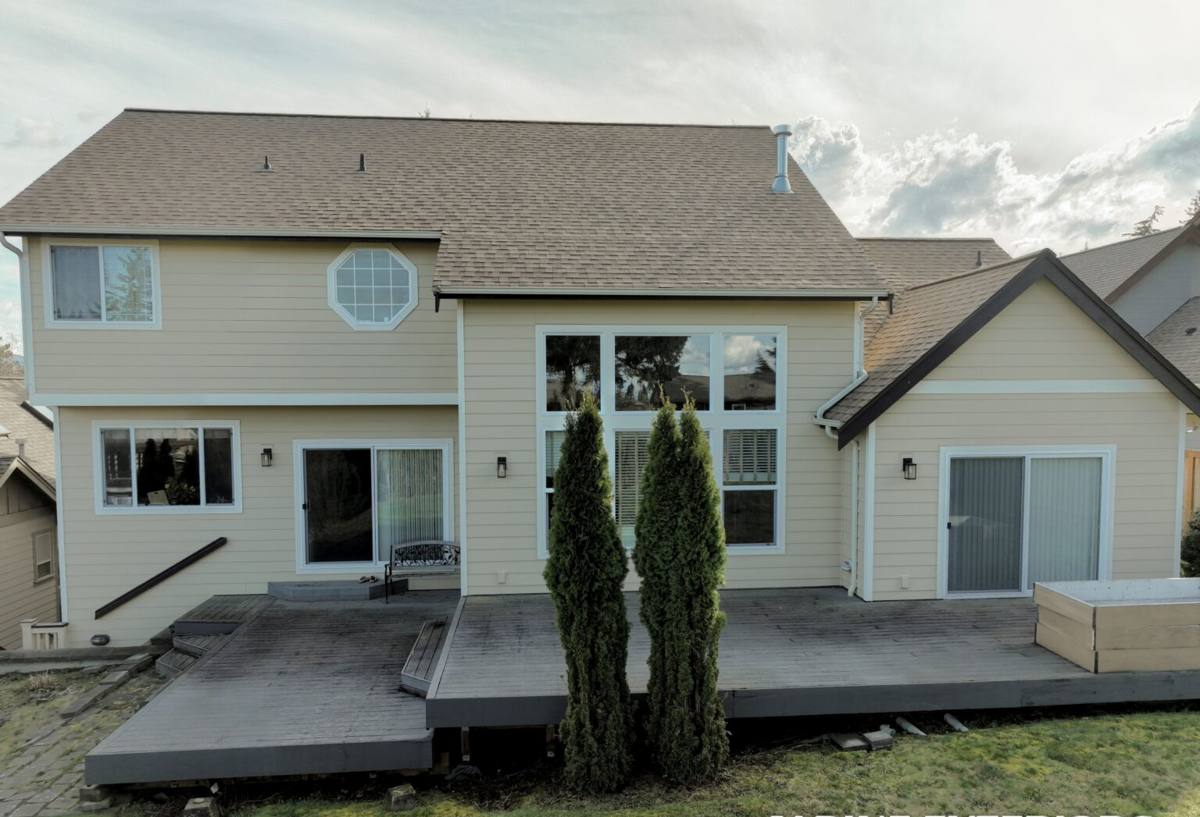
What a Deck Actually Needs to Hold Up Here
Drainage and Slope
Every deck should shed water away from the house, not pool against the ledger board or framing. On Birch Bay lots, where wind can drive rain sideways instead of straight down, that means careful attention to slope, gaps between boards, and how water moves off the surface once it lands. A flat, poorly sloped deck traps water in exactly the spots where salt-laden moisture does the most damage over time.
Ledger Board and Framing Protection
The ledger board — where the deck attaches to the house — is the single most common point of failure on any deck, coastal or not. It needs proper flashing to keep water from working its way behind the siding and into the wall framing. In a marine environment, we treat this connection as non-negotiable, because a failure here is invisible until it isn't.
Footings Sized for Real Ground Conditions
Soil composition varies block to block near the water in Birch Bay — some lots have sandy, well-draining soil, others have more clay or fill. Footings need to be sized and set to actual ground conditions and frost depth, not a one-size-fits-all assumption. This is one of the reasons a proper site visit matters more than a phone estimate.
Choosing Decking Material for Salt Air and Moss
There's no single "best" decking material for every Birch Bay home — the right choice depends on how close you are to the water, how much shade the deck gets, and how much upkeep you actually want to do. Here's an honest comparison of the materials we most commonly work with in this area.
| Material | How It Handles Salt Air & Moisture | Maintenance Load | Typical Fit |
|---|---|---|---|
| Pressure-treated lumber | Holds up well if properly sealed and fasteners are corrosion-rated; untreated cut ends are a weak point | Higher — needs regular cleaning and re-sealing | Budget-conscious builds, framing and substructure |
| Western red cedar | Naturally moisture- and insect-resistant, but still needs finish maintenance near salt air | Moderate to high | Homeowners who want a natural wood look and don't mind upkeep |
| Capped composite | Excellent moisture and salt resistance; the capped shell resists staining and moss gets a foothold more slowly | Low — periodic cleaning, no sealing or staining | Most Birch Bay waterfront and near-water properties |
| PVC decking | Fully synthetic, essentially immune to moisture damage and salt corrosion of the board itself | Lowest | Homes prioritizing minimal upkeep over natural wood look |
Whichever material you choose, the surface itself is only part of the equation. We've seen plenty of composite decks fail early because the hardware underneath wasn't rated for the environment — the board didn't rot, but the screws holding it down did.
Fasteners and Hardware: The Part That Gets Skipped
This is where a lot of decks in coastal areas quietly go wrong. Standard galvanized fasteners are fine in many inland settings, but in a salt air environment they corrode faster, staining the decking around them and eventually losing their grip. For Birch Bay projects, we use stainless steel or coastal-rated coated fasteners and structural connectors specifically because standard hardware is a poor match for this environment — not because any manufacturer's standard product is defective, just because it wasn't engineered for salt exposure.
The same logic applies to joist hangers, post bases, and any exposed structural metal. It costs more upfront to spec the right hardware, and it's the difference between a deck that's still solid in fifteen years and one that develops rust streaks and loose connections in five.
Railings and Wind Exposure
Birch Bay's open exposure to the water means wind loads on railings and guardrails matter more than they would on a sheltered, tree-lined inland lot. Railing posts need to be properly through-bolted and blocked, not just screwed to the rim joist, and any cable or glass railing systems need hardware rated for the same salt exposure as the rest of the build. A railing that's merely code-minimum on paper can still feel flexible or work loose faster in a spot that catches wind straight off the water.
Permits and Building to Whatcom County Code
Birch Bay is unincorporated, so deck permitting runs through Whatcom County rather than a city building department. Most new decks and significant deck replacements require a permit, and any deck near the shoreline may fall under additional review depending on setback and shoreline management rules. We handle the permitting conversation as part of the process — pulling the right permit, meeting setback requirements, and scheduling required inspections — so you're not the one figuring out county requirements on your own.
Getting this step right matters beyond avoiding fines. An unpermitted deck can complicate a home sale later, and inspections along the way catch structural issues — like undersized footings or missing ledger flashing — before they're buried under decking boards.
Our Process, Start to Finish
- Site visit and assessment — we look at sun and shade exposure, wind direction, existing drainage, and soil conditions specific to your lot.
- Design and material selection — we walk through decking, railing, and hardware options based on your budget, maintenance preference, and how exposed the site is to salt air and wind.
- Permit handling — we prepare and submit what Whatcom County requires and schedule inspections at the right points in the build.
- Framing and structural work — footings, ledger flashing, joist layout, and hardware selection done to hold up in this specific environment.
- Decking, railing, and finish work — installed with attention to fastener spacing, board gapping for drainage, and clean railing connections.
- Final walkthrough — we go over the finished deck with you, including what maintenance it will and won't need going forward.
Keeping a Birch Bay Deck Looking Good for Years
Even a deck built with the right materials and hardware still needs some seasonal attention in this climate. A little routine care goes a long way toward preventing the moss buildup and surface staining that salt air and shade tend to cause.
- Sweep debris and standing leaves off the deck regularly, especially in shaded corners where moisture lingers longest
- Clean the surface at least once a year to remove early moss and algae growth before it takes hold
- Check railing posts and structural connections periodically for looseness, particularly after winter storms
- Re-seal or re-stain wood decking on the manufacturer's recommended schedule — don't wait until it's visibly weathered
- Keep gutters and downspouts near the deck clear so runoff isn't adding extra moisture load to the structure
- Watch for rust staining around fasteners, which can signal hardware that isn't holding up to salt exposure
Why Local Experience in Birch Bay Matters
Anyone can build a deck. Building one that's still solid, level, and free of rust streaks a decade from now takes knowing how this specific stretch of coastline behaves — which lots catch the worst of the wind, where moss takes hold fastest, and which hardware choices actually pay off here versus a few miles inland where conditions are milder. A crew that already works in Birch Bay has made those material and fastener decisions dozens of times and has seen which ones hold up through real Whatcom County winters, not just on paper.
That local knowledge also shows up in smaller ways — knowing the county's permitting process well enough to keep a project moving, understanding typical soil conditions on nearby lots, and recognizing early warning signs of moisture or corrosion issues before they become expensive repairs.
If you're planning a new deck or replacing one that's showing its age, we're happy to take a look and talk through what makes sense for your specific property. Reach out for a free, no-pressure estimate using the form below.