 Bellingham
 Ferndale's Climate Is Harder on Siding Than Most Homeowners Realize
Ferndale sits close enough to the water and to the lowland river valleys around it that homes here deal with a specific combination of punishment: salt-tinged air rolling in off the bay, long stretches of driving, wind-pushed rain in the fall and winter, and a moss season that can run most of the year in shaded, north-facing spots. Any one of those on its own is manageable. Together, over years, they expose the weak points in a siding product or an installation shortcut faster than almost anywhere else in Whatcom County.
Salt air accelerates corrosion on fasteners, trim flashing, and any metal component that isn't properly rated or protected. Driving rain doesn't just wet the surface of a wall — it tests every seam, joint, and butt edge to see if water can find a way behind the cladding. And moss, once it gets a foothold on a north wall or under an eave with limited sun exposure, holds moisture against the siding surface for weeks at a time. A siding installation done for a drier inland climate simply isn't built for that combination.
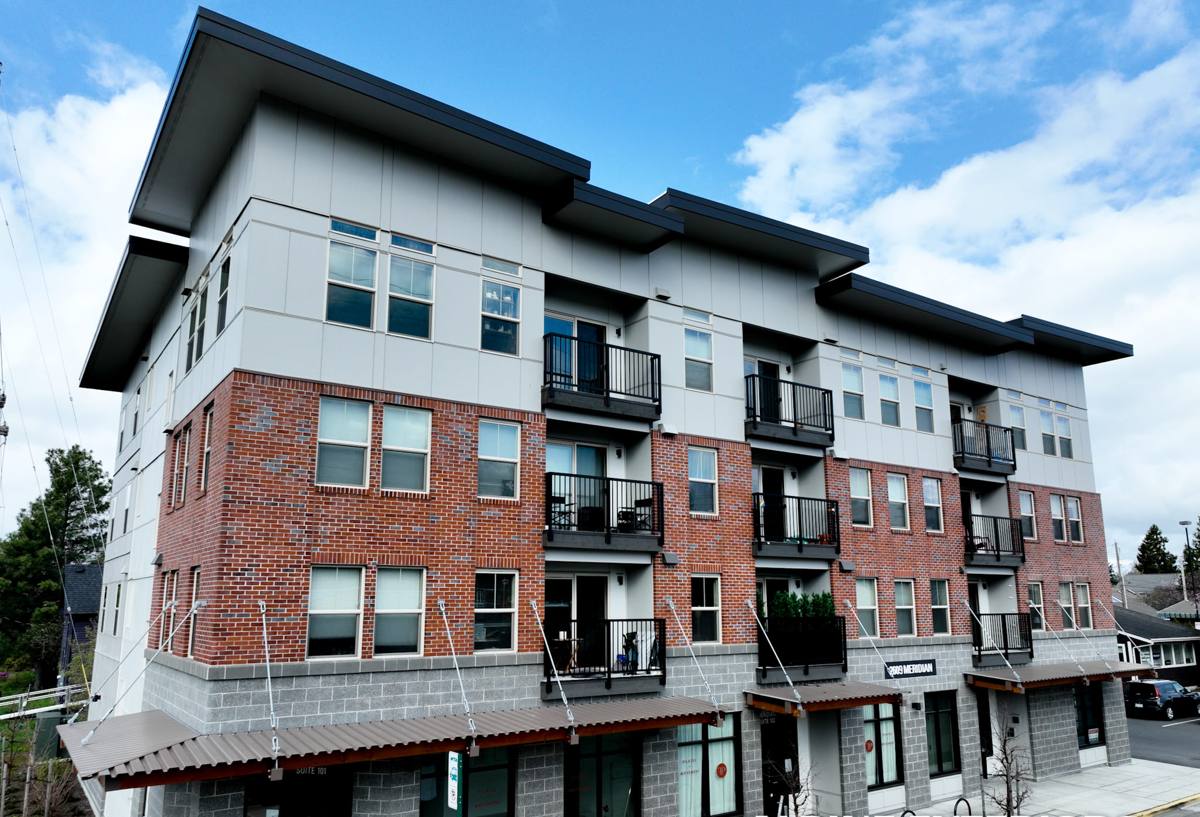
What a Correct Siding Installation Looks Like for a Ferndale Home
Getting siding right in this environment isn't about the cladding material alone — it's about the whole assembly working together. That includes:
- A functioning water-resistive barrier installed and lapped correctly behind the siding, so any moisture that does get past the cladding has somewhere to go besides your sheathing.
- Properly flashed windows, doors, and penetrations — the majority of siding failures we see on older homes trace back to flashing details, not the siding itself.
- Correct fastener spec — in a salt-air environment, using the wrong fastener metal or coating is how you get bleed-through staining and premature corrosion within a few years.
- Ventilation and drainage gaps where the wall assembly calls for them, so siding can dry out after a soaking rain instead of staying damp against the sheathing.
- Tight, correctly caulked and painted-out joints at butt seams and trim, since these are the first place driving rain finds an opening.
Skip any one of these and the siding material — whatever it is — is working at a disadvantage from day one.
Why This Matters More on North and West-Facing Walls
In Ferndale, the walls that face prevailing weather and get the least direct sun are almost always the first to show trouble: moss creep at the base courses, dark streaking under eaves, and softening at butt joints where water has had time to sit. A good installer plans for this during the job — not just picking a material, but thinking through drainage, gap spacing, and joint placement on the sides of the house that will take the most abuse.
Why We Install James Hardie Fiber Cement — And Nothing Else
We made a deliberate decision to install James Hardie fiber cement siding exclusively, and not vinyl, not LP SmartSide, not Cemplank or Allura, not primed spruce or cedar. That's not a marketing angle — it's a standard we hold because of what we've seen play out on homes in this exact climate over time.
Vinyl siding expands and contracts significantly with temperature swings, can warp or buckle, and its seams and channels are a real avenue for wind-driven rain to work behind the panel over the years. Wood products — cedar or primed spruce — are the most vulnerable to Ferndale's moss season and moisture cycle; even with good maintenance, wood siding needs more frequent attention to paint, caulking, and rot inspection than most homeowners want to keep up with. Engineered wood products like LP SmartSide use a treated wood-strand substrate that performs reasonably well when installed and maintained exactly to spec, but any breach in that treated surface — a scratch, an unsealed cut edge, a failed caulk joint — gives moisture a path into a wood-based core, which is a bigger risk in a wet coastal climate than an inland one.
Fiber cement alternatives to James Hardie, like Cemplank or Allura, are legitimate fiber cement products in the same general category — the core material itself resists moisture and doesn't rot. Where we see the difference is in the factory finish system, the depth of climate-specific engineering in the product lines, and the manufacturer support behind the installation. James Hardie's ColorPlus factory finish is baked on and warranted separately from the substrate, which matters in a salt-air environment where a field-applied paint job is going to need attention sooner. Hardie also engineers its HZ5 product line specifically for wetter, harsher climates like ours, rather than offering one general-purpose board for the whole country.
James Hardie fiber cement is non-combustible, doesn't rot, doesn't attract pests, and holds up to repeated wet-dry cycling without the swelling or delamination risk you get with wood-based products. Combined with a factory finish warranty and a transferable product warranty, it's the product we're willing to put our name behind on every job — which is why we don't offer alternatives.
Comparing Siding Options for a Ferndale Home
| Material | Moisture/Moss Resistance | Salt Air Durability | Maintenance Burden | Our Position |
|---|---|---|---|---|
| James Hardie Fiber Cement | Excellent — non-organic core, engineered for wet climates (HZ5) | Strong; factory finish holds up well | Low — occasional wash, no repainting cycle needed | What we install |
| Vinyl | Moderate; seams can trap moisture behind panels | Can become brittle/faded over time | Low, but limited repair options when damaged | Not installed |
| LP SmartSide / engineered wood | Good if finish stays intact; vulnerable once breached | Moderate | Moderate — finish and caulk need monitoring | Not installed |
| Cedar / primed spruce | Poor to moderate; organic material, rot-prone | Low without diligent upkeep | High — regular painting, caulking, inspection | Not installed |
| Other fiber cement (Cemplank, Allura) | Good — similar core material properties | Good | Low to moderate depending on finish system | Not installed |
Our Process for a Ferndale Installation
1. On-Site Assessment
We walk the property, look at existing siding condition, note which walls take the worst weather exposure, and check for signs of past moisture intrusion around windows, trim, and the lower courses near grade.
2. Tear-Off and Substrate Check
Once old siding comes off, we inspect the sheathing underneath. Any soft spots, rot, or prior water damage get addressed before anything new goes up — covering a compromised substrate with new siding just hides the problem.
3. Water-Resistive Barrier and Flashing
We install and properly lap the weather barrier, then detail flashing at every window, door, and penetration point. This step is where most long-term siding failures are prevented or created.
4. James Hardie Installation to Manufacturer Spec
Correct fastener type and placement, proper gapping at butt joints and corners, and factory-finish touch-up only where the manufacturer allows it — not as a substitute for careful cutting and handling.
5. Final Detailing and Walkthrough
Caulking, trim paint-out, and a final walkthrough so you know what to expect from the siding and how little upkeep it should actually need.
What to Ask Before Hiring a Siding Contractor in Ferndale
- Do they work in this specific area regularly, or is it an occasional drive-in job?
- Can they explain their flashing and water-barrier approach in plain terms, not just the visible siding brand?
- Do they carry manufacturer certification for the specific product they're installing?
- Will they inspect and address sheathing issues discovered during tear-off, or just re-side over them?
- What does their warranty actually cover — labor, product, or both — and for how long?
A crew that already works Ferndale regularly knows which walls on which lots take the worst of the weather, has already seen how moss establishes itself locally, and isn't guessing at flashing details for the first time on your house. That familiarity shows up in fewer callbacks and a siding job that's still performing well a decade or two out.
What Affects the Cost of a Siding Installation Here
| Factor | Why It Matters |
|---|---|
| Substrate condition | Rot or water damage found during tear-off adds repair scope before new siding can go on correctly |
| House shape and trim detail | More corners, dormers, and trim transitions mean more flashing and cutting labor |
| Siding profile and accessories | Lap width, trim boards, and factory-finish color all affect material cost |
| Access and site conditions | Tight lots, second stories, or landscaping can add setup time |
| Existing moisture damage | Hidden damage behind old siding is common on older homes and isn't visible until tear-off begins |
We give straightforward, itemized estimates rather than a single vague number, so you can see what's driving the cost.
Ready to Talk About Your Home's Siding?
If you're weighing a siding replacement on a Ferndale home and want an honest read on condition, options, and cost — not a sales pitch for whatever's easiest to install — we're happy to take a look. Request a free, no-pressure estimate below and we'll walk the property with you.