 Bellingham
 New Roof Installation in South Hill
South Hill sits above downtown Bellingham with a mix of older homes, mature tree cover, and enough elevation to catch weather that flatter parts of the city don't see quite the same way. Many of the roofs up here are original to houses built decades ago, or they're a second or third layer of asphalt shingles put on top of an aging deck. When a roof reaches the end of its life on South Hill, it usually doesn't fail quietly — it shows up as moss mats holding water against the shingles, soft spots near valleys, or a slow leak that's been tracked down to a dozen possible entry points.
A new roof installation is a bigger job than a repair, but it's also the point where you get to fix everything that's been working against the old roof for years: poor ventilation, undersized flashing, ice-and-water protection that was never installed, or a shingle product that was never really suited to this much shade and moisture. Done right, it's a one-time job that should outlast the mortgage.
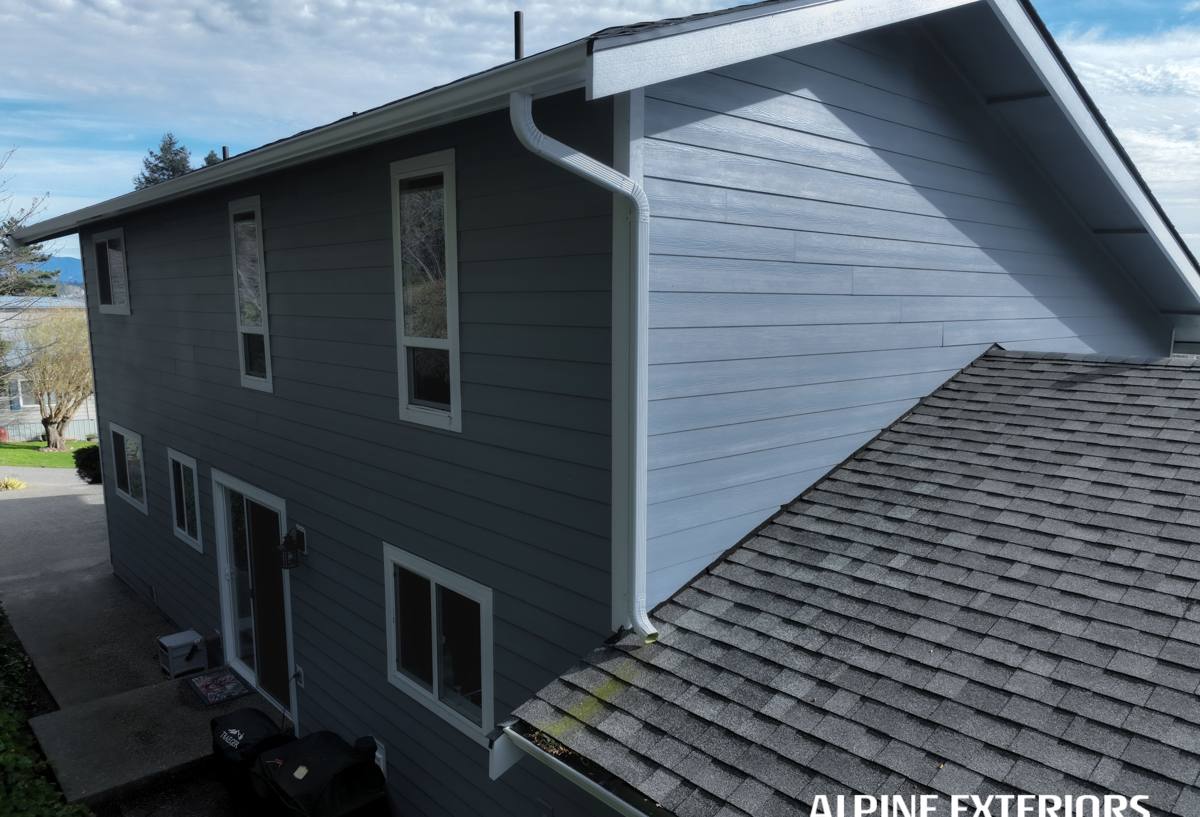
What Bellingham's Climate Does to a South Hill Roof
Whatcom County weather is hard on roofs in ways that aren't always obvious from the ground. South Hill's tree canopy and hillside exposure add a few extra wrinkles on top of the usual Pacific Northwest challenges.
Moss and Shade
Mature trees are part of what makes South Hill attractive, but they also mean shaded roof sections that never fully dry out between rain events. Moss and moss-supporting algae get a foothold in those shaded areas first, and once established, moss roots work under shingle edges and lift them just enough to let water in behind the surface layer. A long moss season here means a roof that isn't cleaned and treated periodically will show moss growth years before the shingles themselves are actually worn out.
Driving Rain
Bellingham gets a lot of rain that doesn't just fall straight down — wind off the bay and through the hillside terrain pushes it sideways, which puts real stress on flashing, valleys, and any point where two roof planes meet. Driving rain finds weaknesses that a straight-down rain would never reach, which is why flashing detail matters more here than in drier, calmer climates.
Salt Air
Proximity to Bellingham Bay means a steady low level of salt-laden air moving through the area. Salt air accelerates corrosion on exposed metal — nails, flashing, vents, and fasteners — faster than it would inland. Materials and fasteners chosen for a South Hill roof need to be rated for that exposure, not just for general Pacific Northwest weather.
Signs a South Hill Home Needs a New Roof, Not Another Repair
Repairs make sense for isolated damage. A full new roof installation is the right call when the problems are spread across the roof or point to failure of the underlying system rather than one bad spot.
- Shingles are curling, cracking, or losing granules across multiple roof sections, not just one area
- Moss has been growing back within a year or two of cleaning, especially on north- or shade-facing slopes
- Daylight is visible through the roof deck from inside the attic
- Multiple leaks have shown up in different locations over the past couple of years
- The roof is past 20-25 years old (for asphalt) and has never been re-decked or re-flashed
- Previous repairs are visibly patched together with mismatched materials
- Attic insulation shows water staining or mold, suggesting long-term moisture intrusion
- Energy bills have crept up, which can point to failed ventilation working against the insulation
What a Correct New Roof Installation Involves
A new roof is more than swapping old shingles for new ones. The parts that don't show once the job is finished are usually what determine whether the roof lasts 15 years or 40.
Full Tear-Off and Deck Inspection
We remove the old roofing down to the deck rather than layering over it. That's the only way to actually see the plywood or plank decking underneath, replace any sections that have rotted or gone soft from years of trapped moisture, and confirm the deck is properly nailed before anything new goes down.
Underlayment and Ice-and-Water Protection
Given how much driving rain this area sees, underlayment isn't just a formality. Self-adhered ice-and-water membrane belongs at eaves, valleys, and around every penetration — chimneys, vents, skylights — where wind-driven rain is most likely to work its way underneath the shingle surface.
Ventilation
A roof that can't breathe traps moisture in the attic, which shortens the life of the decking and the shingles from underneath. Balanced intake and exhaust ventilation matters as much as the shingles themselves, and it's routinely undersized or missing entirely on older South Hill homes.
Flashing and Metal Work
Every valley, wall intersection, and roof penetration needs flashing sized and installed for the amount of water this area sees, using metal rated to hold up against salt air rather than standard mill-finish steel that will rust prematurely this close to the bay.
Fasteners and Hardware
Corrosion-resistant nails and fasteners are worth the small added cost. Standard fasteners can start showing rust streaks on the shingle surface within a few years in a salt-air environment, which is both a cosmetic problem and an early sign the fastener itself is weakening.
Roofing Material Options for South Hill Homes
Most South Hill roofs are asphalt shingle, and for good reason — it performs well here, is straightforward to maintain, and fits the look of the neighborhood's older housing stock. But it's worth understanding the trade-offs before committing to a product.
| Material | Moss/Moisture Behavior | Typical Lifespan | Notes for South Hill |
|---|---|---|---|
| Architectural asphalt shingle | Good with proper ventilation; algae-resistant granules available | 25-30 years | Best all-around fit for shaded, tree-covered lots |
| 3-tab asphalt shingle | More prone to moss lifting edges over time | 15-20 years | Lower upfront cost, shorter service life in this climate |
| Metal (standing seam) | Sheds moss and water very well; little for moss to grip | 40-50+ years | Higher upfront cost; needs marine-grade coatings near the bay |
| Cedar shake | Requires regular maintenance to resist moss and rot | 20-30 years with upkeep | Traditional look but highest maintenance burden in a wet, shaded climate |
For most South Hill homes, a quality architectural shingle with algae-resistant granules and proper ventilation strikes the best balance of cost, appearance, and how well it holds up to shade and moisture. We'll walk through the honest trade-offs for your specific roof rather than pushing one product across the board.
Our Installation Process
- On-site assessment — we inspect the existing roof, deck condition, ventilation, and any problem areas specific to your lot's tree cover and exposure
- Written estimate — a clear scope of work and materials, no vague allowances
- Permitting — we handle the City of Bellingham permit requirements for the project
- Tear-off and deck repair — full removal of old roofing, deck inspection, and replacement of any compromised sections
- Underlayment, flashing, and ventilation installation — the system that determines long-term performance
- Shingle or material installation — installed to manufacturer specification to keep warranty coverage intact
- Cleanup and final walkthrough — magnetic sweep for nails, debris removal, and a walkthrough so you understand what was done and why
Why Hire a Crew That Already Works South Hill
South Hill's older housing stock, mature trees, and hillside lots each bring their own quirks — deck condition that varies house to house, shaded slopes that need different ventilation planning than a sun-exposed roof across town, and driveways or access that aren't always straightforward on a hillside street. A crew that's worked in this specific neighborhood has already seen most of what your roof is likely to reveal once the old layer comes off, which means fewer surprises and a more accurate estimate up front.
Local experience also means knowing how Bellingham and Whatcom County permitting and inspection actually work in practice, not just on paper, and understanding which material choices genuinely hold up to this area's combination of shade, salt air, and sustained wet weather versus which ones look good on a spec sheet but struggle here.
What Drives Cost on a New Roof Installation
| Factor | Why It Matters |
|---|---|
| Roof size and pitch | More square footage and steeper slopes mean more material and labor time |
| Deck condition | Rotted or soft decking found during tear-off needs replacement before new roofing goes down |
| Number of layers to remove | Roofs with two or three layers of old shingles take longer to strip |
| Material choice | Asphalt, metal, and cedar carry very different material costs |
| Roof complexity | Valleys, dormers, chimneys, and skylights each add flashing work |
| Access | Hillside lots and limited driveway access can affect staging and labor time |
We'd rather walk your roof and give you real numbers than quote a broad range that doesn't mean much for your specific house.
Maintaining Your Roof After Installation
A new roof installed correctly for this climate still benefits from basic upkeep. Keep gutters clear of needles and debris so water isn't backing up under the eaves, especially where overhanging trees drop material year-round. Have moss growth addressed early rather than letting it establish, since prevention is far less invasive than dealing with lifted shingles later. And have the roof looked at after any major windstorm — Whatcom County gets its share of them — to catch a lifted shingle or damaged flashing before it becomes a leak.
If your South Hill roof is showing its age or you're planning ahead rather than waiting for a leak to force the decision, we're happy to take a look and give you a straightforward, no-pressure estimate using the form below.