 Bellingham
 Roofing in the Puget Area Isn't a One-Size-Fits-All Job
Homes in the Puget area near Bellingham sit in a climate that's genuinely hard on a roof. You've got salt-laden air drifting in off the water, wind-driven rain that finds every weak seam, and a moss season that can stretch from October clear through April in a wet year. A roof that would hold up fine in a dry inland climate can fail early here if it wasn't designed and installed with these specific conditions in mind. Roof replacement in this area isn't just about swapping old shingles for new ones — it's about building a roof system that's going to handle Whatcom County weather for the next 25-plus years without babysitting.
We work on homes throughout the Puget area regularly, which means we're not guessing at how a roof performs here — we're watching it happen, season after season, on roofs we've installed and roofs we've been called out to repair. That local track record shapes every recommendation we make.
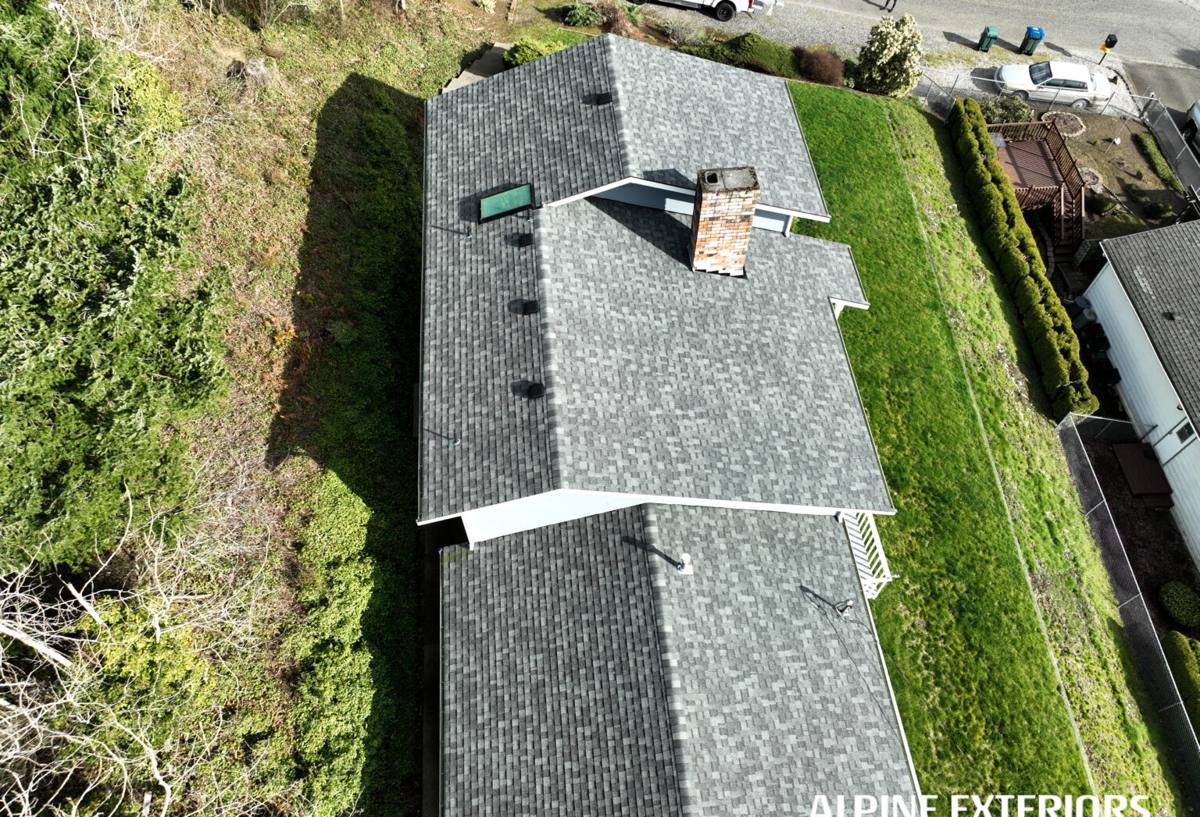
Why Salt Air, Driving Rain, and Moss Change the Equation
Salt Air and Metal Fatigue
Proximity to Puget Sound means airborne salt settles on roofing materials, flashing, fasteners, and gutter systems. Over years, that salt exposure accelerates corrosion on lower-grade metal components — exposed nail heads, cheap flashing, and unprotected metal edges are the first things to show it. It doesn't mean metal roofing is off the table here; it means the metal, fasteners, and flashing all need to be rated for coastal exposure, not generic inland-grade materials.
Driving Rain and Wind-Driven Water
Rain here doesn't always fall straight down. Storms off the Sound push rain sideways into roof edges, valleys, and wall-roof intersections. A roof that relies purely on shingle overlap without proper underlayment and flashing detail at those transition points will eventually let water find its way behind the roofing material, not through it.
The Long Moss Season
Shade, moisture, and moderate temperatures are exactly what moss wants, and a lot of Puget-area lots have mature tree cover that keeps roofs damp and shaded for long stretches. Moss isn't just cosmetic — as it grows, its root structure lifts shingle edges and holds moisture against the roof deck, which is one of the more common causes of early roof failure we see in this region.
Signs a Puget-Area Home Needs Replacement, Not Another Repair
Not every roof problem means a full replacement. But there's a point where patching becomes a losing bet, especially on a roof that's already dealing with the moisture load typical of this area. Signs worth taking seriously:
- Granule loss heavy enough that you're seeing bare asphalt on shingles, especially on south- and west-facing slopes
- Moss or algae staining that keeps coming back within a season or two of cleaning
- Soft spots or sagging when walking the roof, which usually points to deck damage underneath
- Daylight visible through the attic sheathing, or water stains on interior ceilings
- A roof past 20-25 years old, particularly if it's never had ventilation upgrades
- Repeated flashing leaks around chimneys, skylights, or roof-wall intersections
- Curling, cracking, or cupping shingles, which signals the material has aged past its useful life
If a roof is showing two or more of these at once, replacement is almost always the more cost-effective path over the next decade compared to chasing repairs.
What a Correct Roof Replacement Involves Here
A roof replacement done right for this climate is more than the visible layer. Every component underneath the shingles matters as much as the shingles themselves.
Tear-Off and Deck Inspection
We remove the old roofing down to the deck rather than layering over it, because that's the only way to actually assess the sheathing. Moisture damage, soft spots, and rot from prior moss growth or flashing leaks only show up once the old material is off. Any compromised decking gets replaced before anything new goes down — skipping this step is one of the most common shortcuts that leads to premature failure.
Underlayment Built for Wind-Driven Rain
Given how much sideways rain this area gets, we use synthetic underlayment with self-adhering ice-and-water membrane at the eaves, valleys, and any roof-wall transitions — the spots where wind-driven water is most likely to work its way in. This is a step some lower-bid jobs skip or minimize, and it's usually the first thing that shows up as a leak two or three winters later.
Flashing Rated for Coastal Exposure
Chimneys, skylights, vents, and roof-wall intersections all get new flashing as part of a replacement, not reused old flashing. In a salt-air environment, we specify corrosion-resistant metal and fasteners at these points rather than standard-grade material, since these are the components most exposed to both water and salt.
Ventilation That Matches the Climate
Proper intake and exhaust ventilation keeps the attic space dry and temperature-balanced, which does two things that matter a lot here: it extends shingle life by reducing heat and moisture cycling, and it reduces the damp, shaded conditions moss favors. A lot of older Puget-area homes were built with undersized or blocked ventilation, and a replacement is the right time to correct it.
Comparing Roofing Materials for This Climate
| Material | Moss/Moisture Behavior | Salt Air Considerations | Typical Lifespan Here |
|---|---|---|---|
| Architectural asphalt shingle | Good with copper/zinc strips or algae-resistant granules; needs periodic moss removal | Standard fasteners fine when properly galvanized | 20-30 years |
| Standing seam metal | Sheds moisture fast, very moss-resistant on steep slopes | Requires coastal-grade coatings and stainless or coated fasteners | 40-50+ years |
| Composite/synthetic shingle | Resists moisture absorption well, low maintenance | Generally stable in salt air; check manufacturer coastal rating | 30-50 years |
| Cedar shake | High moisture retention, needs regular maintenance to resist moss and rot | Requires diligent upkeep near the water | 20-30 years with maintenance |
We don't push one material on every home. The right choice depends on roof pitch, tree cover, budget, and how much ongoing maintenance a homeowner actually wants to take on. Steep, shaded roofs under heavy tree cover tend to do better with metal or a moss-resistant shingle line; open, sunnier roofs have more flexibility.
Our Roof Replacement Process
- On-site assessment — we inspect the existing roof, attic ventilation, and any visible moisture damage before quoting anything.
- Material and system recommendation — based on your roof's pitch, shade exposure, and budget, not a default upsell.
- Written estimate — clear scope, materials, and pricing, no vague allowances.
- Tear-off and deck inspection — old roofing removed, deck checked and repaired as needed.
- Underlayment and flashing installation — ice-and-water membrane at vulnerable points, new flashing throughout.
- Roofing material installation — installed to manufacturer specification, which protects your warranty coverage.
- Ventilation check and correction — intake and exhaust balanced for the new system.
- Final walkthrough — cleanup, debris and magnetic nail sweep, and a walkthrough of what was done.
Cost Factors Worth Understanding Before You Get Quotes
- Roof size and pitch — steeper roofs take longer and require more safety setup
- Number of layers being removed — tear-off of multiple old layers adds labor
- Deck condition — hidden rot or moisture damage adds material and time once uncovered
- Material choice — asphalt, composite, and metal carry different material and labor costs
- Roof complexity — valleys, dormers, chimneys, and skylights each add flashing work
- Ventilation upgrades — correcting undersized or blocked attic ventilation
- Access and staging — trees, tight lot lines, or difficult truck access can affect labor
Broadly, homeowners in this region should expect a range that moves from a modest per-square figure for a straightforward asphalt tear-off and replace, up to considerably more for steep, complex roofs or premium materials like standing seam metal. Any quote should break these factors down individually rather than handing you a single lump number.
Permits, Timing, and Working Around Our Weather
Roof replacements in Whatcom County typically require a building permit, and we handle that process as part of the job. Timing matters too — we schedule tear-offs around forecasted dry windows whenever possible, since an open roof deck exposed to a sudden Puget Sound rain event is exactly the kind of risk a careful crew avoids. Most replacements here run best in the drier stretches of the year, though we work project-by-project rather than shutting down entirely for the wet months, using proper tarping and staging when a job has to proceed during less predictable weather.
Why Hiring a Crew That Already Works Puget Matters
A roofing crew that mostly works inland climates can still do competent work, but they're often learning this area's failure points on your roof instead of already knowing them. A crew that regularly works Puget-area homes already knows which flashing details fail first in this wind pattern, which slopes hold moss the longest, and which material choices actually hold up against salt air over time rather than just on paper. That local pattern recognition shows up in fewer callbacks and a roof that performs the way it's supposed to for its full expected lifespan.
It also matters for accountability — a contractor working in this specific area regularly has a reputation to protect with neighbors and repeat clients, not just a one-time job to close out.
Maintaining Your New Roof After Installation
A correctly installed roof still benefits from basic upkeep, especially in a moss-prone, tree-covered area. Keeping gutters clear of debris, having moss growth addressed before it establishes root structure, and getting an occasional visual inspection after major storms will meaningfully extend the life of any roofing system installed here. We're happy to walk homeowners through a simple maintenance schedule specific to their roof and lot when the job wraps up.
If your Puget-area roof is showing its age or you're just trying to plan ahead, we're glad to take a look and give you a straight, no-pressure assessment. Fill out the form below for a free estimate and we'll walk the roof with you and explain exactly what we find.