 Bellingham
 Storm Damage in Edgemoor: What Bellingham's Weather Does to a Roof
Edgemoor sits close enough to Bellingham Bay that homes here take a different kind of weather beating than roofs a few miles inland. The combination of salt-laden air off the water, wind-driven rain that comes in sideways during winter storms, and a moss season that can stretch from October well into spring adds up over the years. None of it is dramatic on its own. It's the accumulation that causes problems — a little bit of wind-lifted flashing here, a little bit of moss holding moisture there, and eventually you've got a leak that seems to come out of nowhere.
Storm damage doesn't always look like a missing shingle after a windstorm. Sometimes it's slower and quieter: repeated cycles of wet-dry-wet that work a fastener loose, or a wind gust that cracks a seal without tearing anything off. A roof that's been through a few Pacific storms without a proper inspection is often carrying damage the homeowner hasn't noticed yet.
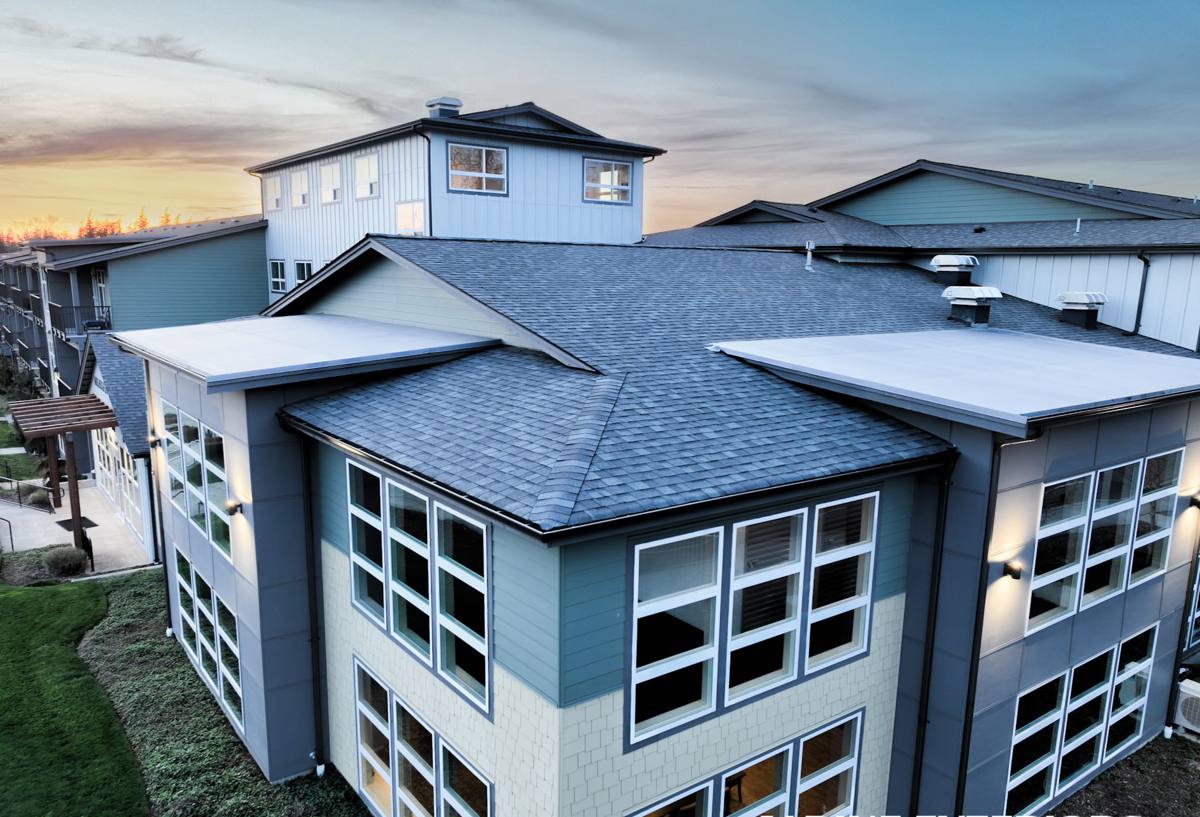
Signs Your Roof Has Storm Damage
Most storm damage in this part of Whatcom County shows up in a handful of predictable places. Knowing what to look for from the ground can help you catch a problem before it becomes a ceiling stain.
- Shingles that look curled, cracked, or lifted at the edges, especially on the side of the roof that faces prevailing wind
- Granules collecting in gutters or at the base of downspouts after a storm
- Flashing around chimneys, vents, or skylights that looks bent, separated, or rusted
- Dark streaking or heavy moss growth in shaded, tree-covered sections of the roof
- Soft or discolored spots on interior ceilings, especially after a heavy rain event
- Gutters pulling away from the fascia or sagging under debris weight
- Visible daylight or gaps in the attic where the roof deck meets the rafters
If you notice any of these after a windstorm or a stretch of heavy rain, it's worth getting a roof looked at before the next system rolls through. Small gaps don't stay small once they're exposed to repeated storms.
What a Proper Storm Damage Repair Includes
A storm repair that's done right isn't just about patching the spot that's leaking. It starts with figuring out why that spot failed, because a patch on top of an unresolved cause just buys you a few months before the same leak comes back somewhere nearby.
Full Assessment, Not a Spot Check
We look at the whole roof plane, not just the area the homeowner points us to. Wind and moisture damage rarely stay confined to one shingle. We also check the attic from the inside — that's often where the real story is, since water can travel along the underside of the deck before it ever shows up as a ceiling stain.
Matching Materials, Not Just Available Ones
Whenever a repair involves replacing shingles, we match the existing product as closely as possible in profile and color, and we're upfront when an exact match isn't realistic due to age or discontinued lines. A mismatched patch is a cosmetic problem now and a resale problem later.
Flashing and Underlayment Get Real Attention
A huge share of the leaks we find after a storm trace back to flashing — around chimneys, sidewalls, vents, and valleys — not the shingles themselves. Storm repair work has to include re-sealing or replacing flashing where it's compromised, and checking that underlayment is intact underneath, not just covering the visible shingle damage and calling it done.
Ventilation Check
Bellingham's damp climate means a roof with poor attic ventilation traps moisture, which accelerates moss growth and rot from the inside. Part of a thorough storm repair is confirming intake and exhaust venting are working as intended, since storm damage often exposes ventilation problems that were already present.
Repair or Replace? How We Make the Call
Not every storm-damaged roof needs a full replacement, and we don't push for one when a targeted repair will genuinely hold up. The decision comes down to a few honest factors: how much of the roof is affected, how old the roofing is, and whether the underlying decking has taken on moisture damage.
| Situation | Usually a Repair | Usually a Replacement |
|---|---|---|
| Localized wind damage (one slope, isolated area) | Yes | No |
| Roof under 12-15 years old, otherwise sound | Yes | No |
| Widespread granule loss or multiple failed sections | No | Yes |
| Roof already near the end of its expected service life | No | Yes |
| Rotted or soft decking found during inspection | Depends on extent | Often, if widespread |
| Recurring leaks in the same general area over multiple storms | No | Yes |
We'll walk you through what we actually find on your roof and explain the reasoning, so the decision is based on the condition of your roof rather than a sales pitch.
Working With Your Insurance Company
Many storm damage repairs in this area are at least partially covered by homeowners insurance, depending on the cause and your policy. We can document damage with photos and a written assessment that adjusters can use, and we're happy to meet an adjuster on-site if that's helpful. We don't handle the claim itself — that's between you and your insurer — but we make sure the damage is documented clearly and the scope of repair is explained in terms that hold up to review.
One thing worth knowing: insurers distinguish between sudden storm damage and gradual deterioration (like long-term moss damage or age-related wear), and only the former is typically covered. Part of our assessment is being honest about which category your damage falls into, even when that's not the answer a homeowner is hoping for.
Why Local Experience in Edgemoor Matters
Edgemoor's tree cover and proximity to the water create roofing conditions that differ from a roof on an open, inland lot. Homes tucked under mature trees deal with more shade, more debris, and slower drying times after rain, which speeds up moss growth and keeps moisture sitting on the roof longer than it should. Homes closer to the shoreline deal with salt air that's harder on exposed metal fasteners and flashing over time.
A crew that regularly works this neighborhood already has a sense of which roof styles and ages are common here, what access looks like on sloped and tree-lined lots, and how the microclimate near the bay behaves differently than a repair job in, say, a more open part of Whatcom County. That familiarity shows up in fewer surprises once we're actually on the roof.
Our Storm Repair Process
- Initial contact and scheduling — we get a description of the issue and timeline, and prioritize active leaks.
- On-site inspection — roof, attic, flashing, and ventilation are all checked, not just the reported problem area.
- Written assessment — you get a clear explanation of what we found, what caused it, and what repair options make sense, including rough cost ranges.
- Temporary protection if needed — for active leaks, we can tarp or seal an area to prevent further water intrusion while repair materials are sourced.
- Repair work — matched materials, proper flashing and underlayment work, and cleanup of debris and moss where it's contributing to the problem.
- Final walkthrough — we show you what was done and what to watch for going forward.
Cost Factors for Storm Damage Repair
Every storm repair is different, but the price generally moves with a few predictable factors rather than being a flat number.
| Factor | Why It Affects Cost |
|---|---|
| Size of the affected area | More square footage means more materials and labor |
| Roof pitch and accessibility | Steeper or harder-to-reach roofs take longer and require more safety setup |
| Extent of decking damage | Rotted or soft decking underneath shingles adds carpentry work beyond surface repair |
| Material availability | Matching older or discontinued shingle profiles can add cost or lead time |
| Flashing complexity | Roofs with multiple valleys, chimneys, or skylights need more detail work |
We give a written estimate before any work starts, and we'll flag it clearly if an inspection turns up something beyond the original scope — no surprise add-ons after the fact.
Protecting Your Roof Going Forward
Storm repair fixes the immediate problem, but a few habits go a long way toward keeping Edgemoor's climate from creating the next one. Keeping gutters clear so water actually drains instead of backing up under the roof edge matters more here than in drier climates, given how long the wet season runs. Trimming back tree limbs that overhang the roof reduces both debris buildup and the shade that keeps moss thriving. And a roof inspection after any significant windstorm — even if nothing looks obviously wrong from the ground — catches small issues while they're still small.
If a recent storm has you wondering about the condition of your roof, we're glad to take a look and give you a straight answer, whether that means a quick repair, a bigger fix, or peace of mind that everything's holding up fine. Reach out for a free, no-pressure estimate using the form below.