 Bellingham
 Window Replacement in Silver Beach: Built for Bellingham Bay Conditions
Silver Beach sits close enough to the water that homes here take a different kind of weathering than houses further inland in Whatcom County. Salt-laden air off Bellingham Bay, wind-driven rain that hits west and south-facing walls at an angle instead of straight down, and a moss season that can stretch from October well into spring all work on window frames, sills, and seals in ways that add up over the years. A window that looks fine from the sidewalk can already be letting moisture into the wall cavity behind it.
We replace windows for homeowners throughout Bellingham, and Silver Beach comes with its own set of considerations: proximity to salt air, older housing stock with original wood or early-generation vinyl windows, and homes oriented to take advantage of water views that also means more direct exposure to storm-driven rain. This page walks through what actually wears out windows in this neighborhood, what a correct replacement job involves, and how we approach the work.
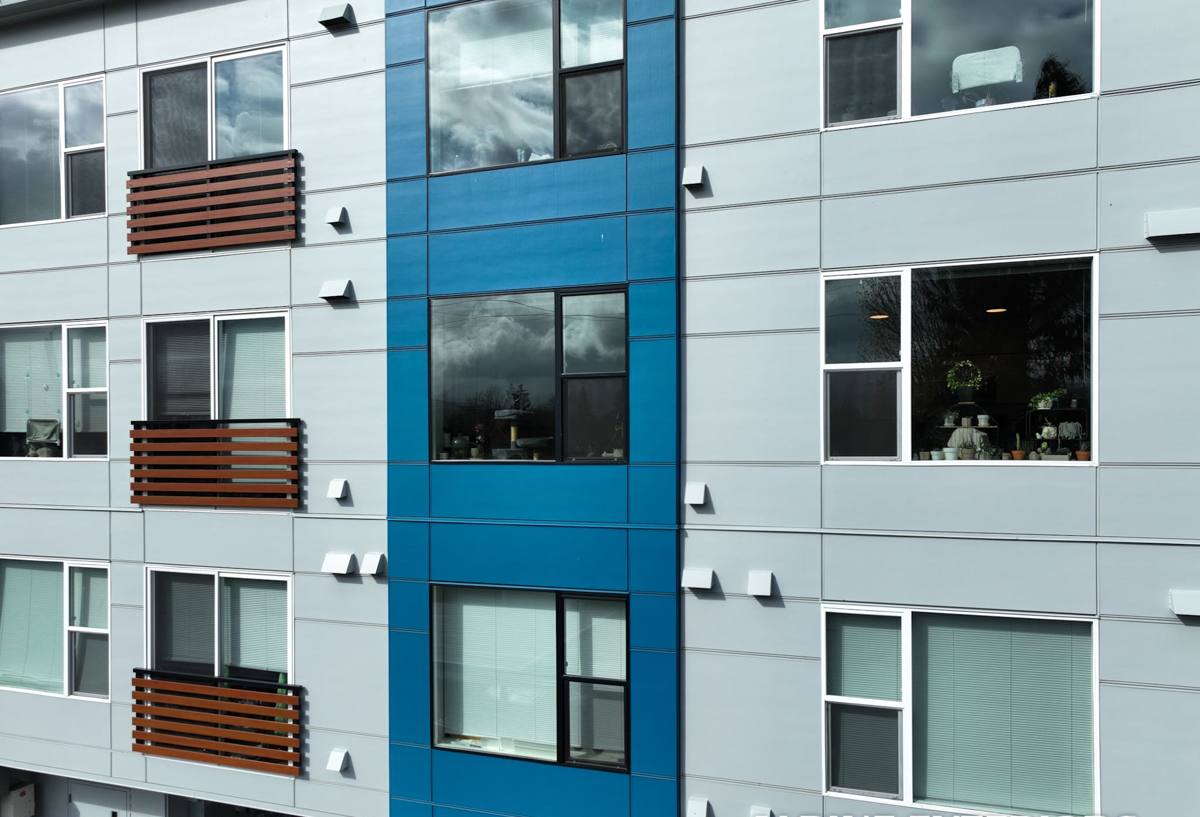
What Salt Air, Driving Rain, and Moss Season Do to Windows Over Time
Three things drive most of the window problems we see in Silver Beach, and they compound each other:
Salt Air and Corrosion
Homes within a mile or two of saltwater deal with airborne salt settling on metal hardware, aluminum frames, and fasteners. Over years, this accelerates corrosion on hinges, locks, and cranks, and it can pit or discolor lower-grade aluminum and vinyl cladding. It's not dramatic on any single day, but it shortens the working life of hardware that would otherwise last decades.
Driving Rain and Wind-Driven Water
Bellingham's storms often come with wind, which pushes rain sideways into window assemblies rather than letting it simply run down the glass. This exposes weak points in flashing, sealant, and the window-to-wall interface that a calmer climate would rarely test. Water that gets behind a poorly flashed window doesn't always show up as an obvious leak — it often shows up first as soft trim, a musty smell, or peeling paint below the sill.
Moss and Prolonged Moisture Exposure
A long, wet moss season means more months where wood trim, sills, and any exposed fasteners stay damp longer between dry spells. Moss and algae growth on and around window trim holds moisture against the surface, which is exactly the condition that lets rot get started in wood components and lets seals degrade faster than their rated lifespan.
Signs a Silver Beach Home Needs Window Replacement, Not Just Repair
Not every window problem calls for full replacement. But certain signs mean the window assembly itself — not just the caulking or weatherstripping — has failed:
- Fogging or a persistent haze between the panes of a double-pane window, which means the seal has failed and the gas fill is gone
- Soft or spongy wood trim or sill, especially on south- or west-facing windows that catch the most driving rain
- Visible gaps between the window frame and siding, or daylight visible around the frame from inside
- Windows that are difficult to open, close, or lock — often a sign the frame has shifted or swollen
- Noticeable drafts even with the window fully closed and locked
- Paint that's bubbling, peeling, or discolored directly around the window frame
- A musty smell near a window that doesn't go away when the room is aired out
- Visible corrosion or pitting on hardware, hinges, or cranks
If you're seeing one or two of these, it's worth an honest look before assuming the worst — sometimes it really is a resealing job. But once wood rot or frame movement is involved, patching tends to be a short-term fix on a longer-term problem.
What a Correct Window Replacement Job Actually Involves
Window replacement isn't just popping an old unit out and a new one in. In a climate that pushes rain sideways for months at a time, the details around the window matter as much as the window itself.
Removal and Inspection
We remove the old window and inspect the rough opening, sill, and surrounding framing for hidden water damage before anything new goes in. This is the point where problems that caused the original failure — poor flashing, missing sill pans, rotted framing — get found and fixed, rather than sealed over.
Flashing and Water Management
Proper flashing directs any water that gets past the exterior cladding back out, rather than letting it pool at the sill or run into the wall cavity. This includes sill pan flashing, head flashing, and integrating the window properly with the house's weather-resistive barrier — details that matter more here than in drier climates because the window will actually be tested by wind-driven rain, repeatedly, for years.
Air Sealing and Insulation
The gap between the window frame and the rough opening gets properly insulated and air-sealed, which affects both energy performance and moisture control. An improperly sealed gap is a common path for both drafts and water intrusion.
Exterior Finish Work
Trim, caulking, and any siding disturbed during the install get finished cleanly and sealed with materials suited to marine air exposure, so the visible finish holds up as long as the window itself.
Full-Frame Replacement vs. Retrofit (Pocket) Replacement
One of the first decisions on any window job is whether to do a full-frame replacement or a retrofit installation into the existing frame. Both are legitimate approaches, but they fit different situations.
| Factor | Retrofit (Pocket) Replacement | Full-Frame Replacement |
|---|---|---|
| Best when | Existing frame is sound, dry, and square | Frame shows rot, water damage, or is out of square |
| Access to hidden damage | Limited — existing frame stays in place | Full — sill, framing, and flashing are exposed and repairable |
| Labor and disruption | Lower, faster installation | More involved, may affect surrounding trim or siding |
| Long-term risk in wet climates | Higher if underlying rot wasn't visible beforehand | Lower, since problems are addressed at the source |
| Typical cost | Lower per window | Higher per window |
In a lot of Silver Beach homes with original wood-frame windows, what looks like a candidate for a quick retrofit turns out to have sill or framing damage once the old window is removed. We'll always tell you honestly which approach the actual condition of your window calls for, rather than defaulting to whichever is faster to install.
Choosing a Frame Material for a Waterfront-Adjacent Neighborhood
Frame material matters more in a salt-air, high-moisture environment than it does further inland. Here's how the common options compare for this kind of exposure:
| Material | Performance in Salt Air / Wet Climate | Maintenance |
|---|---|---|
| Vinyl | Doesn't corrode or rot; performs well in coastal-adjacent air | Low — occasional cleaning |
| Fiberglass | Very stable dimensionally, resists moisture and corrosion well | Low |
| Aluminum | Prone to corrosion and pitting near salt air over time unless well-coated | Moderate — hardware and finish need monitoring |
| Wood (uncoated/unclad) | Vulnerable to rot and moisture absorption in prolonged wet conditions | High — regular painting/sealing required |
| Wood-clad (vinyl or aluminum exterior) | Good, as long as the cladding and seals stay intact | Moderate — depends on cladding integrity |
We're not going to tell you a given brand or material is universally "bad" — every option has a place. But for homes exposed to salt air and sustained wind-driven rain, we lean toward materials that don't depend on paint or coatings to resist corrosion and rot, because a missed maintenance cycle in this climate has real consequences faster than it would somewhere drier.
Our Process, Start to Finish
Every job runs the same basic sequence, adjusted for the specific windows and house involved:
- On-site assessment of existing windows, framing condition, and water intrusion signs
- Honest recommendation on retrofit vs. full-frame replacement, with reasoning explained
- Written estimate covering materials, labor, and scope — no surprise add-ons once work begins
- Removal of old windows with inspection of the opening before new units go in
- Installation with proper flashing, air sealing, and insulation at every opening
- Exterior trim and finish work matched to your home's existing look
- Final walkthrough and cleanup — including removal of old windows and debris
We don't push a sale during the first visit. If a window can be reasonably repaired instead of replaced, we'll say so.
Why a Crew That Already Works Silver Beach Matters
Window replacement done by a contractor unfamiliar with this specific stretch of Bellingham Bay exposure tends to under-account for wind-driven rain angles, salt air's effect on hardware, and how long moss season actually runs here compared to a general Pacific Northwest estimate. We work in Silver Beach and the surrounding Bellingham neighborhoods regularly, which means we've seen how specific orientations and exposures on homes in this area actually perform over time, not just what a spec sheet says a product should do.
That local pattern recognition shows up in small decisions: which side of a house needs the more robust flashing detail, where moss buildup around trim tends to start first, and which frame materials hold up without heavy maintenance in this specific air quality. None of that replaces a proper inspection of your specific windows, but it means we're not guessing at conditions we've never dealt with.
After Installation: Keeping New Windows Performing in This Climate
A correctly installed window still benefits from basic upkeep in a marine climate:
- Rinse hardware and tracks periodically to reduce salt buildup, especially on homes with more direct bay exposure
- Keep gutters and downspouts clear so water isn't overflowing near window heads
- Remove moss or algae growth on nearby trim and siding before it holds moisture against the surface
- Check exterior caulking annually, particularly after the wettest months, and address any cracking early
- Operate locks and cranks periodically even on windows you don't open often, so hardware doesn't seize
None of this is heavy maintenance — it's the kind of basic seasonal attention that keeps a properly installed window performing for its full expected lifespan instead of quietly failing years early.
If you're dealing with drafty, foggy, or hard-to-operate windows in Silver Beach, we're happy to take a look and give you a straightforward assessment. The estimate is free, there's no pressure, and you'll get an honest answer about whether you need replacement, repair, or nothing at all — just fill out the form below.