 Bellingham
 Roofing in Columbia Isn't the Same as Roofing Inland
Columbia sits close enough to Bellingham Bay that salt-laden air is a daily fact of life for anything on the roof, not just an occasional coastal breeze. Add Whatcom County's long stretch of driving rain each winter and the deep shade many Columbia lots carry from mature trees, and you get a roofing environment that's noticeably harder on asphalt shingles than what a homeowner might expect from a general "Pacific Northwest" description. Metal fasteners corrode faster near salt air, granule loss shows up sooner on shingles that were installed with the wrong nailing pattern, and moss gets a running start on any roof plane that stays shaded and damp for weeks at a time.
None of that makes asphalt shingle roofing a bad choice for Columbia — it's still the most practical, cost-effective option for most homes here. It does mean the installation details matter more than they would in a drier climate, and a roof that was installed to a minimum-code standard somewhere else will underperform here.
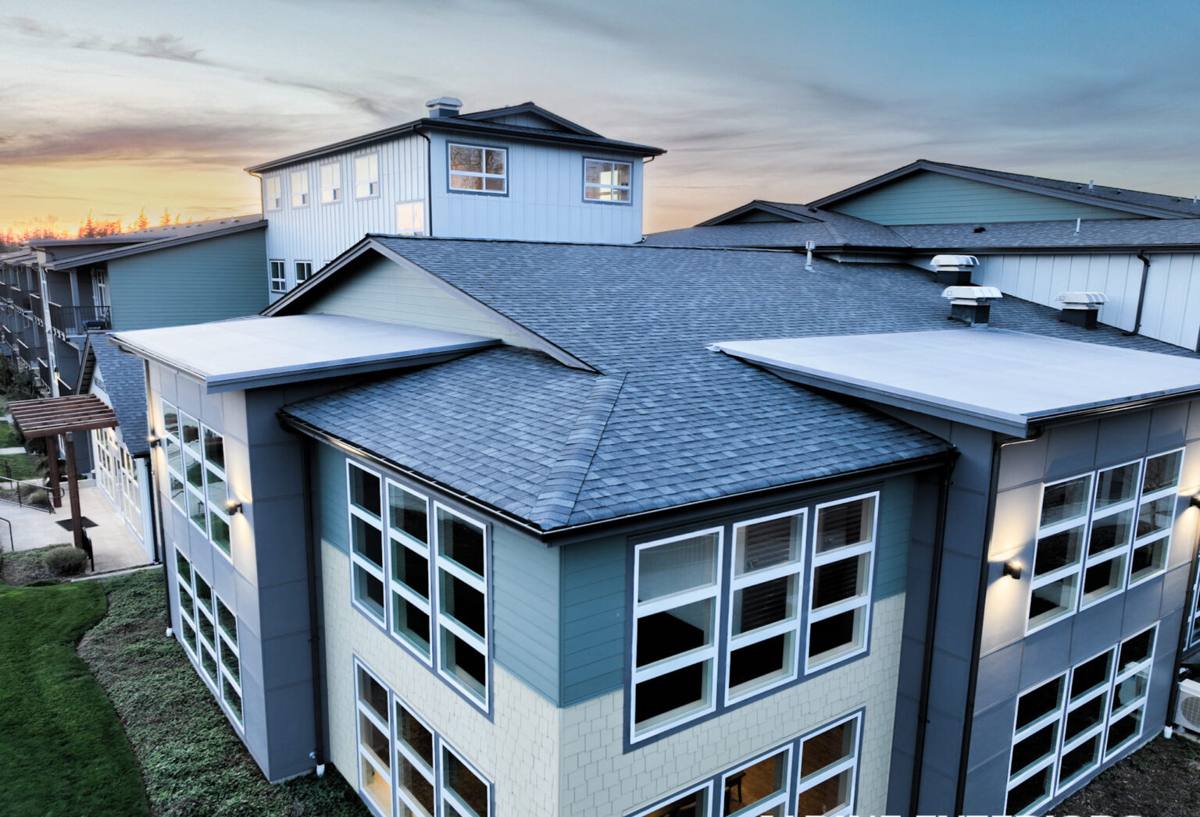
What a Correct Asphalt Shingle Job Involves in This Climate
A shingle roof is a system, not just a layer of shingles nailed to plywood. In a marine climate like Bellingham's, every layer underneath the shingles is doing real work, and skipping or shortcutting any one of them shows up as a leak, premature wear, or a moss and moisture problem within a few years.
Underlayment and Water-Resistive Barrier
Given how much of the year Whatcom County spends under active rainfall, we treat underlayment as a second line of defense, not an afterthought. Synthetic underlayment holds up better than old-style felt under repeated wet-dry cycles, and self-adhering ice-and-water membrane belongs at eaves, valleys, and any roof-to-wall transition where wind-driven rain is most likely to find a way in.
Ventilation and Moisture Control
A roof deck that can't breathe traps moisture underneath the shingles, which shortens shingle life and can lead to rot in the sheathing itself. Balanced intake at the eaves and exhaust at the ridge keeps air moving through the attic space, which matters even more in a climate where the outside air is often nearly as damp as the air you're trying to vent.
Flashing Details
Most roof leaks trace back to flashing, not the shingles themselves — around chimneys, skylights, dormers, and where a roof plane meets a sidewall. We use step flashing and counter-flashing rather than relying on sealant alone, because caulk is a maintenance item and metal flashing, installed correctly, isn't.
Choosing the Right Shingle for a Columbia Roof
Not every asphalt shingle product is built the same way, and the differences matter more here than they would in a milder climate. Wind exposure off the bay, sustained moisture, and shade-driven moss growth all play into which product makes sense for a given roof.
| Shingle Type | Typical Lifespan | Wind Rating | Algae/Moss Resistance | Best Fit |
|---|---|---|---|---|
| 3-Tab (standard) | 15–20 years | Lower | Standard, fades faster | Budget-conscious, low-slope simple roofs |
| Architectural / Dimensional | 25–30 years | Higher | Better with algae-resistant granules | Most Columbia homes — better balance of cost and durability |
| Impact-Resistant / Premium | 30+ years | Highest | Best available granule treatments | Exposed roof planes, higher wind areas, longer-term ownership |
For most homes in Columbia, we point people toward a mid-to-upper tier architectural shingle with algae-resistant (copper- or zinc-infused) granules. The upfront cost difference over standard 3-tab shingles is modest, and the payoff is fewer streaks, less moss colonization, and a longer service life in a climate that punishes anything marginal.
Moss, Algae, and Bellingham's Long Wet Season
Whatcom County's wet season runs long, and shaded roof planes in Columbia — especially north-facing slopes under tree cover — stay damp far longer than roofs in open, sun-exposed areas. That's exactly the environment moss and algae need to establish. Once moss gets a foothold, it lifts shingle edges, holds moisture against the roof deck, and accelerates granule loss.
A few things make a real difference over the life of the roof:
- Algae-resistant shingles with embedded copper or zinc granules, which slow regrowth at the source
- Zinc or copper strips installed near the ridge, which release trace metals with every rain and inhibit new moss growth downstream
- Keeping overhanging branches trimmed back so roof planes get more light and air movement
- Gentle, low-pressure moss removal rather than pressure washing, which strips granules and shortens shingle life
We don't recommend pressure washing a shingle roof under any circumstances — it's a fast way to strip the granules that protect the shingle mat, and the moss usually comes back within a season or two anyway. Soft washing or hand removal, paired with prevention measures, is the more durable approach.
Our Process for a Columbia Roofing Project
Every roof is a little different, but the sequence we follow doesn't change, because each step protects the ones after it.
- Inspection and assessment — we check the current shingle condition, decking, flashing, ventilation, and any signs of past leaks before quoting anything.
- Tear-off — old shingles and underlayment come off down to the deck, which lets us actually see the condition of the sheathing rather than guessing.
- Deck repair — any soft, rotted, or delaminated plywood gets replaced before anything new goes down. Roofing over a compromised deck just hides the problem.
- Underlayment and ice/water membrane — installed per manufacturer spec, with extra protection at eaves, valleys, and wall transitions.
- Flashing — new step flashing, counter-flashing, and drip edge wherever the old flashing is worn, undersized, or missing.
- Shingle installation — correct nailing pattern and exposure for the wind zone, with attention to ridge and hip detailing.
- Ventilation check — intake and exhaust balanced and functioning, upgraded where the existing setup falls short.
- Cleanup and magnetic sweep — job site and yard cleared of debris and stray fasteners before we call it done.
Signs a Columbia Roof Needs Attention
Because moss and moisture damage build slowly, a lot of homeowners don't realize how much wear their roof has until a leak shows up inside. Worth checking for periodically:
- Moss buildup, especially on shaded or north-facing slopes
- Granules collecting in gutters or at downspout outlets
- Shingles that look cupped, curled, or have lifted edges
- Dark streaking across the shingle field (algae staining)
- Daylight visible through the attic roof deck, or damp insulation
- Soft spots when walking the roof, or sagging between rafters
- Flashing that's rusted, loose, or separated from the roof plane
Any one of these on its own isn't necessarily an emergency, but a roof showing several at once is usually past due for a real inspection.
What Drives the Cost of an Asphalt Shingle Roof
There's no single number that applies to every Columbia roof, but the same handful of factors move the price up or down on most jobs:
| Factor | Why It Matters |
|---|---|
| Roof size and number of planes | More square footage and more valleys/hips mean more material and labor time |
| Pitch and access | Steep or hard-to-access roofs require more safety setup and slow the work down |
| Number of tear-off layers | Removing two layers of old shingles costs more than removing one |
| Decking condition | Rotted or delaminated sheathing found during tear-off adds material and labor |
| Shingle tier selected | 3-tab, architectural, and premium impact-rated products carry different material costs |
| Ventilation upgrades | Adding or correcting intake/exhaust venting is worthwhile but adds to the scope |
We walk every roof and give a written estimate that spells out what we found and what's included — no surprise change orders for things a proper inspection should have caught up front.
Why It Matters to Hire a Crew That Already Works in Columbia
A roofing crew that regularly works Columbia and the surrounding Bellingham neighborhoods already knows how this climate behaves on a roof — which slopes hold moss the longest, how much ice-and-water protection makes sense at this latitude, and what a properly vented attic needs to handle a Whatcom County winter. That local pattern recognition is different from generic training, and it shows up in fewer callbacks and a roof that's actually built for the conditions it has to survive, not just built to a national minimum code.
It also matters for the practical side of the job — pulling the right permits, knowing how weather windows work here for scheduling tear-off safely, and being reachable afterward if a question comes up rather than having moved on to another region entirely.
If your roof in Columbia is showing moss, granule loss, or you're just not sure how much life it has left, we're happy to take a look and give you a straightforward, no-pressure estimate using the form below.