 Bellingham
 Building Decks for Birchwood's Specific Weather
A deck in Birchwood has to earn its keep in a way a deck in a dry climate never does. Bellingham sits where marine air off the Salish Sea meets the wet side of the Cascades, and that combination means any outdoor structure here is fighting salt-laden moisture, sideways rain, and shade-driven moss for most of the year. A deck built to a generic national spec will show its age fast in Whatcom County. One built for this specific corner of Washington will still be solid and safe well past the point where a poorly matched deck has started to sag, stain, or rot at the connections.
This page is about one job, done right, in one neighborhood: custom deck construction for homes in Birchwood. Not a rundown of every deck style we've ever built everywhere — just what actually matters for a deck going into the ground or attaching to a house in this part of Bellingham.
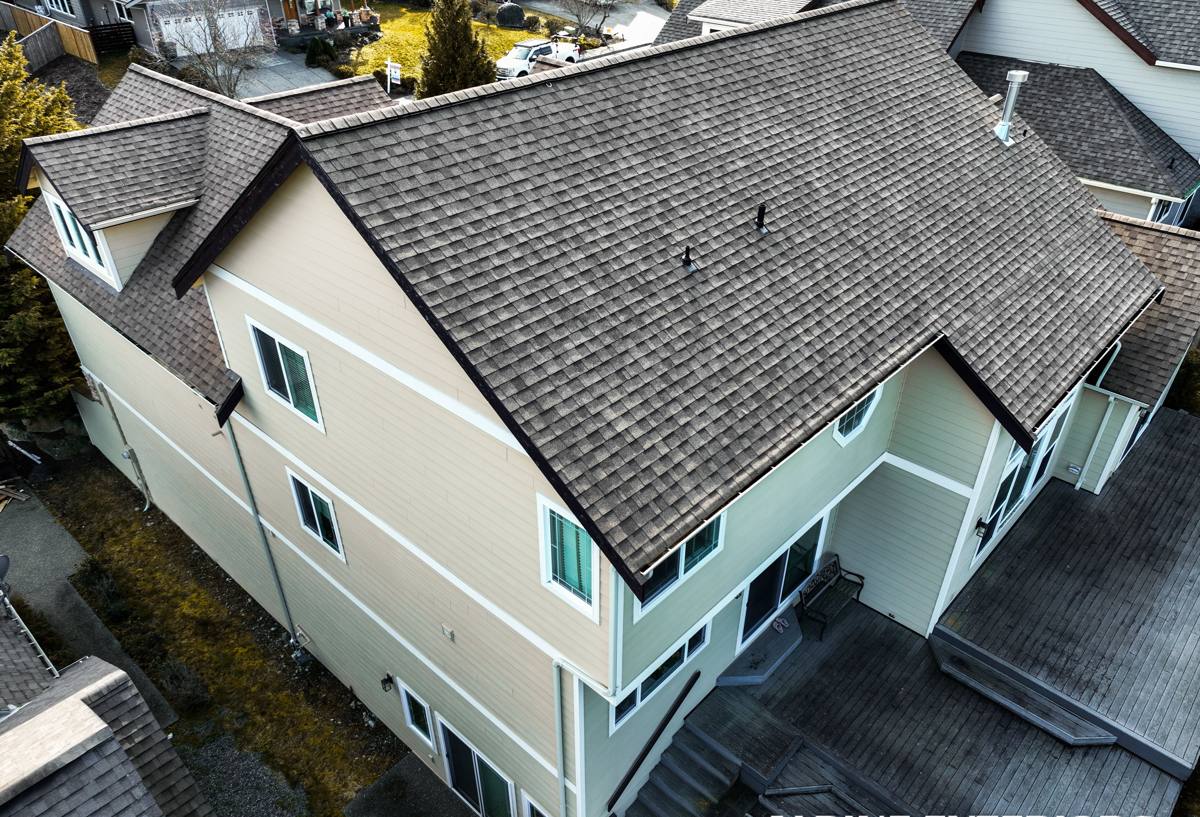
What Bellingham's Climate Does to a Deck
Homeowners often assume a deck's biggest enemy is direct sun. Around here it's closer to the opposite problem: too much moisture, for too much of the year, without enough drying time in between.
Salt Air and Metal Fatigue
Bellingham's proximity to Bellingham Bay and the broader Salish Sea means the air carries a measurable amount of salt, even well inland from the water. Salt-bearing moisture accelerates corrosion in fasteners, brackets, and any exposed metal hardware. On a deck, that's not cosmetic — it's structural. A ledger bolt or joist hanger that corrodes and weakens is a hidden failure point, because the wood around it can still look fine while the connection underneath is losing strength.
Driving Rain and Trapped Moisture
Whatcom County doesn't just get a lot of rain — a good share of it arrives sideways, driven by wind off the water. That matters for deck design because driving rain gets up under railings, into end-grain cuts, and behind ledger boards in ways that straight-down rain doesn't. Wood that stays damp for days at a stretch is wood that's setting up for rot, especially at joints and fastener points where water collects and has nowhere to drain.
Moss, Algae and Slip Hazards
Bellingham's long, mild, wet season — often stretching from fall through spring — is exactly the environment moss and algae favor: shade, moisture, and cool temperatures for months on end. On a deck surface, that growth isn't just an appearance issue. It turns boards slick, especially on north-facing decks or ones shaded by mature trees, which is common throughout Birchwood's tree-lined lots. A deck that isn't designed with drying and drainage in mind will grow moss faster than one that is, regardless of what it's built from.
Where Deck Failures Actually Start: Foundation and Framing
The decking boards are the part everyone sees, but the part that determines whether a deck lasts fifteen years or forty is almost entirely underneath — the footings, the framing, and the connections between the deck and the house.
Footings Sized for Local Soil and Frost
Footings need to be sized and set to a depth appropriate for local frost conditions and the soil on the specific lot. Whatcom County soils vary block to block — some Birchwood lots have well-drained soil, others hold water longer — and footing depth and diameter should be set based on the actual site, not a one-size answer. Undersized or shallow footings are one of the most common reasons an older deck develops a noticeable wobble or lean over time.
Ledger Attachment and Flashing
Where a deck attaches to the house, the ledger board and its flashing are doing more structural and moisture-control work than almost any other part of the build. Correct ledger flashing directs water away from the house's wall assembly instead of letting it wick behind the siding — a detail that matters enormously in a climate that sees as much driving rain as this one does. A poorly flashed ledger is one of the most frequent sources of hidden rot damage to the house itself, not just the deck.
Joists, Beams and Hardware
Every joist hanger, structural screw, and bolt on an exterior deck is exposed to the same salt air and moisture cycling described above. Framing lumber should be rated for ground contact or exterior exposure as appropriate to its position in the structure, and every piece of connecting hardware should be corrosion-resistant hardware — not a downgraded or mismatched substitute — because framing failures are far more expensive and more dangerous to fix after the fact than they are to build correctly from the start.
Choosing the Right Decking Material for a Birchwood Home
There's no single "best" decking material — there's a best fit for how a homeowner wants the deck to look, how much upkeep they're willing to do, and how much shade and moisture the specific spot on the property deals with. Here's how the common options actually compare in this climate:
| Material | How It Handles PNW Moisture | Moss/Algae Resistance | Upkeep | Relative Upfront Cost |
|---|---|---|---|---|
| Pressure-treated lumber | Good when properly sealed and maintained; end grain and cuts need re-treatment | Moderate — needs periodic cleaning | Annual cleaning, periodic sealing/staining | $ |
| Cedar | Naturally decay-resistant; still needs sealing to control graying and moisture uptake | Moderate — better than untreated softwoods | Sealing every 1-2 years, regular cleaning | $$ |
| Composite decking | Excellent — doesn't absorb water like wood, resists rot | Good, but surface can still grow algae film in deep shade | Periodic washing; no staining or sealing | $$$ |
| PVC/capped polymer decking | Excellent — fully moisture-resistant, no wood fiber to rot | Good; smooth cap sheds growth more easily | Occasional washing | $$$ |
Homes in Birchwood with heavier tree cover and more shade tend to do best with composite or capped polymer boards, simply because they hold up better through long stretches without direct sun to dry them out. More open, sun-exposed lots have more flexibility, and a well-sealed cedar or treated-lumber deck can perform very well there with normal seasonal maintenance.
Railings, Fasteners and Corrosion Resistance
Railings take a disproportionate amount of weather exposure because they're vertical, fully exposed on both faces, and often the first thing driving rain hits. We treat railing hardware with the same standard we hold framing hardware to: stainless steel or otherwise corrosion-rated fasteners at every connection point, not just at the ones that are easy to reach. A railing post that loosens because a mid-grade fastener corroded is both a maintenance headache and, eventually, a safety issue.
The same logic applies to any metal accents, post caps, or lighting hardware built into the railing system — anything installed on a Birchwood deck should be rated for coastal or marine-adjacent exposure, not just generic "exterior use."
Drainage and Moss Prevention by Design
The most effective way to fight moss isn't cleaning it off after it grows — it's designing the deck so it dries out faster than moss can establish itself. That comes down to a handful of practical details:
- Proper board spacing so water drains through rather than pooling on the surface
- A slight slope away from the house on the substructure, so water sheds instead of collecting near the ledger
- Clearance underneath the deck for airflow, rather than framing sitting low and trapping ground moisture
- Gaps and flashing details that keep water from wicking into end grain and fastener holes
- Material choices matched to how much shade the specific spot on the lot actually gets
A deck built with these details in mind will still need periodic cleaning in a climate this wet — nothing eliminates moss entirely under enough shade and moisture — but it will need far less scrubbing, and it won't be hiding rot underneath a mossy surface the way a poorly drained deck can.
Our Process — Design Through Completion
Every custom deck we build in Birchwood follows the same basic sequence, adjusted for the specific home and lot:
- On-site assessment. We look at the house's ledger point, the soil and grading, existing shade patterns, and how the space will actually be used before drawing anything.
- Design and material selection. We walk through layout, railing style, and decking material trade-offs based on the site's sun and shade exposure and the homeowner's maintenance preferences.
- Permitting. Most attached and elevated decks in Bellingham require a building permit; we handle the application and coordinate any required inspections rather than leaving that on the homeowner.
- Footings and framing. Footings are set to the depth appropriate for the site, and framing goes in with corrosion-resistant hardware and correct ledger flashing from the start.
- Decking, railings and finish work. Boards, railings, and any built-in features go in last, with attention to drainage gaps and fastener placement throughout.
- Final walkthrough. We go over the finished deck with the homeowner, including what routine maintenance to expect for the material chosen.
We build to permit and inspection standards throughout — not just at the points an inspector happens to check — because the parts of a deck that are hardest to fix later are the parts that get covered up first.
Permits, Setbacks and Engineering in Whatcom County
Deck projects in and around Bellingham commonly involve a building permit, particularly for anything attached to the house or elevated more than a modest height above grade. Setback requirements from property lines and, in some cases, additional engineering review for taller or larger structures can also come into play depending on the specific lot. None of this needs to be a burden on the homeowner — it's part of what we handle as part of the build — but it's worth knowing going in that a legitimate deck project in this area is a permitted one, not an off-the-books weekend build.
Keeping Your Deck Sound Season After Season
Whatever material a Birchwood deck is built from, a little seasonal attention goes a long way in this climate. A practical maintenance routine looks like:
- Sweep debris and standing leaves off the deck surface regularly, especially in fall
- Clean the surface at least once a year to keep moss and algae from establishing a foothold
- Check railing posts and stair connections periodically for looseness
- Reseal or restain wood decking on the schedule appropriate to that product — don't wait until it's visibly gray and dry
- Keep gutters and downspouts near the deck clear so runoff isn't dumping extra water onto or under the structure
- Look underneath the deck occasionally for standing water, debris buildup, or signs of moisture at the ledger connection
Catching a small issue — a loosening post, a spot where water is pooling, an early patch of moss on a shaded corner — early is always less work than dealing with it after a full wet season has made it worse.
Why a Crew That Already Works Birchwood Matters
Deck-building fundamentals don't change from one town to the next, but the details that determine whether a deck lasts do change with the climate and the specific conditions of a neighborhood. A crew that regularly works in Birchwood already knows how shaded lots here behave through a wet Whatcom County winter, what footing depths hold up on the soil types common in the area, and which hardware and material choices are worth the extra cost versus which ones are unnecessary for a given site. That's not something a generalized national playbook accounts for — it comes from building decks in this specific climate, on this specific coastline, repeatedly.
If you're planning a new deck or replacing one that's showing its age, we're happy to take a look at your property and talk through what makes sense for your site, your budget, and how you actually plan to use the space. Reach out for a free, no-pressure estimate using the form below.