 Bellingham
 Why Birchwood Homes Need Siding Built for This Climate
Birchwood sits inside the same weather pattern that shapes exterior work across Whatcom County: marine air off the Salish Sea, long stretches of low-intensity rain that can last for days, and enough shade and moisture on many lots to keep moss and algae active most of the year. None of that is unusual for a Bellingham neighborhood, but it does mean siding here has a harder job than siding in a drier inland climate. It has to shed water reliably, resist the slow biological growth that shade and dampness encourage, and hold up to salt-laden air without the fasteners or trim corroding out from under it.
A lot of siding problems we see in this part of Whatcom County aren't caused by bad materials alone — they're caused by materials that were never engineered for this specific combination of moisture, salt, and shade. That's the starting point for how we think about any siding job in Birchwood.
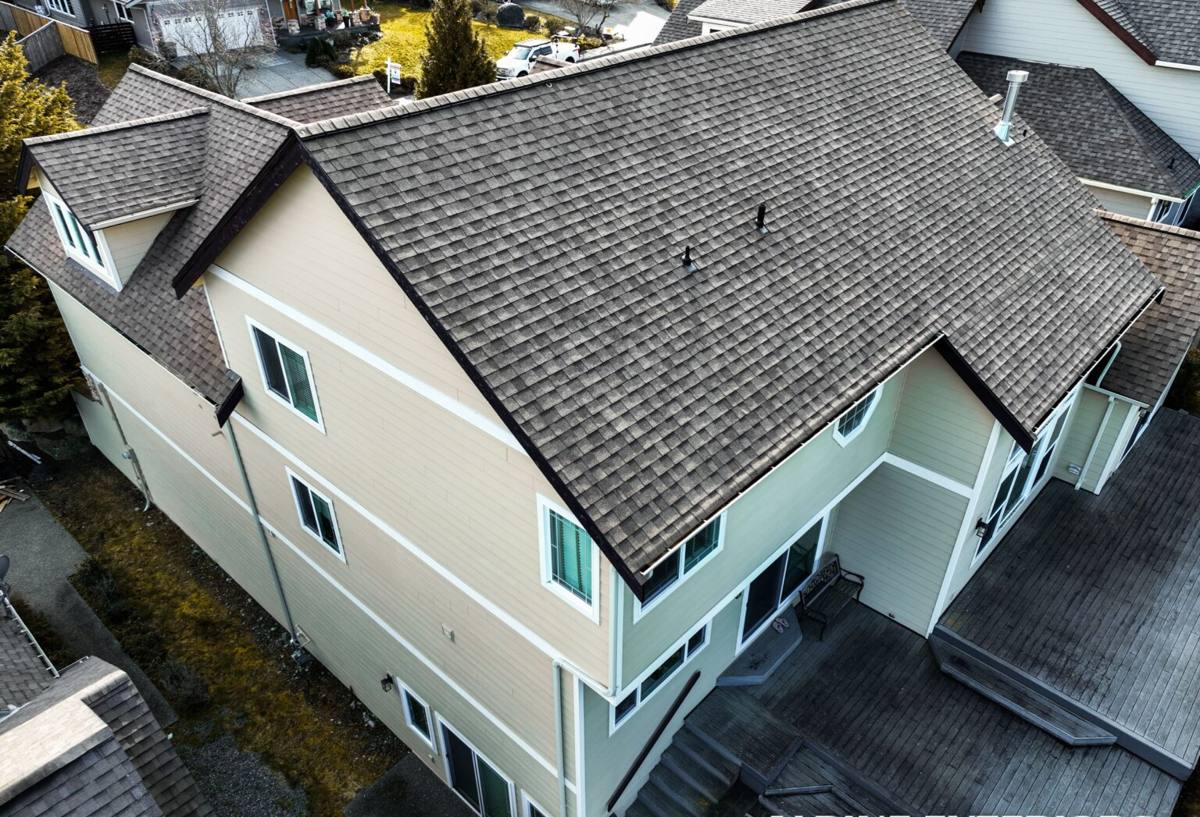
What Salt Air, Rain, and Moss Do to the Wrong Siding
Salt Air
Proximity to the water means airborne salt settles on exterior surfaces and metal components year-round. Over time it accelerates corrosion on fasteners, flashing, and trim that isn't rated for a marine-influenced environment. Siding that looks fine from the street can be failing quietly at the fastener level.
Driving Rain
Bellingham's rain isn't usually a downpour — it's persistent, wind-driven, and good at finding gaps. Any siding system with weak seams, poor flashing details, or a water-resistive barrier installed out of sequence will eventually let moisture behind the cladding. Once water gets behind siding in a climate this damp, it doesn't dry out quickly.
Moss Season
Shaded lots and tree cover, common throughout Birchwood, keep siding damp longer after every rain event. That extended dampness is exactly what moss and algae need to establish. On materials that absorb moisture or that use a paint film instead of a factory-cured finish, that growth can work its way into the surface rather than just sitting on top of it.
Why We Install Only James Hardie Fiber Cement
We standardized on James Hardie fiber cement siding for every job we do, including here in Birchwood, and we don't install vinyl, LP SmartSide, Cemplank, Allura, primed spruce, or cedar. That's not a marketing position — it's a practical one built around what actually holds up in this climate over decades, not just the first few years.
Fiber cement is non-combustible, dimensionally stable in wet-dry cycling, and doesn't feed moss and algae the way wood-based products can. James Hardie's ColorPlus finish is baked on at the factory rather than field-applied, which matters directly for moss resistance — a factory-cured finish gives biological growth less to grip onto and holds its color far longer under UV and constant moisture than a site-painted surface. Hardie also engineers specific product formulations, called HZ (HardieZone) lines, for different climate zones, and the Pacific Northwest falls squarely into the zone their wetter-climate formulation was built for.
The Right Hardie Product Lines for Birchwood Homes
Not every Hardie product is the right fit for every part of a house. Here's how the main lines typically apply on a Birchwood project:
| Product | Best Use | Why It Fits This Climate |
|---|---|---|
| HardiePlank Lap Siding | Primary wall cladding | Most common field siding; sheds driving rain well when lapped and flashed correctly |
| HardiePanel Vertical Siding | Accent walls, gables, modern facades | Fewer horizontal seams for water to test on steep or exposed elevations |
| HardieShingle | Accent bands, dormers | Traditional look without the moisture absorption of real wood shingle |
| HardieTrim | Corners, window and door trim | Matches the wall material's stability so trim and field siding move together |
Color and texture selection matters too, but the bigger factor for longevity in Birchwood is matching the right product to each part of the house — an exposed north- or west-facing wall that takes the brunt of driving rain deserves the same attention to detail as the more visible street-facing elevation.
What a Correct Installation Actually Involves
Fiber cement siding is only as good as the installation behind it. James Hardie publishes detailed installation specifications, and skipping steps is the single biggest reason siding fails early in a climate like this one. A correct job includes:
- A continuous, properly lapped water-resistive barrier installed before any siding goes on
- Correct flashing at every window, door, and roof-to-wall intersection — the details that stop driving rain from getting behind the cladding
- Proper fastener type and placement, driven to Hardie's specified depth, not over- or under-driven
- Minimum clearance between the bottom of the siding and grade, decks, or roof lines so moisture and splash-back don't sit against the material
- Correctly sized gaps at butt joints and trim, sealed with a caulk rated for the exposure, not just whatever's on the truck
- Painted or factory-finished cut edges, since raw cut edges are the one part of Hardie siding that isn't factory-sealed
Any one of these done wrong won't necessarily show up right away. It shows up two, five, or ten years later as a soft spot, a stain, or a section that's holding moisture when the rest of the wall isn't.
Our Process From Estimate to Finished Job
Assessment
We start by looking at the existing siding and sheathing, not just the surface. In a damp climate, what's happening behind the cladding matters as much as what you can see. We check for soft sheathing, existing moisture damage, and flashing conditions around penetrations before we ever talk product or color.
Tear-Off and Prep
Old siding comes off, the wall is inspected and repaired where needed, and a new water-resistive barrier goes on before anything else. This is the stage where a rushed job creates problems that don't surface until years later.
Installation
Siding, trim, and flashing go in to James Hardie's written specifications — fastener schedule, clearances, and joint treatment included. We don't treat the spec sheet as optional guidance.
Finish and Walkthrough
Cut edges are sealed, caulk lines are checked, and we walk the job with you before calling it done.
Signs Your Current Siding Is Already Failing
Before scheduling a full replacement, it's worth checking your existing siding for these signs. Some are cosmetic, others point to moisture already behind the wall:
- Persistent moss or algae streaking that comes back within weeks of cleaning
- Soft, spongy, or bubbling spots when you press on the siding
- Paint that's peeling or bubbling rather than fading evenly
- Visible gaps, cracking, or warping at seams and corners
- Rust streaks below fasteners or trim
- Musty smell or discoloration on interior walls that back onto exterior siding
Any of these on their own might be minor. Several together, especially on a shaded or west-facing wall, usually mean it's time for a closer look.
Why a Crew That Works Birchwood Regularly Matters
A contractor who works this specific area repeatedly starts every job already knowing how Whatcom County's damp, salt-influenced climate behaves against a wall — which elevations tend to take the worst of the driving rain, how shaded a given lot is likely to stay through the year, and what fastener and flashing details actually hold up here versus what a generic spec sheet assumes for a drier region. That local pattern recognition shows up in the small decisions on a job site: where to add extra flashing attention, which walls need the most careful joint sealing, and how to sequence the work around Bellingham's rain windows so the wall assembly isn't exposed longer than it needs to be.
It also matters for permitting and code familiarity specific to Bellingham and Whatcom County, and for knowing how to talk through options with homeowners who've already dealt with moss, salt corrosion, or a previous siding product that didn't hold up.
Maintenance After Installation
Correctly installed Hardie siding is low-maintenance, not no-maintenance. In Birchwood's climate, a periodic soft wash to keep moss and algae from establishing is worth doing on shaded elevations, along with an annual check of caulk lines and any areas where trees or shrubs sit close to the wall and keep it damp longer than the rest of the house. Beyond that, the ColorPlus finish is designed to go a long time without repainting, which is one less maintenance cycle to manage in a climate that already asks a lot of a home's exterior.
If you're in Birchwood and dealing with moss that won't quit, siding that's starting to show its age, or you're just planning ahead, we're happy to take a look and give you a straightforward, no-pressure estimate — use the form below to get started.