 Bellingham
 Roof Replacement for Birchwood Homes
Birchwood sits close enough to Bellingham Bay and the surrounding waterways that homes here take a different kind of weather beating than roofs further inland. Salt-laden air, wind-driven rain off the Salish Sea, and a long, wet moss season all work on a roof year-round, not just during winter storms. A roof replacement in this neighborhood isn't a generic swap-the-shingles job — it's a project that has to account for what Whatcom County weather actually does to a roof over 20-plus years.
This page covers what a correct roof replacement looks like for Birchwood specifically: the materials that hold up, the details that keep water out, and what to expect when you hire a crew that already knows this part of Bellingham.
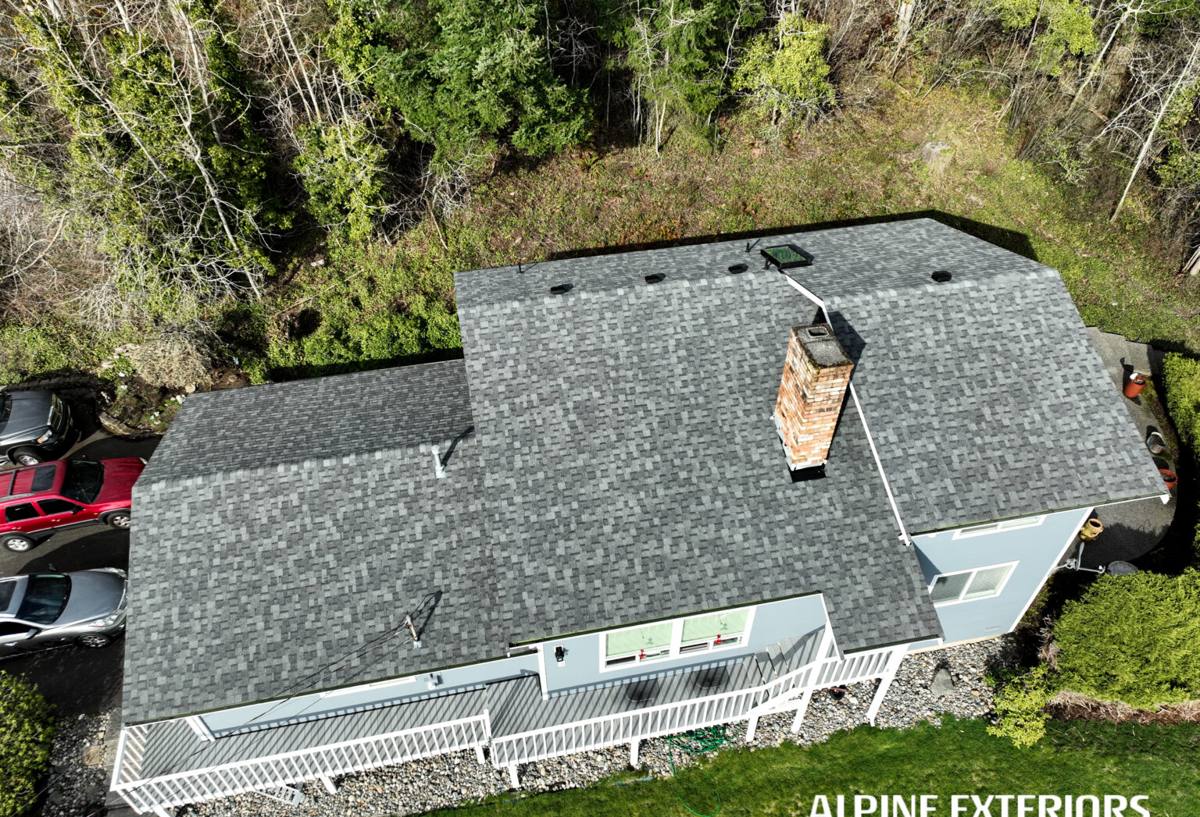
What Bellingham's Climate Does to a Birchwood Roof
Salt Air and Metal Fasteners
Homes closer to the water deal with airborne salt that accelerates corrosion on exposed metal — nail heads, flashing seams, vent stacks, and gutter hardware. A roof that was fastened or flashed with standard-grade materials will show rust streaking and metal fatigue years before an inland roof of the same age. This is one of the first things we check on an aging Birchwood roof: not just whether the shingles are worn, but whether the metal underneath them has started to fail quietly.
Driving Rain, Not Just Rain
Whatcom County gets a lot of rain, but the bigger issue for roofs near the bay is wind-driven rain — storms that push water sideways under shingle edges, around chimneys, and into any gap in the flashing. A roof designed for calm, straight-down rainfall doesn't necessarily hold up to that lateral pressure. Underlayment quality and flashing detail matter more here than in drier, calmer climates.
Moss and Constant Moisture
Bellingham's long wet season, combined with shaded lots and mature tree cover common in older neighborhoods, gives moss plenty of time to establish itself on north-facing slopes and anywhere debris collects. Moss isn't just cosmetic — it holds moisture against the roofing material, works its way under shingle tabs, and can shorten the life of an otherwise sound roof by years if left unmanaged.
Signs a Birchwood Roof Needs Replacing, Not Patching
- Granule loss showing up in gutters or downspouts, especially on south- and west-facing slopes
- Curling, cupping, or cracked shingles, particularly where moss has been sitting for more than one season
- Rusted or visibly corroded flashing around chimneys, skylights, and roof-to-wall joints
- Soft spots or sagging in the roof deck when walked, which usually means water has already reached the sheathing
- Repeated leaks in the same spot after patching — a sign the underlayment or decking has failed, not just the surface layer
- A roof approaching or past 20-25 years old, which is a reasonable outer limit for standard asphalt shingle roofs in this climate
A roof with one or two of these issues might still be a repair. Several of them together, especially deck softness or repeat leaks, usually means replacement is the more honest recommendation.
What a Correct Roof Replacement Involves
Full Tear-Off, Not Overlay
We remove the existing roofing down to the deck on every replacement. Overlaying new shingles on top of old ones is sometimes allowed by code, but it traps moisture problems instead of fixing them and adds weight the structure wasn't necessarily designed to carry twice over. A tear-off also lets us inspect the deck directly, which matters a lot in a climate where hidden moisture damage is common.
Deck Inspection and Repair
Once the old roofing is off, we check the sheathing for soft spots, delamination, or rot — usually concentrated around valleys, chimneys, and eaves where water has had the most opportunity to sit. Any compromised decking gets replaced before new material goes down. Skipping this step is one of the most common ways a new roof fails early.
Underlayment Built for Wet Climates
Given how much of the year Bellingham spends wet, we use synthetic or self-adhered underlayment rated for high-moisture climates rather than the minimum required by code. In vulnerable areas — eaves, valleys, and roof penetrations — we install ice-and-water shield style membrane as a second line of defense against wind-driven rain and any ice that does form during cold snaps.
Flashing Details
Flashing failure is the most common cause of "new roof, old leak" complaints we see. Chimneys, skylights, sidewalls, and valleys all get new, corrosion-resistant flashing installed correctly rather than reused or caulked over. This is one of the areas where cutting corners doesn't show up until the next big storm.
Ventilation
Proper attic ventilation keeps moisture from condensing under the deck and helps prevent the ice-damming and moss-friendly conditions that come with a poorly ventilated roof in a wet climate. We check existing intake and exhaust venting as part of every replacement and correct it where it's inadequate.
Material Choices for Coastal Whatcom County Conditions
There's no single "best" roofing material for every Birchwood home — the right choice depends on the home's structure, budget, and how much long-term maintenance the owner wants to take on. Here's how the common options compare for this specific climate:
| Material | Moisture & Salt-Air Performance | Maintenance | Typical Lifespan Here |
|---|---|---|---|
| Architectural asphalt shingle | Good, with quality underlayment and flashing | Periodic moss treatment recommended | 20-30 years |
| Standing seam metal | Very good; sheds water and moss quickly if properly coated/fastened | Low; occasional fastener/seam check | 40-50+ years |
| Composite/synthetic shingle | Good; resists moisture absorption better than wood | Low to moderate | 30-50 years |
| Cedar shake | Requires diligent maintenance in this climate; moss and moisture are ongoing concerns | High; regular treatment needed | Highly variable with upkeep |
For most Birchwood homes, we steer people toward architectural asphalt or metal roofing. Not because other materials can't work, but because they demand a level of ongoing maintenance — moss treatment, sealing, inspection — that not every homeowner wants to sign up for given how much moisture this area sees. That's a maintenance-burden conversation, not a claim that any material is inherently bad.
Our Process for a Birchwood Roof Replacement
- On-site inspection. We look at the current roof, attic ventilation, and any visible signs of moisture damage before quoting anything.
- Written estimate. A clear scope of work and price range, including material options, so you're comparing apples to apples if you're getting other quotes.
- Scheduling around the weather. Roofing in a wet climate means watching forecasts closely and staging materials so the deck isn't exposed longer than necessary.
- Tear-off and deck inspection. Old roofing removed, deck checked and repaired as needed.
- Underlayment, flashing, and roofing installation. Installed to manufacturer spec, with extra attention to the wind-driven-rain and salt-air details this area requires.
- Final walkthrough. We go over the finished roof with you, including what maintenance (if any) it needs going forward.
Why a Crew That Already Works Birchwood Matters
Roofing crews that mostly work drier, inland regions sometimes under-spec underlayment or skip extra flashing steps because it's rarely necessary where they usually work. In Birchwood, those shortcuts show up as leaks within a few wet seasons. A crew that already works this neighborhood knows which slopes hold moss longest, which older homes tend to have undersized ventilation, and which flashing details actually get tested by the way storms roll in off the water here.
There's also a practical side to local familiarity: knowing the permitting process for Bellingham and Whatcom County, understanding typical lot access and staging constraints in established neighborhoods, and being able to respond quickly if a tarp or emergency repair is needed between the estimate and the scheduled replacement.
Cost Factors for Birchwood Roof Replacement
Roof replacement cost varies by roof size, pitch, material choice, deck condition, and access — there's no honest single number without an inspection. Broadly, homeowners in this area should expect asphalt shingle replacement to run in the moderate range typical for the Pacific Northwest, with metal roofing costing more upfront but requiring less long-term maintenance. The clearest way to get an accurate number is a walk of your specific roof, which is why we quote in person rather than over the phone.
Maintaining a New Roof in This Climate
- Have gutters and downspouts cleared at least twice a year, more often under mature trees
- Address moss early — light growth is far easier to manage than an established mat that's been sitting for a season or more
- Keep an eye on flashing around chimneys and skylights after major windstorms
- Trim back overhanging branches that keep sections of the roof shaded and damp
- Schedule a roof check every few years even without visible problems, since leaks in this climate often start out of sight
If you're weighing repair versus replacement, or just want an honest read on how much life is left in your current roof, we're happy to take a look. Estimates are free and there's no pressure either way — use the form below to get started.