 Bellingham
 Siding Built for Birchwood's Weather, Not Just Its Curb Appeal
Birchwood sits inside a stretch of Bellingham where three things work against exterior siding at the same time: salt-laden air drifting in off the water, driving rain that comes in sideways during fall and winter storms, and a moss season that can run half the year in the shadier, tree-covered lots this neighborhood is known for. None of that is unusual for Whatcom County. But it does mean that siding installed the way it might be in a drier inland climate tends to fail here years before it should — not because the product was bad, but because the install wasn't matched to the conditions.
This page is about one job, done right, in one neighborhood: siding installation for Birchwood homes. Not a general overview of siding options, not a sales pitch — just what actually holds up here, what a correct installation looks like, and why the details matter more in this part of Bellingham than they would somewhere with a milder, drier climate.
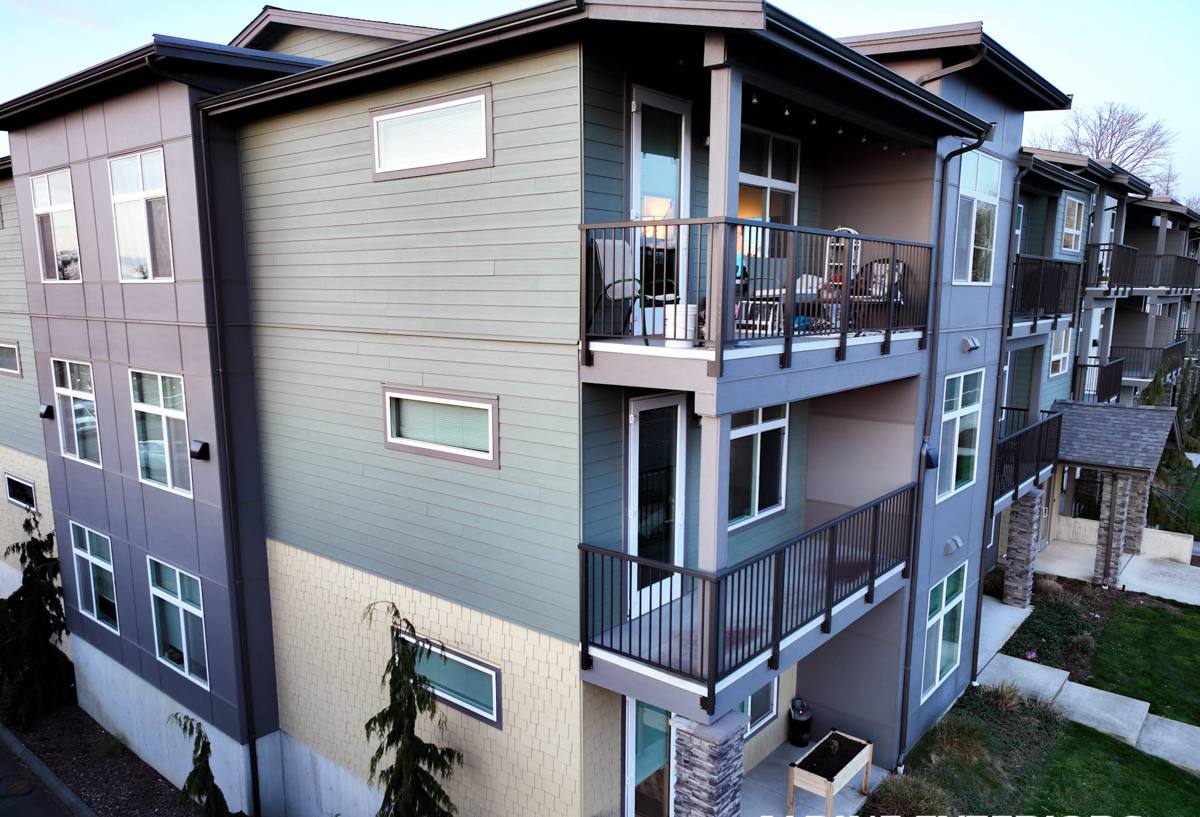
What Bellingham's Climate Actually Does to Siding Over Time
Every siding material reacts differently to sustained moisture and salt exposure, and Birchwood gets a steady dose of both. A few specific mechanisms are worth understanding before you replace or repair siding here:
Salt air and metal fasteners
Airborne salt accelerates corrosion in fasteners, flashing, and trim hardware that isn't rated for coastal exposure. Cheap or mismatched fasteners can start staining and weakening a siding job within a few seasons, long before the siding panels themselves show any wear.
Driving rain and wind-driven moisture
Bellingham's rain doesn't just fall straight down — storms off the water push it sideways into wall assemblies, which is exactly the condition that exposes weak seams, poor caulking, and undersized overlaps. A siding system that's watertight in a light, vertical rain can still leak under wind-driven rain if it wasn't detailed for it.
Extended moss and mildew season
Shade, moisture, and mild temperatures are ideal for moss and mildew growth, and Birchwood's tree cover keeps a lot of siding damp longer after each storm than it would be in full sun. Porous or absorbent siding materials hold that moisture and feed the growth cycle; siding that doesn't wick water resists it far better.
Why We Only Install James Hardie Fiber Cement
We install one siding system on Birchwood homes: James Hardie fiber cement. Not because it's the cheapest option or the fastest to install, but because it's the one product line engineered specifically for the conditions this region throws at a house year-round.
Fiber cement doesn't rot, doesn't feed mold or moss the way wood-based products can, and it holds paint and factory finish far longer than materials that expand and contract heavily with moisture. Hardie's ColorPlus factory finish is baked on and warrantied against fading and peeling, which matters in a climate where a house gets wet and dries out on a near-weekly cycle for months at a stretch. We also use Hardie's HZ5 product line, engineered specifically for wetter, harsher climate zones like the Pacific Northwest — built with this kind of weather in mind, not adapted from a product designed somewhere drier.
We don't install vinyl, LP SmartSide, primed wood, or cedar siding, and we're upfront about why: each of those products asks a homeowner to take on a maintenance or moisture-risk trade-off that fiber cement simply doesn't. Standardizing on one system means our crews install it constantly, know its failure points cold, and can back the work with a warranty that actually means something.
What a Correct Siding Installation Actually Involves
Siding failures in this climate are almost never about the panel material itself — they're about what's underneath and around it. A correct installation gets these details right every time, not just when it's convenient:
- A continuous, properly lapped weather-resistant barrier behind the siding, with every seam taped and every penetration sealed before a single piece of siding goes up
- Correct flashing at every window, door, deck ledger, and roof-to-wall transition — the points where wind-driven rain actually gets in
- Stainless or hot-dip galvanized fasteners rated for coastal and marine-influenced air, not standard interior-grade hardware
- Proper clearance between the bottom of the siding and grade, decks, patios, and roof lines so moisture can't wick up or pool against the material
- Correct nailing pattern and fastener depth per Hardie's installation specs — over-driven or under-driven nails are one of the most common causes of early siding failure
- Caulking and sealant only where Hardie's install guide actually calls for it — oversealing traps moisture instead of shedding it
Skipping or rushing any one of these doesn't show up as a problem on install day. It shows up two, five, or ten years later as a soft spot, a stain, or a section that's holding moss no matter how often it's cleaned.
Our Installation Process for Birchwood Homes
The process is the same discipline every time, adjusted for what we find on your specific house:
1. On-site assessment
We walk the exterior, check the current siding and sheathing condition, look at drainage, roofline transitions, and shaded or moss-prone areas, and identify anything that needs to be addressed before new siding goes up.
2. Tear-off and substrate check
Old siding comes off and we inspect the sheathing underneath. Any water damage, soft wood, or compromised framing gets addressed before we move forward — installing new siding over a damaged substrate just hides a problem instead of fixing it.
3. Weather barrier and flashing installation
This is the step that determines whether the house stays dry for the next several decades. We install and tape the weather-resistant barrier, then flash every window, door, and penetration correctly for wind-driven rain.
4. Hardie siding installation
Panels, lap siding, or shingle-style Hardie products go on per manufacturer spec, with the correct fastener type, spacing, and clearance for this climate.
5. Trim, caulking, and final detail work
Trim gets installed, sealant is applied only where it belongs, and we do a final walk-through to check every seam, corner, and transition.
6. Final inspection
We walk the finished job with you, confirm everything meets spec, and go over what to expect for the first year as the finish settles in.
Choosing the Right Hardie Line and Color for This Setting
Hardie makes several product lines and dozens of ColorPlus finishes, and the right choice depends on your home's style and how exposed it is to sun, shade, and moisture. A few practical considerations for Birchwood specifically:
| Consideration | Why it matters here |
|---|---|
| HZ5 climate zone rating | Engineered for wetter, harsher climates — the right baseline for anywhere in Whatcom County |
| Lap siding vs. shingle-style panels | Wider lap profiles shed driving rain slightly more efficiently than heavily detailed shingle patterns, which matters more on exposed elevations |
| Darker vs. lighter ColorPlus finishes | Darker colors show water spotting and mineral streaking less than very light colors on shaded, tree-covered lots |
| Trim and fascia matching | Using Hardie trim alongside Hardie siding avoids mismatched expansion rates and moisture behavior at the seams |
What New Siding Typically Costs — and What Drives the Price
We don't quote pricing without seeing the house, but the factors that move the number up or down are consistent from job to job:
| Factor | How it affects cost |
|---|---|
| Home size and number of stories | More square footage and taller walls mean more material and more labor, including access equipment for two-story sections |
| Current siding condition and substrate | Hidden sheathing damage discovered during tear-off adds repair work before new siding can go on |
| Product line and profile | Shingle-style and specialty trim profiles cost more in material and install time than standard lap siding |
| Trim and detail complexity | Homes with more windows, dormers, and roofline transitions require more flashing and trim work |
| Site access | Tight lots, slopes, or limited staging area can add labor time for material handling and equipment |
The honest range for a full siding replacement varies widely based on these factors — a straightforward single-story home is a very different project than a large, detailed two-story with multiple rooflines. We'll give you real numbers after walking the property.
Signs a Birchwood Home May Need New Siding
Some signs are obvious; others take a closer look. Before you decide between a repair and a full replacement, check for:
- Persistent moss or mildew that returns within weeks of cleaning
- Soft spots or visible give when you press on the siding, especially near the bottom courses
- Paint or finish that's peeling, bubbling, or chalking rather than just fading evenly
- Visible warping, cupping, or buckling panels
- Staining that runs from fastener heads or seams — a sign of trapped moisture or corroding hardware
- Gaps opening up at corners, trim, or window edges
- Rising heating or cooling bills that suggest the wall assembly isn't sealing the way it should
Any one of these on its own might just need a repair. Several at once, especially on a home with older wood-based or vinyl siding, usually means the underlying material has reached the end of what it can handle in this climate.
Why a Crew That Already Works in Birchwood Makes a Difference
Siding installation isn't a one-size-fits-all trade, and a crew that's worked other Bellingham neighborhoods knows things a traveling or out-of-area contractor doesn't: how far to plan for wind-driven rain on exposed elevations, which detailing holds up against a Whatcom County moss season, and how local permitting and inspection actually work. That local experience shows up in fewer surprises during tear-off and a finished job that's actually built for the weather it has to survive, not just the weather on install day.
We stand behind our work with a manufacturer-backed warranty on the Hardie product itself and our own workmanship warranty on the installation — because in this climate, the installation is at least as important as the material.
If your Birchwood home's siding is showing signs of wear, or you're planning ahead for a replacement, we're happy to take a look and give you an honest assessment — no pressure, no obligation. Use the form below to request a free estimate.