 Bellingham
 Why Blaine Roofs Wear Differently Than Roofs Inland
Blaine sits right on the water at the northwest corner of Whatcom County, and that location changes what a roof has to deal with over its lifetime. Homes here get a steady dose of salt-laden air off the water, wind-driven rain that comes in sideways during winter storms rather than falling straight down, and a moss season that runs long because of the shade, humidity, and mild temperatures typical of this stretch of the Pacific Northwest coast. None of that is unique to any one house — it's the baseline every roof in this part of Whatcom County has to handle. The difference between a roof that looks and performs well at year fifteen and one that's already leaking, staining, or losing granules usually comes down to how it was installed, not just what shingle or panel was chosen.
A new roof installation is one of the few times a homeowner gets to correct everything at once — old flashing, tired ventilation, soft decking, whatever detailing shortcuts were made the last time around. Treating it as a full system replacement, rather than a stripped-down shingle swap, is what actually buys you the extra years in a climate like this one.
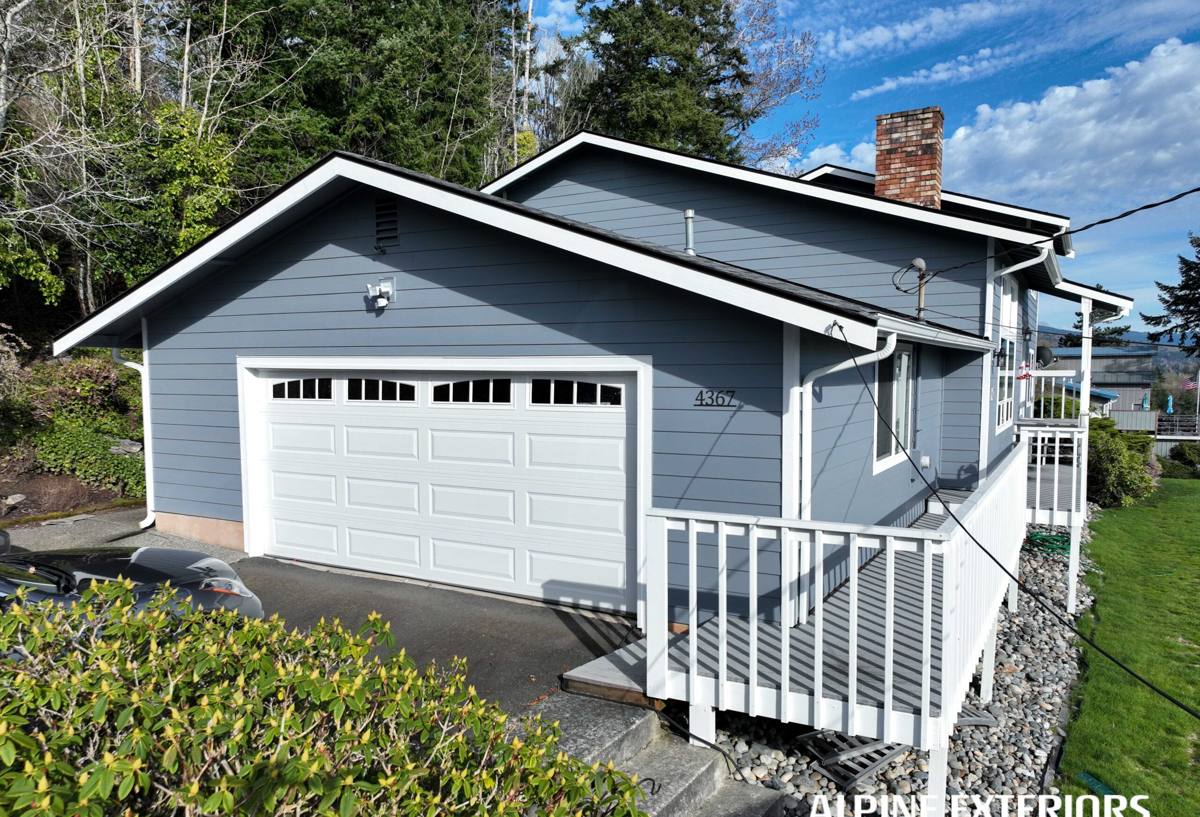
What Salt Air, Rain, and Moss Actually Do to a Roof
Salt Air
Airborne salt accelerates corrosion on anything metal — nails, flashing, vent stacks, gutter hardware. Over time it can also degrade the reflective or granule coatings on some roofing products faster than in a dry inland climate. This doesn't mean metal or coated components should be avoided; it means the specific alloys, coatings, and fastener types matter more here than they would fifty miles inland.
Driving Rain and Wind
Storms coming off the water tend to push rain sideways and up under laps and edges that would stay dry in a calmer climate. That puts real weight on flashing details, underlayment coverage, and how well the roof's edges and penetrations are sealed — areas that are easy to shortcut on a fast job and very hard to inspect once the roof is finished.
Moss and Algae
Consistent moisture, shade from mature trees, and mild winter temperatures let moss and algae establish quickly on north-facing slopes and anywhere debris collects. Moss does more than look bad — its root structure holds moisture against the roofing material and can work its way under shingle tabs over several seasons, shortening the life of an otherwise sound roof.
What a Correct New Roof Installation Actually Involves
A roof is a system, not a single layer. Skipping or shortcutting any one of these steps is usually where premature leaks and warranty disputes come from.
Tear-Off and Deck Inspection
We remove the old roofing down to the deck rather than layering over it. That's the only way to actually see the plywood or OSB underneath, check for soft spots or rot around old penetrations, and replace bad sections before they're covered up again for another 20-plus years.
Underlayment and Water Barrier
Given how much wind-driven rain this area sees, underlayment coverage matters more than the shingle brand printed on the wrapper. We use synthetic underlayment across the field and self-adhering ice-and-water barrier at eaves, valleys, and around penetrations — the places wind-driven rain is most likely to find a way in.
Flashing
Flashing around chimneys, skylights, sidewalls, and valleys is where the majority of roof leaks actually originate — not in the open field of shingles. We install new flashing rather than reusing old pieces, and we detail it to shed water even when rain is hitting the roof at an angle instead of straight down.
Ventilation
Balanced intake and exhaust ventilation keeps the attic temperature and moisture level in check, which protects the underside of the decking and helps prevent the ice damming and condensation issues that show up in homes with poor airflow. It also matters for shingle warranty compliance — most manufacturers require adequate ventilation as a condition of coverage.
Fasteners
In a salt-air environment, fastener corrosion resistance is not optional. We use fasteners rated for coastal exposure rather than standard-grade nails that can start rusting and losing holding power years before the roofing material itself is due for replacement.
Choosing a Roofing Material for a Blaine Home
There's no single "best" roofing material for this climate — the right choice depends on the home's roof pitch, budget, and how much long-term maintenance the homeowner wants to take on. Here's how the common options compare for a coastal Whatcom County property:
| Material | Coastal / Salt Air Performance | Moss Resistance | Typical Lifespan |
|---|---|---|---|
| Architectural Asphalt Shingle | Good with proper fasteners and flashing; algae-resistant granule options available | Moderate — benefits from periodic cleaning | 25–30 years |
| Standing Seam Metal | Excellent when properly coated and detailed; sheds wind-driven rain well | High — little surface for moss to grip | 40–50+ years |
| Synthetic/Composite Shingle | Good; resistant to moisture absorption | Moderate to high depending on product | 30–50 years |
| Cedar Shake | Requires diligent maintenance in damp, salty conditions | Low without regular treatment | 20–30 years with upkeep |
We don't install every product on that list on every home. For roofs with heavy shade or north-facing slopes prone to moss, we'll generally steer a homeowner toward asphalt with algae-resistant granules or metal rather than cedar, simply because cedar's maintenance requirements in a damp, salt-exposed climate are demanding and unforgiving if skipped even one season.
Moss and Algae Prevention Built Into the Install
Rather than treating moss as something to fight after the fact with chemical washes, a good installation reduces the conditions moss needs to take hold in the first place.
- Algae-resistant shingle granules on shaded or north-facing slopes
- Proper attic ventilation to reduce condensation that feeds moisture-loving growth
- Correct flashing and drip edge so water sheds cleanly instead of pooling at valleys and edges
- Gutter and downspout sizing appropriate for the volume of runoff a Pacific Northwest winter produces
- Discussing zinc or copper strip installation at the ridge for homes with heavy tree cover, where ongoing moss pressure is expected
Our Process, Start to Finish
- On-site assessment — we walk the roof and attic, check the decking condition where accessible, and note flashing points, ventilation, and any problem areas specific to the home's exposure.
- Written estimate — a clear scope of work and material options, explained in plain terms, with no pressure to decide on the spot.
- Scheduling around weather — we plan installations for dry windows and protect the open deck if conditions turn before the roof is dried in.
- Tear-off and deck repair — full removal of the old roofing, with any soft or damaged decking replaced before anything new goes down.
- Underlayment, flashing, and ventilation installation — the system components that determine how the roof actually performs in local weather.
- Roofing material installation — installed to manufacturer specification, which is also what keeps material warranties valid.
- Final walkthrough and cleanup — magnetic sweep for debris, haul-away of old materials, and a final review with the homeowner.
Signs a Blaine Home May Need a New Roof
Not every roofing problem calls for full replacement — but these are the signs worth having looked at before a small issue becomes a bigger one:
- Granules collecting in gutters or at downspout outlets
- Shingles that are curling, cupping, or losing their flat profile
- Visible daylight through the attic decking or sheathing
- Moss buildup thick enough to hold moisture against the roof surface
- Flashing that's rusted, lifted, or separating from the roof deck
- Interior staining on ceilings, especially near chimneys, skylights, or valleys
- A roof approaching or past 20–25 years old, regardless of visible damage
What Affects the Cost of a New Roof
Every roof is priced individually after an on-site look, but the same handful of factors drive most of the variation between jobs:
| Factor | Why It Matters |
|---|---|
| Roof size and number of facets | More square footage and more valleys/hips mean more material and labor |
| Existing decking condition | Rot or soft sheathing found during tear-off adds repair scope |
| Material selection | Asphalt, metal, and composite carry different material and labor costs |
| Roof pitch and access | Steep or hard-to-access roofs take longer and require more safety setup |
| Ventilation and flashing upgrades | Bringing an older system up to current standards adds value but also cost |
| Layers of existing roofing | Multiple old layers mean more tear-off labor and disposal |
As a rough range, straightforward asphalt shingle replacements on typical homes tend to run in the mid-five-figures, with metal roofing and homes needing significant deck repair landing higher. The only way to get an accurate number is a physical look at the roof — anything quoted sight-unseen should be treated as a placeholder, not a real bid.
Why It Matters That We Already Work in Blaine
A crew that regularly works this stretch of coastal Whatcom County already knows what a roof here is up against before they climb the ladder. That means recognizing which slopes will need extra moss protection based on tree cover and orientation, knowing which flashing details tend to fail first in wind-driven storms, and understanding how permitting and inspection typically move through Whatcom County and the City of Blaine. It also means we're not guessing at material choices — we've seen how different products actually hold up over years of salt air and marine weather in this exact area, not just in a manufacturer's general climate zone chart.
Familiarity with a specific area also shows up in smaller, practical ways: knowing realistic delivery and disposal logistics for the neighborhood, understanding typical lot layouts and access constraints, and being available for a follow-up look if a question comes up after the job is done.
After Installation: Keeping a New Roof Performing
A correctly installed roof still benefits from basic upkeep, especially in this climate. Keep gutters and downspouts clear so water has somewhere to go besides pooling at the roof edge. Trim back overhanging branches where reasonable to reduce shade and debris buildup that feeds moss. Have the roof looked at after any major windstorm, and don't wait for an interior stain to show up before addressing a suspected leak — by the time water reaches the ceiling, it's usually been finding its way in for a while.
If you're weighing a new roof for a home in Blaine or anywhere else in the Bellingham area, we're happy to take a look and walk you through what we're seeing — no pressure, no obligation. Use the form below to request a free estimate.