 Bellingham
 Why Blaine Homes Wear Out Siding Faster Than Inland Whatcom County
Blaine sits right on the water — Drayton Harbor and Semiahmoo Bay put homes here in nearly constant contact with salt-laden air, and the wind off the water drives rain sideways into walls that a house a few miles inland never has to deal with. Add in a marine climate that stays damp and shaded much of the year, and you get siding that's fighting three things at once: salt corrosion on fasteners and trim, wind-driven moisture intrusion at every seam and joint, and a moss and algae season that can run eight months or longer on north- and west-facing walls.
None of that is unique to any one siding material — wood, fiber cement, and vinyl all take a beating in this environment. What differs is how each one fails, and how forgiving it is of a repair. That's the lens we bring to every Blaine siding repair call: figure out what the coastal exposure actually did to this specific wall, then fix the cause, not just the visible damage.
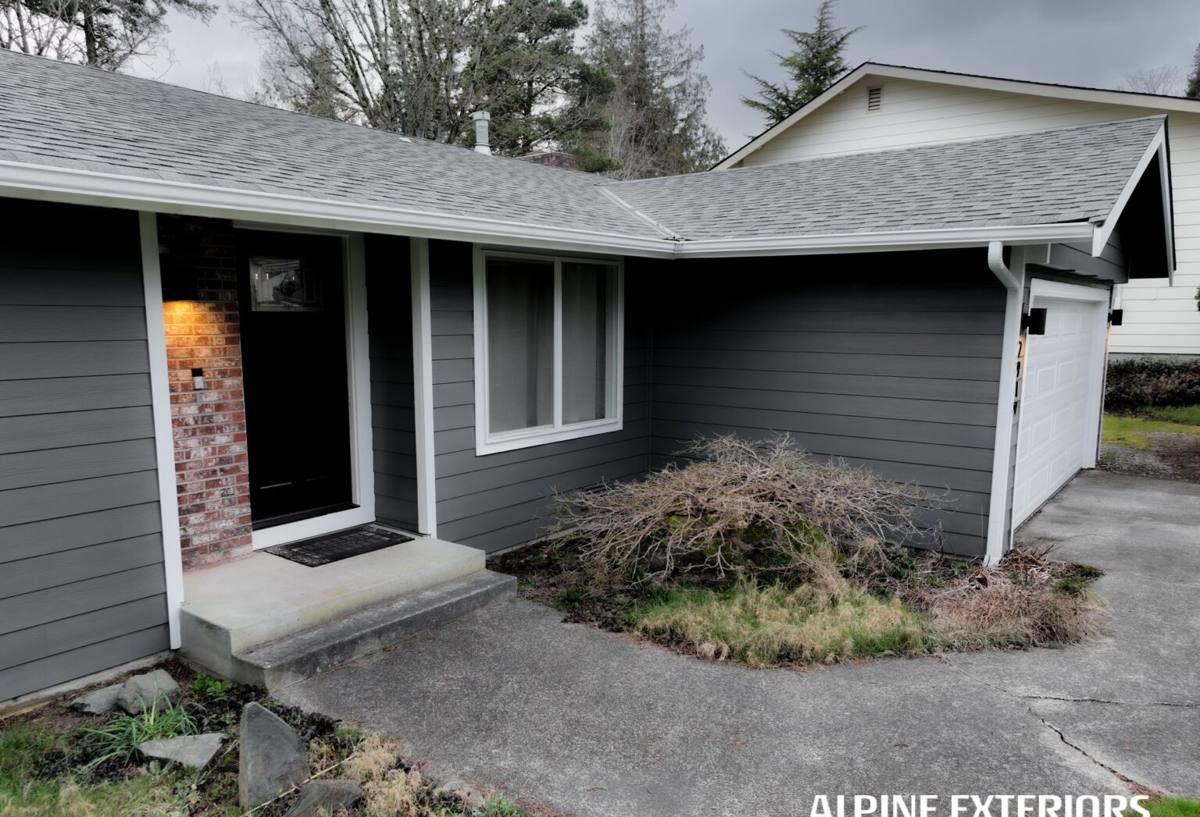
Signs Your Blaine Home Needs Siding Repair
Coastal wear rarely announces itself with a dramatic crack. It usually shows up as small, easy-to-dismiss details that add up. Walk your exterior — especially the sides that face the water or catch the prevailing wind — and look for these:
- Soft or spongy spots when you press on a board, especially near the bottom courses closest to grade
- Dark green or black streaking that keeps coming back within weeks of being cleaned
- Rust bleeding from nail heads or staining running down from metal trim and flashing
- Paint that's blistering, peeling, or chalking faster in one area than the rest of the house
- Gaps opening up at butt joints, corner boards, or around window and door trim
- Visible warping, cupping, or separation at panel seams
- A musty smell or soft drywall on an interior wall that backs up to an exterior wall showing any of the above
Any one of these can be minor. Several together, or anything showing up near grade or on a water-facing wall, usually means moisture has been getting behind the siding for a while — worth a look before the next wet season, not after.
What a Correct Repair Actually Involves
Diagnosing the Cause, Not Just Patching the Symptom
The most common mistake in siding repair isn't bad workmanship — it's treating the visible damage as the whole problem. A rotted board at a corner is often a symptom of a flashing detail that was never sealed right, or a caulk joint that failed years ago and let water track down behind the wall. Cut out and replace the board without fixing what let the water in, and you'll be repairing the same spot again in a year or two. A proper repair starts with pulling back enough material to see the water path — where it's getting in, where it's traveling, and what's actually saturated versus just discolored.
Matching Materials the Right Way
Repairs also have to match what's on the wall — not just in color, but in how the material moves and weathers. Patching a fiber cement wall with a different product, or mixing repair techniques meant for wood onto a fiber cement house, creates a seam that ages differently than the surrounding siding and often fails faster than the original damage did. When we repair, we match the existing product and profile as closely as possible, and where a full section needs replacing rather than patching, we talk through whether it makes more sense to match what's there or use the opportunity to upgrade that section to a better-performing material.
Repair, Section Replacement, or Full Re-Side: How We Decide
Not every call ends in a small patch, and not every problem needs a full tear-off. The right scope depends on how much of the wall is affected and what's driving the damage.
| Situation | Typical Approach | Why |
|---|---|---|
| Isolated damage to a few boards or panels, structure underneath is sound | Spot repair with matched material | Cheapest fix that fully solves a contained problem |
| One wall or elevation (usually the water- or wind-facing side) shows repeated failures | Section replacement of that elevation | Addresses a wall that's structurally exposed differently than the rest of the house |
| Damage shows up in multiple locations, siding is original and past its expected service life | Full re-side | Patchwork repairs on aging siding rarely outlast the cost of doing it once, correctly |
| Rot has reached sheathing or framing | Repair the structure first, then siding | New siding over compromised sheathing just hides the problem again |
We'll tell you honestly which category your home falls into, including when a smaller repair is genuinely the right call and a full re-side would be overkill.
Why We Repair and Rebuild with James Hardie Fiber Cement
When a repair calls for new material rather than a patch to what's already there, we use James Hardie fiber cement — it's the only siding product we install, and it's a deliberate standard, not a default. In a marine environment like Blaine's, fiber cement doesn't absorb water and swell the way wood does, and it doesn't soften or become brittle from long-term UV and salt exposure the way some other siding materials can over time. Hardie's ColorPlus factory finish is baked on and warranted against fading and peeling, which matters a lot on a coastal wall that's already dealing with more weather stress than an inland home. Hardie also makes HZ5 product specifically engineered for harsher climate zones — the kind of engineering that's worth having on a wall that faces open water.
We won't install LP SmartSide, vinyl, Cemplank, Allura, or primed wood siding, and we're upfront about why: each of those products has real strengths, but each also has a moisture or maintenance trade-off that we think shows up faster in an environment like Blaine's than most homeowners expect when they first choose it. A repair is a good moment to have that conversation, especially if the section being replaced has failed once already.
Our Siding Repair Process in Blaine
- Inspection. We look at the damaged area and the rest of the exterior, since coastal damage is rarely confined to one spot — we check flashing, caulk joints, and grade clearance while we're there.
- Diagnosis and scope. We explain what we found, what caused it, and give you a straightforward repair-versus-replace recommendation with the reasoning behind it.
- Written estimate. Clear scope, materials, and cost before any work starts — no surprise add-ons once the wall is opened up.
- The repair. We remove affected material, address the underlying moisture path (flashing, sealant, drainage), and install matched or upgraded siding to spec.
- Final check. We walk the repair with you, confirm the finish and seal, and point out any other spots worth keeping an eye on.
Why Hiring a Crew That Already Works Blaine Matters
Border towns and small coastal communities like Blaine don't get the same contractor traffic as bigger Whatcom County markets, and that shows up in two ways. First, a crew that's worked other homes along this stretch of coast already knows how aggressively the salt air and wind-driven rain attack certain details — corner boards, butt joints, anywhere siding meets trim — and knows to check those spots even when they're not the reason you called. Second, response time matters: a coastal moisture problem left alone through one more wet season can turn a repair into a much bigger job, and a crew that's already familiar with the area can typically get out to look at it sooner than one starting from scratch.
We also know the practical side — permitting expectations in Whatcom County, how local building department inspections typically go for exterior repair work, and what's realistic for scheduling around the wetter months here. That local familiarity keeps a repair project from turning into a series of avoidable delays.
Preventing the Next Repair
A good repair should buy you years, not months. A few habits make a real difference in a climate like Blaine's:
- Rinse or gently wash siding at least once a year, more often on shaded, moss-prone walls
- Keep gutters clear so water isn't overflowing directly onto siding below
- Trim back vegetation and tree cover that keeps walls damp and shaded
- Maintain clearance between siding and grade, mulch beds, or hardscaping
- Re-caulk trim and penetration points on a regular schedule rather than waiting for a gap to appear
- Have any new staining or softness looked at early — it's cheaper to fix a small area than a wall
If your Blaine home has siding that's showing wear from the salt air, wind, or moss, we're happy to take a look and give you an honest read on what it needs. Reach out for a free, no-pressure estimate — there's a form right below to get started.