 Bellingham
 Storm Damage Roof Repair Built for Columbia's Older Housing Stock
The Columbia neighborhood is one of Bellingham's older, established residential pockets, with a mix of early-to-mid-century homes and newer infill sitting close to Whatcom Falls Park and the tree canopy that comes with it. That combination — mature trees, older roof decking, and a location that catches the full brunt of winter storms rolling in off Bellingham Bay — means storm damage here rarely looks like a single dramatic event. More often it's a branch strike that cracks a few shingles, wind that lifts a ridge cap, or weeks of driving rain finding a weak spot that's been building for years. We repair storm damage on Columbia roofs the way it actually happens: methodically, with an eye for what's hidden as well as what's obvious.
Whatcom County's storm pattern isn't hurricane-force wind events. It's sustained, wet, windy fronts that hit repeatedly from fall through spring. That's a different kind of stress than a single big storm — it's cumulative. A roof that shrugs off one bad night can still fail after the tenth one if the underlying material or flashing was already compromised.
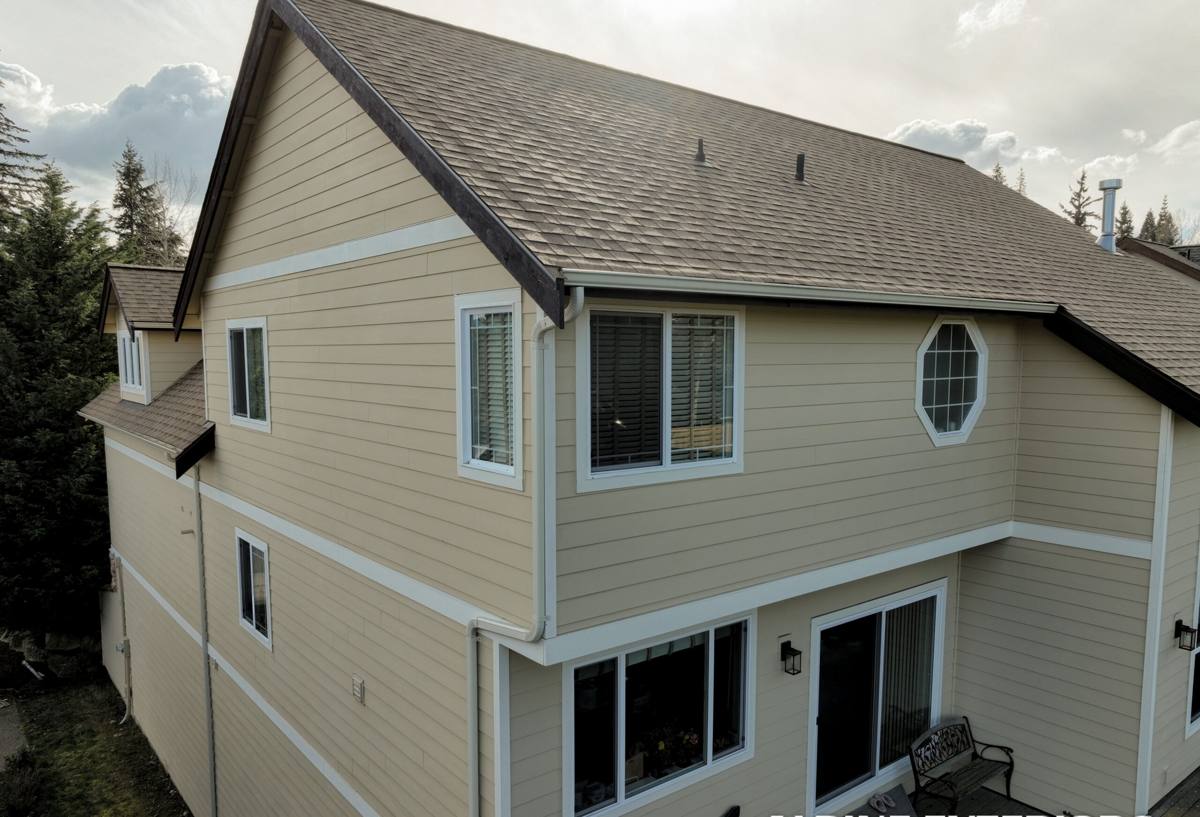
What Salt Air, Driving Rain, and Moss Season Do to a Columbia Roof
Salt Air
Bellingham sits on salt water, and even a few miles inland the air carries enough salt to accelerate corrosion on exposed metal — flashing, fasteners, gutter hardware, and vent caps. Corroded fasteners back out slightly over time, and a fastener that's backed out even an eighth of an inch is a starting point for a leak the next time wind-driven rain hits that section of roof.
Driving Rain
Most roofing materials are built to shed rain falling straight down. Driving rain — rain pushed sideways by wind — behaves differently. It gets up under shingle tabs, forces its way past marginal flashing laps, and finds gaps that would never leak in calm weather. After a windstorm, the leaks that show up two or three days later are almost always a driving-rain problem, not a fresh puncture.
Moss Season
Whatcom County's moss season runs long — realistically most of the year on north-facing slopes and shaded sections near mature trees, which describes a lot of Columbia's tree-lined streets. Moss holds moisture directly against the roofing material, and on wood or older asphalt roofing that constant dampness breaks the material down from the surface in. A storm-damaged roof with an existing moss problem tends to leak faster and in more places than a clean roof with the same physical damage, because the moss has already softened the material's ability to shed water.
How to Tell If Your Columbia Home Has Storm Damage
Not all storm damage is visible from the ground, and not all roof problems after a storm are actually storm-caused — sometimes a storm just exposes wear that was already there. Here's what we tell homeowners to watch for after a wind or rain event:
- New or worsening water stains on ceilings, especially near exterior walls or chimneys
- Shingles or roofing pieces in the yard or gutters after a windstorm
- Visible lifted, curled, or missing shingles near ridges, edges, or valleys
- Dented or dislodged gutters, downspouts pulling away from the fascia
- Cracked or displaced flashing around chimneys, skylights, or vent pipes
- A musty smell in the attic or upper floor that wasn't there before
- Daylight visible through the roof deck from inside the attic
- Branches or debris resting on the roof surface, even without visible damage yet
If you see any of these, the roof needs a walk-on inspection soon — not necessarily an emergency tarp, but soon. Small storm damage left through another wet Whatcom County week tends to become bigger, more expensive damage.
What a Correct Storm Damage Repair Actually Involves
A lot of storm repair work in this region gets done as a patch: replace the visibly damaged shingles, caulk the obvious gap, call it done. That approach misses the driving-rain and moss issues described above, and it's why some homeowners end up calling a contractor back two or three times for what should have been one repair. Our process is built around finding the full extent of the damage the first time.
1. Roof and Attic Assessment
We inspect the roof surface itself — shingles, flashing, ridge and hip caps, valleys, vent boots — and we check the attic from the inside where access allows. Water almost always travels before it shows up as a ceiling stain, so tracing a leak back to its actual entry point matters more than treating the spot where the stain appeared.
2. Identifying Storm vs. Pre-Existing Damage
This matters for insurance purposes and for your own understanding of the roof's condition. We'll be straight with you about what the storm caused versus what was already wear-related — inflating a claim, or letting an adjuster assume everything is storm-related when it isn't, tends to cause problems down the line.
3. Repair Scope and Material Matching
Where possible we match existing roofing material so a repair doesn't stand out as an obvious patch. On older Columbia roofs where the original material is no longer manufactured, we'll talk through the closest honest match and explain the trade-offs rather than guessing and hoping it blends.
4. Flashing and Fastener Check
Because salt air corrodes fasteners and flashing over time, any storm repair on a Bellingham-area roof should include a check of the flashing and fastener condition in the surrounding area, not just the damaged spot. Fixing a hole in the field of the roof while leaving corroded flashing next to it just means a second repair call later.
5. Moss and Debris Clearing
If moss contributed to the failure, we clear it as part of the repair rather than leaving it to keep working against the new materials. A repair done on top of active moss growth doesn't hold up as long.
Repair vs. Replacement: How We Help You Decide
Not every storm-damaged roof needs full replacement, and not every roof is worth repairing repeatedly. The honest answer depends on the roof's age, material, and how many separate issues the storm exposed.
| Factor | Leans Toward Repair | Leans Toward Replacement |
|---|---|---|
| Roof age | Under 60-70% of expected material lifespan | Near or past expected lifespan |
| Damage extent | Isolated to one section or slope | Multiple sections, or scattered across the roof |
| Underlying deck condition | Solid, dry decking under the damage | Soft, rotted, or repeatedly wet decking |
| Moss/algae history | Minor, treatable | Long-term, material already degraded |
| Prior repair history | First or second repair | Repeated repairs to the same area |
We'll walk you through where your roof falls on this and give you a straightforward recommendation — including telling you when a repair is the right call even if replacement would be more profitable for us. A roof that only needs a repair doesn't need a sales pitch.
Insurance and Storm Claims: What We Can Do
If your storm damage is significant enough to involve your homeowner's insurance, we can document the damage with photos and a written scope that supports your claim, and we're glad to meet an adjuster on-site to point out damage that's easy to miss from the ground. We don't handle the claim itself — that's between you and your insurer — but we won't pad a scope of work to inflate a claim, and we won't downplay real damage to make a repair look smaller than it is. Straight documentation tends to get claims processed faster and with fewer disputes.
Why a Crew That Already Works Columbia Matters
Roofing problems in this specific part of Bellingham have a pattern to them — the tree cover near Whatcom Falls Park, the age of housing stock in the neighborhood, the specific way wind funnels through this part of the county during winter storms. A crew that already works Columbia roofs recognizes that pattern faster instead of treating every job as a blank slate. That familiarity translates into a more accurate first assessment, fewer surprises mid-repair, and materials on the truck that actually match what's common on roofs in this neighborhood.
It also means faster response after a storm. When a wind event hits Whatcom County, every roofing contractor in the region gets busy at once. Working locally lets us route crews efficiently between nearby jobs rather than crossing the county for every call, which matters when you've got an active leak and don't want to wait a week.
After the Repair: Reducing Your Next Storm's Impact
A storm repair is a good moment to address the conditions that made the damage worse than it needed to be. That usually means:
- Trimming back branches that overhang the roof, especially near mature trees
- Scheduling moss treatment or removal before the next wet season sets in
- Checking gutters and downspouts are clear and securely attached before fall
- Having flashing and fasteners inspected every few years given the salt-air corrosion rate here
None of these are big-ticket items, and taking care of them after a repair is far cheaper than dealing with the same failure again next storm season.
Get a Free, No-Pressure Estimate
If your Columbia home has visible storm damage, or you're just not sure whether that recent windstorm did anything worth worrying about, we're happy to take a look and give you a straight answer. Use the form below to request a free estimate — no pressure, no upsell, just an honest read on your roof's condition and what, if anything, it needs.