 Bellingham
 Custom Windows Built for Lynden's Climate
Lynden sits inland from Bellingham Bay, but it doesn't escape what the rest of Whatcom County deals with every year: long stretches of driving rain, damp winters that never quite dry out, and a moss season that seems to start earlier every fall. Homes here still catch the same marine air that moves in off the Sound, and that moisture works on window assemblies whether a house is a mile from the water or fifteen. Old aluminum-frame windows, wood windows with failed glazing, or vinyl units installed without proper flashing all eventually let that moisture find a way in.
Custom windows aren't just about picking a style off a shelf. "Custom" means the window is built or configured to the actual rough opening in your wall, the specific wall assembly behind your siding, and the way water moves across your home's exterior. For Lynden homeowners, that's the difference between a window that holds up through twenty Whatcom County winters and one that starts showing rot, fog, or drafts within five.
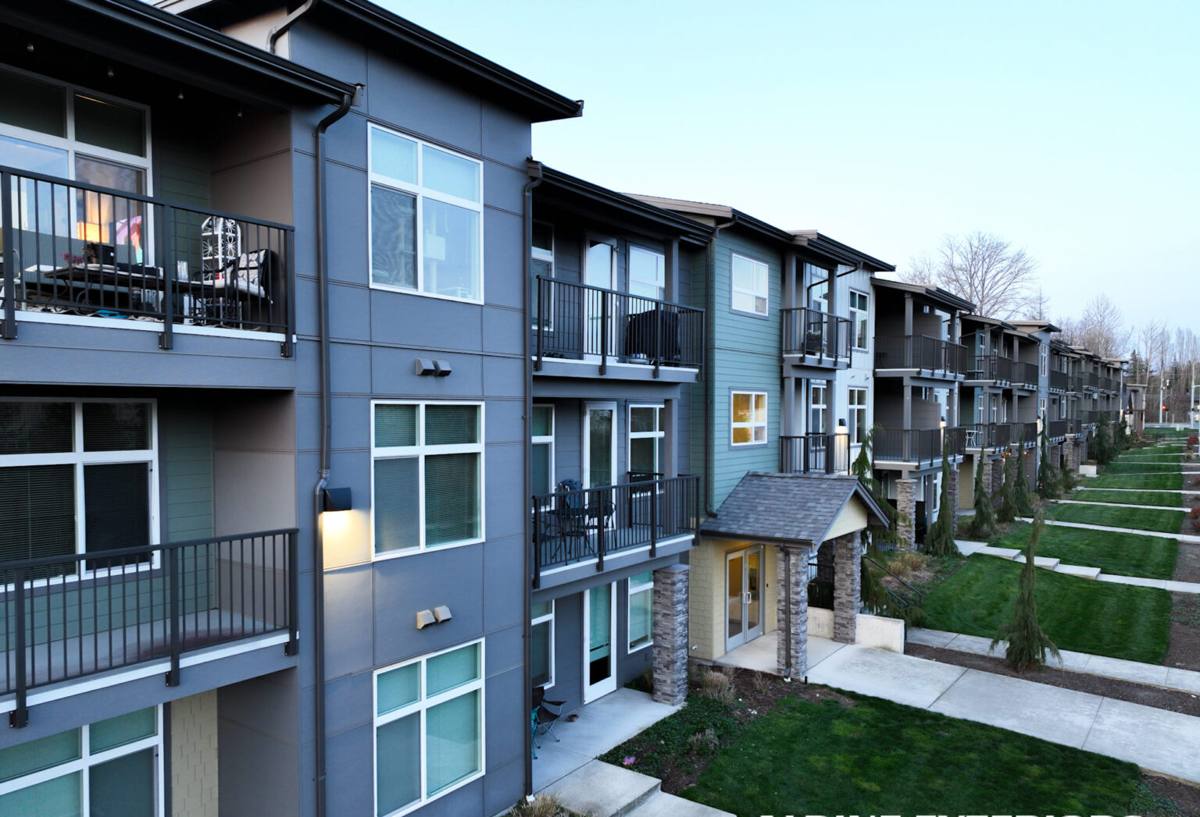
What Lynden Homes Need From Their Windows
Every region has its own set of demands on exterior openings. In and around Lynden, we see a consistent set of issues that shape how we approach window work:
- Wind-driven rain intrusion — Pacific storms push rain sideways, not straight down, which means standard installation without proper flashing and sill pans lets water track behind trim and into wall cavities.
- Condensation and fogging — older double-pane units and poorly sealed frames lose their seal in our humidity, leaving a permanent haze between the panes that can't be cleaned off.
- Moss and algae staining — anything with horizontal ledges, deep sills, or wood trim collects moisture and organic growth if it isn't detailed to shed water and dry out.
- Wood rot at sills and jambs — the most common failure point we find on older Lynden homes, usually from a missing or improperly lapped flashing detail rather than a bad window itself.
- Seasonal temperature swings — cold, damp winters followed by warm, dry summers stress frame materials and seals differently depending on what they're made of.
None of this means Lynden is a uniquely harsh place to own a house. It means the installation details matter more here than they would in a dry climate, and cutting corners on flashing or sealant shows up faster in a wet region than it does elsewhere.
Why Framing and Flashing Matter More Than the Window Itself
Homeowners often focus entirely on the window unit — vinyl versus fiberglass, double-pane versus triple-pane — and that's a reasonable place to start. But in our experience, most window failures we're called out to repair in this area aren't glass or frame failures at all. They're water management failures: a missing sill pan, house wrap that wasn't lapped correctly over the flange, or caulk used in place of proper flashing tape. A premium window installed without correct flashing will still leak. A mid-range window installed correctly, with the wall's water-resistive barrier properly integrated, will often outperform it.
What a Correct Window Installation Involves
When we replace or install custom windows on a Lynden home, the process follows the same sequence every time, regardless of window brand or budget:
- Opening assessment. We inspect the existing rough opening, sill, and surrounding wall for hidden rot, soft framing, or prior water damage before anything gets ordered.
- Precise measurement. Custom units are built to the actual opening, not a standard size, which avoids the shimming and gap-filling that weakens a seal over time.
- Sill pan installation. A sloped, sealed pan at the bottom of the opening gives any water that does get past the window a way out instead of a place to pool.
- Flashing integration. Flashing tape and the window's nailing flange are layered with the house wrap in the correct shingle-lap order — top piece over the one below it — so water sheds outward at every layer, not just at the surface.
- Air sealing and insulation. The gap between the frame and rough opening is sealed and insulated correctly, which affects both energy performance and long-term moisture control inside the wall cavity.
- Interior and exterior trim. Trim is set to shed water away from the frame, not create ledges where it collects.
- Final inspection. We check operation, seal, and water management details before calling the job done.
Skipping or rushing any one of these steps is how a "new window" ends up with the same rot problem five years later, just with fresh vinyl covering it up.
Choosing Window Materials for Whatcom County Weather
There's no single "best" window material — the right choice depends on your home's exposure, your budget, and how much upkeep you want to take on. Here's how the common options compare for our climate specifically:
| Material | Moisture Performance | Maintenance | Typical Lifespan |
|---|---|---|---|
| Vinyl | Good — won't rot, but seals and hardware can degrade with UV and temperature cycling | Low | 20–30 years |
| Fiberglass | Excellent — dimensionally stable in wet/dry cycles, resists warping | Low | 30–40+ years |
| Wood (clad or unclad) | Requires diligent maintenance; unclad wood is vulnerable to our wet winters | High | Varies widely with upkeep |
| Aluminum | Poor thermal performance, prone to condensation in cold, damp conditions | Low | 20–25 years, condensation issues common |
For most Lynden homes, we steer clients toward vinyl or fiberglass because both handle our wet-dry seasonal swings without the ongoing maintenance that wood demands. That's not a knock on wood windows as a product — some homeowners want the look and are willing to do the upkeep — it's simply that in a climate with this much sustained moisture exposure, a low-maintenance material takes one more failure point off the table.
Glass Packages Worth Considering
Double-pane, low-E glass is the standard baseline and performs well here. For homes with more exposure to wind and rain — corner lots, west- or south-facing walls that catch the brunt of incoming storms — we'll often discuss upgraded glass packages or better weatherstripping at the frame, since the glass itself is rarely where water gets in; the frame-to-wall connection is.
Signs Your Lynden Home Needs Window Attention
You don't need to wait for a window to fail completely before addressing it. Watch for:
- Fogging or a permanent haze between panes — the seal has failed and the unit needs replacing, not just cleaning.
- Soft or discolored wood trim around the frame — often the first visible sign of moisture getting behind the window.
- Drafts or a noticeable temperature difference near the window in winter.
- Difficulty opening, closing, or locking — frames can shift as wood components swell or shrink with moisture.
- Visible moss or dark staining collecting on sills or trim.
- Paint peeling or bubbling on interior or exterior trim near the frame.
Any one of these on its own might be minor. Several together, especially on an older window, usually means it's time for a real assessment rather than another round of caulk.
Our Process, Start to Finish
We keep the process straightforward because Lynden homeowners are generally busy and don't want a project that drags on:
- Free on-site estimate. We look at your existing windows, discuss what's failing and why, and talk through material and budget options honestly.
- Written scope and pricing. You know exactly what's being replaced, what the flashing and sealing plan is, and what it costs before work starts.
- Scheduled installation. We work efficiently to minimize the time your home has open walls exposed to weather — important in a region where a rain system can move in without much warning.
- Cleanup and walkthrough. We walk you through the finished work, confirm operation, and answer any questions about care or warranty coverage.
Why Local Experience in Lynden Matters
A crew that primarily works dry-climate installations doesn't automatically know how to detail a window opening for Whatcom County's rain patterns. The flashing sequence, sill pan slope, and sealant choices that work in a low-moisture region aren't aggressive enough for what this area sees over a wet winter. We work throughout Bellingham and the surrounding communities, including Lynden, and that regional familiarity shapes how we bid and build every job — we're not guessing at what the climate demands, we're accounting for it by default.
It also means we're a known, reachable contractor if a question or issue comes up after the work is done, rather than a crew that installed windows once and moved on to the next region.
Cost Factors to Expect
Every home is different, but a few factors consistently move the price on custom window projects:
| Factor | Why It Affects Cost |
|---|---|
| Window material | Vinyl, fiberglass, and wood carry different unit costs and installation labor |
| Opening condition | Rotted framing or sheathing found during removal adds repair work before the new window goes in |
| Number and size of openings | Larger or custom-shaped windows require more precise fabrication and labor |
| Glass package | Upgraded low-E coatings or impact considerations add cost per unit |
| Trim and siding integration | Matching existing trim profiles or coordinating with siding work affects scope |
We don't publish blanket per-window pricing because opening condition varies too much from house to house to make that honest — a straightforward swap and a job with hidden rot behind the trim are very different projects, and we'd rather give you an accurate number after looking at your home than a low estimate that grows once we open the wall.
If your windows are fogging, drafting, or showing water damage, or you're simply ready to replace aging units before they become a bigger problem, we're happy to come take a look. Reach out for a free, no-pressure estimate using the form below.