 Bellingham
 Composite Decking in Columbia: Built for What This Climate Actually Does
Columbia sits close enough to Bellingham Bay that salt-laden air, wind-driven rain, and a moss season that can stretch from October into May all take a toll on anything installed outdoors. A deck in this neighborhood does more work over a year than a deck built in a drier, inland climate — and it shows in the first material that fails, whether that's fading paint, softening wood, or hardware that rusts before its time. Composite decking, installed correctly, is one of the more sensible answers to that problem for homeowners who want a deck that still looks and performs well a decade in.
This page covers what Columbia homes specifically need from a composite deck, what a correct installation actually involves, and how our process works from the first estimate to the last board. We've kept the claims honest — no invented numbers, no guaranteed lifespans we can't stand behind, just what we've learned building and repairing decks in this part of Whatcom County.
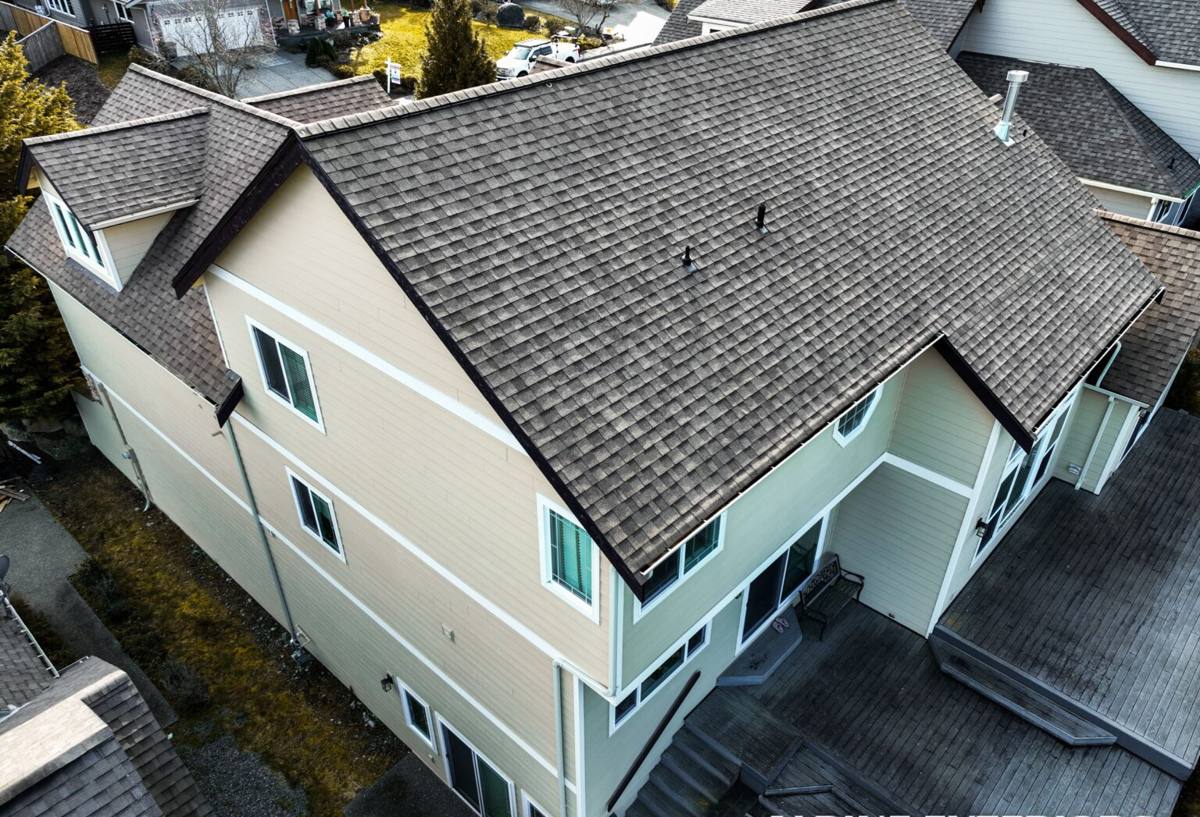
What Whatcom County Weather Does to an Outdoor Deck
Three things drive most of the decking failures we see in and around Bellingham:
- Salt air off the bay accelerates corrosion on fasteners, brackets, and any exposed metal hardware — even hardware rated for exterior use wears faster here than it would fifty miles inland.
- Driving rain, especially the sideways rain that comes with winter storms, gets pushed into joints, end grain, and ledger connections that a calmer climate would never test.
- A long moss season means anything that stays damp and shaded — the north side of a house, under a low deck, between boards that don't drain — grows moss and algae for the better part of eight months a year, not just a few weeks in spring.
None of these are exotic problems. They're just constant, low-grade stress that adds up. A deck built without accounting for them tends to look fine for a year or two and then start showing problems all at once — soft spots, staining, boards that cup or crown, ledger rot hidden behind the siding.
Why This Matters More for Composite Than People Expect
Composite boards themselves resist moisture better than wood, but the material isn't the whole story. The substructure underneath, the fasteners holding it together, and the way water is allowed to drain and dry all matter just as much with composite as with wood — sometimes more, because composite doesn't visibly warn you the way wood does when something underneath is going wrong.
Composite vs. Wood vs. PVC: A Straight Comparison
There's no single right answer for every home — the right decking material depends on budget, how the deck will be used, and how much upkeep a homeowner actually wants to do. Here's how the three common options compare for a Bellingham-area deck:
| Material | Upkeep | Moisture Behavior | Typical Lifespan | Upfront Cost |
|---|---|---|---|---|
| Pressure-treated wood | Annual cleaning, periodic staining/sealing | Absorbs water, prone to cupping and splintering if not maintained | 10-15 years with regular maintenance | Lowest |
| Composite | Occasional washing, no staining or sealing | Resists rot; capped boards resist moisture penetration well | 25-30+ years depending on product line | Mid-to-upper |
| PVC / cellular vinyl | Minimal, similar to composite | Fully moisture-resistant, doesn't absorb water at all | Comparable to or longer than composite | Highest |
For most Columbia homeowners, composite lands in a practical middle ground: a real reduction in maintenance compared to wood, without the premium cost of full PVC systems. We'll walk through the trade-offs honestly during an estimate rather than push whatever has the best margin.
What a Correct Composite Installation Involves
Substructure and Framing
Composite decking is heavier than wood and behaves differently under load, so joist spacing and framing need to match the manufacturer's specifications for that specific board — not a generic wood-deck layout. We use joist spacing appropriate to the product going down, and we check that ledger connections are flashed and fastened correctly, since a failed ledger connection is one of the more serious deck failures and one of the least visible until it's advanced.
Fasteners and Hardware
Given the salt air off the bay, we use fasteners and structural hardware rated for coastal or corrosive environments rather than standard-grade hardware. This is a small cost difference upfront and a large difference in how the deck holds up ten years out — corroded fasteners are one of the more common causes of premature deck failure we see on older builds in this area.
Drainage and Ventilation
Moss and algae need standing moisture to establish, so the framing and board layout need to let water actually leave the deck instead of pooling underneath it. That means correct board gapping, proper slope away from the house, and enough ventilation beneath the deck surface that the underside can dry out between storms instead of staying damp through the winter.
Board Selection and Layout
Not every composite product performs the same in a wet, shaded climate. We steer homeowners toward capped composite boards with a solid moisture warranty rather than uncapped or budget composite lines that can absorb water at cut ends and along grooves — a real problem in a climate that doesn't give lumber much time to dry out between rain events. Board direction and picture-framing at the edges also affect how water sheds off the deck.
Our Process, Start to Finish
- Free on-site estimate. We look at the existing structure (if there is one), grade, drainage, and sun/shade exposure specific to the lot, and talk through material options and budget.
- Written proposal. Scope, materials, and price in writing before anything is scheduled — no verbal-only agreements.
- Demo and structural prep. Removal of the old deck if applicable, and correction of any framing, ledger, or drainage issues found underneath before new decking goes down.
- Framing and substructure. Joists, beams, and posts installed or reinforced to spec for the composite product selected, with coastal-rated hardware throughout.
- Decking installation. Boards, fascia, and trim installed with correct fastening and gapping for drainage and thermal movement.
- Railing and finish work. Railings, stairs, and any lighting or accessories installed to match the rest of the exterior.
- Final walkthrough. We go over care, warranty paperwork, and answer questions before calling the job done.
Cost Factors for a Composite Deck in Columbia
Composite decking costs more upfront than pressure-treated wood, and the total for any given project depends on more than just square footage. The factors that move the price most are:
| Factor | Why It Affects Cost |
|---|---|
| Deck size and shape | More linear footage of framing, fascia, and cutting on complex or multi-level layouts |
| Height off grade | Taller decks need more substructure, stairs, and railing |
| Existing structure condition | Rot, undersized framing, or a bad ledger connection found during demo adds repair scope |
| Composite product line | Board price varies by manufacturer, color, and warranty tier |
| Railing and accessories | Composite or metal railing, lighting, and stairs are priced separately from decking |
| Site access | Tight lots or limited equipment access can add labor time |
We don't quote a number without seeing the site — anyone who does is guessing. What we can say honestly is that composite decking generally costs somewhere between mid-range wood upgrades and full PVC systems, and the estimate will break out material and labor so there are no surprises.
Maintenance: What Composite Actually Requires Here
Composite decking is low-maintenance, not no-maintenance, and that distinction matters more in a climate with a long moss season. Realistic upkeep for a Columbia-area composite deck looks like:
- Washing the surface a couple of times a year to keep pollen, moss spores, and organic debris from taking hold, especially on shaded or north-facing sections
- Clearing leaves and debris out of the gaps between boards so water keeps draining as designed
- Checking railings, stairs, and fasteners annually for any looseness or corrosion, particularly on hardware closest to the bay
- Keeping gutters and downspouts nearby clear so overflow doesn't dump extra water onto the deck surface
What composite doesn't need is annual staining, sealing, or sanding — that's the real time and cost savings over wood, and it holds up whether the deck sits in full sun or under tree cover.
What to Ask Before Hiring a Deck Contractor
A composite deck is a structural project, not just a surface finish, so it's worth vetting a contractor the same way you would for any other exterior work. Before hiring, ask:
- Are you licensed and insured to do structural deck work in Washington State?
- Will you show me the framing and hardware specs before covering them with decking?
- What fastener and hardware grade do you use, and is it rated for coastal exposure?
- What happens if you find rot or a bad ledger connection once demo starts?
- What's covered under the manufacturer's warranty versus your own workmanship warranty?
- Can I see recent local work, not just photos from out of the area?
A contractor who answers these plainly, without dodging the framing and hardware questions, is usually the safer bet.
Why a Crew That Already Works Columbia Matters
Decking specs written for a generic climate don't always account for what Bellingham Bay does to a deck over a winter. A crew that already works in Columbia and the surrounding Bellingham neighborhoods knows which lots sit low and hold moisture, which sides of a house never fully dry between storms, and which fastener grades hold up and which ones don't after a few wet seasons. That local pattern recognition is the difference between a deck that's built to a spec sheet and one that's built for the actual conditions it has to survive here in Whatcom County.
If you're planning a new composite deck or replacing one that's failing early, we're happy to take a look and give you straight answers — no pressure, no inflated claims, just what your project actually needs. Reach out for a free estimate using the form below.